- Prep
- 15 min
- Cook
- 40 min (about 20 minutes per okonomiyaki)
- Total
- 55 min
- Servings
- 2
- Difficulty
- Intermediate
What is Okonomiyaki?
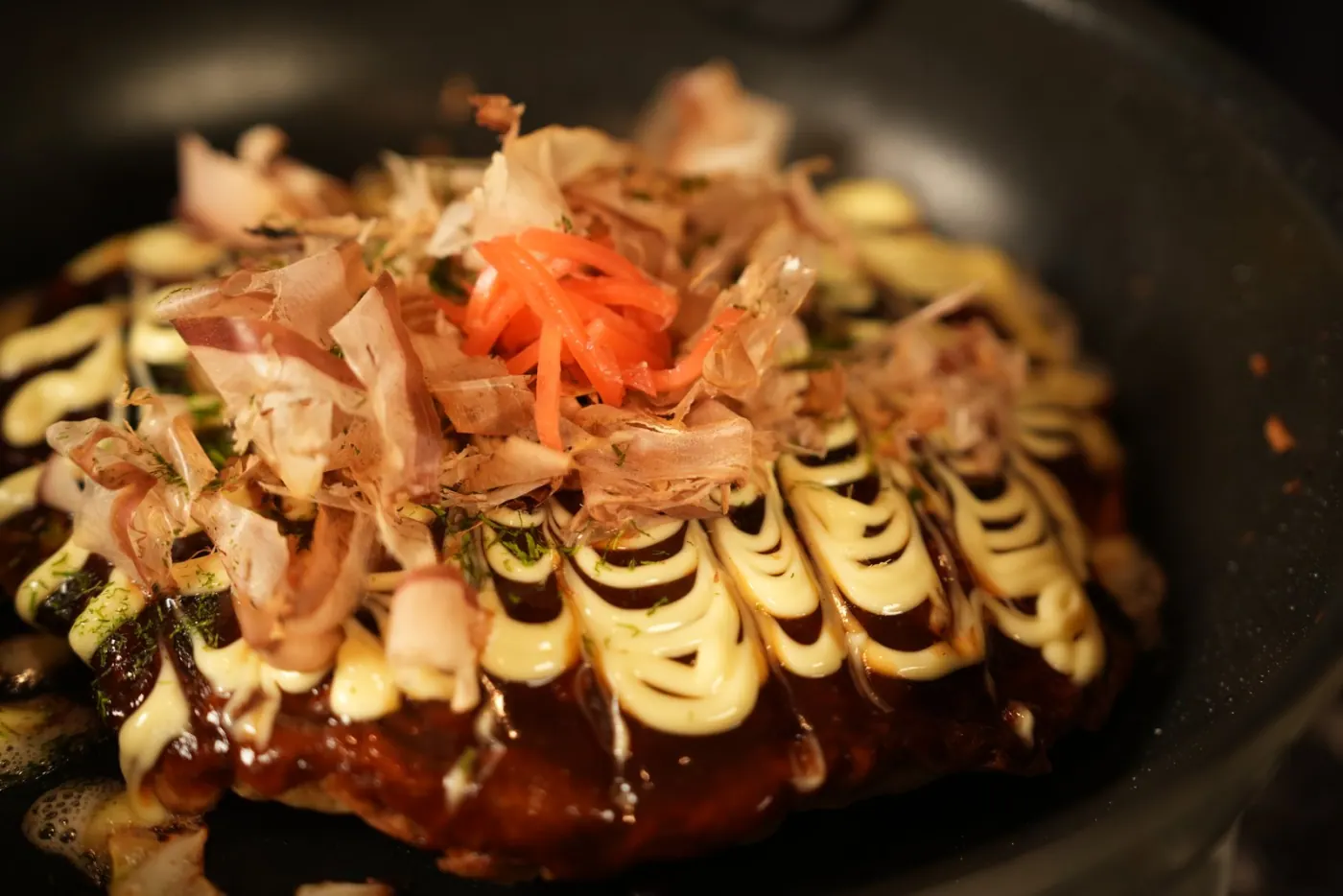
Okonomiyaki is a savory Japanese pancake and one of Osaka's best-known street foods. This recipe is all about enjoying lots of cabbage: the batter holds the cabbage together, and a layer of thinly sliced pork on the bottom turns crispy and seals in the steam, so the cabbage turns sweet.
The recipe makes 2 okonomiyaki, one for each person. The video shows how to make the first one. Make the second the same way with the rest of the ingredients.
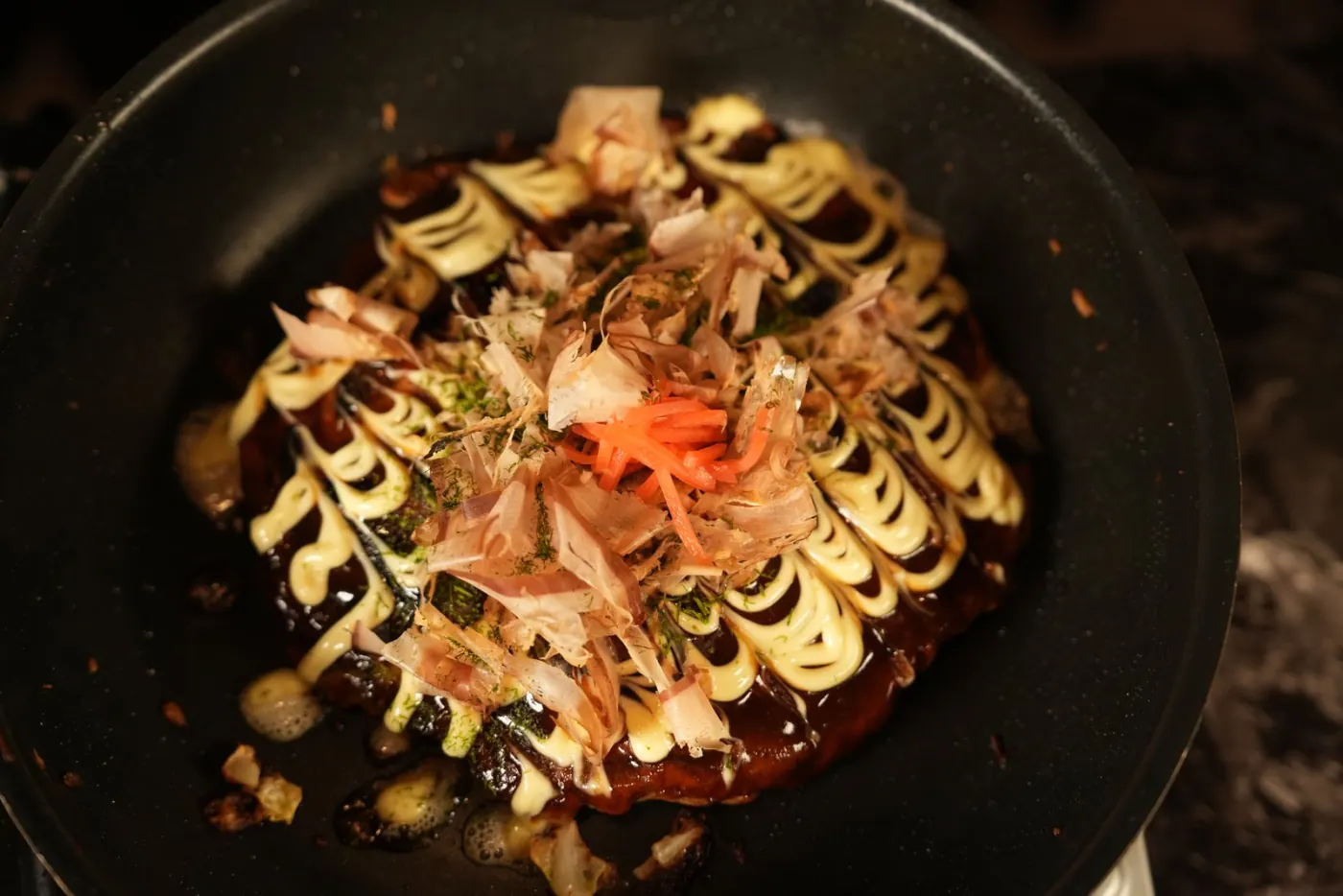
Why You'll Love This Recipe
- Lots of cabbage - Cut into about 1cm pieces, so you really taste the cabbage in every bite
- Crispy pork bottom - Thin slices of fatty pork crisp up in their own fat, no oil needed
- Fluffy, light batter - No grated yam, so it stays light
- Simple batter - Flour, water, soy sauce, dashi powder and salt
Key Points of This Recipe
- Mix the flour into the water in stages so there are no lumps
- Cut the cabbage into about 1cm pieces, and the hard core even finer
- Fold the batter into the cabbage gently, without overmixing
- Don't cover the pan or press down on the okonomiyaki
Required Equipment
- Large bowl (for the batter)
- A very large bowl (for the cabbage)
- Medium bowl (for mixing one okonomiyaki)
- Whisk
- Ladle
- Chopsticks
- Knife and cutting board
- Large frying pan
- 2 spatulas
Okonomiyaki Ingredients (Serves 2)
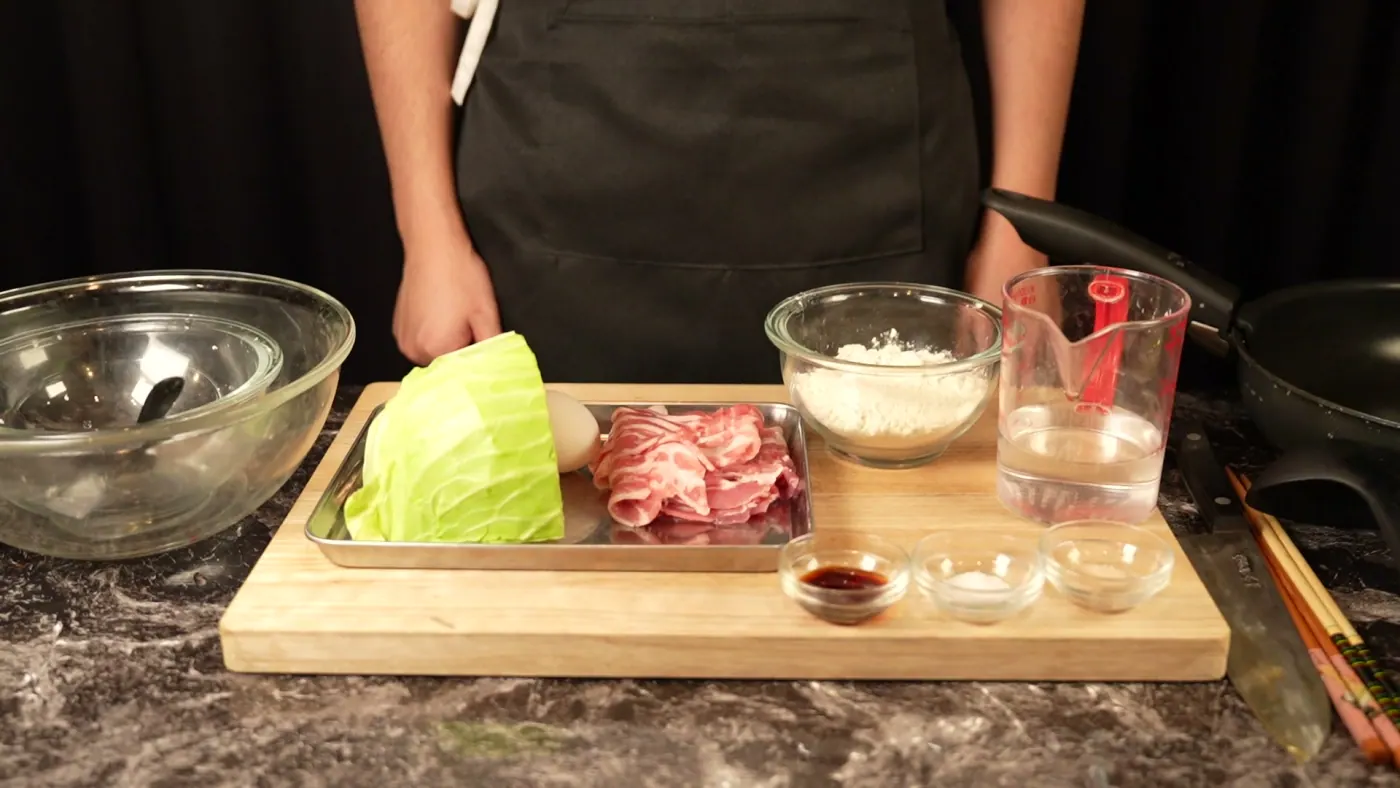
14 ingredients · 2 servings
All-purpose flour, water, soy sauce, dashi powder, salt, cabbage, thinly sliced pork belly, eggs, okonomiyaki sauce, mayonnaise, bonito flakes, aonori, pickled ginger.
From scratch: how to make dashi
Full amounts in the recipe cardIngredient Substitutions
- Pork: Use thin slices with plenty of fat. Pork belly or pork loin works best
- Okonomiyaki sauce: You can make it at home with ketchup, soy sauce, Worcestershire sauce, sugar and honey. See our okonomiyaki sauce recipe
Video Tutorial
The video shows how to mix the batter without lumps, how to cut the cabbage, and the flip with two spatulas.

How to Make Okonomiyaki
Prep: Make the Batter
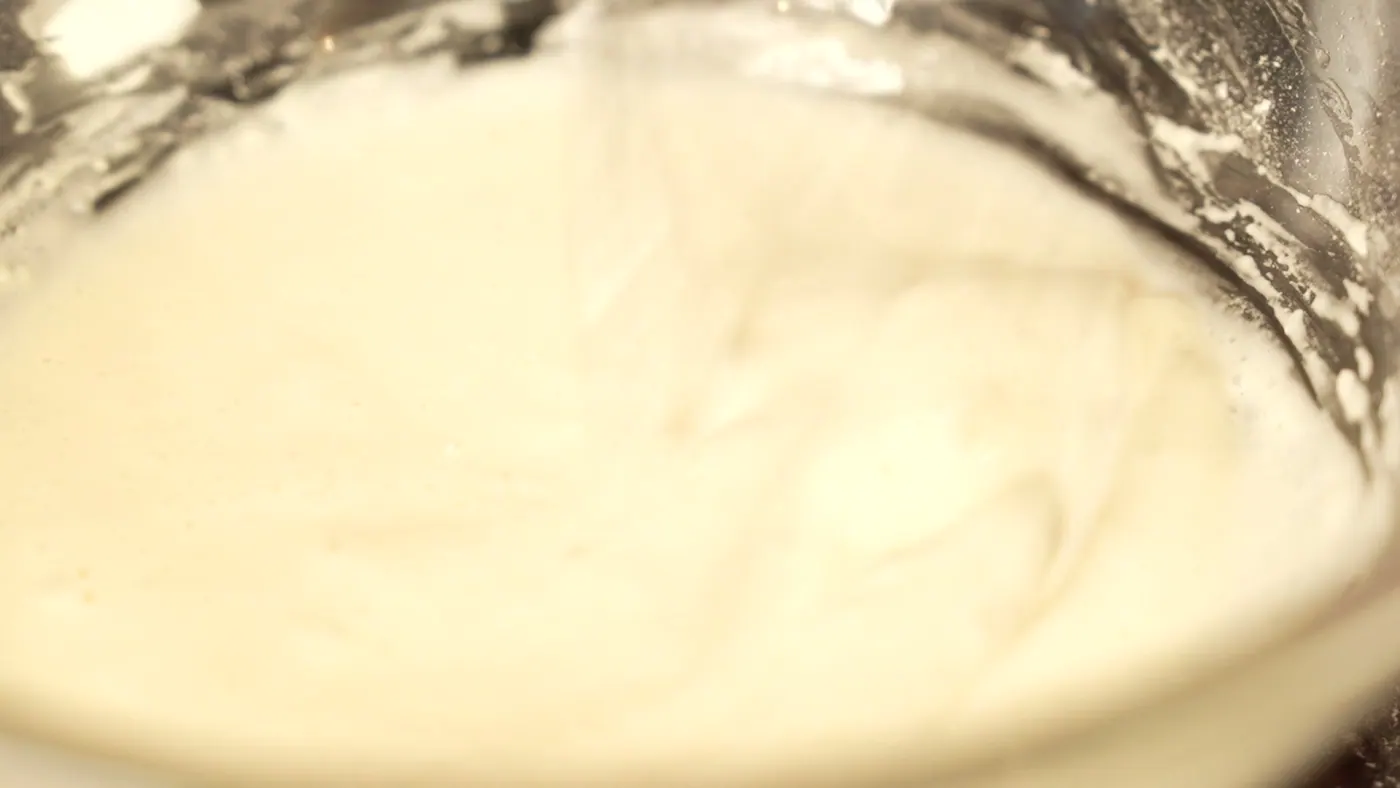
Mix half the flour with the water
Put 150ml of water and about 25g of the flour (half of the 50g) in a large bowl and mix well. If you add all the flour at once, lumps form easily. Mixing half the flour with the water first prevents them.
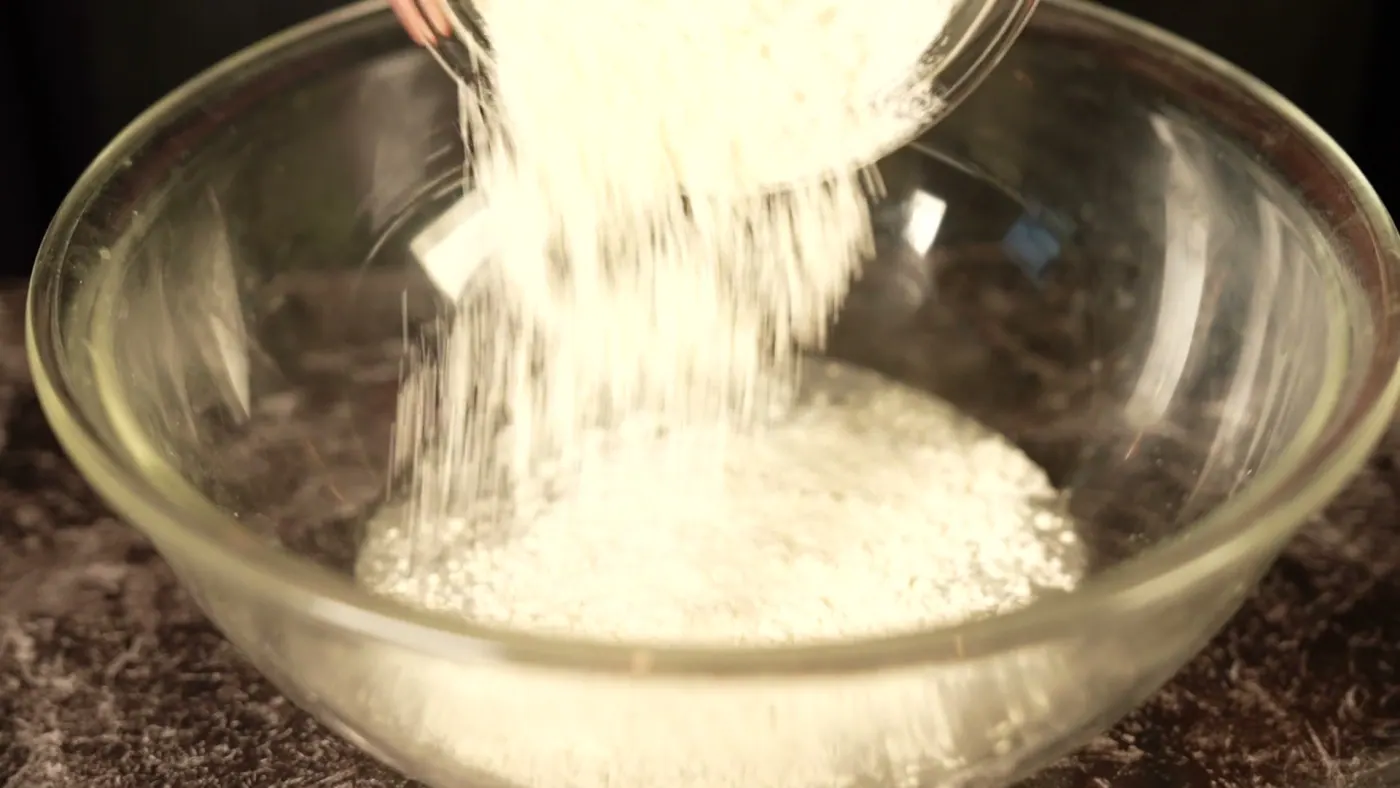
Add the rest of the flour
Add the remaining flour little by little while you mix. Adding it in about 3 parts makes lumps less likely. Mix until smooth.
Some recipes add grated yam to the batter, but it makes the okonomiyaki a little heavy. This recipe leaves it out for a light, crisp okonomiyaki.
Season the batter
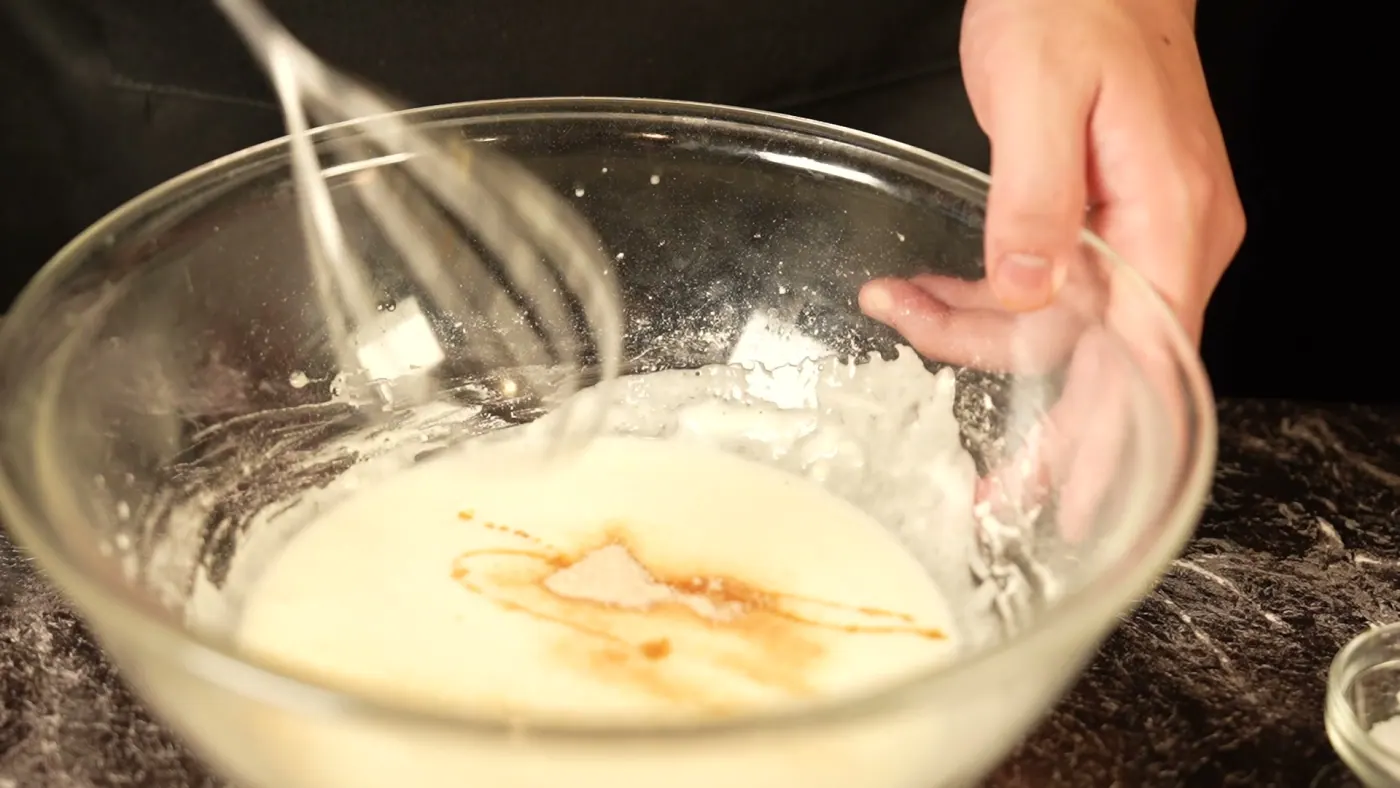
Add the seasonings and mix well:
- 1 teaspoon soy sauce
- 1g dashi powder
- A pinch of salt
Don't skip the dashi powder. It adds umami to the batter. The batter is ready for now.
Prep: Cut the Cabbage and Pork
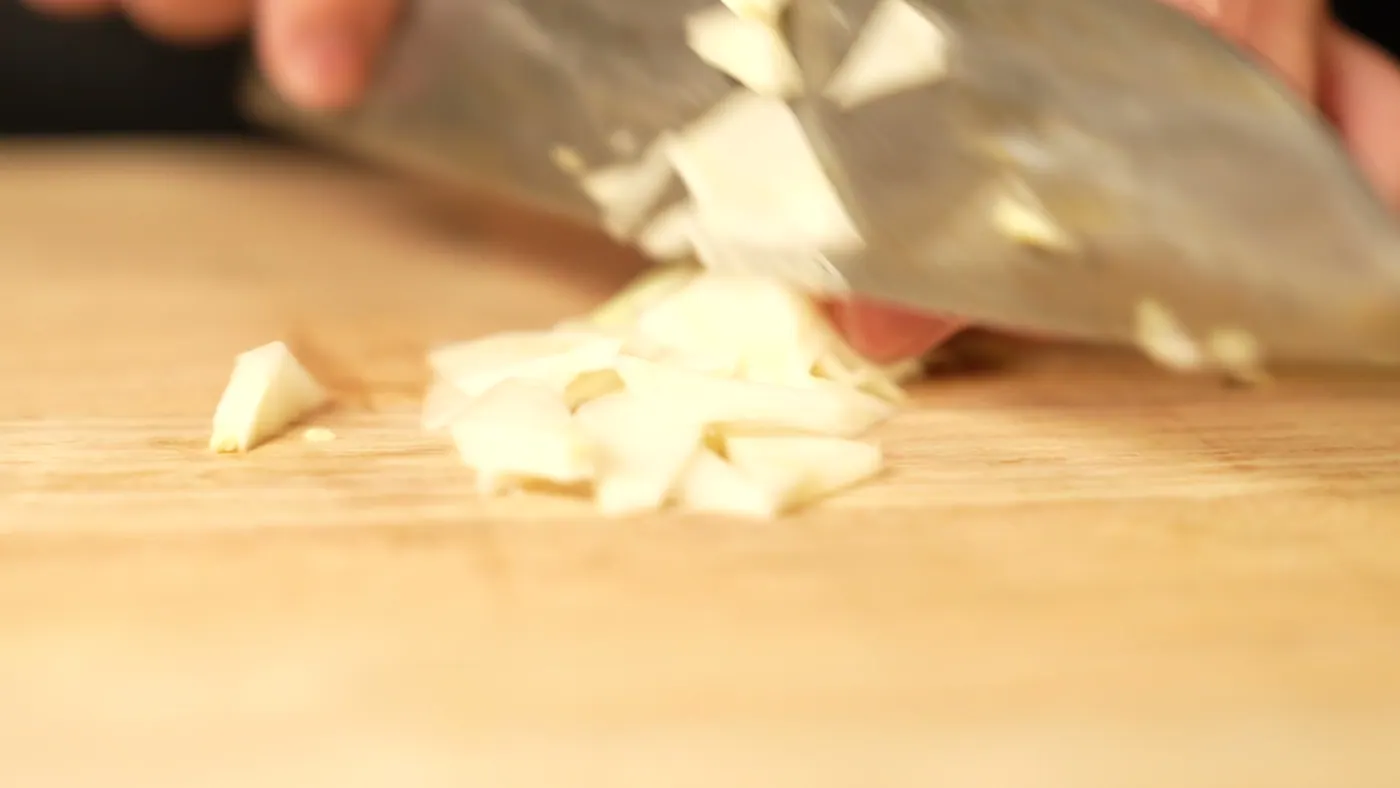
Chop the cabbage core
Take 1/4 cabbage (about 250g) and cut out the core first. The core is very hard, so chop it finely so it cooks through easily. This gives the okonomiyaki a smoother texture.
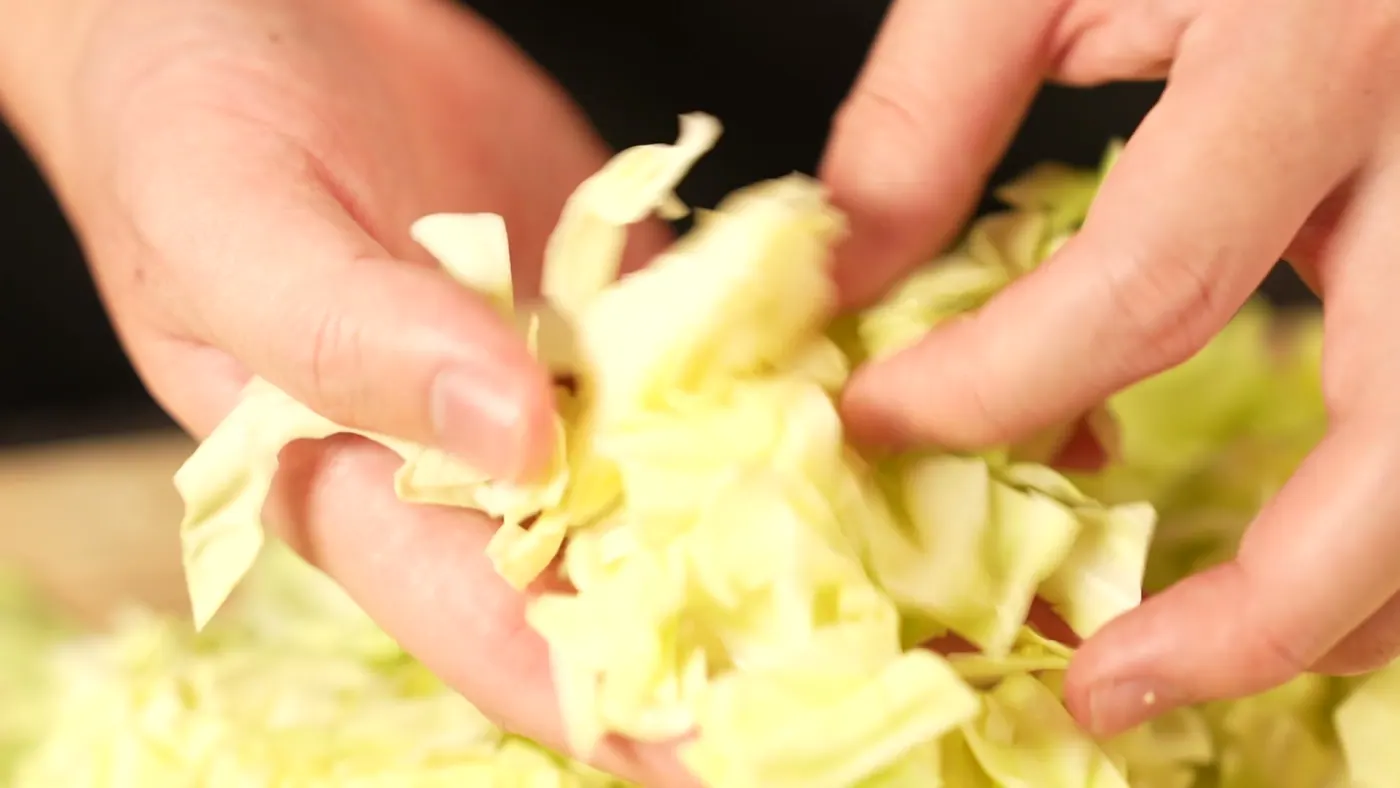
Cut the leaves into 1cm pieces
Cut the leaves lengthwise into strips about 1cm wide. Then turn them sideways and cut them about 1cm wide again, so you get a coarse chop. Cut the rest of the cabbage the same way.
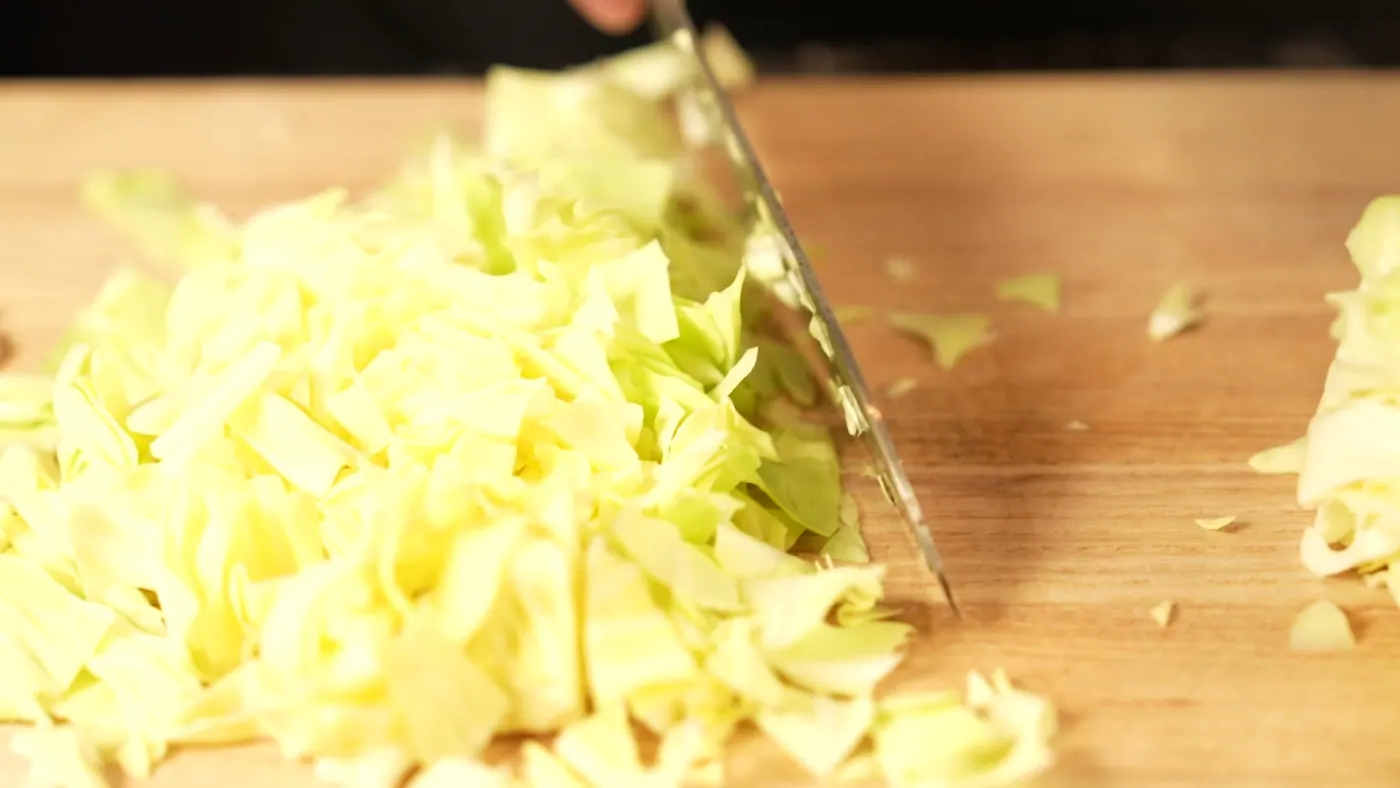
After trying many sizes, about 1cm works best: you can really taste the cabbage, and it blends well with the batter. Use a very large bowl so the cabbage doesn't spill.
Cut the pork
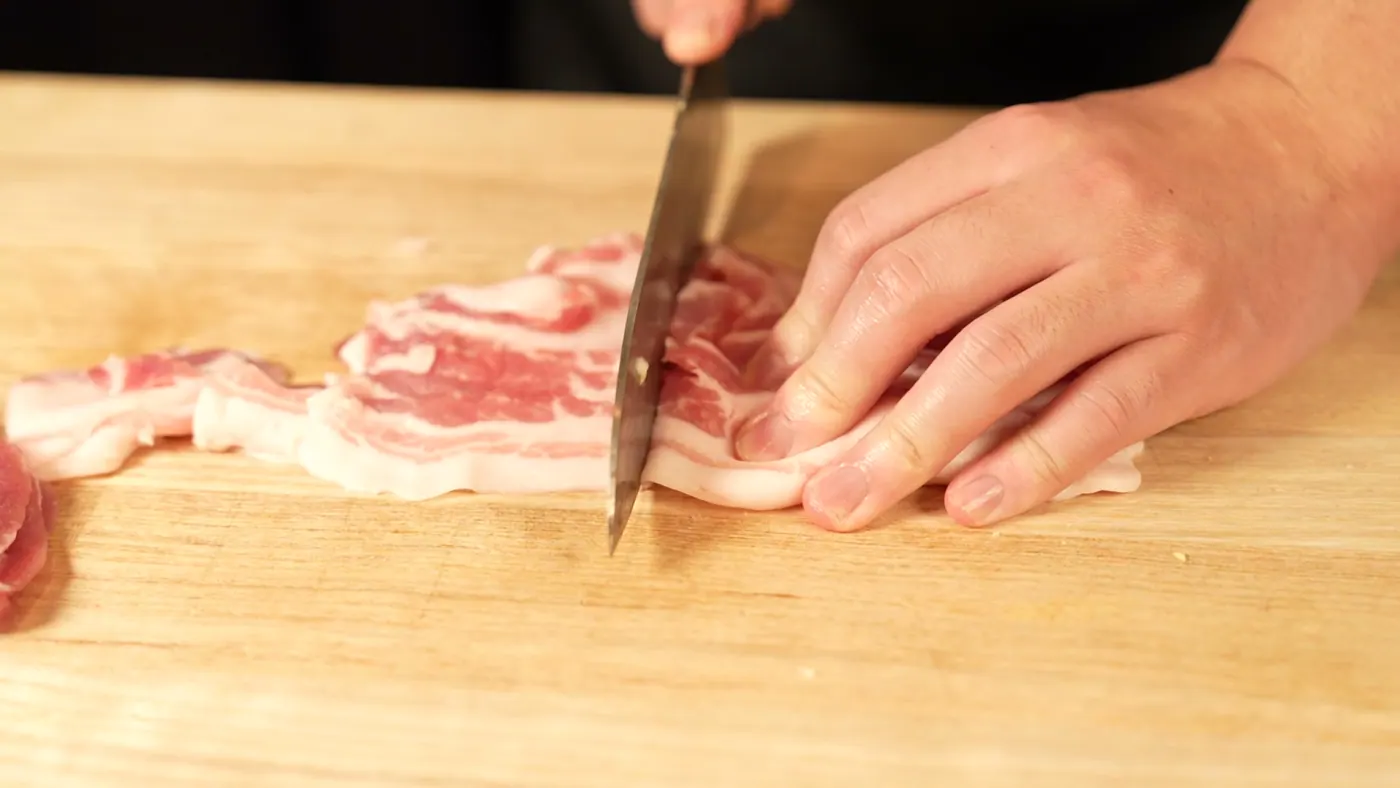
Cut 200g of thinly sliced pork into pieces about 10-15cm long. The length isn't important, so a rough cut is fine. What matters more is the pork itself: choose thin slices with plenty of fat. Pork belly or pork loin is best.
Cook the Okonomiyaki
Arrange the pork in the pan
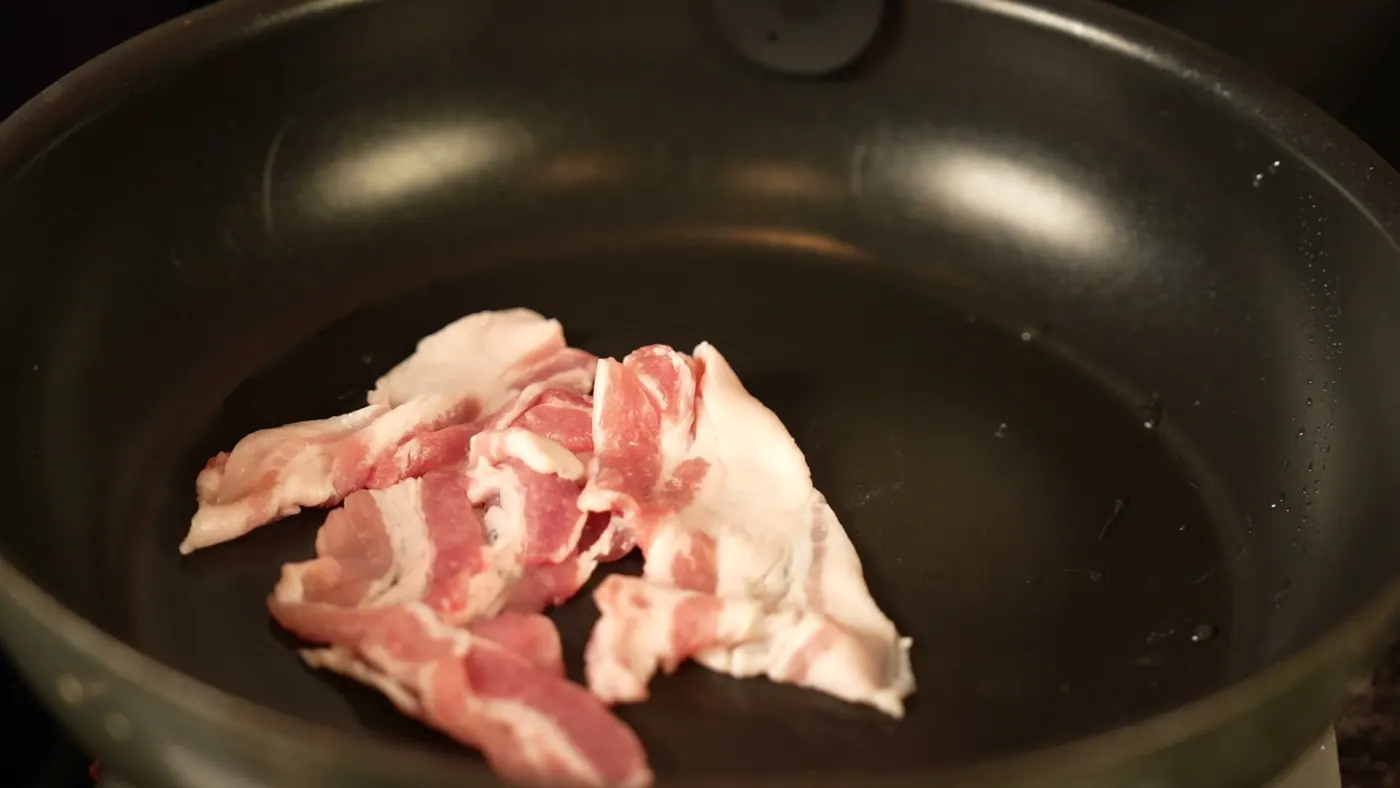
Lay 100g of the pork (half) in a large frying pan, one slice at a time. The circle of pork becomes the bottom of the okonomiyaki, so make it the size you want the okonomiyaki to be.
Salt the pork and cook it over low heat
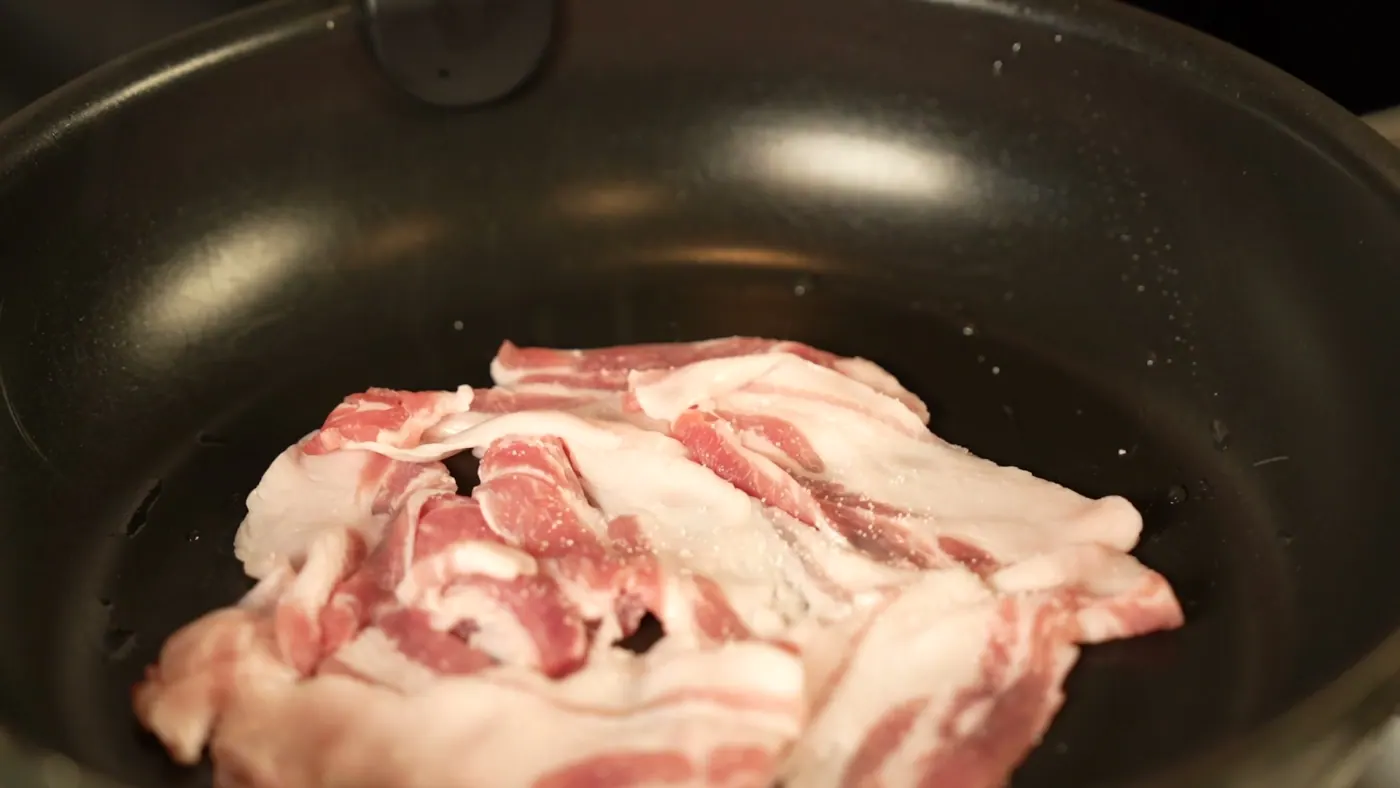
Sprinkle a pinch of salt over the pork and cook it slowly over low heat. Slow cooking makes the pork crispy, and the fat that comes out of the meat cooks the okonomiyaki.
Mix the cabbage, batter and egg
While the pork cooks, put half the cabbage (enough for one okonomiyaki) in a medium bowl. Add 2 ladles of batter and 1 egg.
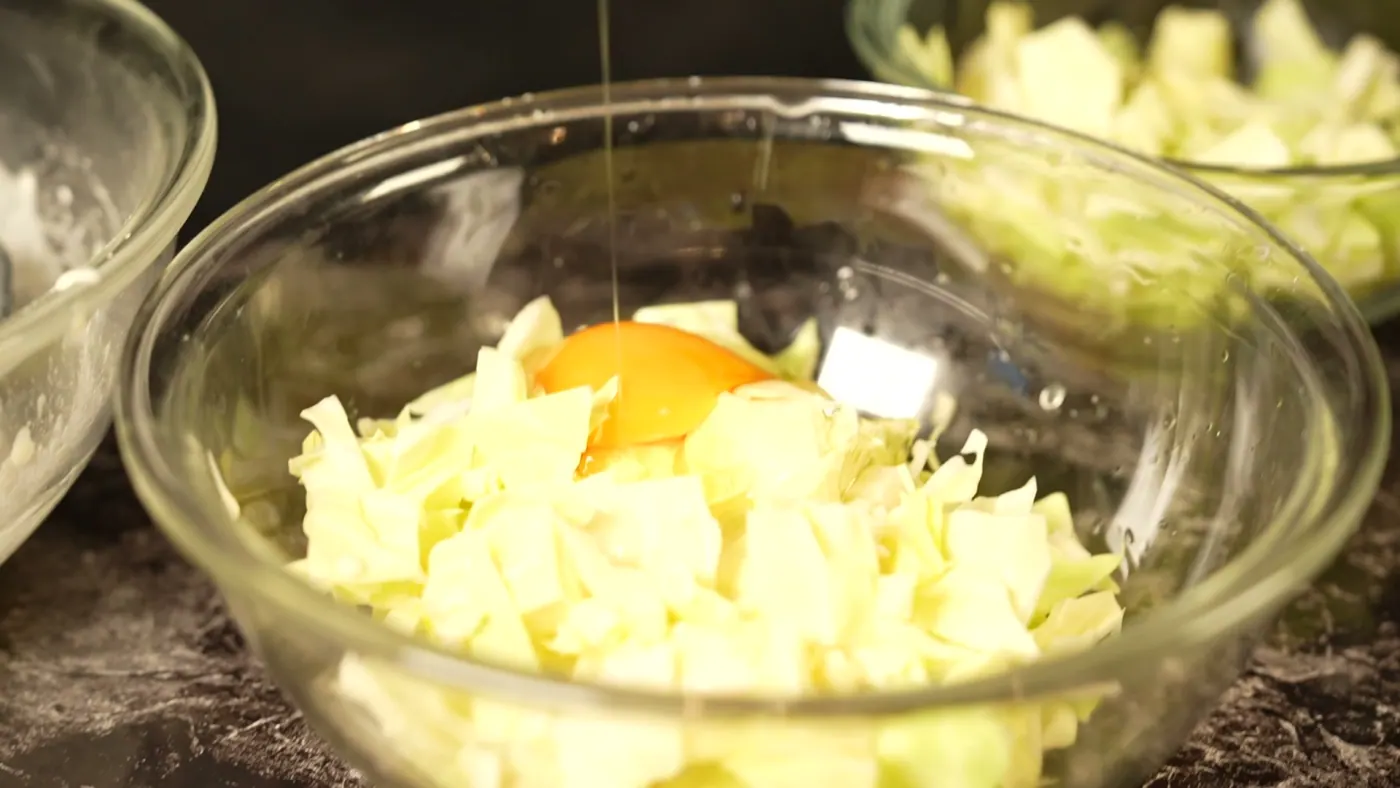
Mix slowly with chopsticks, lifting gently from the bottom. If you mix too much, water comes out of the cabbage and the okonomiyaki turns soggy.
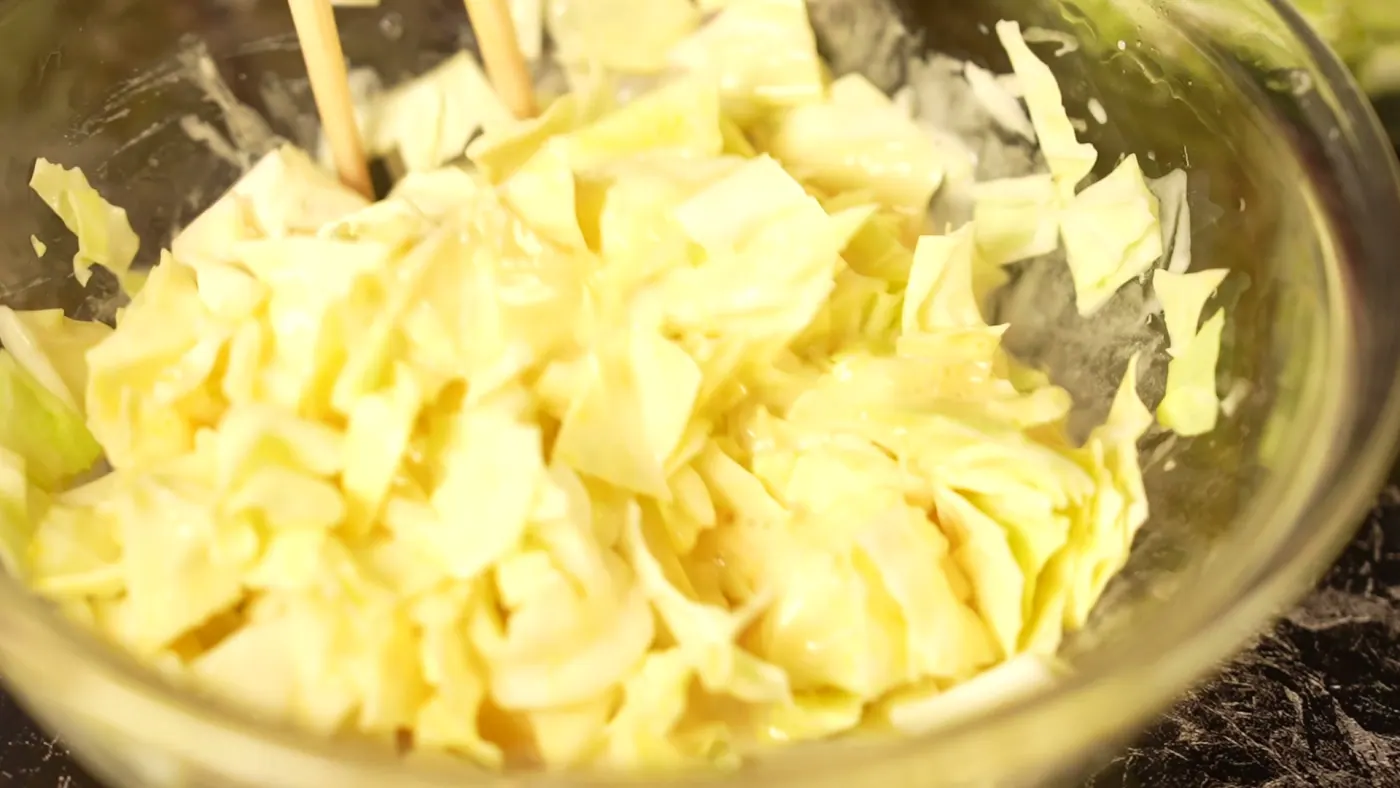
Pour the mixture over the pork
When the pork looks like this, it's time to add the cabbage mixture.
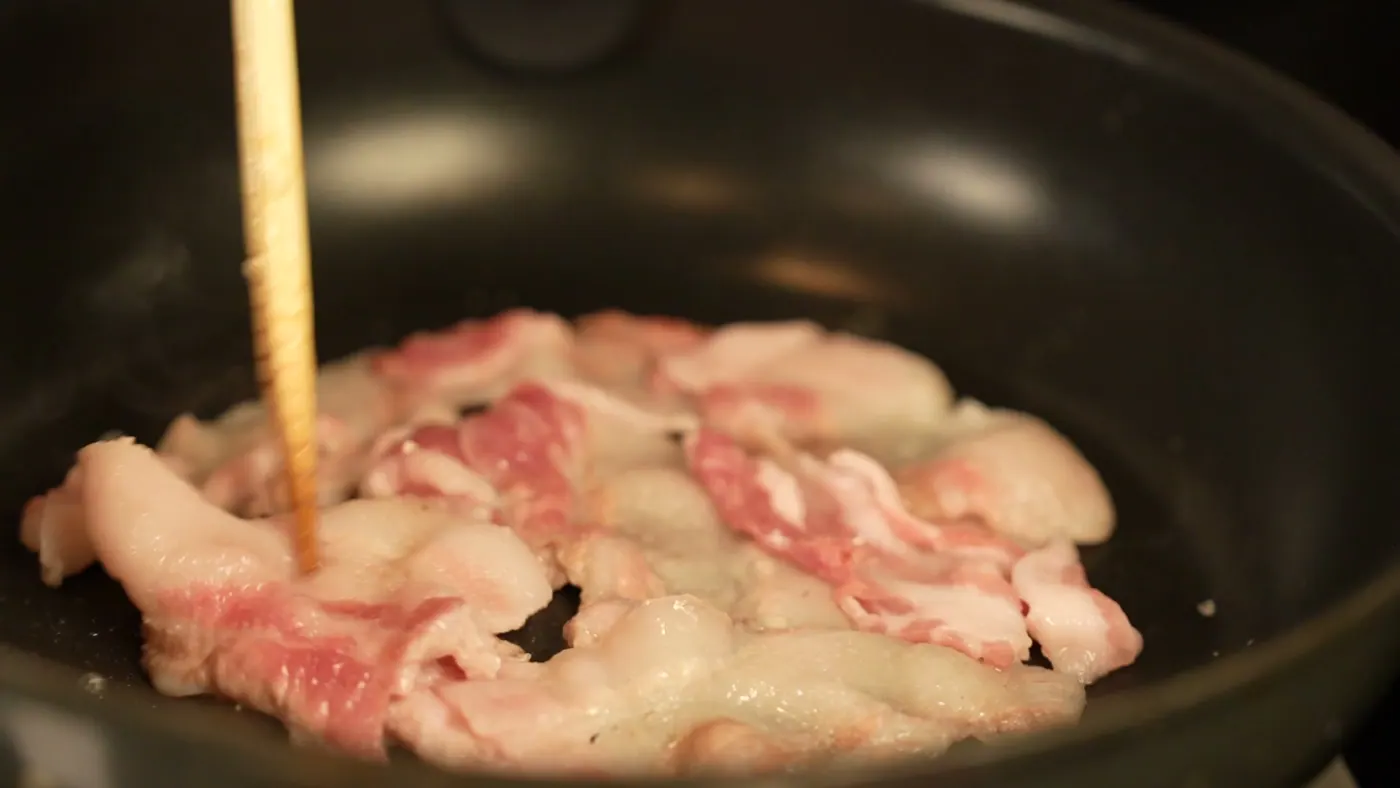
Give the mixture a quick stir and pour it slowly over the pork.
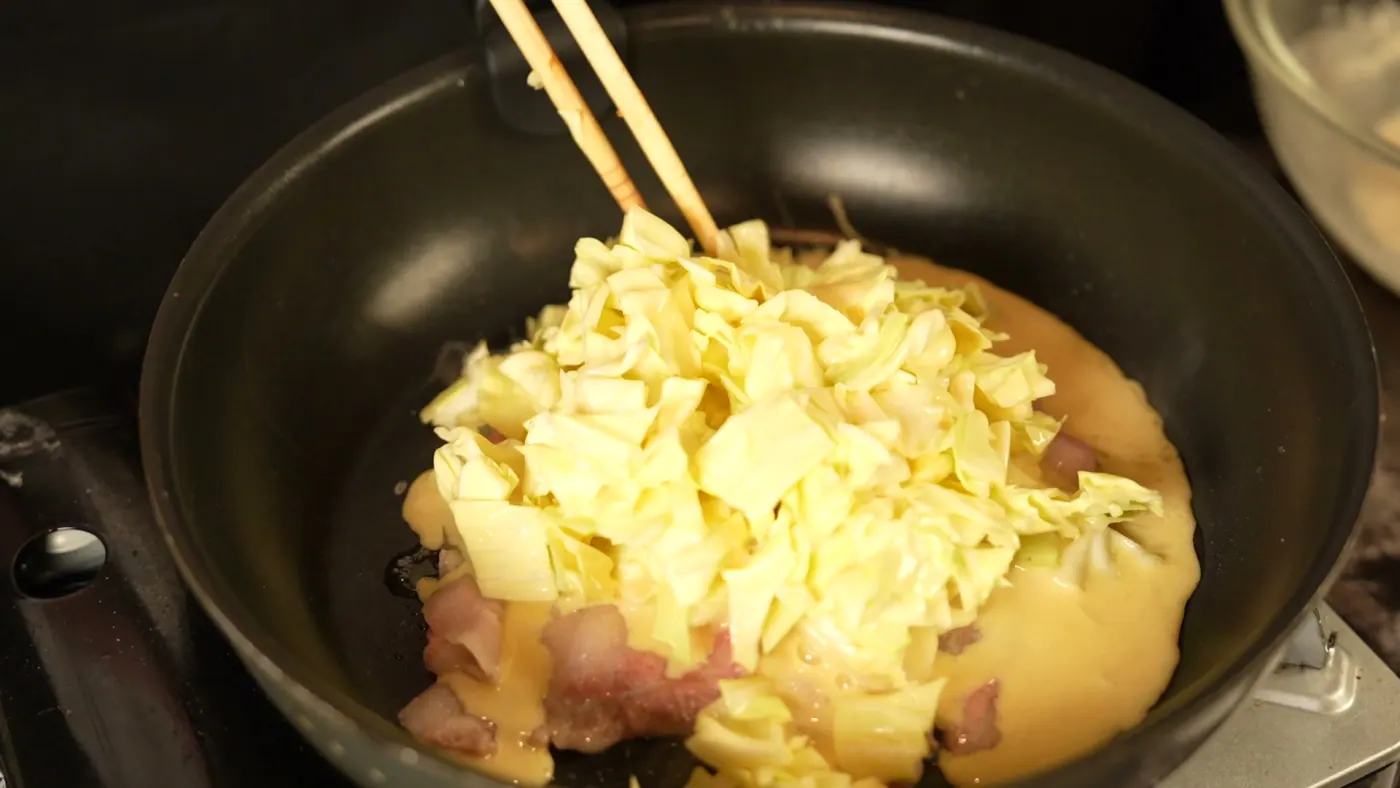
Make it an even thickness so it cooks through, pushing the edges toward the center with a spatula.
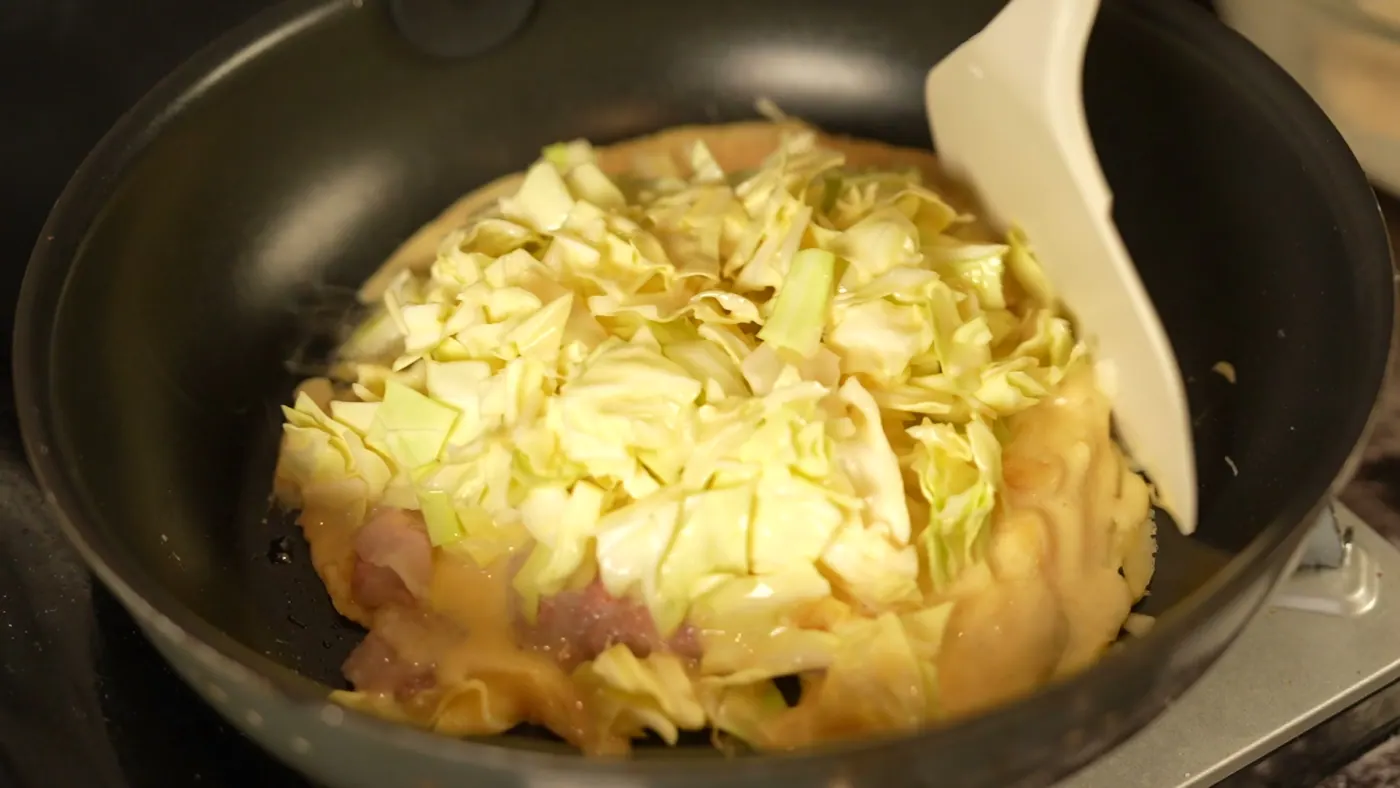
Cook for 8 minutes without a lid
Cook over low heat for about 8 minutes. To keep the okonomiyaki fluffy, don't cover it with a lid and don't press it down with the spatula.
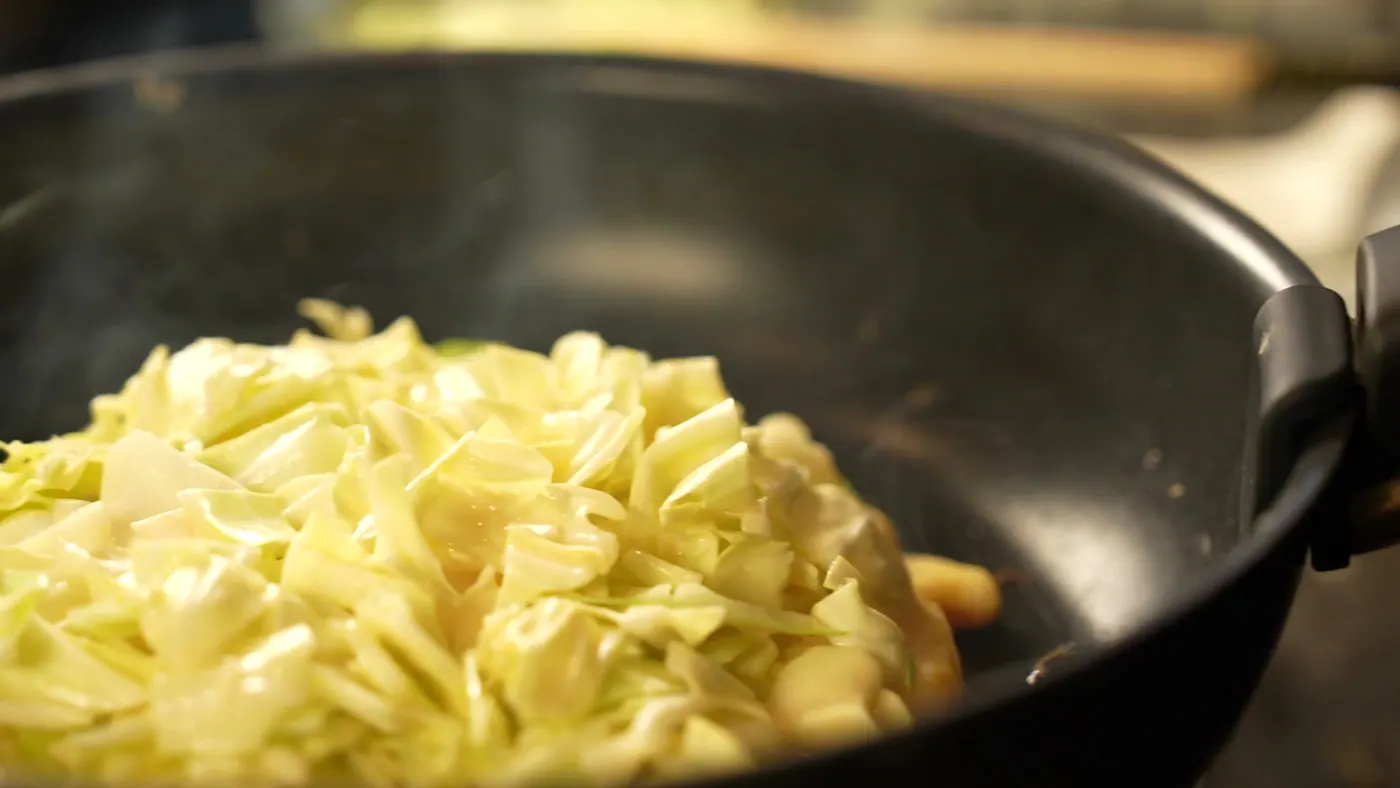
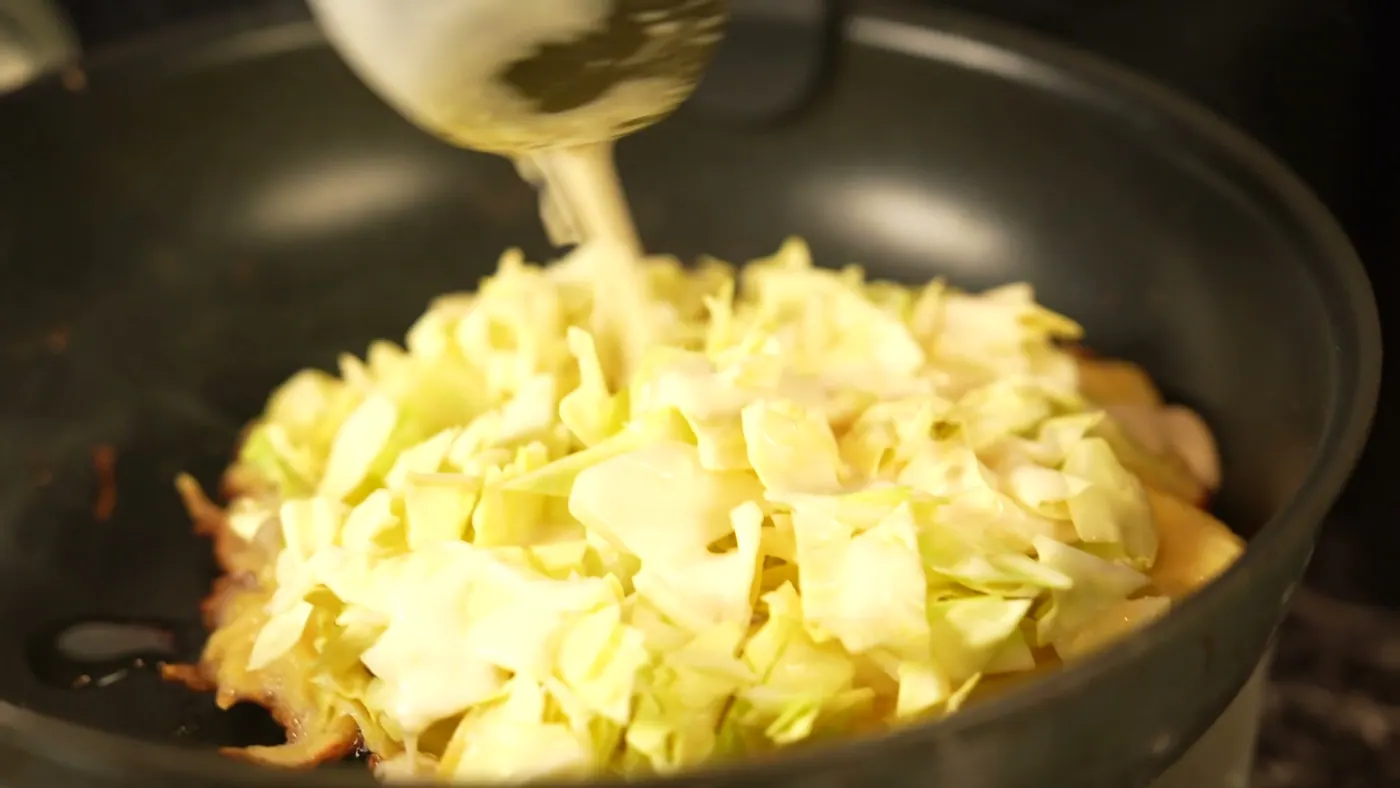
Add a little batter on top and flip
After 8 minutes, when the bottom is nicely browned, pour about half a ladle of batter over the top. It works like glue and holds the cabbage together.
Flip the okonomiyaki carefully with 2 spatulas. The pork should be crispy. Cook the other side for another 8 minutes.
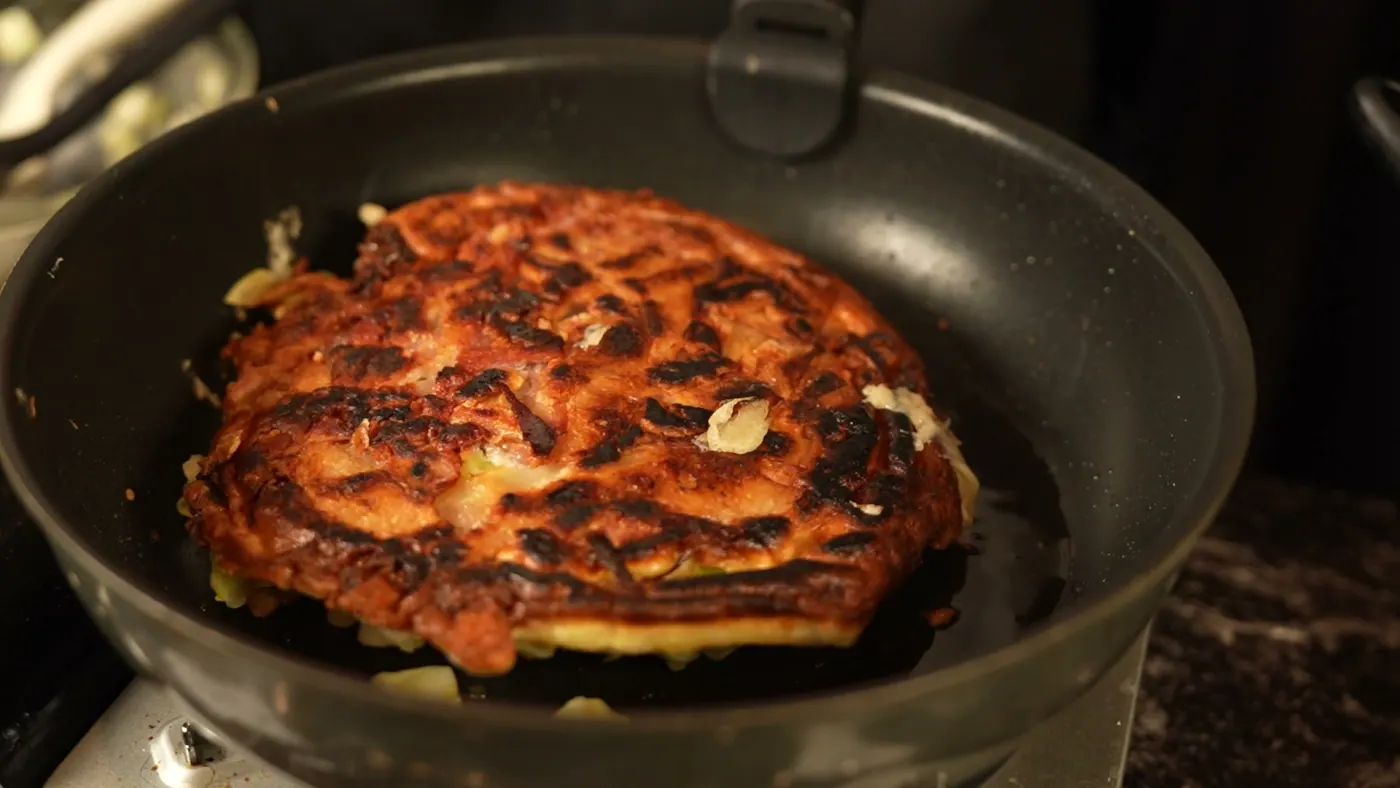
Why cook the pork until crispy?
The crispy pork works like a lid. It keeps the steam in, so the cabbage steams slowly and turns sweet.
If you don't like charred bits, cook each side for about 6 minutes instead and check the color often.
Add the Sauce and Toppings
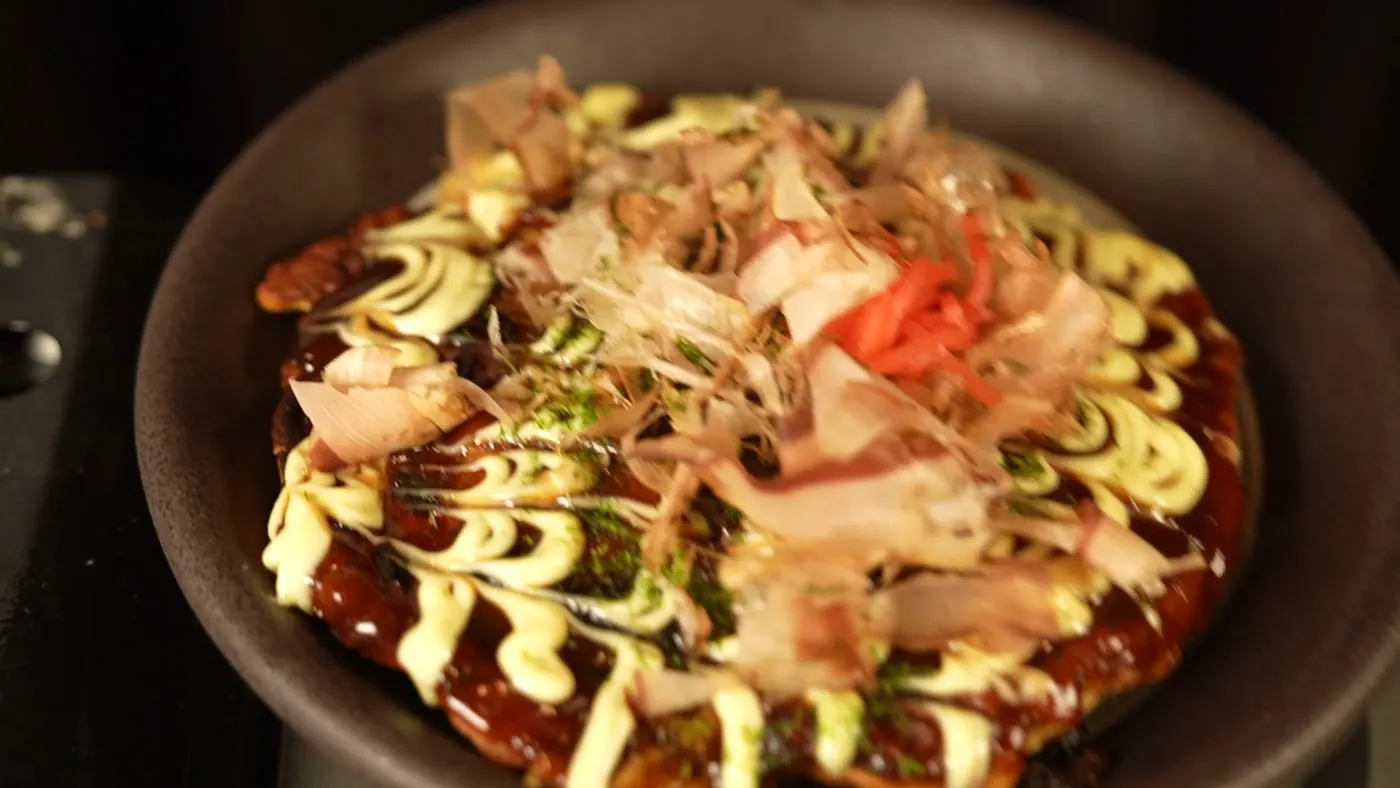
Add the sauce and mayonnaise
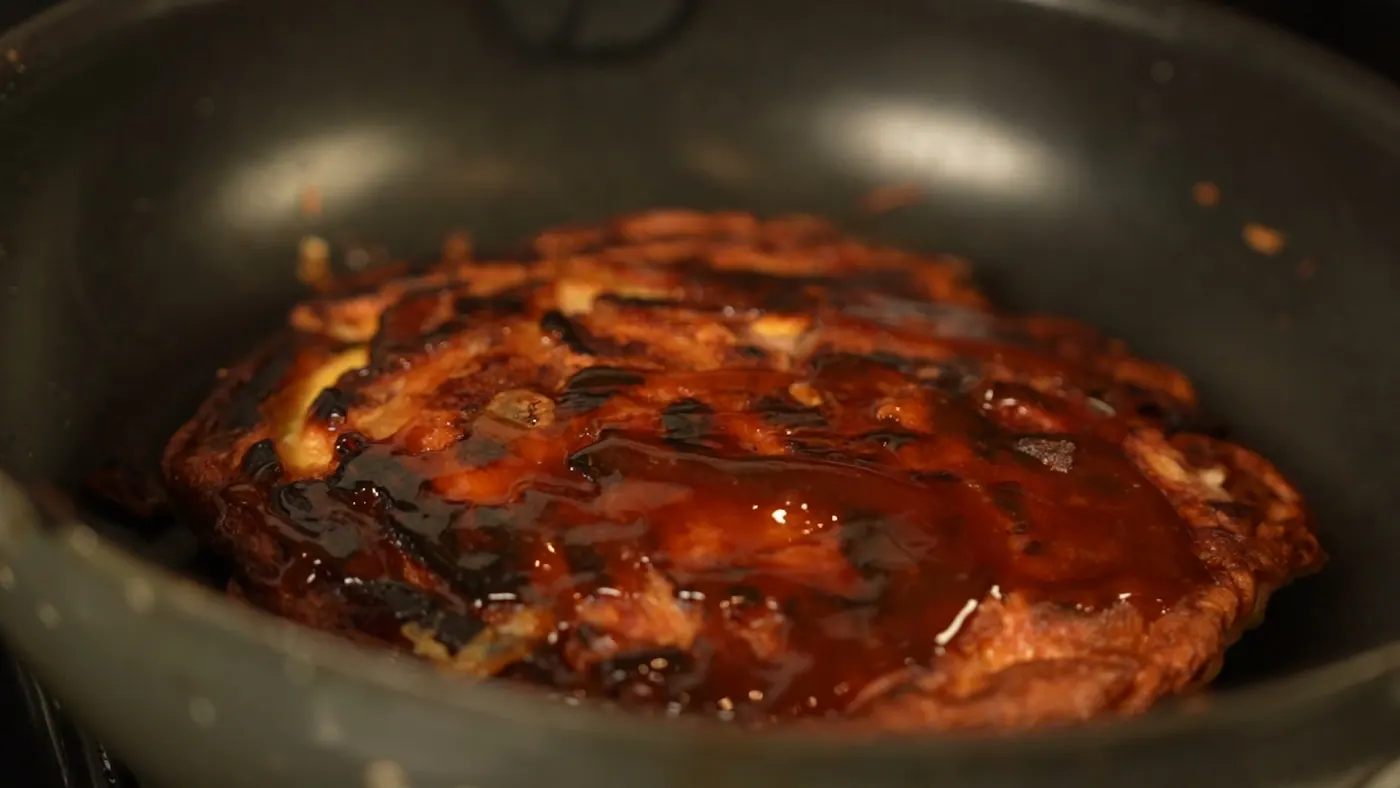
Spread plenty of okonomiyaki sauce over the top.
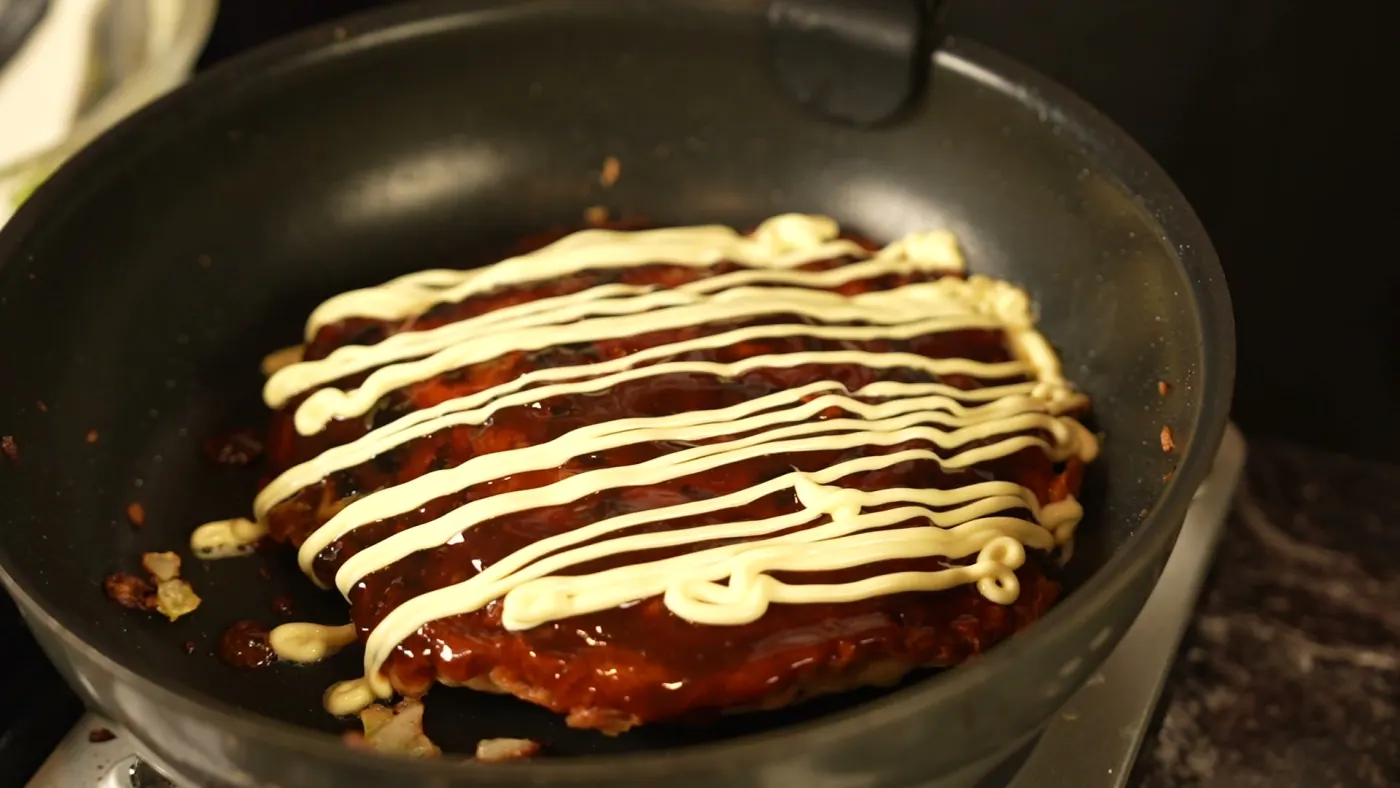
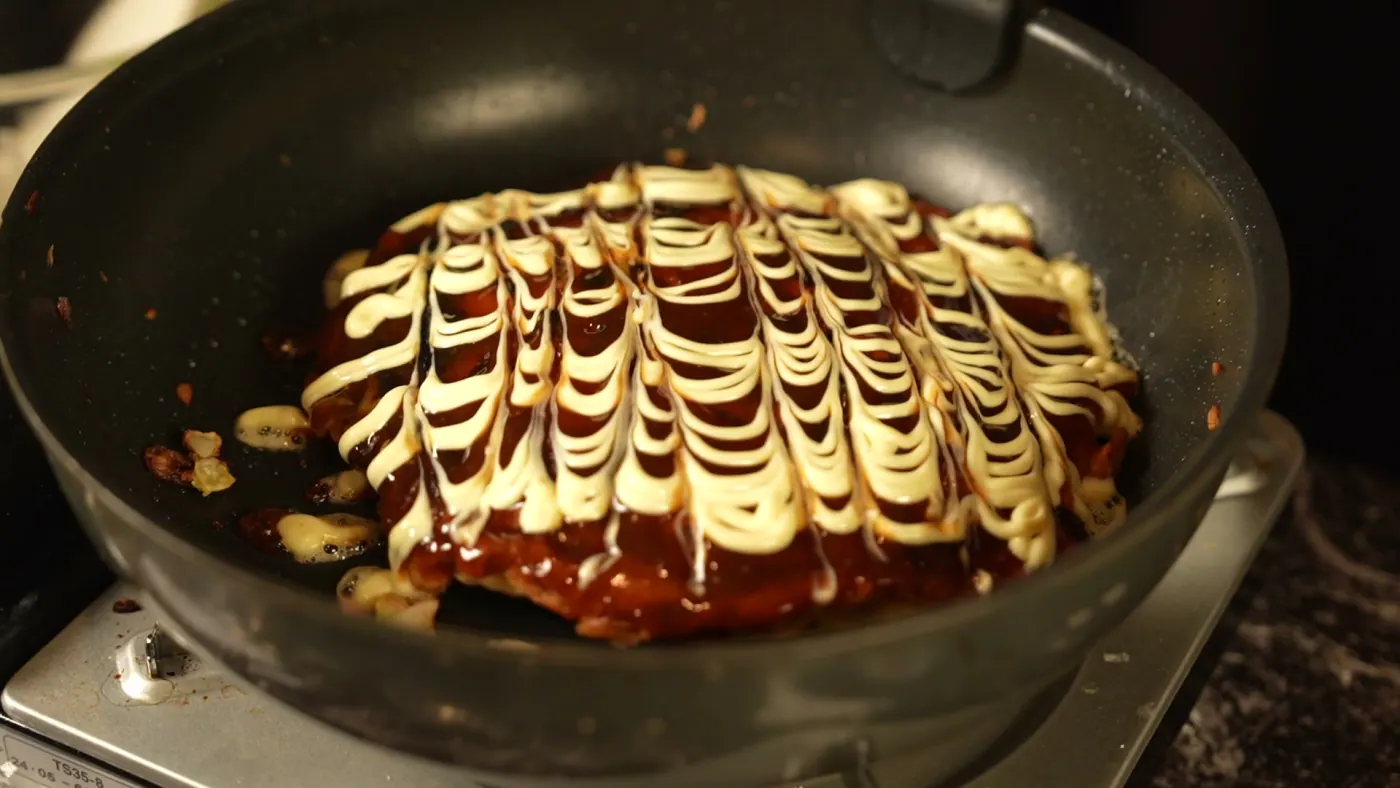
Drizzle mayonnaise in a zigzag from one edge to the other, then drag chopsticks across it to make a pattern. That's the Japanese way.
Add the toppings
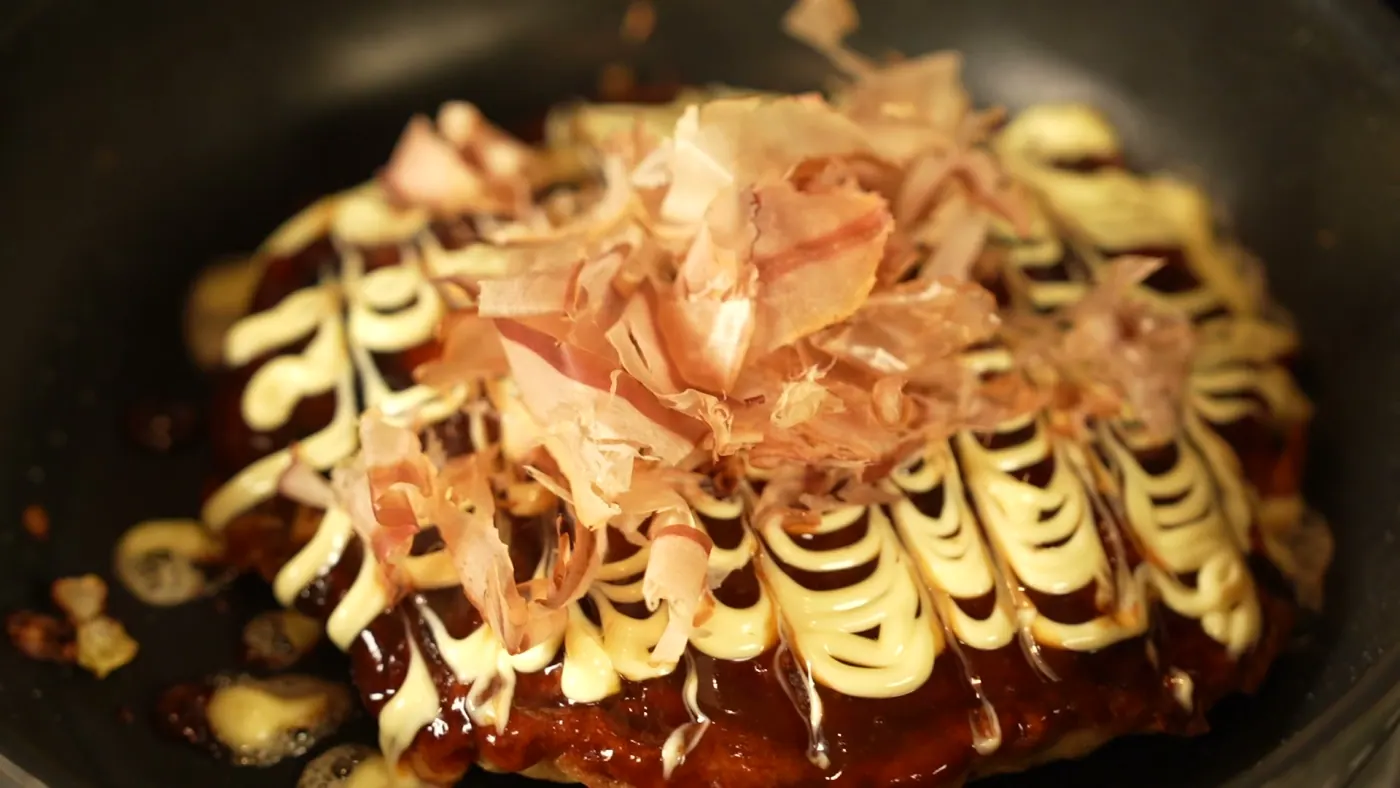
Top with bonito flakes, aonori and pickled ginger.
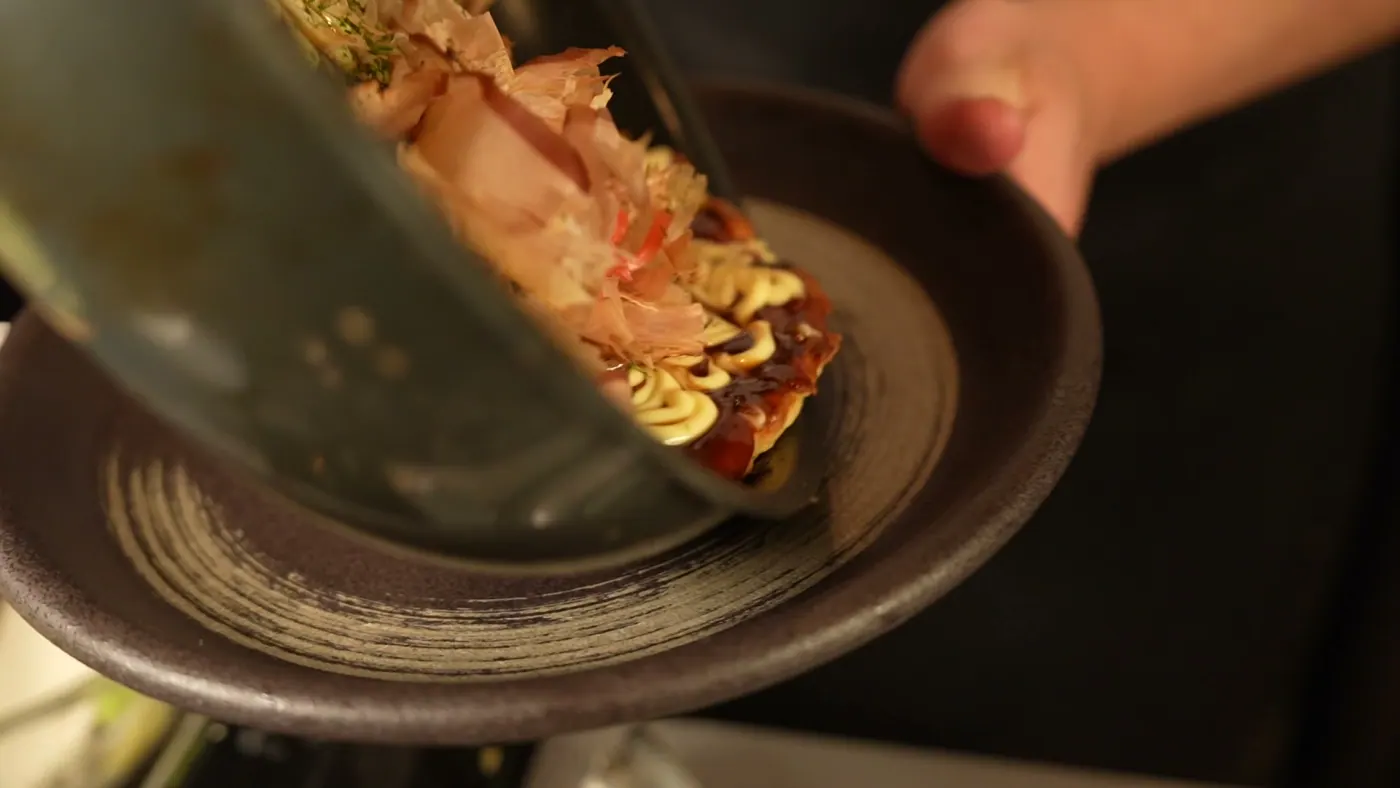
Slide it onto a plate
Slowly slide the okonomiyaki from the frying pan onto a plate. The bonito flakes look like they're dancing.
For the second okonomiyaki, repeat steps 7-15 with the rest of the pork, cabbage and batter, another egg and a pinch of salt.
Tips and Key Points
Add the flour in stages
Mix half the flour with the water first, then add the rest in about 3 parts. That's all it takes to make a batter with no lumps.
Cut the cabbage into 1cm pieces
About 1cm is the size that tastes best: you can really taste the cabbage, and it still blends with the batter. Chop the hard core finely.
Don't overmix
Mix the cabbage and batter gently, lifting from the bottom. Overmixing draws water out of the cabbage and makes the okonomiyaki soggy.
No lid, no pressing
Leave the lid off and don't press down with the spatula. That keeps the okonomiyaki fluffy.
Troubleshooting
Frequently Asked Questions
How do I keep the batter from getting lumpy?
Mix half the flour with the water first, then add the rest little by little, in about 3 parts.
Do I need grated yam?
No. Some recipes add it, but it makes the okonomiyaki a little heavy. This recipe leaves it out for a lighter okonomiyaki.
Which pork should I use?
Thin slices with plenty of fat, such as pork belly or pork loin. The length doesn't matter much.
Why is my okonomiyaki soggy?
The cabbage was probably mixed too much. Mix the cabbage and batter gently, lifting from the bottom, so the cabbage doesn't release its water.
Should I cover the pan?
No. Don't use a lid, and don't press the okonomiyaki with the spatula. That keeps it fluffy.
I don't like charred bits. What should I do?
Cook each side for about 6 minutes instead of 8 and check the color often.
Summary
This okonomiyaki is all about the cabbage: cut it into about 1cm pieces, fold it gently into a lump-free batter with an egg, and cook it on a circle of thinly sliced pork. Leave the lid off, cook it slowly for 8 minutes on each side, and the crispy pork keeps the steam in so the cabbage turns sweet. Finish with okonomiyaki sauce, mayonnaise, bonito flakes, aonori and pickled ginger.
For another festival-stall favorite finished with the same aonori, bonito flakes and pickled ginger, try yakisoba.
主菜Main Dishお好み焼き
Okonomiyaki (Osaka-Style Japanese Savory Pancake)
Osaka-style okonomiyaki for 2, packed with cabbage and cooked on a layer of thinly sliced pork.
No ratings yet
Rate this recipe
- Prep
- 15 min
- Cook
- 40 min (about 20 minutes per okonomiyaki)
- Total
- 55 min
- Servings
- 2
- Difficulty
- Intermediate
Ingredients
Batter
Fillings
Toppings
Ingredient amounts are multiplied; cooking times and pan size may need adjusting.
Instructions
Amounts mentioned in the steps are for the original recipe (1x) — use the scaled amounts above.
Prep: Make the Batter
Mix half the flour with the water
Put 150ml of water and about 25g of the flour (half of the 50g) in a large bowl and mix well. If you add all the flour at once, lumps form easily. Mixing half the flour with the water first prevents them.
Add the rest of the flour
Add the remaining flour little by little while you mix. Adding it in about 3 parts makes lumps less likely. Mix until smooth.
Some recipes add grated yam to the batter, but it makes the okonomiyaki a little heavy. This recipe leaves it out for a light, crisp okonomiyaki.
Season the batter
Add the seasonings and mix well:
- 1 teaspoon soy sauce
- 1g dashi powder
- A pinch of salt
Don't skip the dashi powder. It adds umami to the batter. The batter is ready for now.
Prep: Cut the Cabbage and Pork
Chop the cabbage core
Take 1/4 cabbage (about 250g) and cut out the core first. The core is very hard, so chop it finely so it cooks through easily. This gives the okonomiyaki a smoother texture.
Cut the leaves into 1cm pieces
Cut the leaves lengthwise into strips about 1cm wide. Then turn them sideways and cut them about 1cm wide again, so you get a coarse chop. Cut the rest of the cabbage the same way.
After trying many sizes, about 1cm works best: you can really taste the cabbage, and it blends well with the batter. Use a very large bowl so the cabbage doesn't spill.
Cut the pork
Cut 200g of thinly sliced pork into pieces about 10-15cm long. The length isn't important, so a rough cut is fine. What matters more is the pork itself: choose thin slices with plenty of fat. Pork belly or pork loin is best.
Cook the Okonomiyaki
Arrange the pork in the pan
Lay 100g of the pork (half) in a large frying pan, one slice at a time. The circle of pork becomes the bottom of the okonomiyaki, so make it the size you want the okonomiyaki to be.
Salt the pork and cook it over low heat
Sprinkle a pinch of salt over the pork and cook it slowly over low heat. Slow cooking makes the pork crispy, and the fat that comes out of the meat cooks the okonomiyaki.
Mix the cabbage, batter and egg
While the pork cooks, put half the cabbage (enough for one okonomiyaki) in a medium bowl. Add 2 ladles of batter and 1 egg.
Mix slowly with chopsticks, lifting gently from the bottom. If you mix too much, water comes out of the cabbage and the okonomiyaki turns soggy.
Pour the mixture over the pork
Give the mixture a quick stir and pour it slowly over the pork.
Make it an even thickness so it cooks through, pushing the edges toward the center with a spatula.
Cook for 8 minutes without a lid
Cook over low heat for about 8 minutes. To keep the okonomiyaki fluffy, don't cover it with a lid and don't press it down with the spatula.
Add a little batter on top and flip
After 8 minutes, when the bottom is nicely browned, pour about half a ladle of batter over the top. It works like glue and holds the cabbage together.
Flip the okonomiyaki carefully with 2 spatulas. The pork should be crispy. Cook the other side for another 8 minutes.
Add the Sauce and Toppings
Add the sauce and mayonnaise
Spread plenty of okonomiyaki sauce over the top.
Drizzle mayonnaise in a zigzag from one edge to the other, then drag chopsticks across it to make a pattern. That's the Japanese way.
Add the toppings
Top with bonito flakes, aonori and pickled ginger.
Slide it onto a plate
Slowly slide the okonomiyaki from the frying pan onto a plate. The bonito flakes look like they're dancing.
For the second okonomiyaki, repeat steps 7-15 with the rest of the pork, cabbage and batter, another egg and a pinch of salt.
Video
Watch the video · 8:18Open on YouTube
Jump to a part of the video (14 chapters)
Video: https://youtu.be/yoRPbfmyU9I
Notes
Substitutions
- Pork: Use thin slices with plenty of fat. Pork belly or pork loin works best
- Okonomiyaki sauce: You can make it at home with ketchup, soy sauce, Worcestershire sauce, sugar and honey. See our okonomiyaki sauce recipe
Nutrition estimated, per serving
- Calories
- 554 kcal
- Carbohydrates
- 26.1 g
- Protein
- 24.6 g
- Fat
- 41.1 g
- Saturated fat
- 16.3 g
- Fiber
- 2.9 g
- Sugar
- 4.4 g
- Sodium
- 1,079 mg
Estimated by us from the Standard Tables of Food Composition in Japan (MEXT, 2020). Optional ingredients and garnishes are not counted; soup and sauce are counted as fully eaten. Actual values depend on your brands and portion sizes. How we calculate this
Course: Main Dish · Cuisine: Japanese · Keyword: Okonomiyaki
Recipe from Japanese Cooking Ichie — https://japanesecookingichie.com/recipes/okonomiyaki/
Make it a meal
Add a side dish to round out the table.
Ratings & comments
No ratings yet — be the first to rate this recipe.
Comments