- Prep
- 20 min
- Cook
- 30 min
- Total
- 50 min
- Servings
- 3-4 people
- Difficulty
- Beginner
What is Japanese Curry Rice?
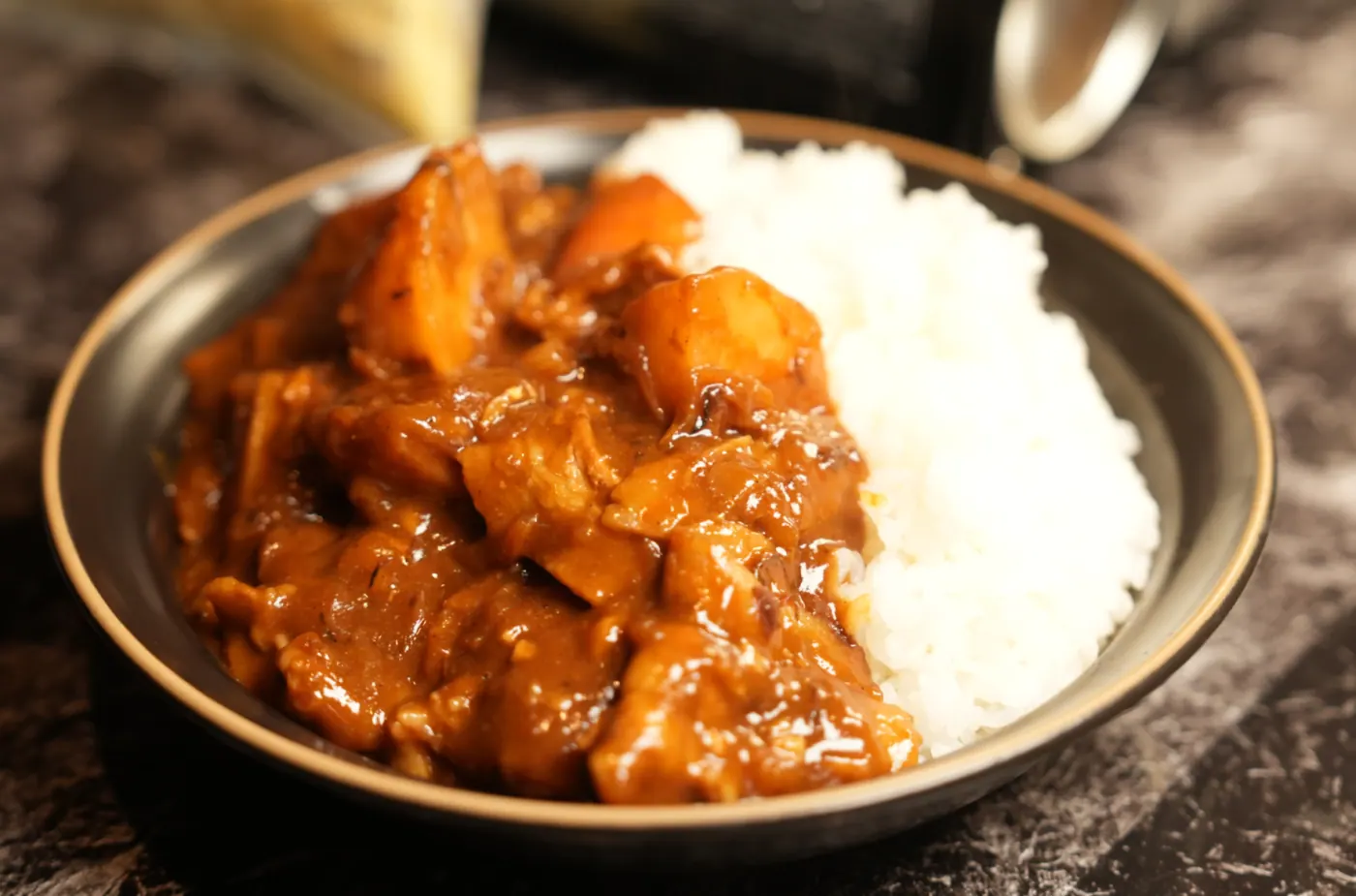
Japanese curry is often praised as one of the most delicious curries in the world. Unlike Indian or Thai curries, Japanese curry is characterized by its thick, rich roux and deep, savory flavor infused with vegetables and meat.
The key feature of this recipe is the technique of slowly sautéing onions to create the Maillard reaction. By gently heating the onions, their umami and sweetness become concentrated, resulting in a deeply flavorful curry. Additionally, adding grated garlic at the end enhances the appetizing aroma.
Why You'll Love This Recipe
- World-class taste - Authentic curry packed with deep umami and rich flavors
- Made with accessible ingredients - Everything you need is available at your local grocery store
- Easy with curry roux - Foolproof results using Golden Curry roux
- Versatile - Delicious topped with tonkatsu (breaded pork cutlet) or cheese
- Perfect for meal prep - Even better the next day as the flavors meld
Key Points of This Recipe
- Cut carrots with a rolling technique for better cooking and flavor absorption
- Why you should cut onions perpendicular to the grain
- Pre-heat onions in the microwave to save time
- Slowly sauté onions to develop the Maillard reaction
- Add grated garlic at the end to enhance the aroma
Equipment Needed
- Large pot or frying pan (about 28-30 cm diameter)
- Knife and cutting board
- Microwave-safe plate
- Ladle
- Wooden spatula or cooking chopsticks
- Vegetable peeler
- Grater (for garlic)
Japanese Curry Rice with Golden Curry Blocks Ingredients (3-4 servings)
16 ingredients · 3-4 people
Carrot, potatoes, onion, pork belly, garlic, ginger, ketchup, Worcestershire sauce, salt, cooking sake, water, curry roux, butter, sugar, oil, cooked rice.
From scratch: how to cook Japanese rice
Full amounts in the recipe cardIngredient Substitutions
- Pork belly: Fatty thinly sliced meat is recommended, but 1cm thick meat also works. You can substitute with beef or chicken
- Cooking sake: Can be omitted, but adding it increases umami and richness
- Potatoes: Yellow potatoes like Yukon Gold that don't fall apart easily are recommended
- Carrot: If not using carrots, we recommend adding 1 tablespoon of sugar to compensate for sweetness
- Curry roux: Golden Curry is most popular, but other brands work as well
Cooking Video
You can watch the detailed cooking process in this video. We clearly demonstrate techniques like slowly sautéing the onions and the rolling cut for carrots, showing you the actual cooking process.

How to Make Japanese Curry Rice with Golden Curry Blocks
Preparation: Prepare the curry roux and vegetables
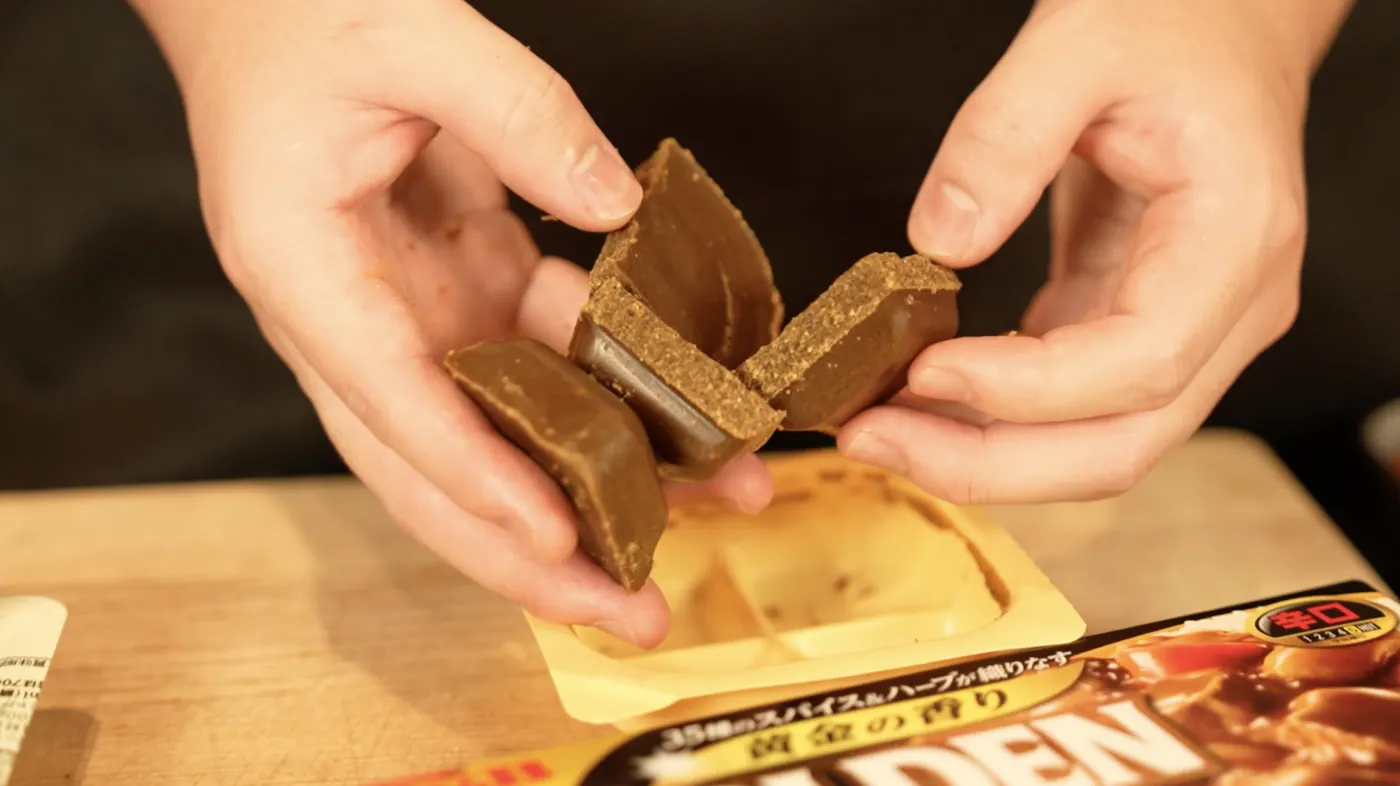
Break up the curry roux into small pieces
One box of curry roux contains 8 servings, but we'll use 4 blocks (for 3-4 servings).
Break it into small pieces now to make it easier to dissolve later.
Cut the carrot with a rolling technique
Hold the knife at an angle and rotate the carrot about 30 degrees with each cut.
The key is to maintain a consistent angle and direction with the knife.
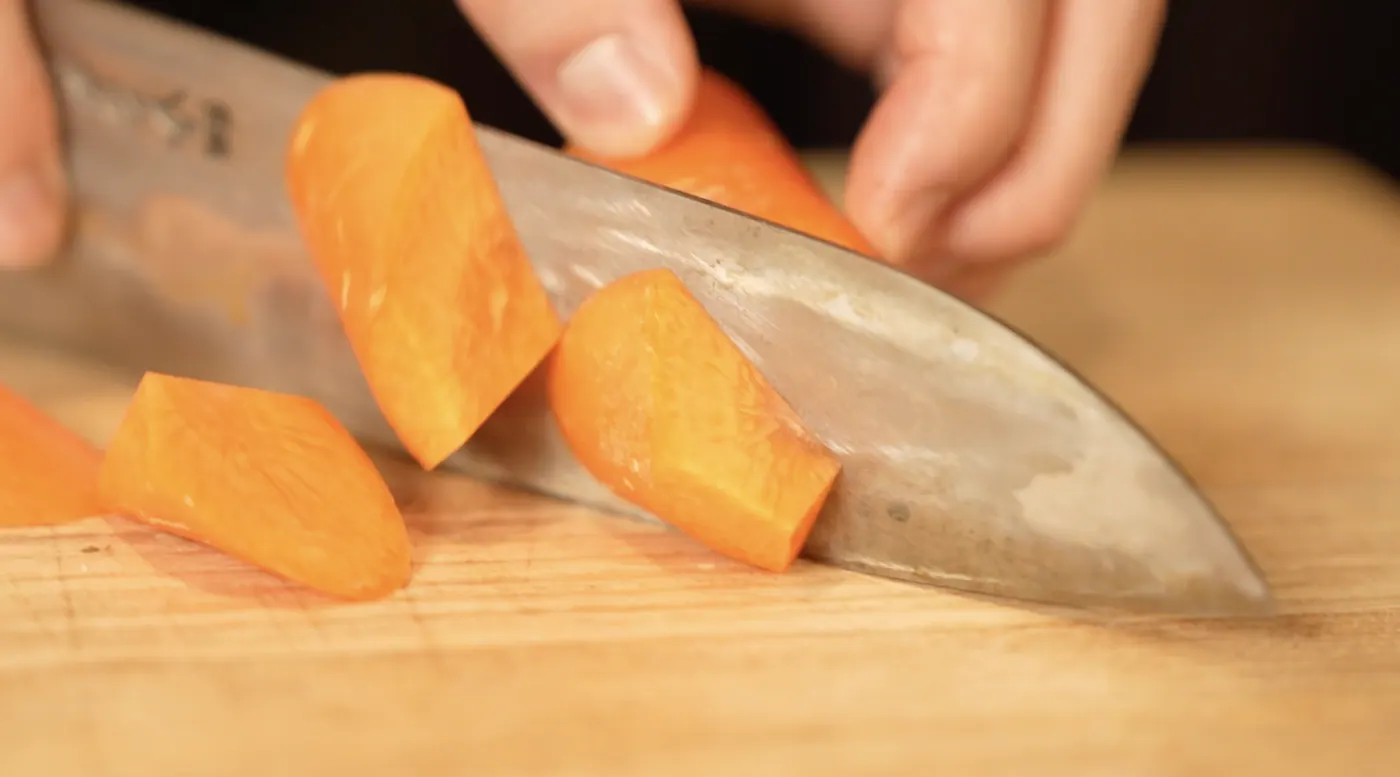
Why use the rolling cut technique?
This cutting method:
- Increases surface area, allowing the carrot to cook faster
- Helps seasonings penetrate more easily
- Allows the carrot's sweetness to infuse into the curry more readily
If not using carrots, we recommend adding 1 tablespoon of sugar to compensate for the sweetness.
Thinly slice the onion
Cut off both ends of the onion. This makes it easier to peel and removes the core.
When you cut the onion in half, you'll see fibers running vertically on the cut surface. Slice thinly perpendicular to these fibers.
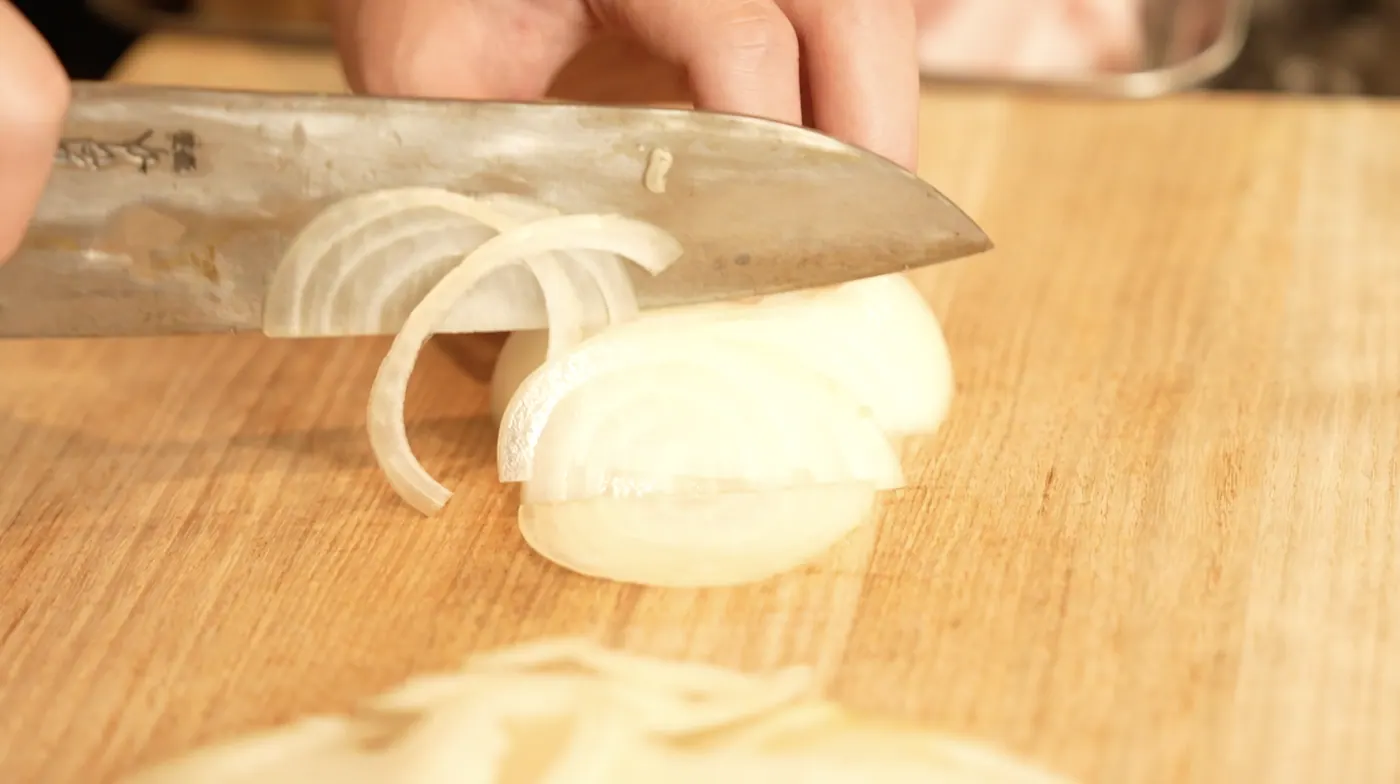
Why cut perpendicular to the grain?
Cutting along the fibers leaves a tough texture, but cutting perpendicular to the fibers:
- Creates a softer texture
- Cooks more evenly
- Brings out the sweetness more easily
This technique can be applied to other dishes as well, so it's worth remembering.
Once you've finished cutting, separate the onion slices. This allows them to cook evenly.
Cut potatoes into bite-sized pieces
Cut the peeled potatoes into bite-sized pieces.
For medium-sized potatoes, cut them in half, then cut each half into quarters to make bite-sized pieces.
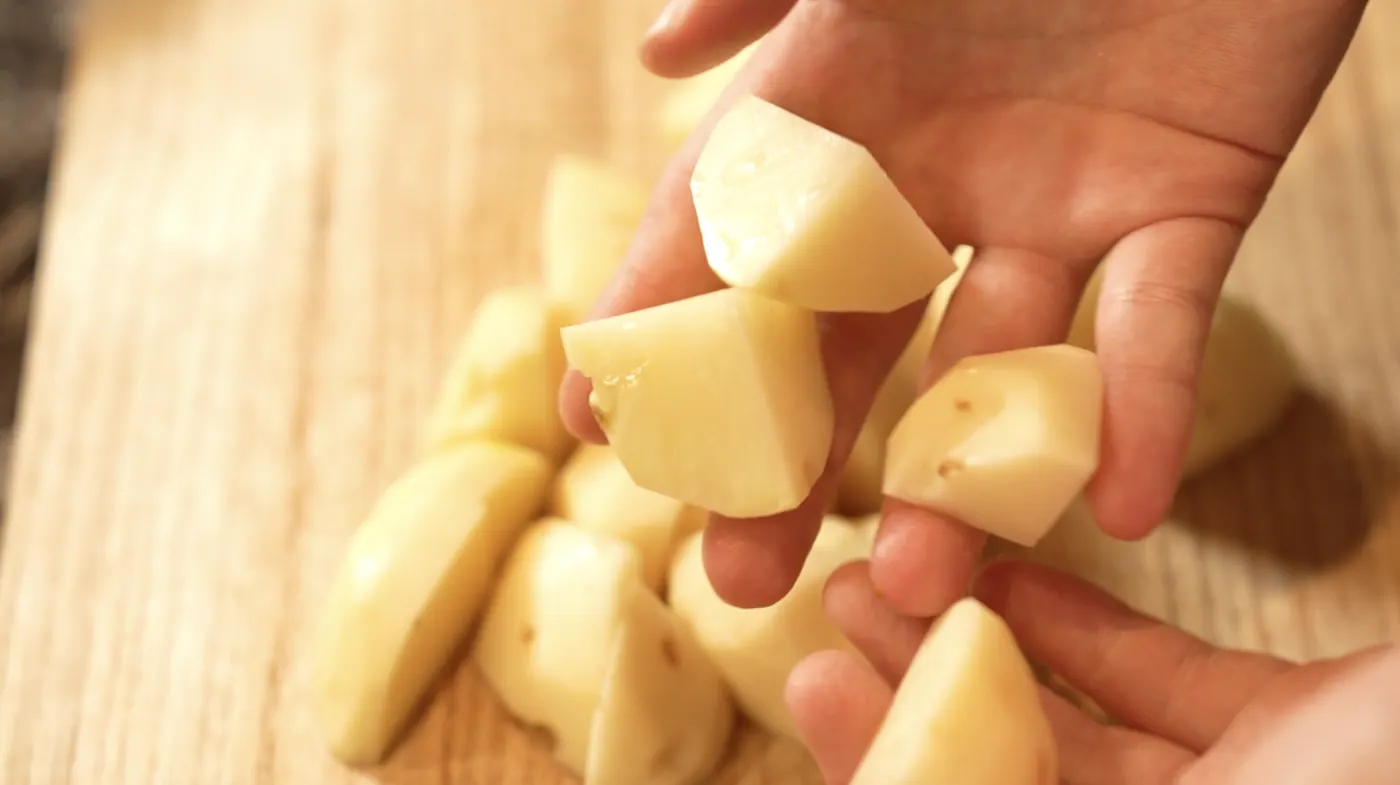
About potato varieties
Waxy potatoes like Yukon Gold that don't fall apart easily when simmered are recommended.
After cutting, soak them in a bowl of water for at least 15 minutes.
Why soak in water?
Removing excess starch prevents the potatoes from falling apart during simmering.
Mince the garlic and ginger
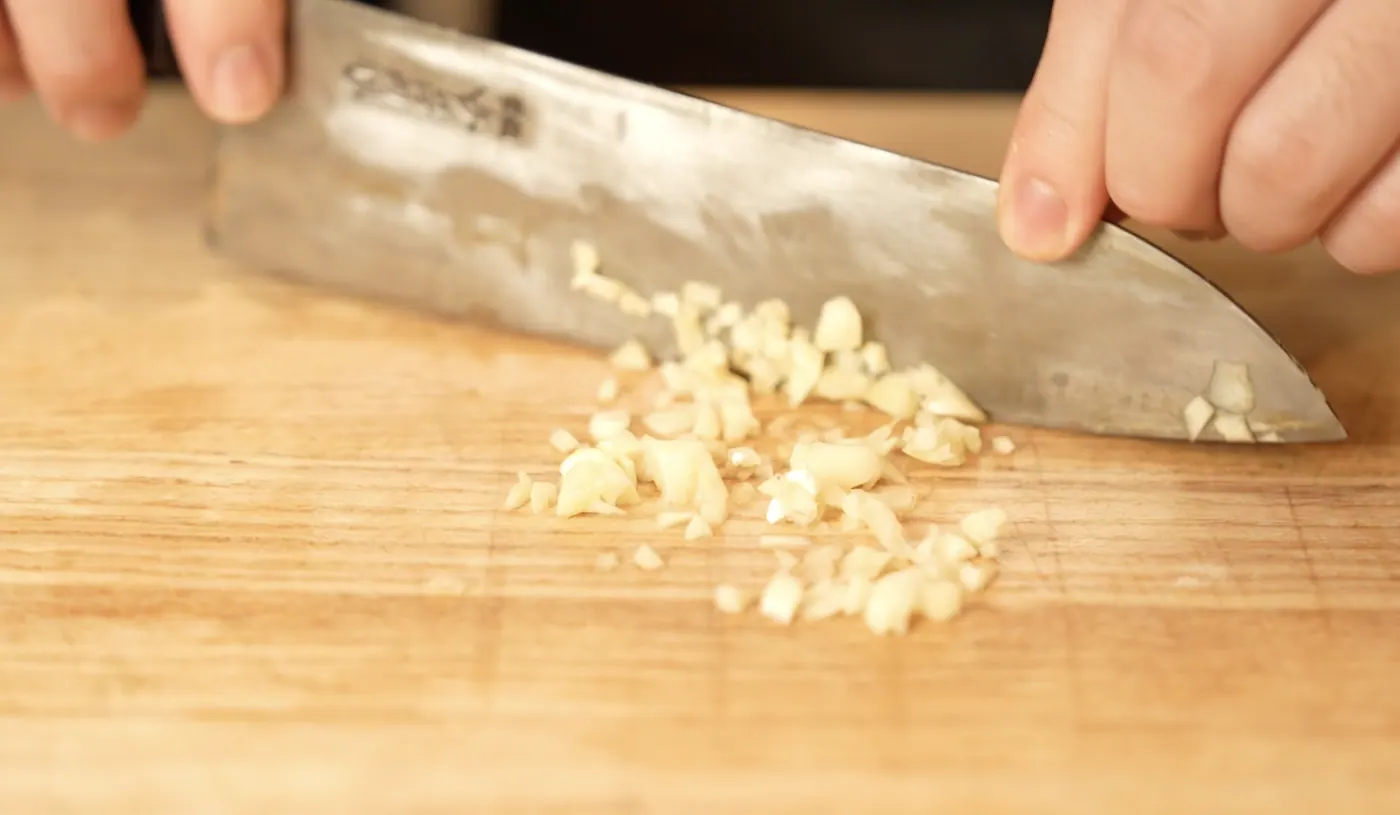
Of the 3 garlic cloves, finely mince 2 cloves.
Crushing the garlic before peeling makes it easier to peel.
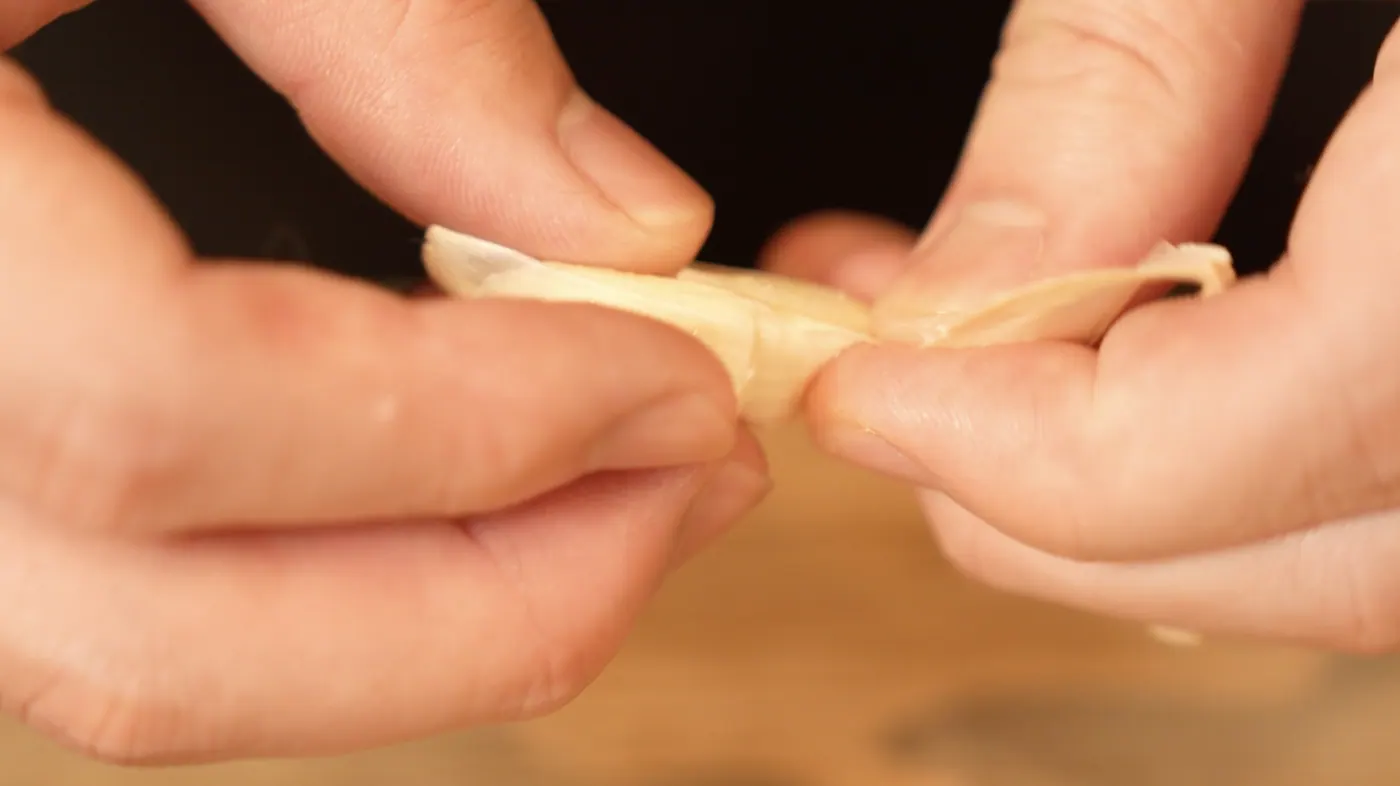
The 2 minced cloves will be used to infuse the ingredients with flavor. The remaining clove will be grated at the end to enhance the overall aroma, so peel it and set aside.
Mince the ginger the same way. Since garlic and ginger are used together, you can keep them in the same bowl.
Cut the pork belly
If you bought a block of meat, slice it to about 1cm thick or less.
For thinly sliced meat, cut into pieces about 10cm long for easier eating. For meat that's about 1cm thick, cutting to half that length is recommended.
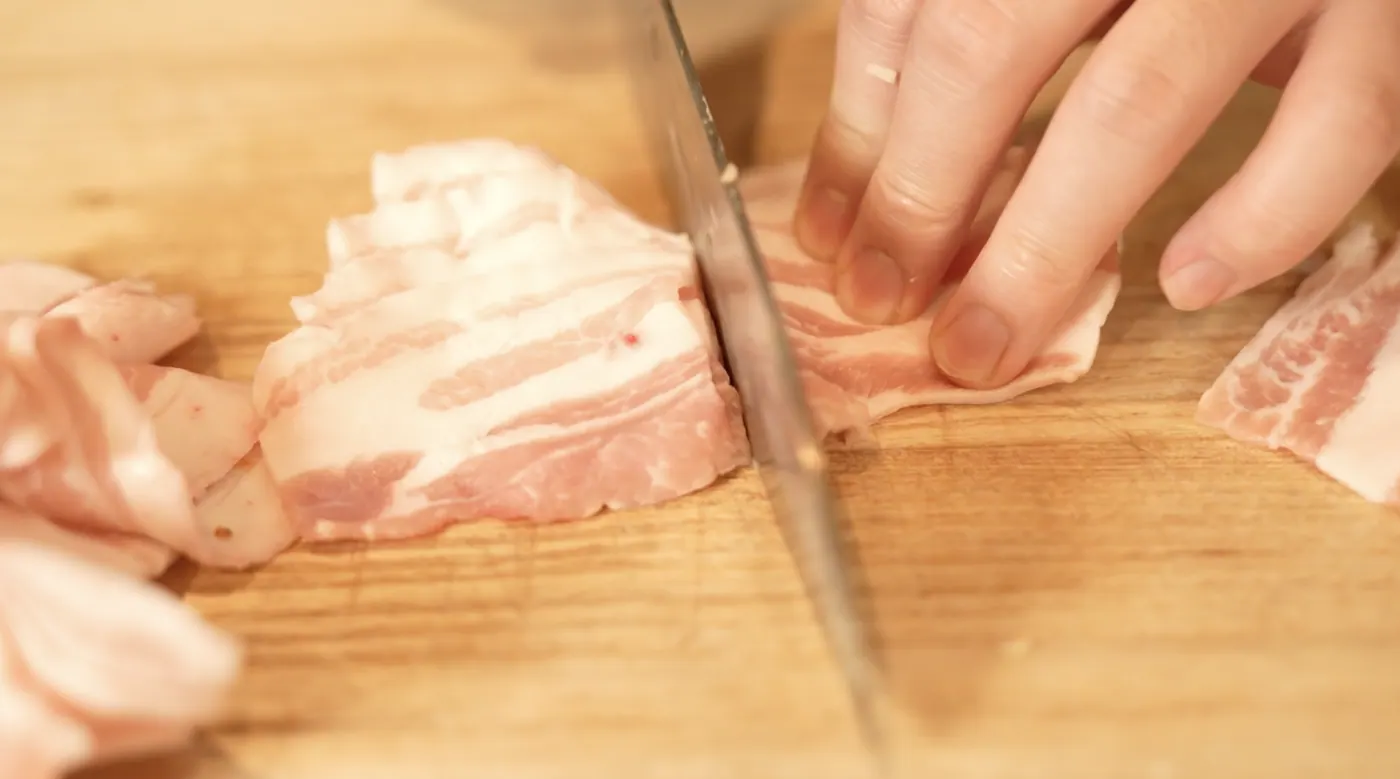
That's all the knife work done.
Cooking Steps
Pre-heat the onion in the microwave
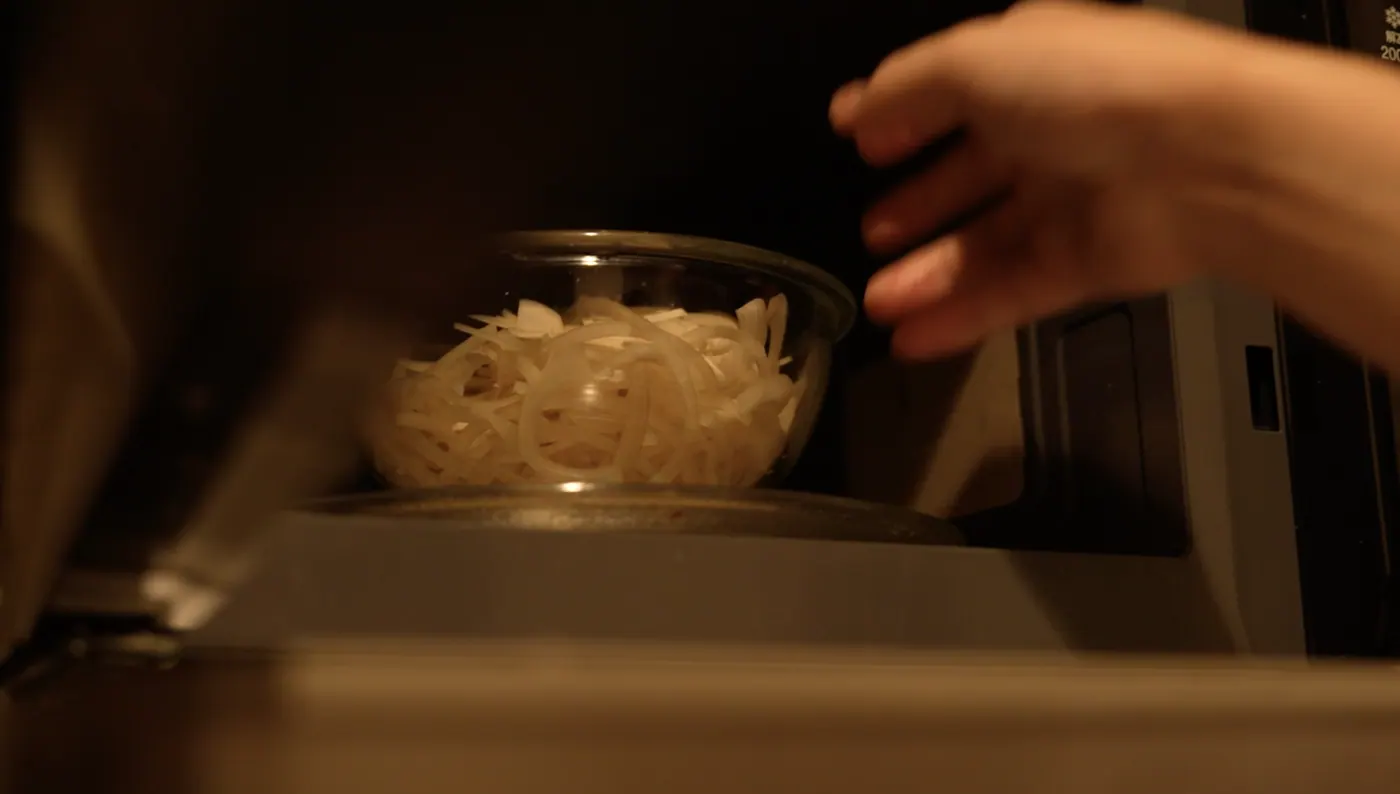
Before sautéing, heat the onion in the microwave.
Without covering, microwave at 600W for 4 minutes.
Why use the microwave?
This simple step saves about 20 minutes of cooking time!
Slowly sauté the onion (Most Important Step!)
Add 1 tablespoon of oil to the pan and heat over medium-low heat.
Once the pan is hot, add all the onion and a pinch of salt.
Spread the onion as flat as possible. The salt draws out moisture from the onion, making it easier to sauté.
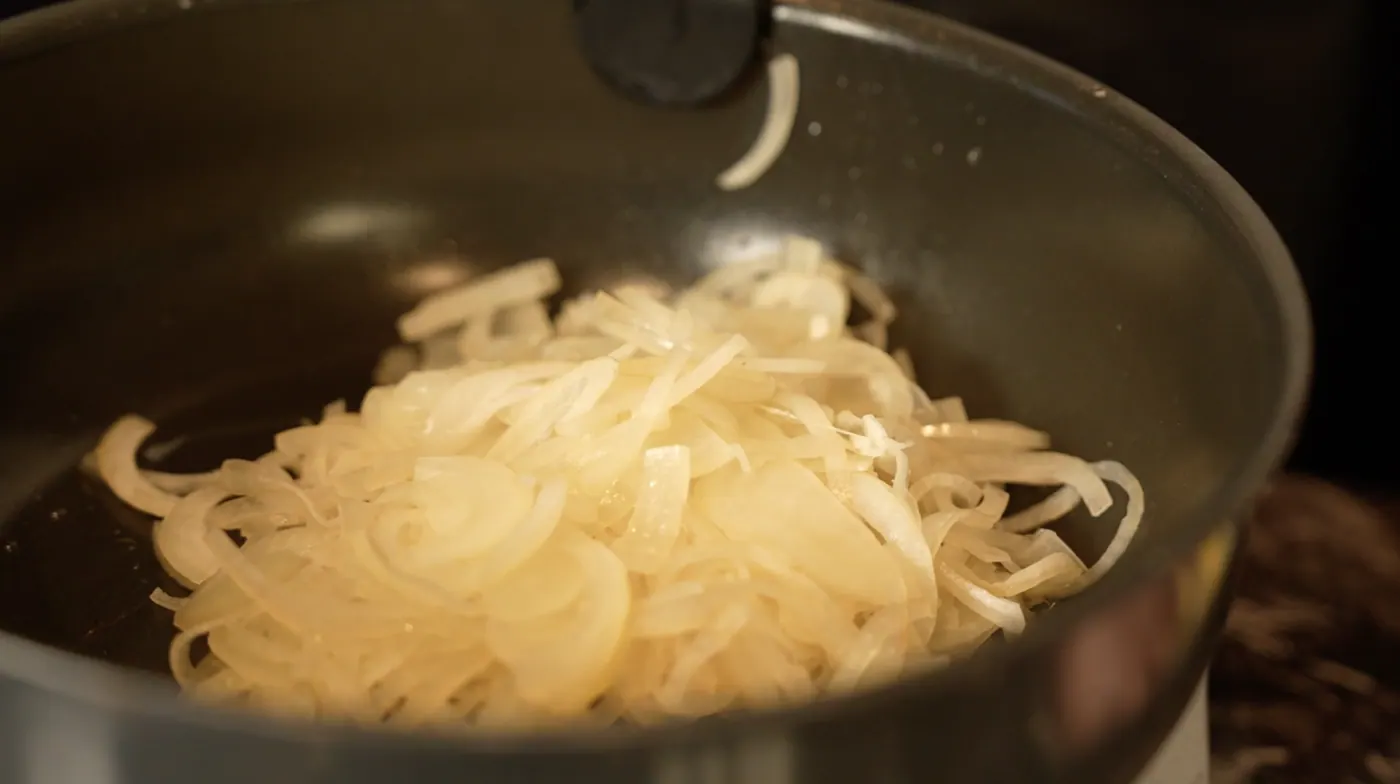
After about 1 minute, you'll start to see some browning. Stir every minute or so to ensure even browning throughout.
The secret to this curry's deliciousness lies in how you sauté the onion
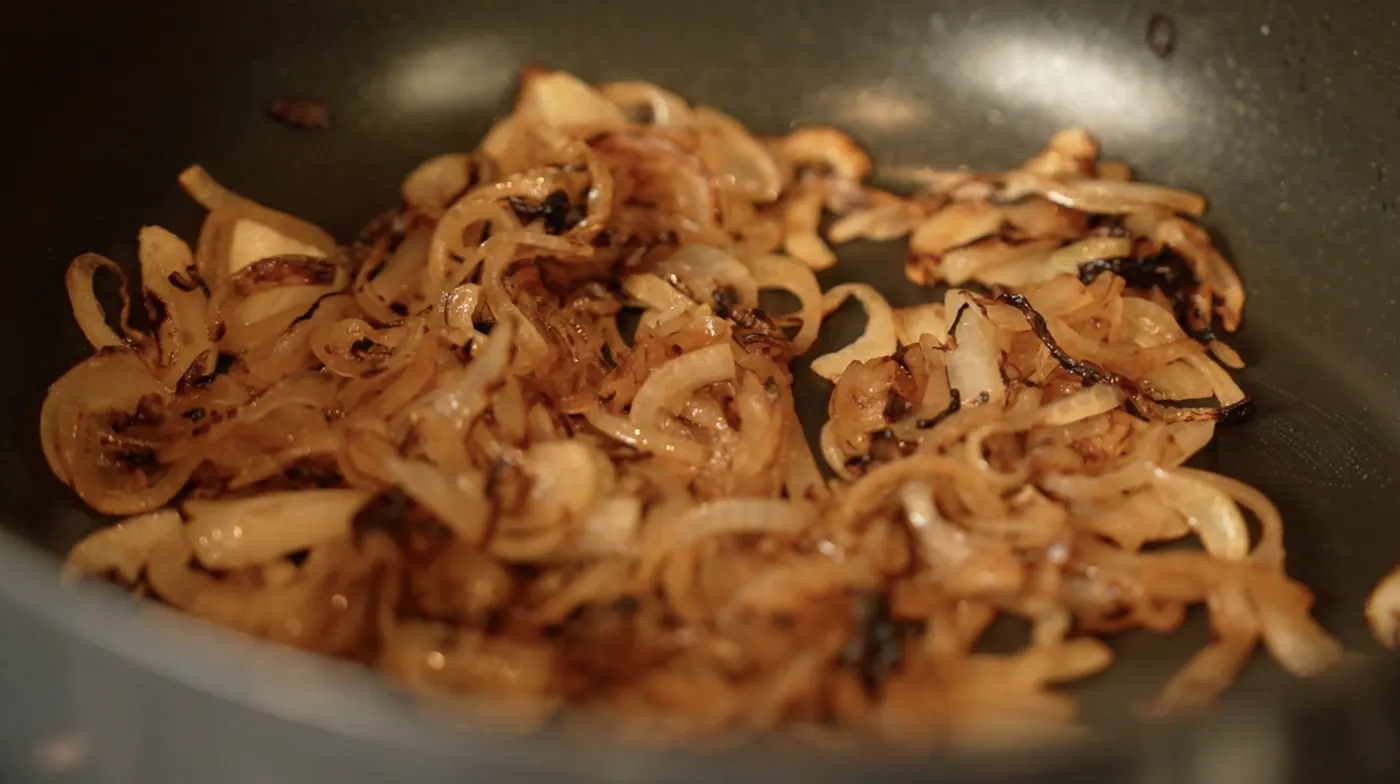
By slowly sautéing and caramelizing the onion, the Maillard reaction occurs, bringing out the onion's umami and sweetness.
This takes about 10 minutes, but it's the most critical step in this recipe, so don't skip it.
The parts that look caramelized are actually creating umami, sweetness, and savory aroma.
When you achieve this level of browning, move on to the next step.
Sauté the garlic and ginger
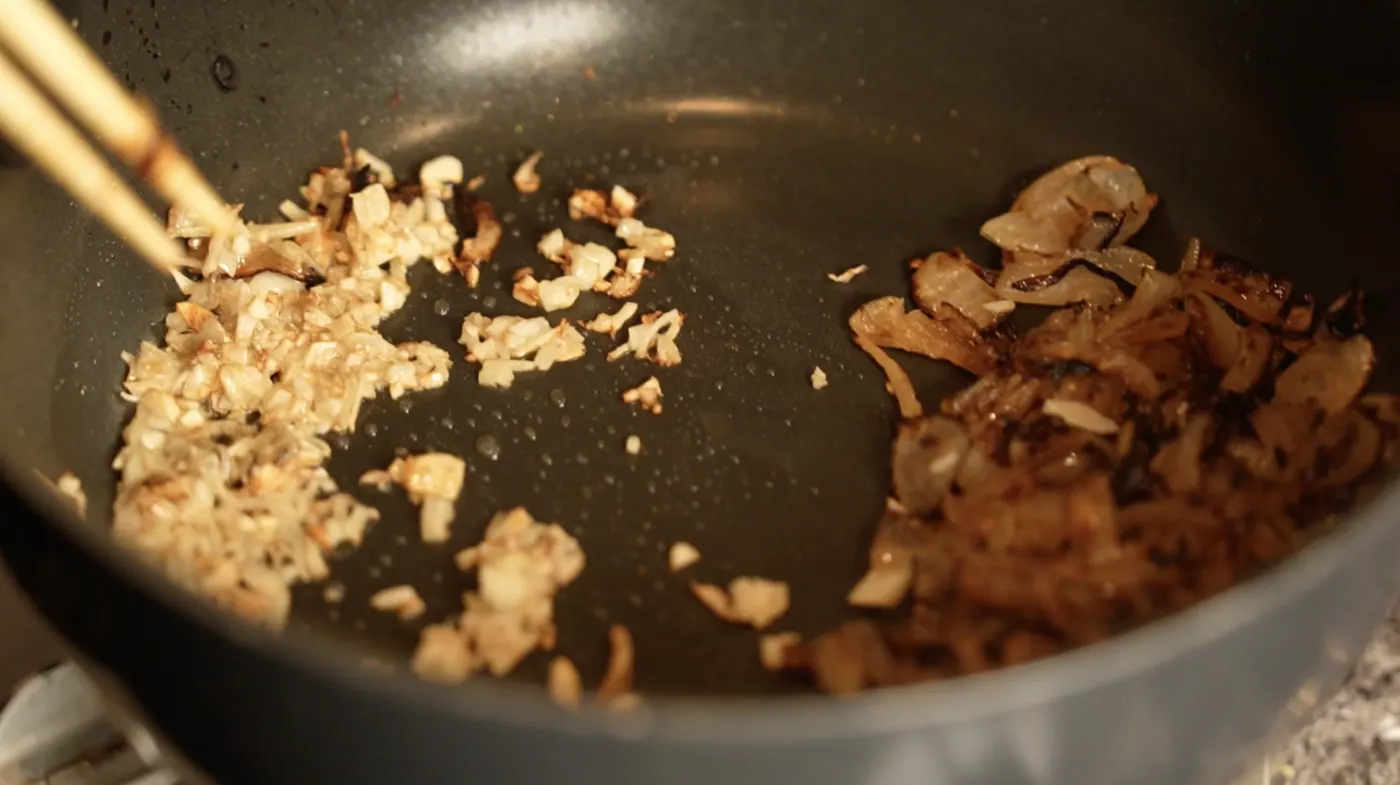
Push the onion to one side of the pan, add the minced garlic and ginger to the empty space, and add 1/2 tablespoon more oil.
Sauté for 1-2 minutes to infuse the oil with the garlic and ginger aroma.
When they're lightly browned, mix them with the onion to spread the aroma throughout.
Add the seasonings
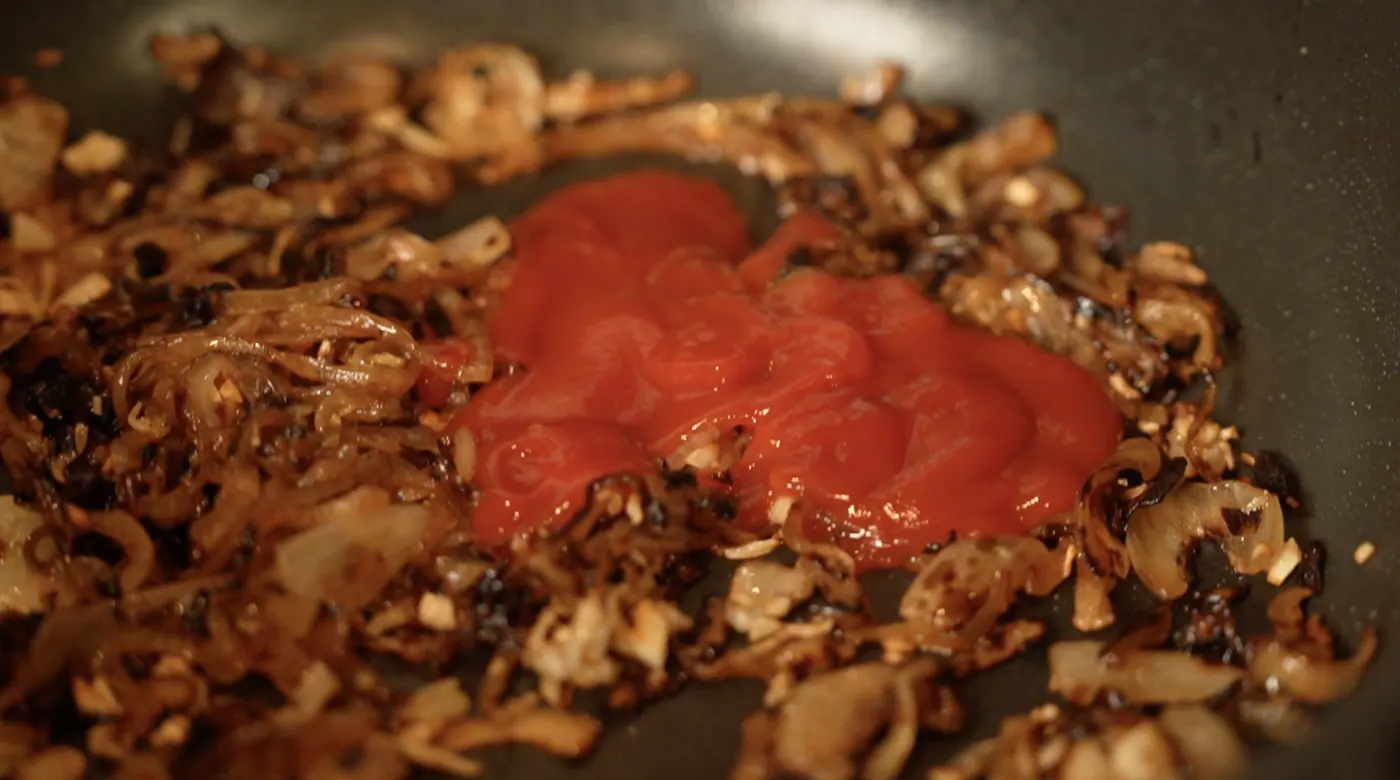
Add 2 tablespoons of ketchup. The ketchup adds fruity umami and aroma.
After sautéing briefly to mellow the acidity, add 1/2 tablespoon of Worcestershire sauce to enhance the depth.
Mix everything well to blend the flavors.
Add the pork
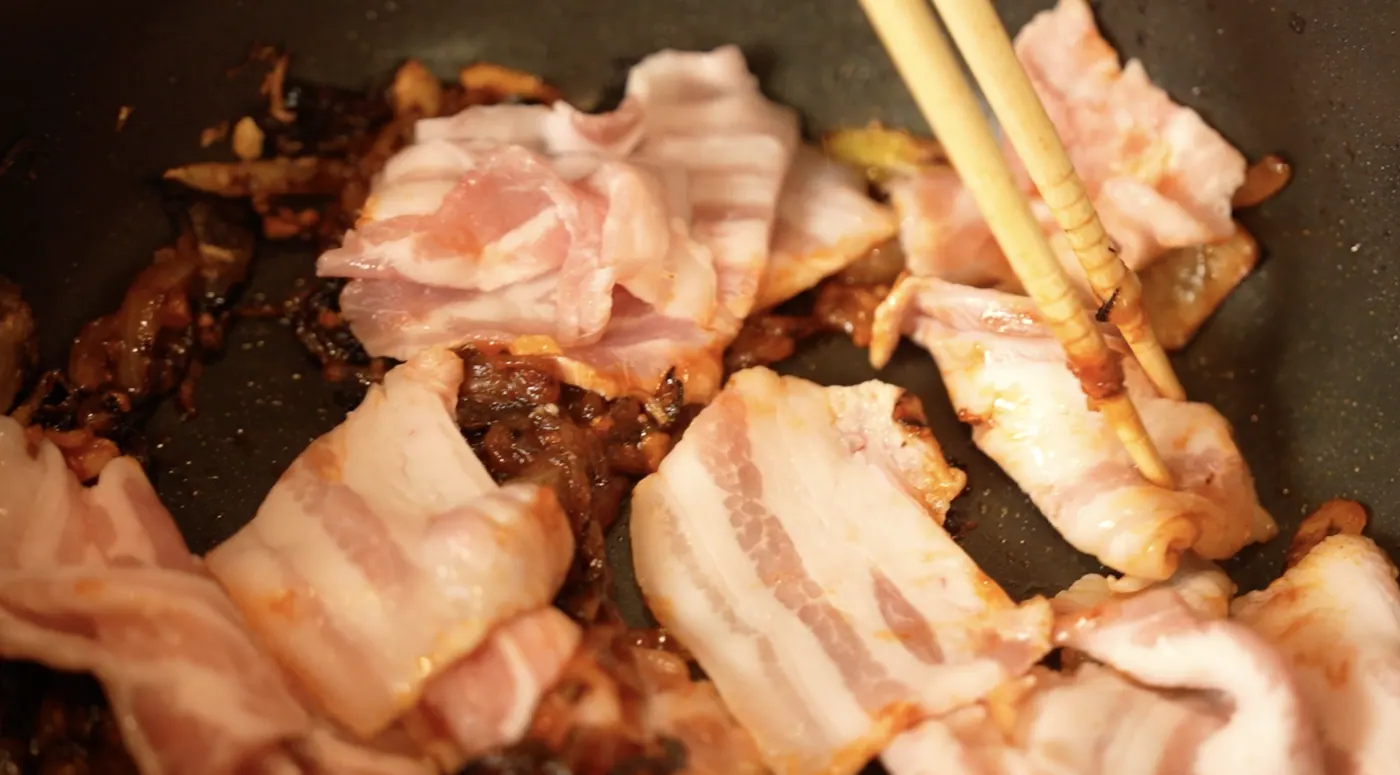
Add all the pork, sprinkle about 3 pinches of salt, and mix everything to distribute the flavors.
If the pork slices are sticking together, separate them one by one while mixing.
Add the carrot and potatoes
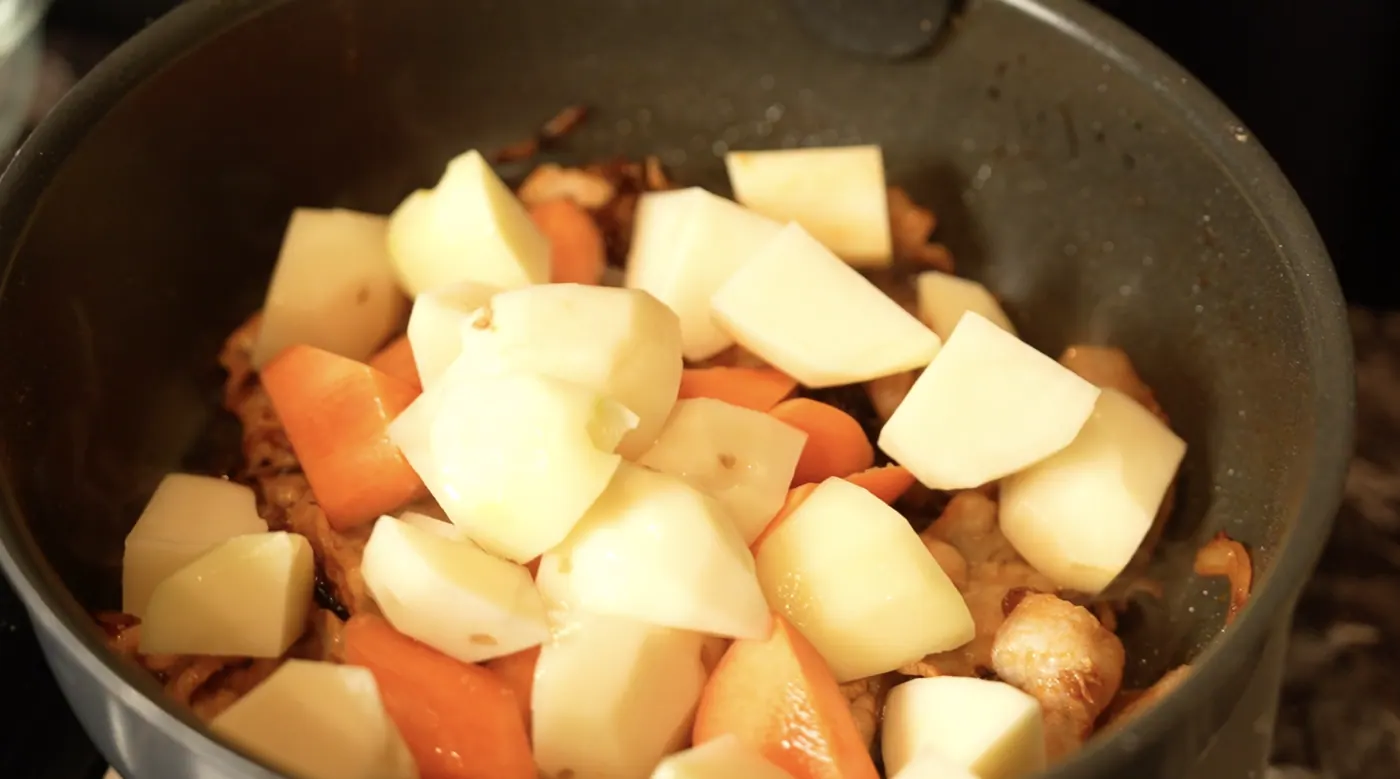
Once everything is well mixed, add the carrot and potatoes.
Sauté while mixing for about 1 minute.
Add cooking sake (Optional)
This step can be skipped, but if you want to make an even more delicious curry, add 120ml of cooking sake and sauté until the alcohol evaporates.
Why add cooking sake?
Cooking sake adds umami and richness, deepening the curry's flavor even more.
When the alcohol smell disappears, proceed to the next step.
Add water and simmer
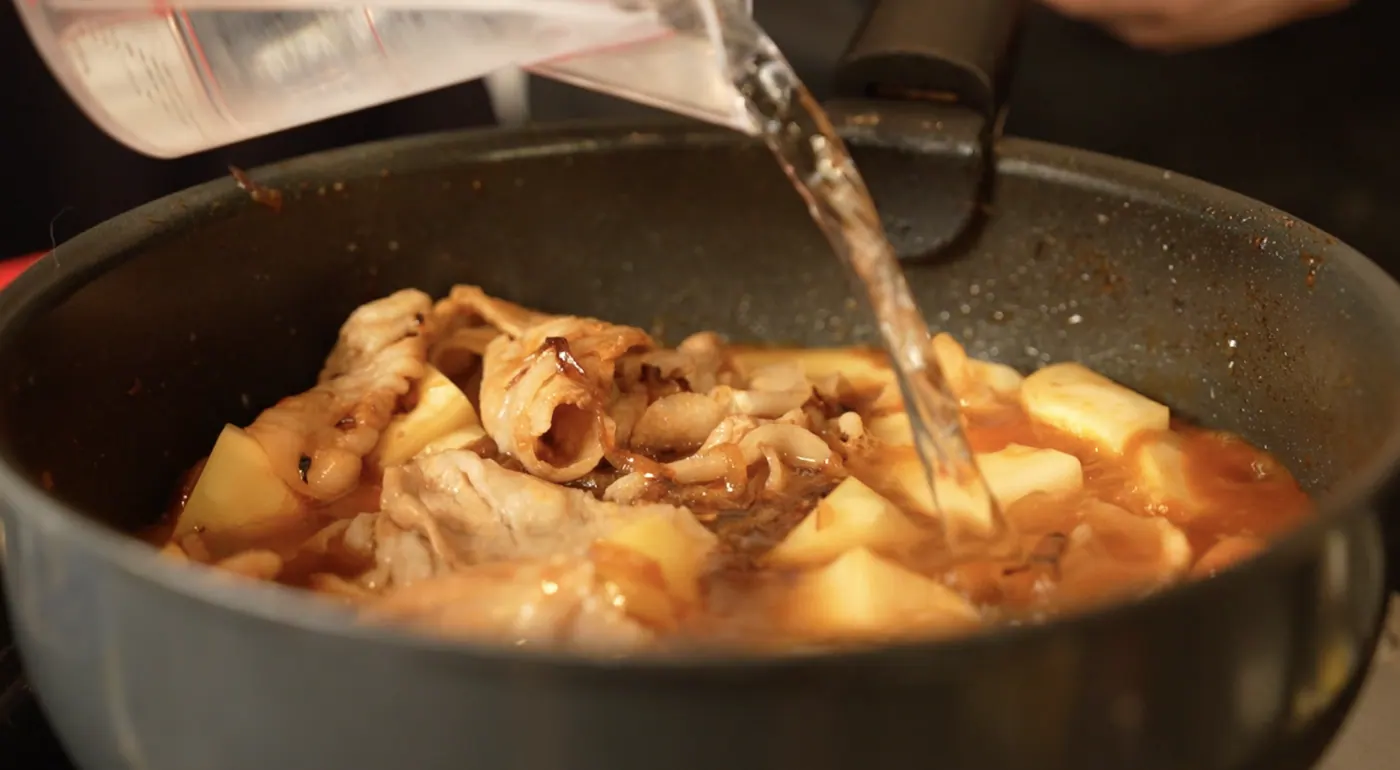
Add 580ml of water and simmer. If not using cooking sake, add 700ml of water.
After adding water, cover and simmer over medium heat for about 5 minutes.
Check if the ingredients are cooked through
After 5 minutes, remove the lid and check if the ingredients are tender.
Potatoes take longer to cook, so pierce them with chopsticks to check for tenderness.
If the chopsticks go through smoothly to the center, they're done.
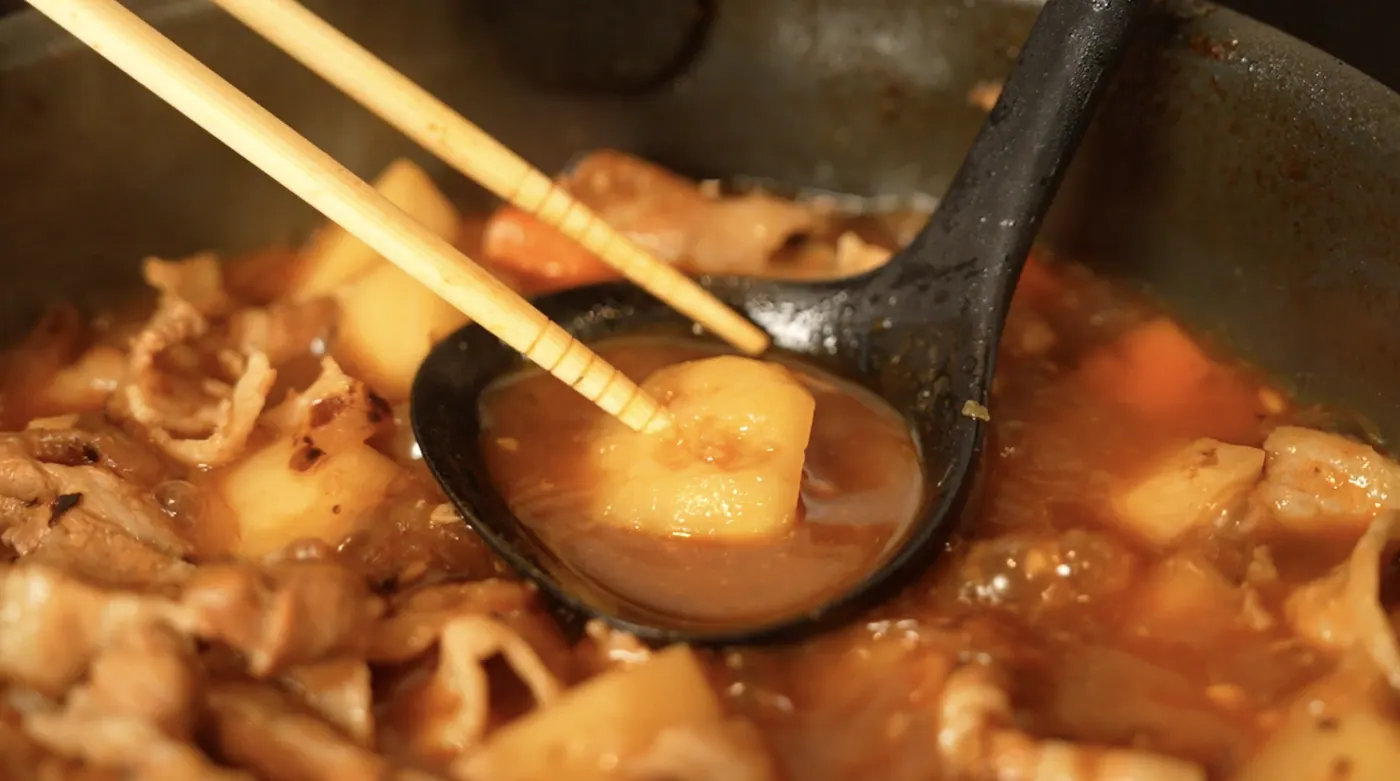
Dissolve the curry roux
Dissolve the curry roux blocks.
Using a ladle to mix the broth and roux together makes it easier to dissolve.
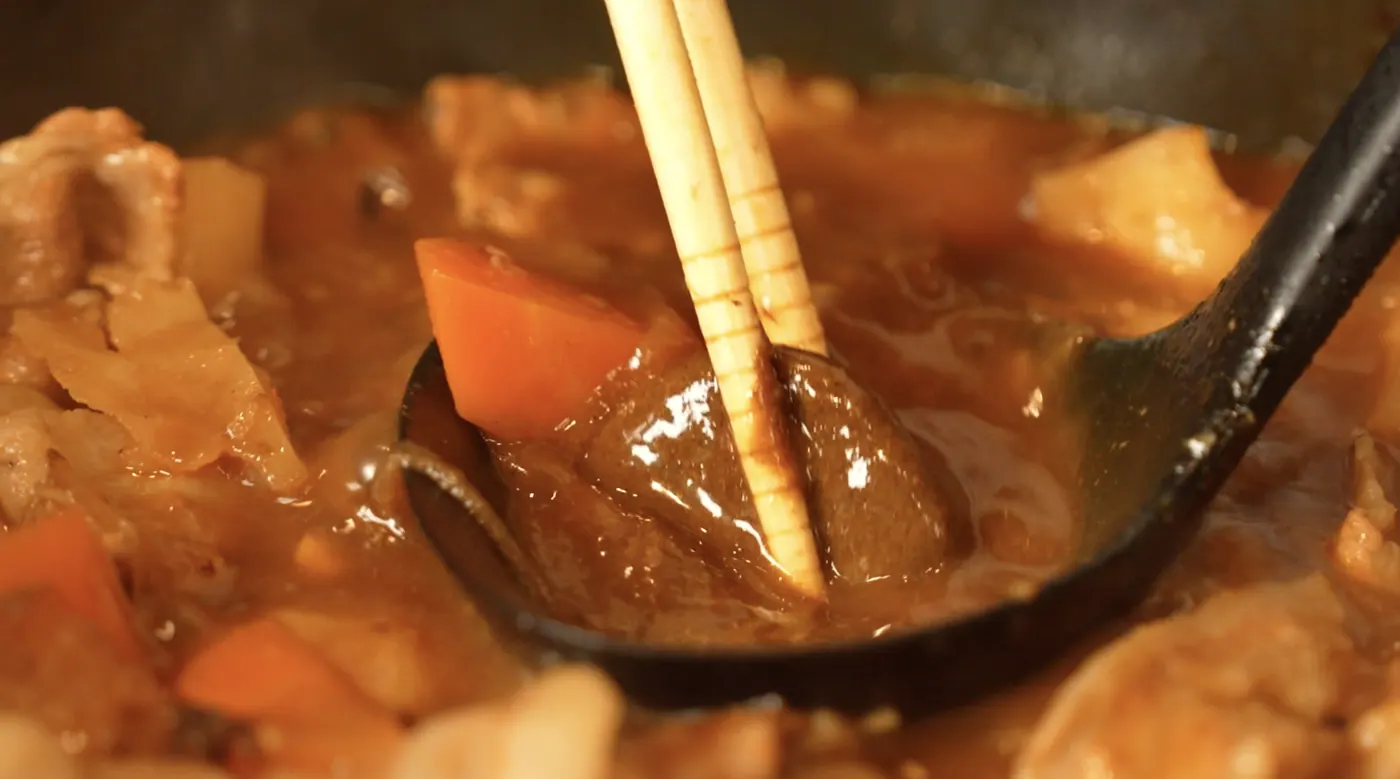
Dissolve thoroughly so no lumps remain.
This recipe serves 3-4 people, so dissolve 4 blocks of curry roux.
If the curry roux won't dissolve easily
Turn off the heat temporarily. When it's boiling, the flour in the roux forms a film, making it harder to dissolve.
Add the finishing touches
Once the roux is completely dissolved, add the finishing ingredients.
Add 10g of butter, 1/2 teaspoon of sugar, and grate 1 clove of garlic into the pot.
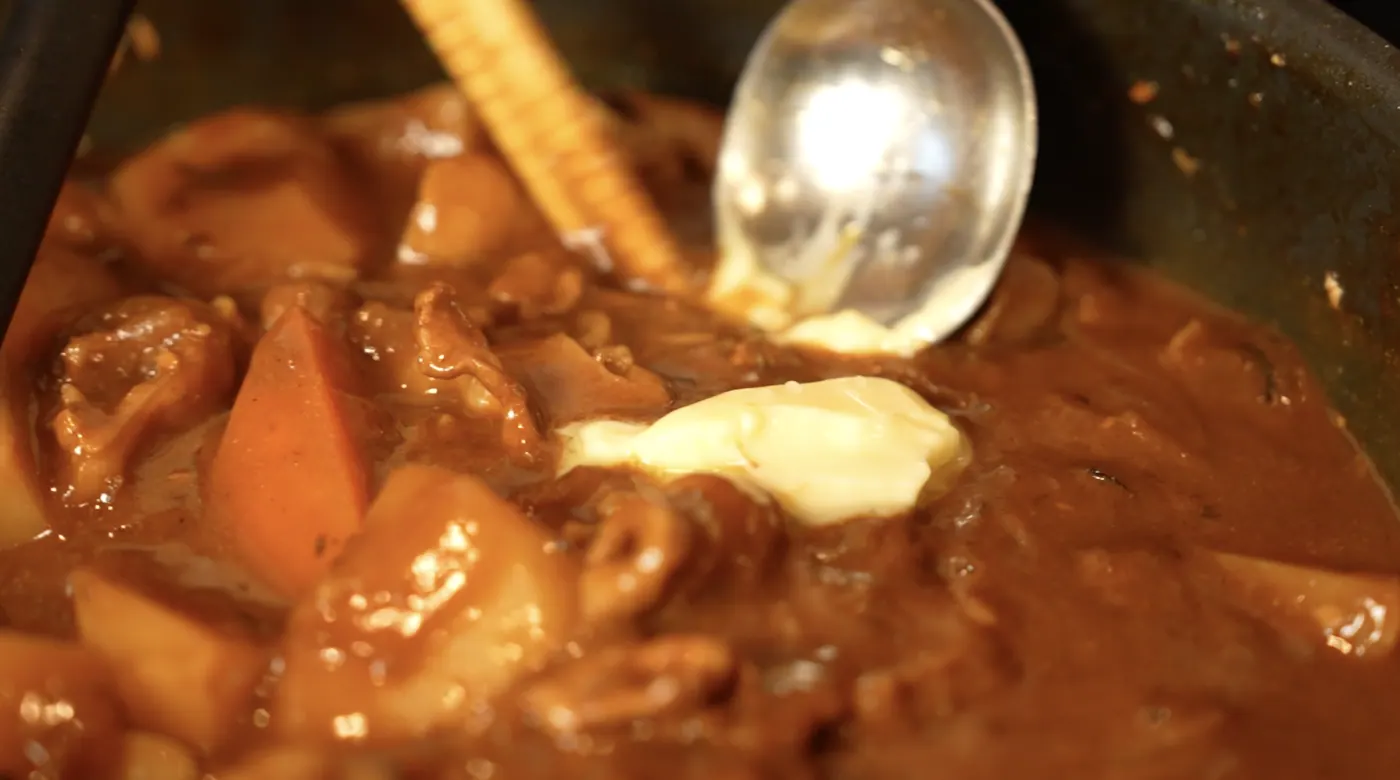
Mix everything while heating on low, cooking the garlic while blending the flavors.
Why add grated garlic at the end?
Adding freshly grated garlic at the end enhances the curry's aroma, creating a more appetizing finish.
After heating for 1-2 minutes, turn off the heat.
It's complete!
Serving
Serve rice on a plate
Serve one portion of rice on a plate.
How to cook delicious rice
See how to cook Japanese rice in a pot — no rice cooker needed.
Pour the curry over the rice
Pour the curry over the rice.
In Japanese style, it's standard to plate the rice and curry separately to create a beautiful presentation.
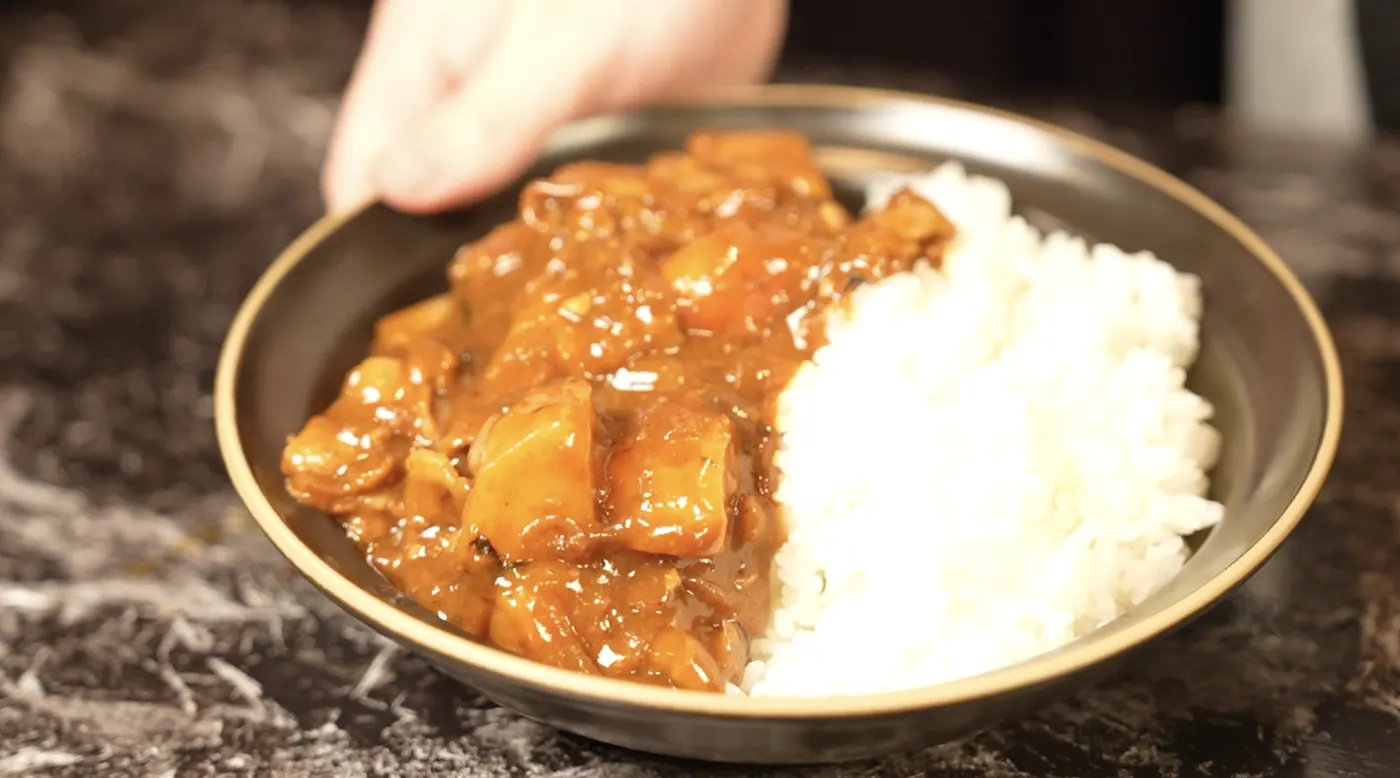
Beautiful to look at and truly world-class cuisine!
Add toppings to finish
We highly recommend toppings like tonkatsu (breaded pork cutlet) or cheese. They pair perfectly with curry.

And there you have it—perfectly plated! It's incredibly delicious, so please give it a try!
Cooking Tips and Key Points
Choosing pork belly
Select fatty, thinly sliced meat for a juicy, delicious result. Meat about 1cm thick also works well and provides a nice bite.
Slowly sautéing the onion is most important
Taking 10 minutes to sauté slowly creates the Maillard reaction, producing deep umami and sweetness. Don't skip this step.
Save time with the microwave
Pre-heating the onion in the microwave saves about 20 minutes of cooking time.
Cooking sake is optional
Adding cooking sake increases umami and richness, but it's still delicious without it.
Dissolve curry roux over low heat
When boiling, the flour in the roux forms a film, making it harder to dissolve. If it won't dissolve easily, turn off the heat temporarily.
Troubleshooting
Frequently Asked Questions
What should I do if my potatoes fell apart?
Choose varieties that don't fall apart easily when simmered, like Yukon Gold. Also, soaking potatoes in water to remove starch is important.
What should I do if the curry tastes bland?
Make sure to thoroughly sauté the onions until browned to increase umami. Also, adjust the taste by adding a little salt.
What should I do if the curry roux formed lumps?
Using a ladle to mix the broth and roux together prevents lumping. Also, turn off the heat temporarily and dissolve slowly over low heat.
What should I do if the pork became tough?
Pork belly is less likely to become tough due to its fat content, but overcooking can toughen it. Follow the recommended cooking time.
Summary
This is Japanese curry at its finest—praised as one of the world's most delicious curries—with the umami and sweetness of slowly sautéed onions, the richness of pork, and the flavors of vegetables all melded together.
The magic of this recipe lies in two key points: "slowly sautéing the onions to develop the Maillard reaction" and "adding grated garlic at the end to enhance the aroma." These two techniques create an authentic, deeply flavorful curry.
Simple yet transformative, this extra effort is the secret to recreating professional-level taste. Please give it a try. Delicious!
Can't find curry roux cubes? Make our Japanese curry from scratch with curry powder instead.
How to Store Japanese Curry Rice with Golden Curry Blocks
Leftover curry can be stored in an airtight container in the refrigerator for 2-3 days. For freezer storage, it keeps for about 1 month.
Reheating instructions:
- Microwave: Heat at 600W for 2-3 minutes, checking as you go
- Stovetop: Reheat over medium heat, adding a small amount of water if needed
Note: Curry tastes even better the next day as the flavors meld. Perfect for meal prep.
主菜Main Dishカレーライス
Japanese Curry Rice (Easy Homemade Curry with Roux)
Japanese curry is often praised as one of the most delicious curries in the world.
No ratings yet
Rate this recipe
- Prep
- 20 min
- Cook
- 30 min
- Total
- 50 min
- Servings
- 3-4 people
- Difficulty
- Beginner
Ingredients
Main Ingredients
Aromatics
Seasonings
Curry Roux
Finishing Touches
Accompaniment
Ingredient amounts are multiplied; cooking times and pan size may need adjusting.
Instructions
Amounts mentioned in the steps are for the original recipe (1x) — use the scaled amounts above.
Preparation: Prepare the curry roux and vegetables
Break up the curry roux into small pieces
One box of curry roux contains 8 servings, but we'll use 4 blocks (for 3-4 servings).
Break it into small pieces now to make it easier to dissolve later.
Cut the carrot with a rolling technique
Hold the knife at an angle and rotate the carrot about 30 degrees with each cut.
The key is to maintain a consistent angle and direction with the knife.
Thinly slice the onion
Cut off both ends of the onion. This makes it easier to peel and removes the core.
When you cut the onion in half, you'll see fibers running vertically on the cut surface. Slice thinly perpendicular to these fibers.
Once you've finished cutting, separate the onion slices. This allows them to cook evenly.
Cut potatoes into bite-sized pieces
Cut the peeled potatoes into bite-sized pieces.
For medium-sized potatoes, cut them in half, then cut each half into quarters to make bite-sized pieces.
After cutting, soak them in a bowl of water for at least 15 minutes.
Mince the garlic and ginger
Of the 3 garlic cloves, finely mince 2 cloves.
Crushing the garlic before peeling makes it easier to peel.
The 2 minced cloves will be used to infuse the ingredients with flavor. The remaining clove will be grated at the end to enhance the overall aroma, so peel it and set aside.
Mince the ginger the same way. Since garlic and ginger are used together, you can keep them in the same bowl.
Cut the pork belly
If you bought a block of meat, slice it to about 1cm thick or less.
For thinly sliced meat, cut into pieces about 10cm long for easier eating. For meat that's about 1cm thick, cutting to half that length is recommended.
That's all the knife work done.
Cooking Steps
Pre-heat the onion in the microwave
Before sautéing, heat the onion in the microwave.
Without covering, microwave at 600W for 4 minutes.
Slowly sauté the onion (Most Important Step!)
Add 1 tablespoon of oil to the pan and heat over medium-low heat.
Once the pan is hot, add all the onion and a pinch of salt.
Spread the onion as flat as possible. The salt draws out moisture from the onion, making it easier to sauté.
After about 1 minute, you'll start to see some browning. Stir every minute or so to ensure even browning throughout.
The parts that look caramelized are actually creating umami, sweetness, and savory aroma.
When you achieve this level of browning, move on to the next step.
Sauté the garlic and ginger
Push the onion to one side of the pan, add the minced garlic and ginger to the empty space, and add 1/2 tablespoon more oil.
Sauté for 1-2 minutes to infuse the oil with the garlic and ginger aroma.
When they're lightly browned, mix them with the onion to spread the aroma throughout.
Add the seasonings
Add 2 tablespoons of ketchup. The ketchup adds fruity umami and aroma.
After sautéing briefly to mellow the acidity, add 1/2 tablespoon of Worcestershire sauce to enhance the depth.
Mix everything well to blend the flavors.
Add the pork
Add all the pork, sprinkle about 3 pinches of salt, and mix everything to distribute the flavors.
If the pork slices are sticking together, separate them one by one while mixing.
Add the carrot and potatoes
Once everything is well mixed, add the carrot and potatoes.
Sauté while mixing for about 1 minute.
Add cooking sake (Optional)
This step can be skipped, but if you want to make an even more delicious curry, add 120ml of cooking sake and sauté until the alcohol evaporates.
When the alcohol smell disappears, proceed to the next step.
Add water and simmer
Add 580ml of water and simmer. If not using cooking sake, add 700ml of water.
After adding water, cover and simmer over medium heat for about 5 minutes.
Check if the ingredients are cooked through
After 5 minutes, remove the lid and check if the ingredients are tender.
Potatoes take longer to cook, so pierce them with chopsticks to check for tenderness.
If the chopsticks go through smoothly to the center, they're done.
Dissolve the curry roux
Dissolve the curry roux blocks.
Using a ladle to mix the broth and roux together makes it easier to dissolve.
Dissolve thoroughly so no lumps remain.
This recipe serves 3-4 people, so dissolve 4 blocks of curry roux.
Add the finishing touches
Once the roux is completely dissolved, add the finishing ingredients.
Add 10g of butter, 1/2 teaspoon of sugar, and grate 1 clove of garlic into the pot.
Mix everything while heating on low, cooking the garlic while blending the flavors.
After heating for 1-2 minutes, turn off the heat.
It's complete!
Serving
Serve rice on a plate
Serve one portion of rice on a plate.
Pour the curry over the rice
Pour the curry over the rice.
In Japanese style, it's standard to plate the rice and curry separately to create a beautiful presentation.
Beautiful to look at and truly world-class cuisine!
Add toppings to finish
We highly recommend toppings like tonkatsu (breaded pork cutlet) or cheese. They pair perfectly with curry.
And there you have it—perfectly plated! It's incredibly delicious, so please give it a try!
Video
Watch the video · 8:32Open on YouTube
Jump to a part of the video (11 chapters)
Video: https://youtu.be/oEpKjqwVvCI
Notes
Substitutions
- Pork belly: Fatty thinly sliced meat is recommended, but 1cm thick meat also works. You can substitute with beef or chicken
- Cooking sake: Can be omitted, but adding it increases umami and richness
- Potatoes: Yellow potatoes like Yukon Gold that don't fall apart easily are recommended
- Carrot: If not using carrots, we recommend adding 1 tablespoon of sugar to compensate for sweetness
- Curry roux: Golden Curry is most popular, but other brands work as well
To store
- Leftover curry can be stored in an airtight container in the refrigerator for 2-3 days. For freezer storage, it keeps for about 1 month.
- Microwave: Heat at 600W for 2-3 minutes, checking as you go
- Stovetop: Reheat over medium heat, adding a small amount of water if needed
- Note: Curry tastes even better the next day as the flavors meld. Perfect for meal prep.
Nutrition estimated, per serving, based on 4 servings
- Calories
- 731 kcal
- Carbohydrates
- 82.1 g
- Protein
- 17.9 g
- Fat
- 40.5 g
- Saturated fat
- 15.8 g
- Fiber
- 7.6 g
- Sugar
- 9.8 g
- Sodium
- 1,068 mg
Estimated by us from the Standard Tables of Food Composition in Japan (MEXT, 2020). Optional ingredients and garnishes are not counted; soup and sauce are counted as fully eaten. Actual values depend on your brands and portion sizes. How we calculate this
Course: Main Dish · Cuisine: Japanese · Keyword: Japanese Curry Rice with Golden Curry Blocks
Recipe from Japanese Cooking Ichie — https://japanesecookingichie.com/recipes/japanese-curry-rice/
Make it a meal
Add a side dish to round out the table.

Ratings & comments
No ratings yet — be the first to rate this recipe.
Comments