- Prep
- 15 min
- Cook
- 10 min
- Total
- 25 min
- Servings
- 1
- Difficulty
- Beginner
What is Shogayaki?
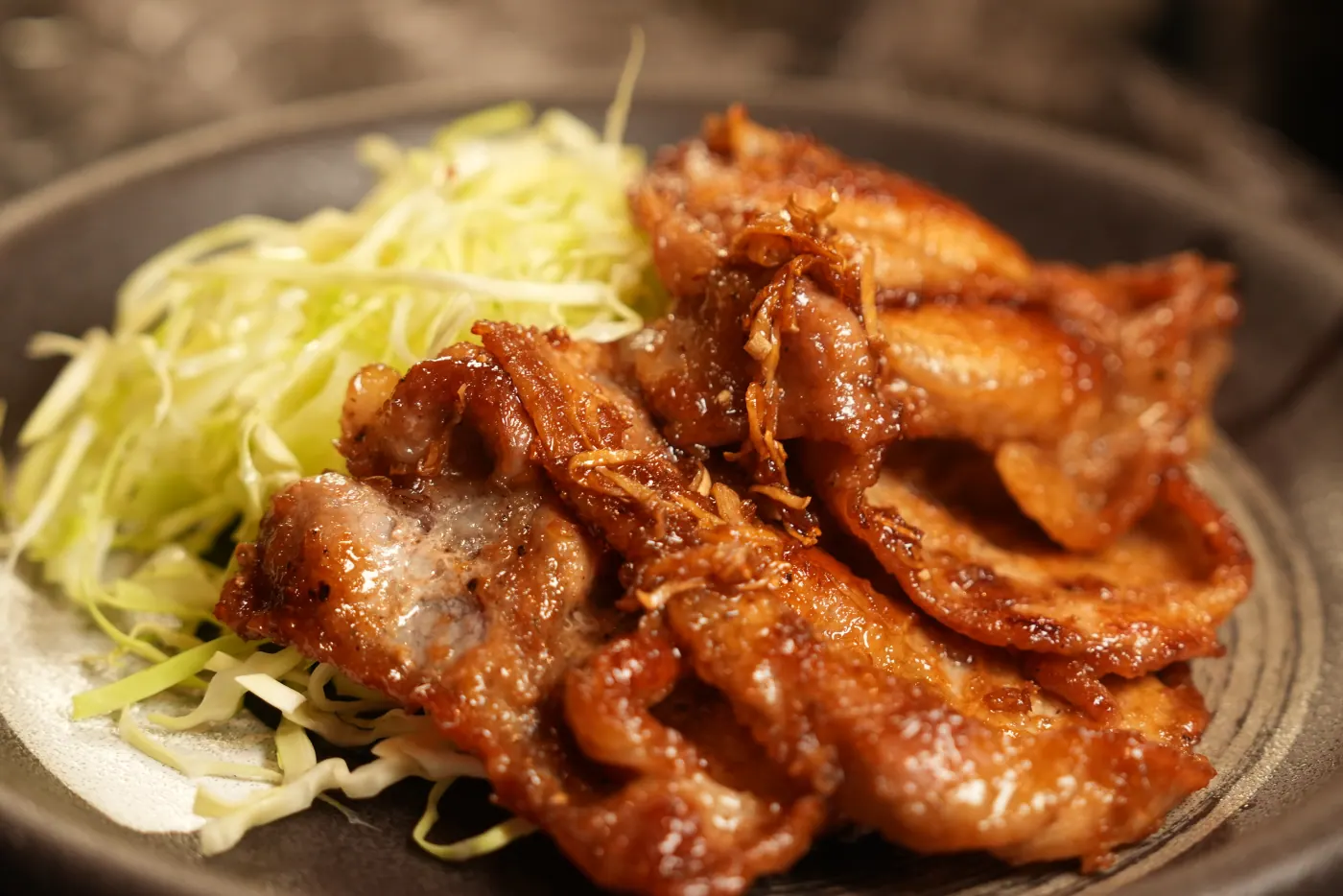
A Japanese home cooking staple, Shogayaki. Pork finished with teriyaki glaze and ginger flavor makes this a beloved national dish for many Japanese.
This recipe's key feature is using ginger in two different forms. Julienned ginger maximizes aroma while grated ginger infuses the sauce with flavor. Plus, coating the pork with flour locks in moisture, creating an incredibly juicy result.
Why You'll Love This Recipe
- Ready in 25 minutes - Perfect for busy weeknight dinners
- Rice-friendly flavors - Sweet-savory sauce and ginger aroma double your appetite
- Juicy texture - Coating with flour locks in the meat juices
- Perfect with cabbage - Crisp cabbage complements the pork's umami
- Simple ingredients - Just pork, ginger, and basic seasonings
Recipe Highlights
- Why use ginger in two forms: julienned and grated
- Scoring pork for tender results
- Scientific cooking method: coating with flour to seal in juices
- Tips for keeping shredded cabbage crisp
Equipment Needed
- Knife and cutting board
- Grater
- Large shallow tray
- Large skillet
- Bowl
- Chopsticks or spatula
Shogayaki Ingredients (Serves 1)
11 ingredients · 1 serving
Thinly sliced pork loin, fresh ginger, cabbage, vegetable oil, all-purpose flour, salt, black pepper, sake, soy sauce, mirin, sugar.
Full amounts in the recipe cardIngredient Substitutions
- Pork loin: Pork belly works but loin is healthier and more tender
- Sake: Dry white wine can substitute
- Mirin: If unavailable, see our mirin substitute recipe
- Cabbage: Optional but highly recommended
Video Tutorial
For a visual guide to this recipe, watch the video below. You'll see the technique of using ginger in two forms and tips for achieving juicy pork.

How to Make Shogayaki
Prep: Ginger, Pork, and Cabbage
Cut ginger in half
First, cut the ginger in half. We divide the ginger because we'll use it in two different ways: julienned and grated.
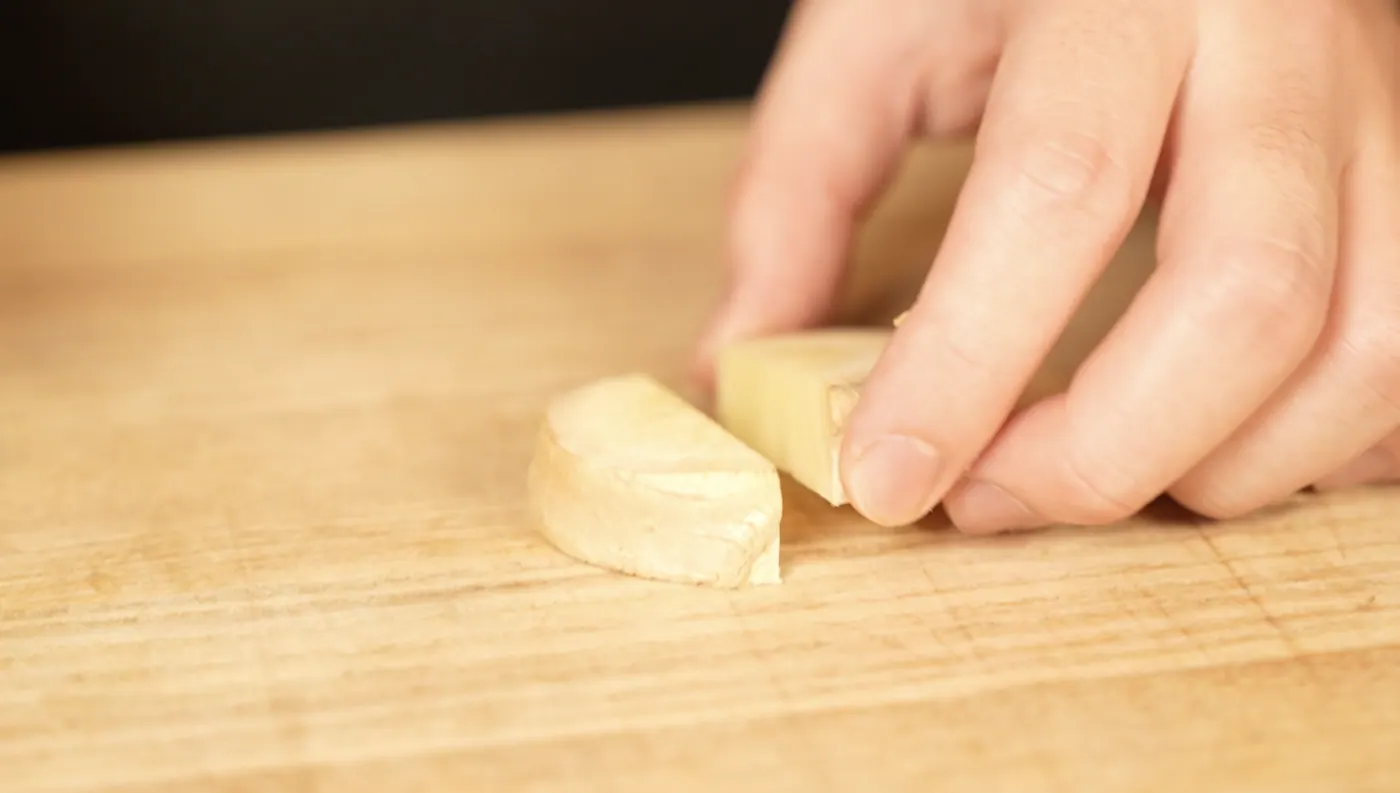
Julienne half the ginger
Julienne half of the ginger.
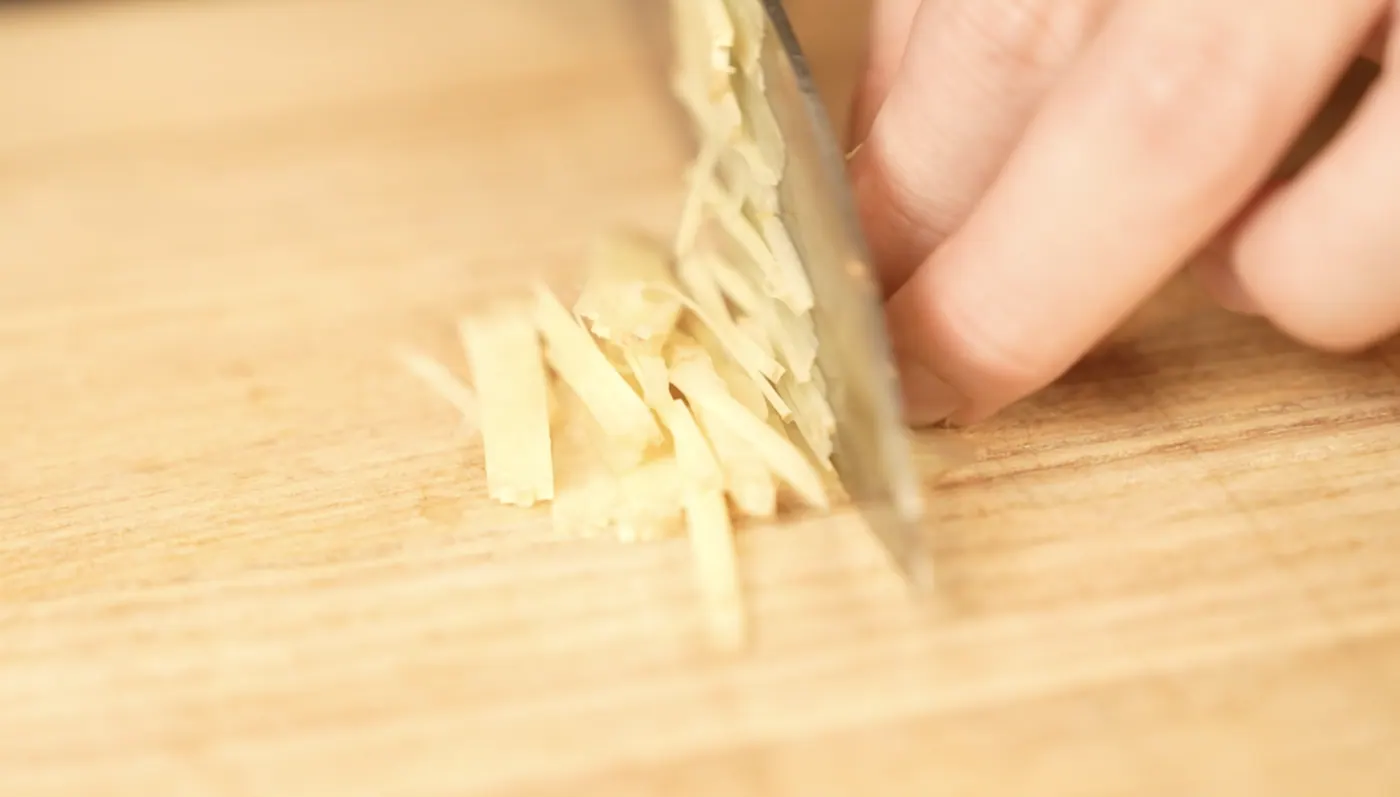
Why julienne the ginger?
Julienning maximizes ginger's aroma most effectively. The julienned ginger transfers beautiful ginger fragrance to the meat, creating a flavorful finish.
Grate remaining ginger
Grate the remaining half of the ginger.
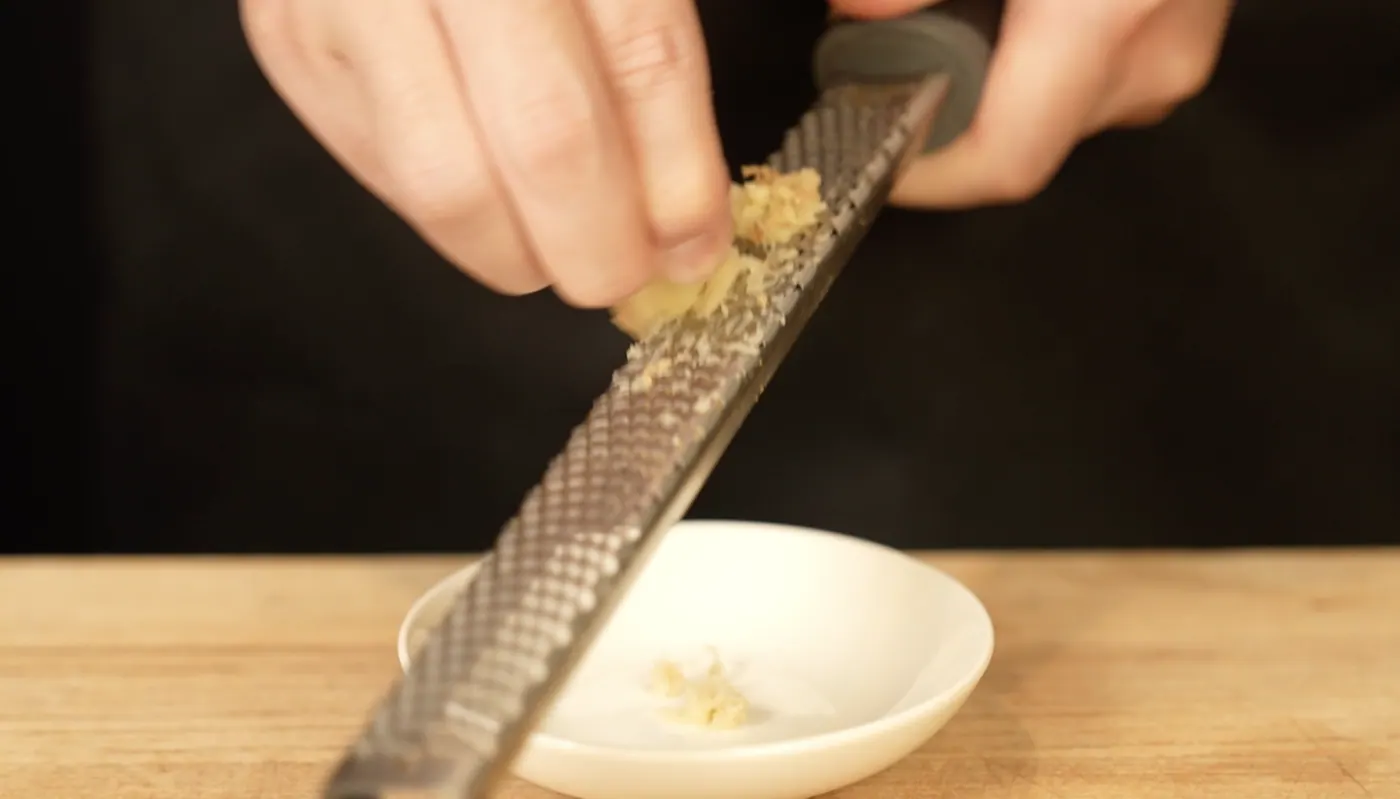
Why grate the ginger?
Grating allows the ginger's aroma and flavor to infuse the sauce as well.
This is the most important point for making delicious shogayaki, so remember it!
Score the pork
The recommended pork thickness is 2-3mm. First, make shallow cuts in the connective tissue between the lean meat and fat. Be careful not to cut too deeply.
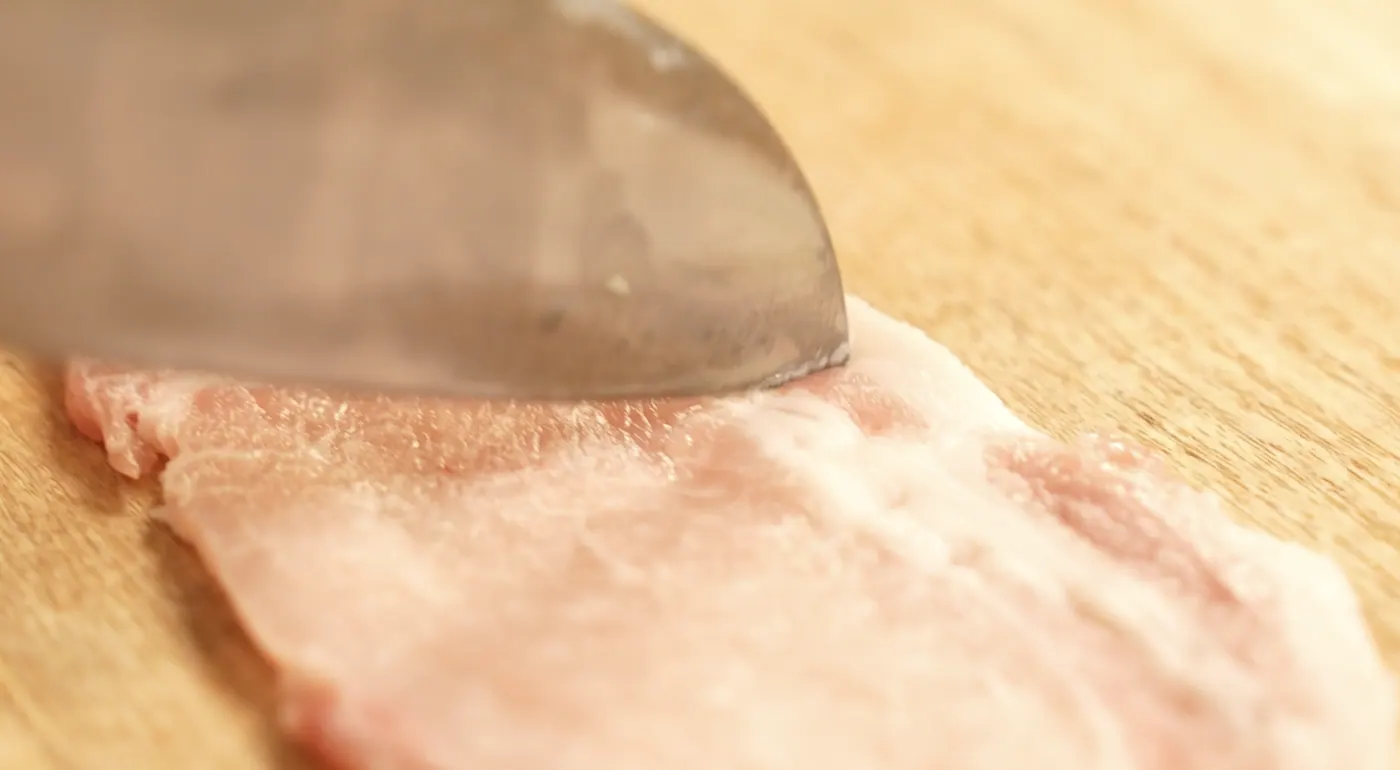
Why score the connective tissue?
Scoring the connective tissue:
- Prevents meat from curling during cooking
- Creates a beautiful presentation
- Makes it easier to eat
Use the tip of your knife to make small cuts in the connective tissue.
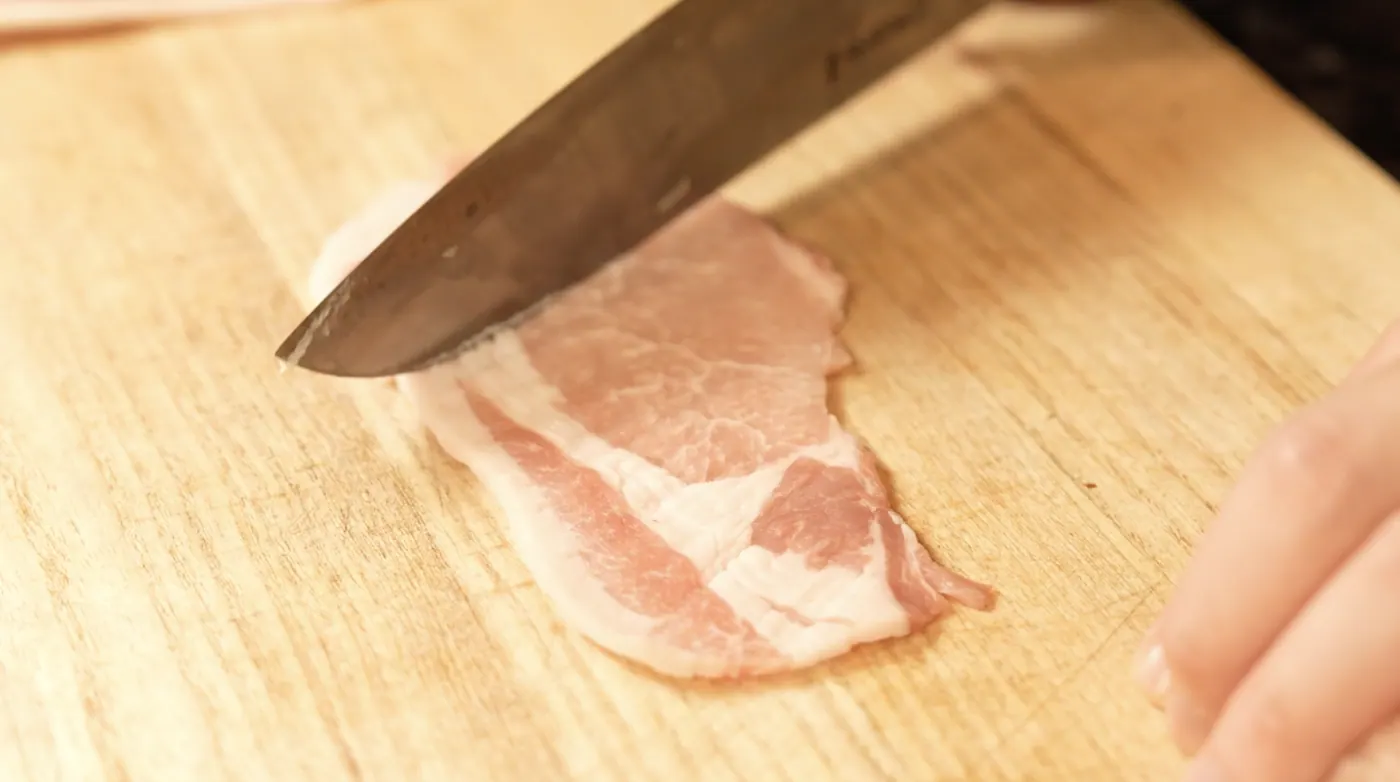
Pound pork lightly with knife
Once scoring is complete, pound the entire pork slice lightly with the back of your knife. This also tenderizes the pork fibers. Repeat this process for all pork slices.
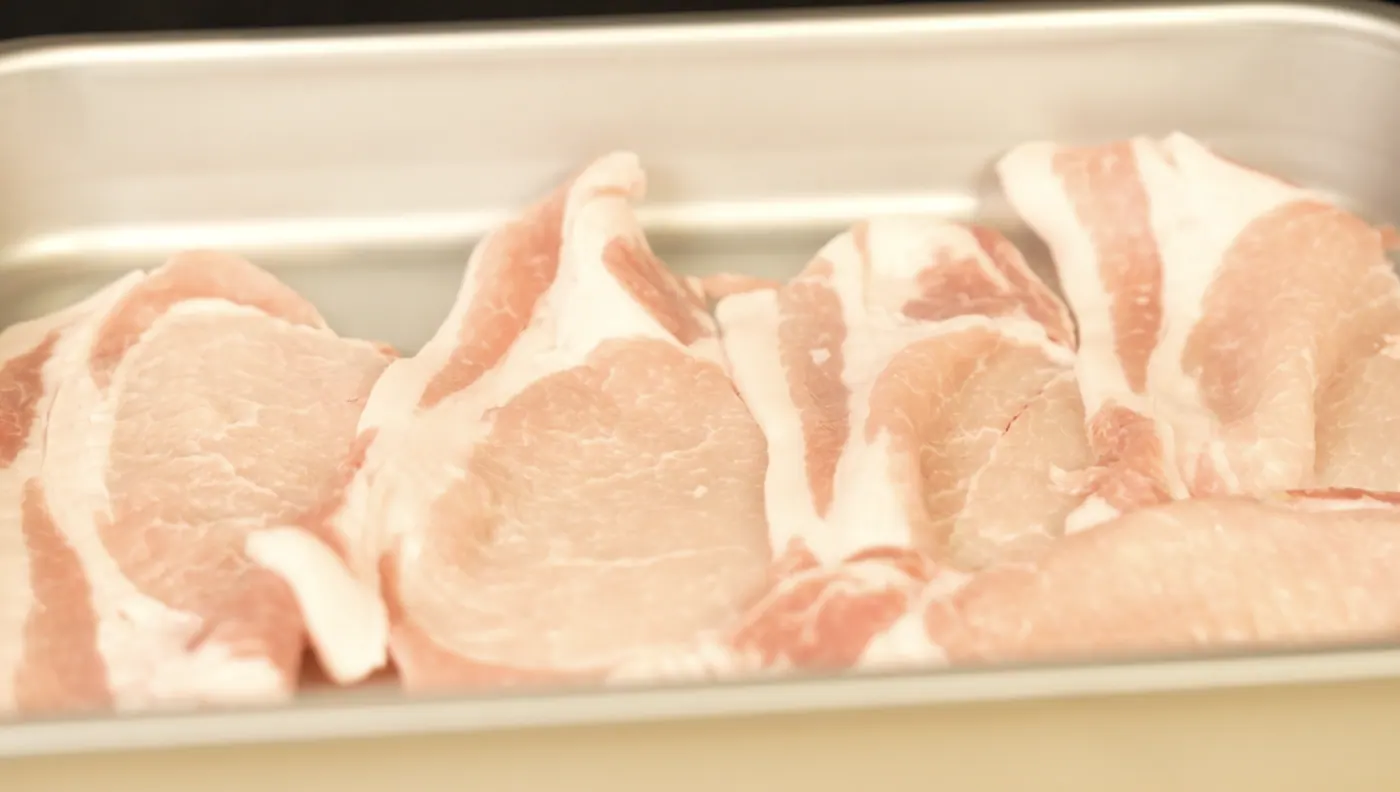
Arrange pork on tray
Once scoring is complete, prepare a large tray and arrange the pork slices without overlapping.
Season pork with salt and pepper
Sprinkle salt and pepper evenly over the pork. The amounts aren't specified, but I season slightly heavier than usual since it will be eaten with cabbage and rice.
If you prefer lighter seasoning, adjust the salt and pepper amounts.
Coat pork with flour
This simple step makes the pork more tender. Coat the other side with flour as well.
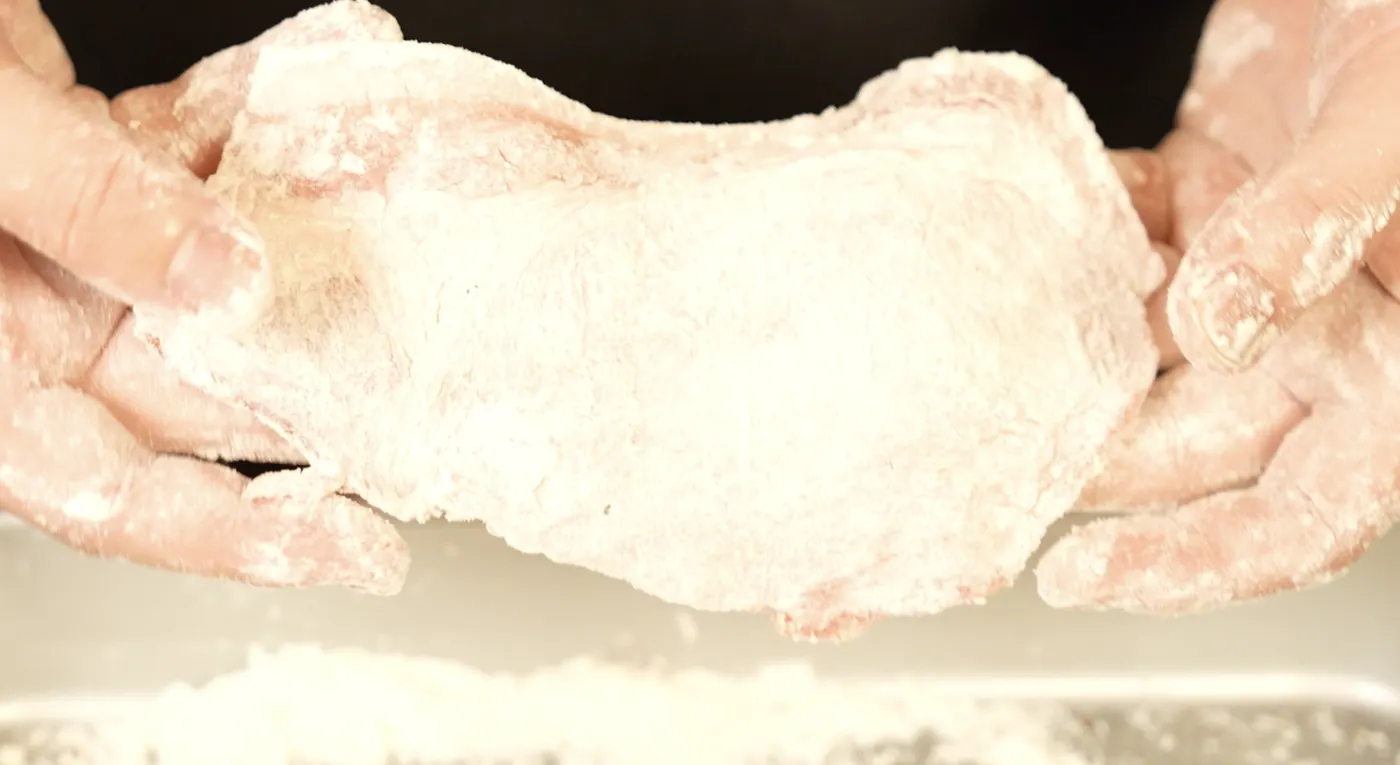
Why coat with flour?
Normally, pork loses moisture during cooking and becomes tough.
However, coating pork with flour:
- Locks in moisture
- Keeps meat juicy
- Helps sauce cling better
Remove cabbage core
Before cooking the pork, prepare the cabbage side dish. Remove or thinly slice the tough cabbage core for better texture.
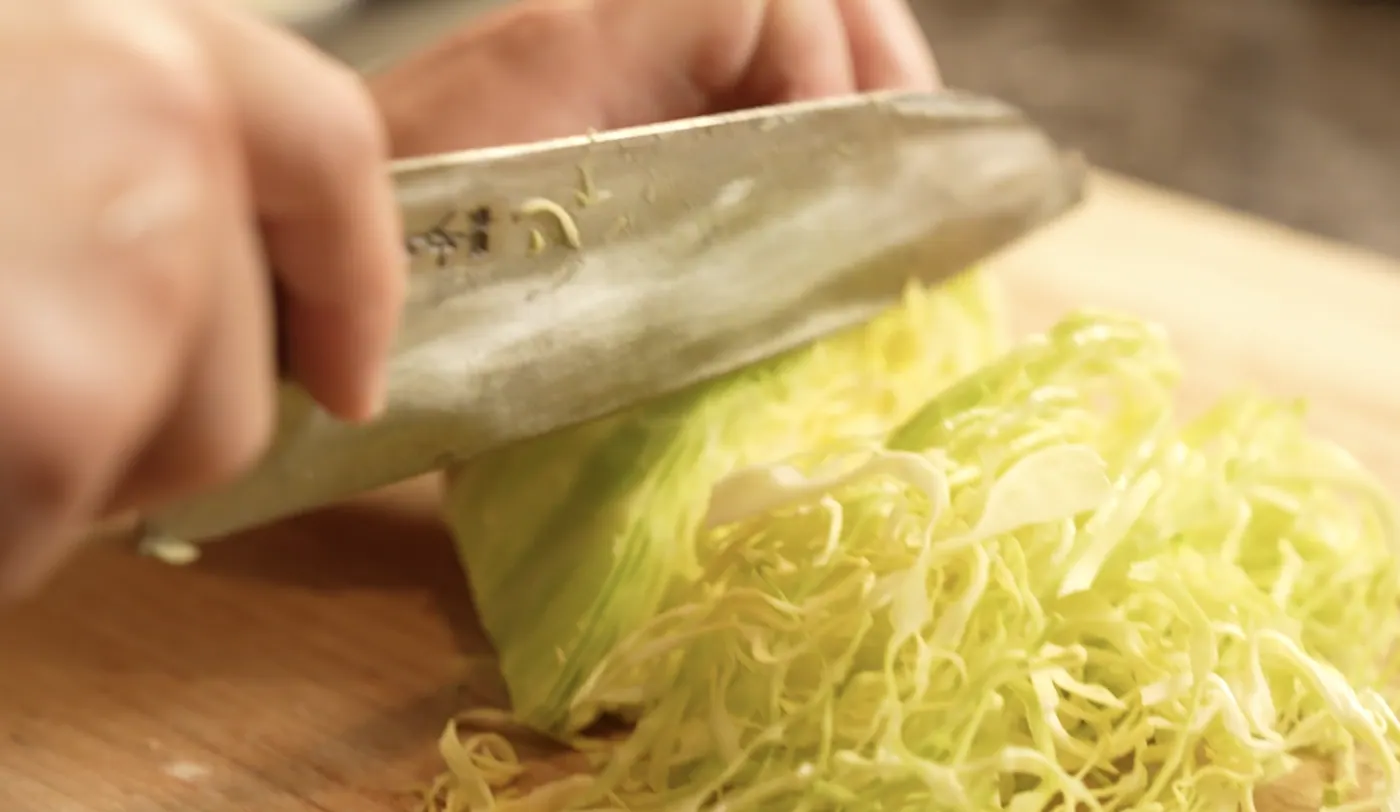
Shred the cabbage
Shred the cabbage thinly. In Japan, serving shredded cabbage with shogayaki is virtually standard.
The textural contrast between tender meat and crisp cabbage is wonderful, and they pair perfectly in flavor.
Soak cabbage in cold water
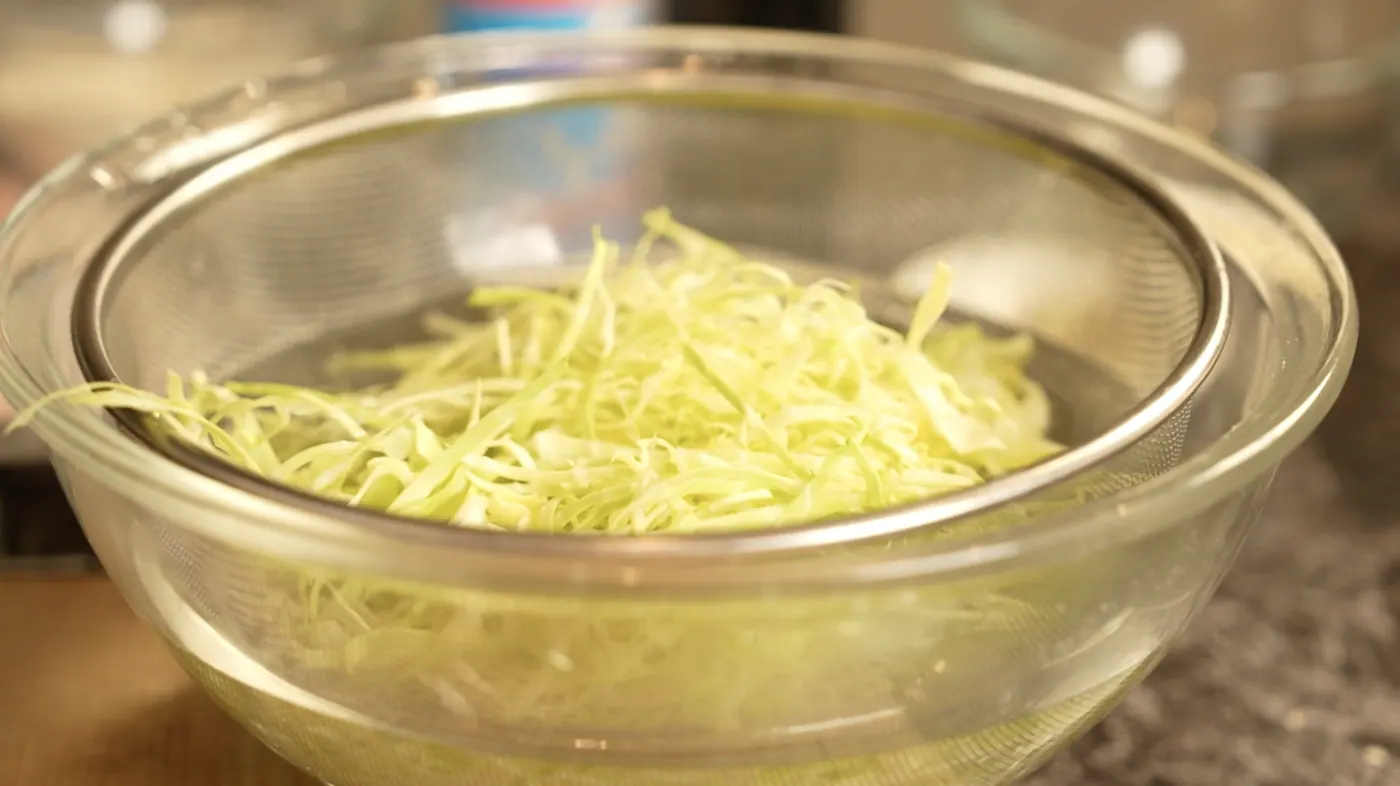
Place shredded cabbage in a bowl and add cold water. To maintain crisp texture, gently mix the cabbage to incorporate air. Be careful not to crush it.
Tips for keeping cabbage crisp
Soaking in cold water:
- Keeps cabbage fresh
- Creates crisp texture
Gently mixing to incorporate air is the secret to maintaining that crisp texture.
Cooking Steps
Cook pork in skillet
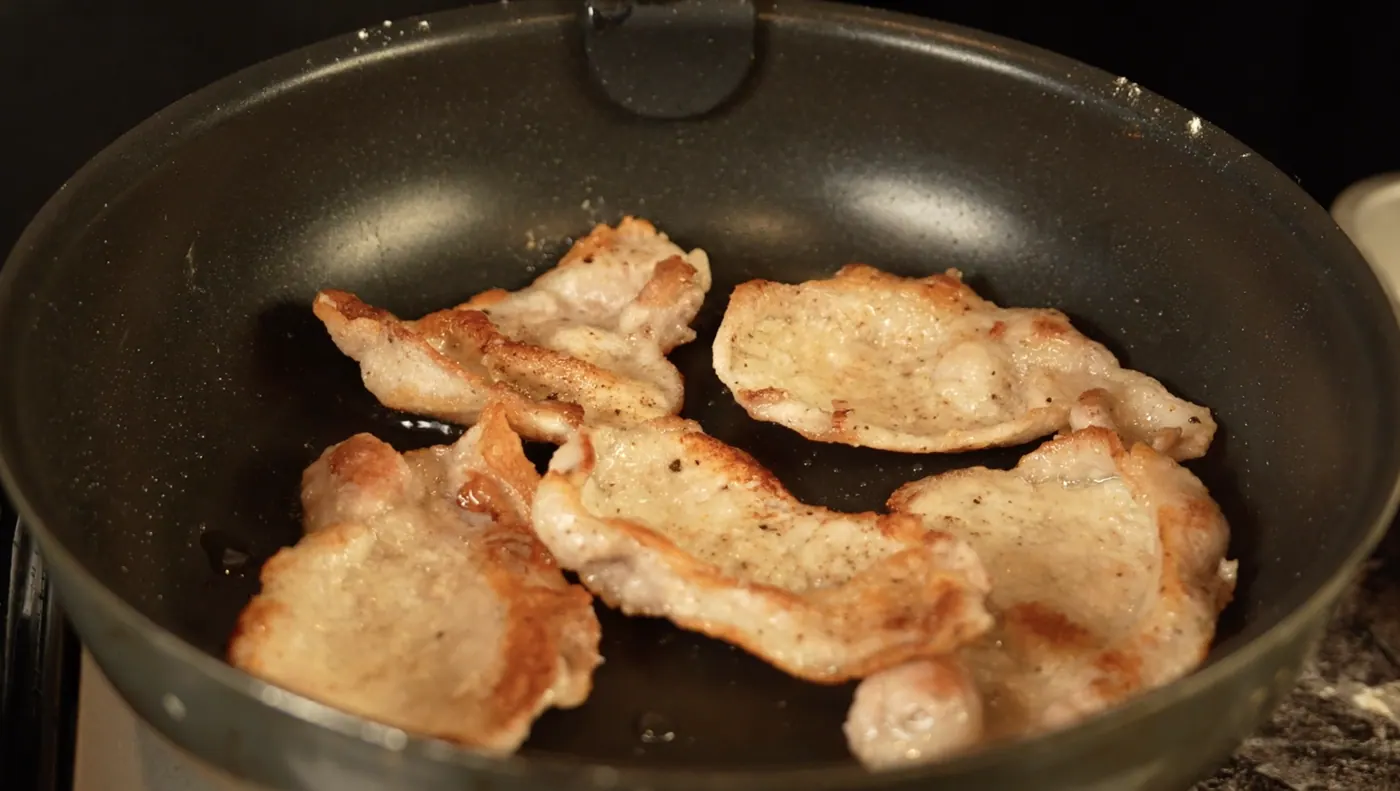
Heat a large skillet over medium-high heat and add 1 tbsp vegetable oil. Once oil spreads thinly across the pan, add the pork. Adjust positioning so pork doesn't overlap.
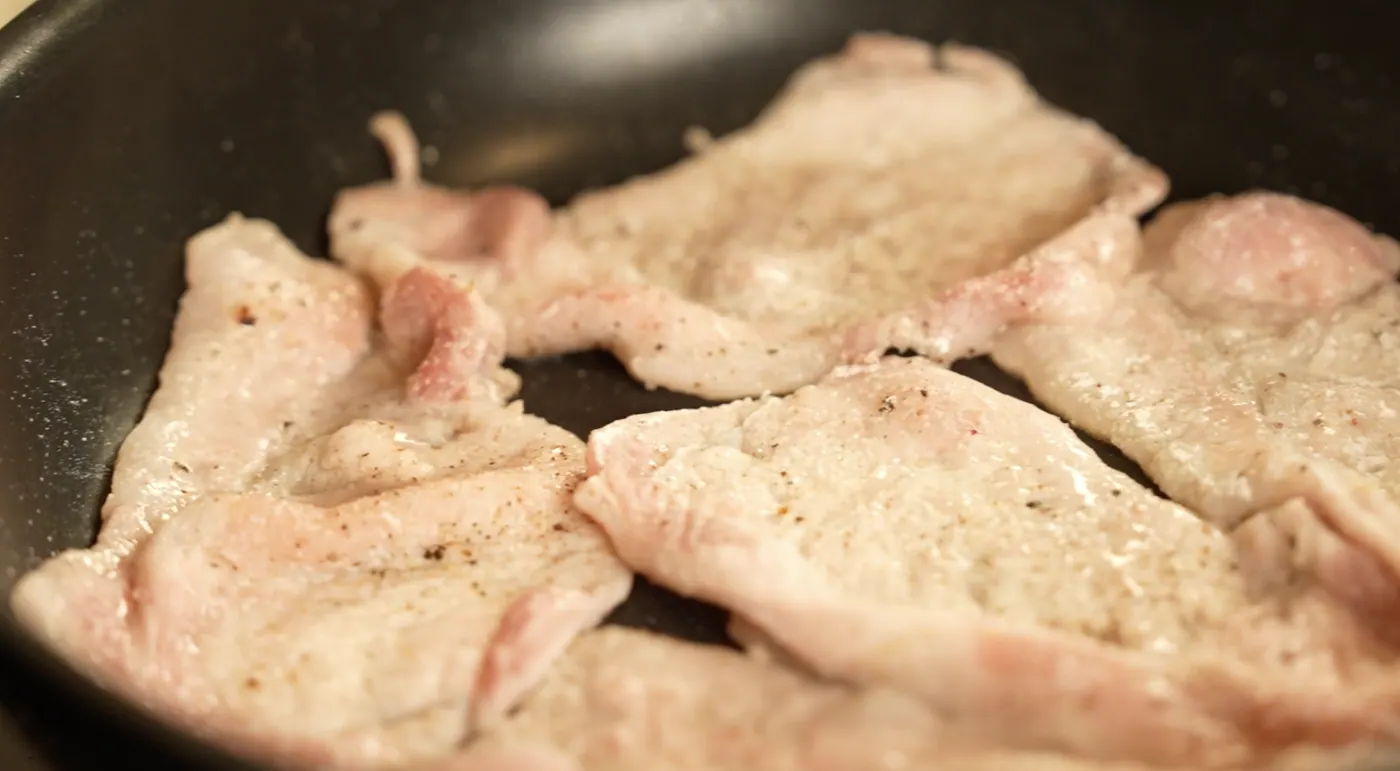
For aroma and texture, cook until all surfaces are nicely browned.
Check doneness
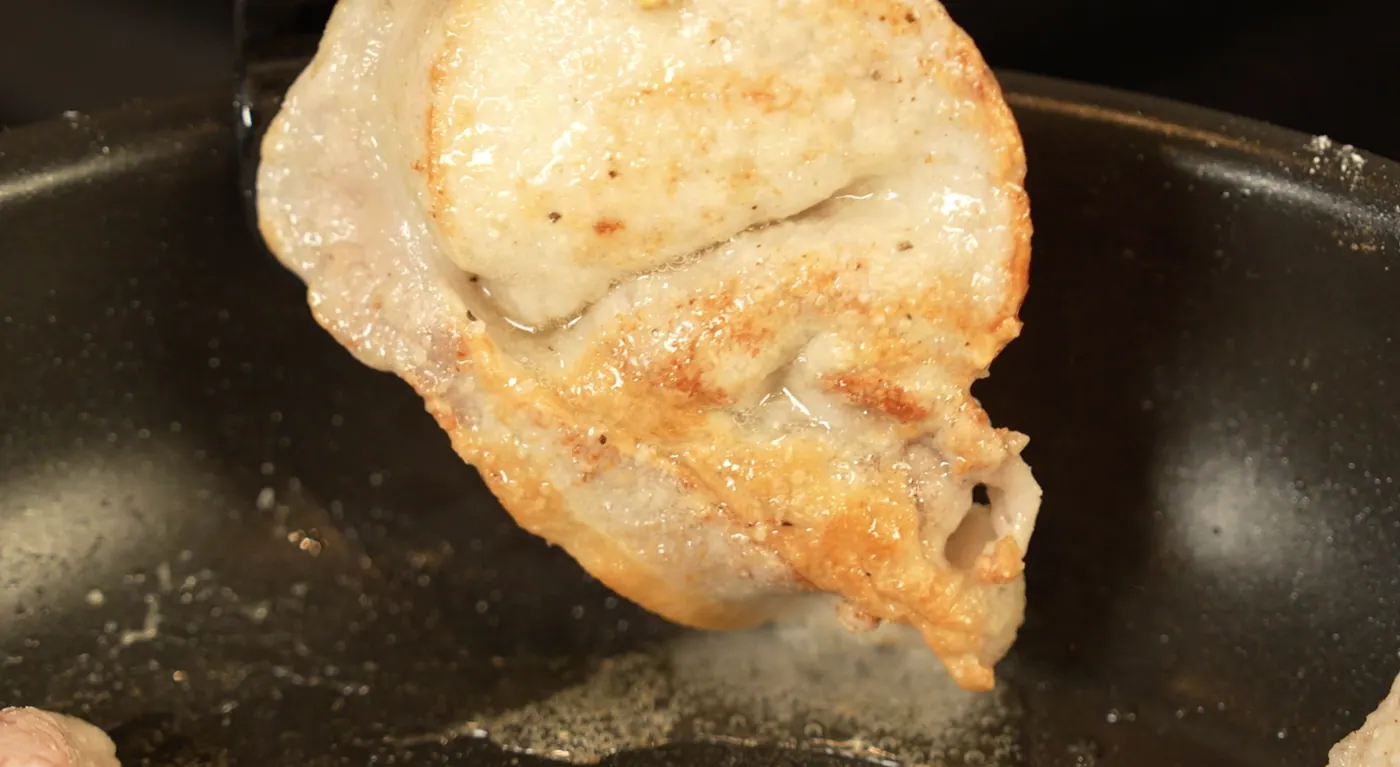
Thin slices burn easily, so check browning frequently. When browned like the photo, it's ready.
Cook both sides
Cook the other side the same way until nicely browned. Once browned, flip again.
As pork cooks it releases fat, but you don't need to remove all of it. However, if you want to reduce richness, blot excess fat with paper towels, leaving about 1 tbsp.
Add sauce seasonings
Add the seasonings in order:
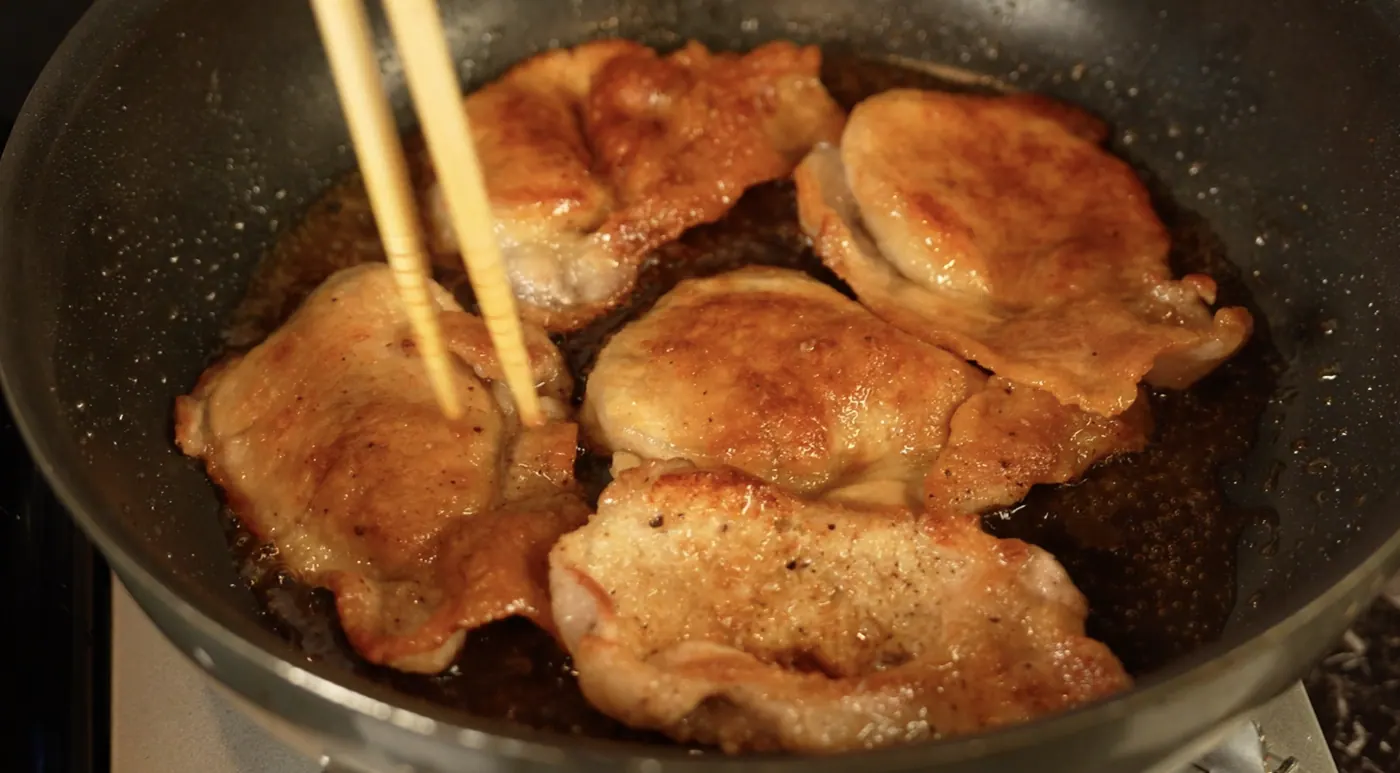
- 2 tbsp sake
- 1.5 tbsp soy sauce
- 2 tsp mirin
- 1 tsp sugar
The sauce burns easily, so reduce heat to medium. Once seasonings are added, mix well with the pork so sauce coats evenly.
Add ginger
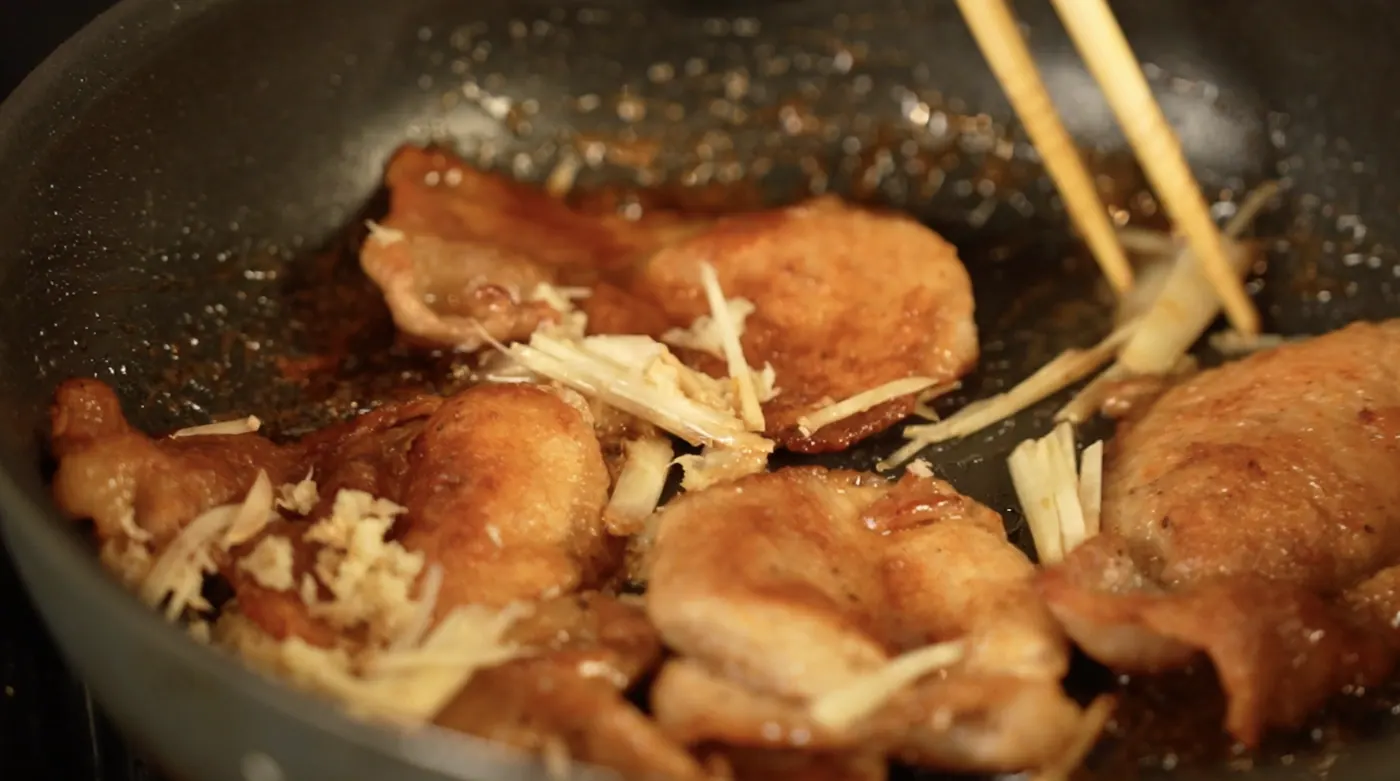
After sautéing for about 1 minute, add both julienned and grated ginger, mixing well again. After about 30 seconds of sautéing, cooking is complete.
Don't over-sauté ginger
Prolonged sautéing causes ginger aroma to dissipate, so sauté for only about 30 seconds.
For more sauce
If you want more sauce, add ginger at the same time as seasonings and reduce the simmering time.
Serving
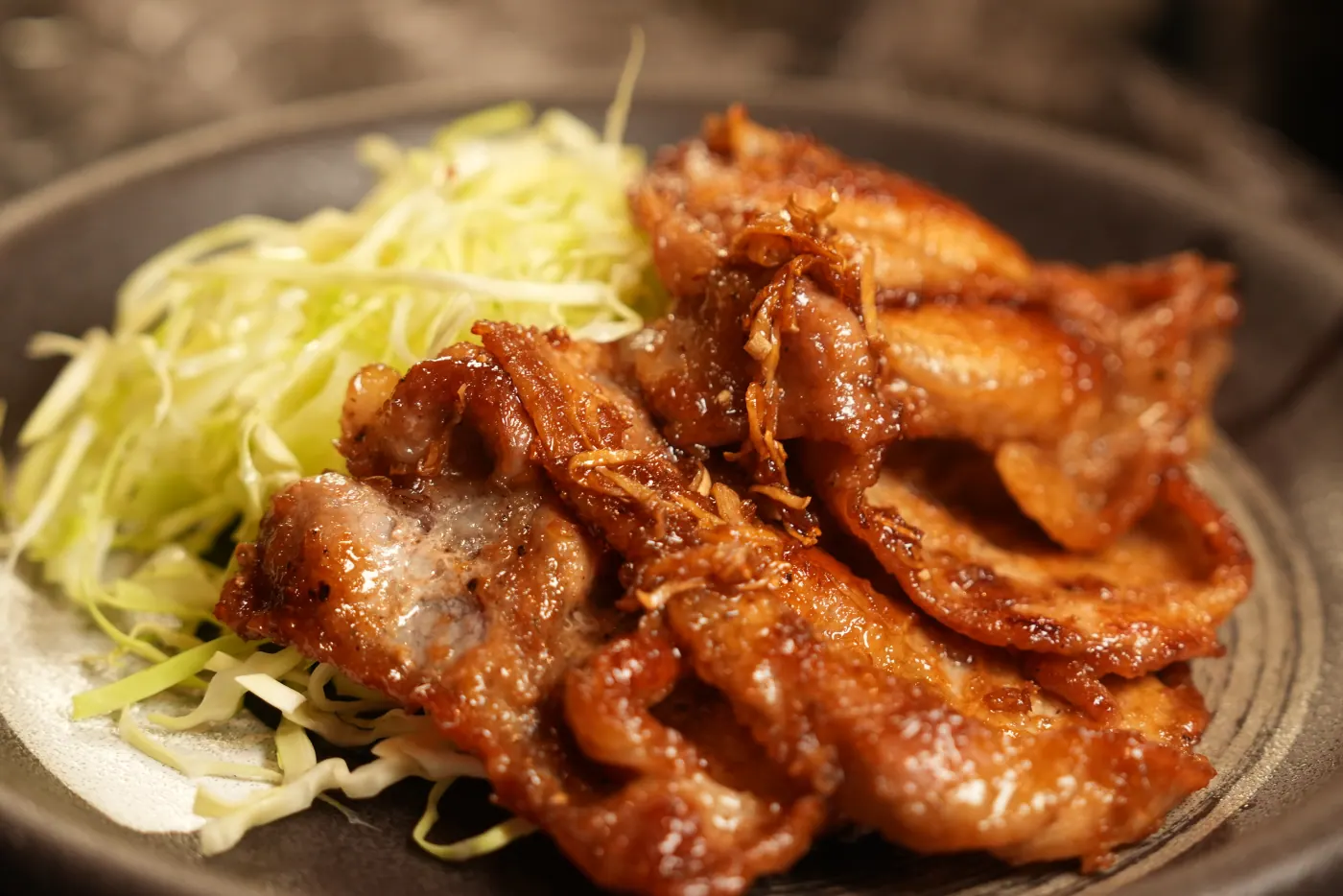
Arrange cabbage on plate
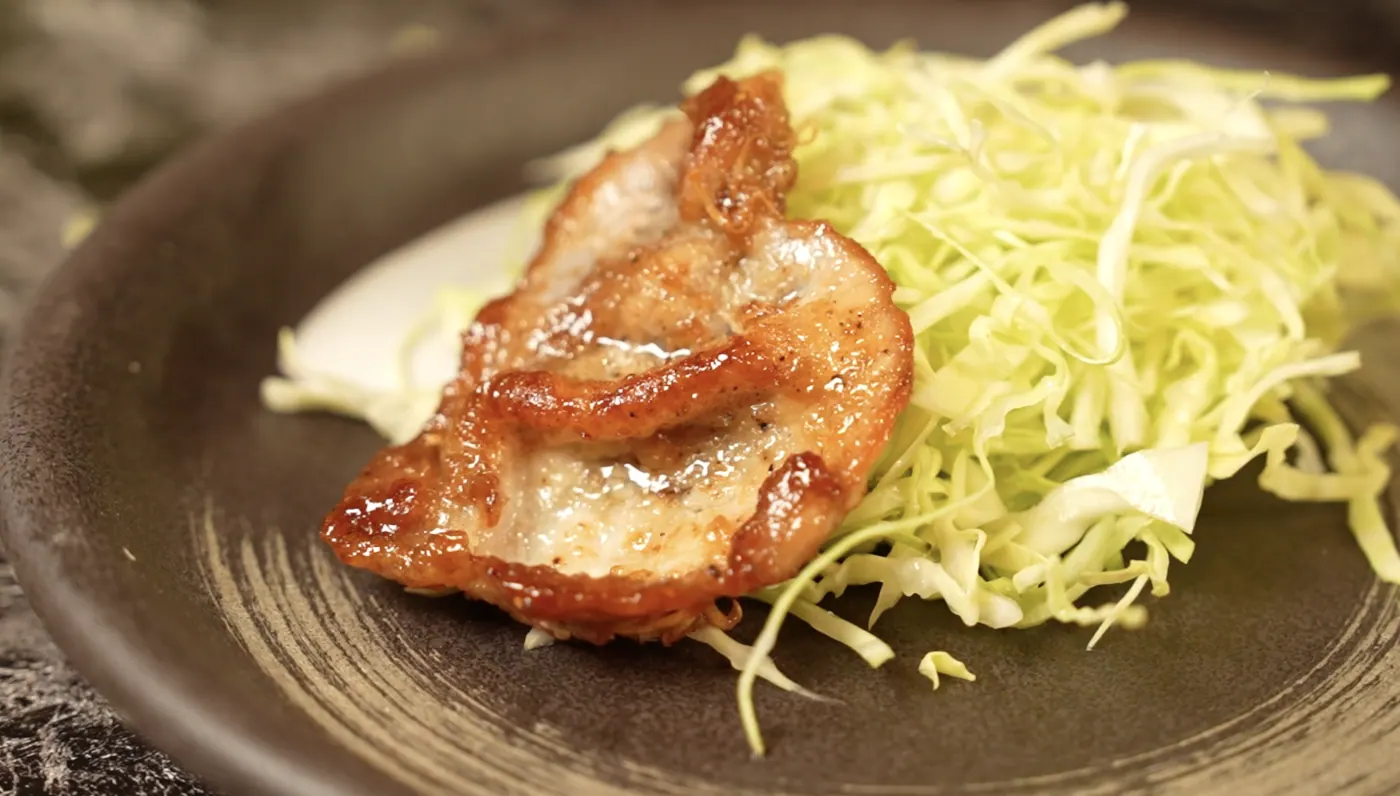
First, drain excess water from cabbage thoroughly and arrange on a plate. For a beautiful presentation, pile the cabbage high.
Place shogayaki on cabbage
Lean the shogayaki against the cabbage mound and it's complete. Glossy and glistening, it looks absolutely delicious. The spicy ginger aroma stimulates the appetite.
Tips & Techniques
Choose thin pork with some fat
Using thin-sliced pork with some fat creates tender, juicy results.
Don't skip scoring
Scoring prevents curling and improves both presentation and texture.
Don't skip the flour coating
This simple step creates incredibly juicy results.
Use ginger in two forms
Using both julienned and grated maximizes both aroma and flavor.
Add ginger at the end
Over-sautéing causes aroma to dissipate, so sauté for only about 30 seconds.
Troubleshooting
Common Questions
What should I do if the pork turned out tough?
Likely overcooked. Thin slices cook quickly, so add sauce as soon as both sides are browned. Also, don't skip the flour coating.
What should I do if I can't taste the ginger much?
Over-sautéing causes aroma to dissipate. Add ginger at the end and sauté for only about 30 seconds. Also, using both julienned and grated forms is important.
What should I do if the sauce burned?
Always reduce heat to medium or lower after adding sauce. Also, frequent stirring prevents burning.
What should I do if the cabbage wilted?
Soak cabbage in cold water and refrigerate until serving. Also, drain thoroughly.
Final Thoughts
This recipe's key features are "using ginger in two different forms" and the scientific approach of "sealing juices with flour." These two simple steps are the secret to recreating professional flavor. Though simple, this technique elevates home cooking. Give it a try!
How to Store Shogayaki
Leftover shogayaki can be stored in an airtight container in the refrigerator for 2-3 days.
Reheating instructions:
- Microwave: Heat at 600W for 1-2 minutes, checking frequently
- Skillet: Reheat over low heat
Note: Meat can toughen when reheated, so freshly made is best.
主菜Main Dish豚の生姜焼き
Shogayaki (Ginger Pork)
A Japanese home cooking staple, Shogayaki. Pork finished with teriyaki glaze and ginger flavor makes this a beloved national dish for many Japanese.
No ratings yet
Rate this recipe
- Prep
- 15 min
- Cook
- 10 min
- Total
- 25 min
- Servings
- 1
- Difficulty
- Beginner
Ingredients
Main Ingredients
Seasoning
Sauce Seasonings
Ingredient amounts are multiplied; cooking times and pan size may need adjusting.
Instructions
Amounts mentioned in the steps are for the original recipe (1x) — use the scaled amounts above.
Prep: Ginger, Pork, and Cabbage
Cut ginger in half
First, cut the ginger in half. We divide the ginger because we'll use it in two different ways: julienned and grated.
Julienne half the ginger
Julienne half of the ginger.
Grate remaining ginger
Grate the remaining half of the ginger.
Score the pork
The recommended pork thickness is 2-3mm. First, make shallow cuts in the connective tissue between the lean meat and fat. Be careful not to cut too deeply.
Pound pork lightly with knife
Once scoring is complete, pound the entire pork slice lightly with the back of your knife. This also tenderizes the pork fibers. Repeat this process for all pork slices.
Arrange pork on tray
Once scoring is complete, prepare a large tray and arrange the pork slices without overlapping.
Season pork with salt and pepper
Sprinkle salt and pepper evenly over the pork. The amounts aren't specified, but I season slightly heavier than usual since it will be eaten with cabbage and rice.
If you prefer lighter seasoning, adjust the salt and pepper amounts.
Coat pork with flour
This simple step makes the pork more tender. Coat the other side with flour as well.
Remove cabbage core
Before cooking the pork, prepare the cabbage side dish. Remove or thinly slice the tough cabbage core for better texture.
Shred the cabbage
Shred the cabbage thinly. In Japan, serving shredded cabbage with shogayaki is virtually standard.
The textural contrast between tender meat and crisp cabbage is wonderful, and they pair perfectly in flavor.
Soak cabbage in cold water
Place shredded cabbage in a bowl and add cold water. To maintain crisp texture, gently mix the cabbage to incorporate air. Be careful not to crush it.
Cooking Steps
Cook pork in skillet
Heat a large skillet over medium-high heat and add 1 tbsp vegetable oil. Once oil spreads thinly across the pan, add the pork. Adjust positioning so pork doesn't overlap.
For aroma and texture, cook until all surfaces are nicely browned.
Cook both sides
Cook the other side the same way until nicely browned. Once browned, flip again.
As pork cooks it releases fat, but you don't need to remove all of it. However, if you want to reduce richness, blot excess fat with paper towels, leaving about 1 tbsp.
Add sauce seasonings
Add the seasonings in order:
- 2 tbsp sake
- 1.5 tbsp soy sauce
- 2 tsp mirin
- 1 tsp sugar
The sauce burns easily, so reduce heat to medium. Once seasonings are added, mix well with the pork so sauce coats evenly.
Add ginger
After sautéing for about 1 minute, add both julienned and grated ginger, mixing well again. After about 30 seconds of sautéing, cooking is complete.
Serving
Arrange cabbage on plate
First, drain excess water from cabbage thoroughly and arrange on a plate. For a beautiful presentation, pile the cabbage high.
Place shogayaki on cabbage
Lean the shogayaki against the cabbage mound and it's complete. Glossy and glistening, it looks absolutely delicious. The spicy ginger aroma stimulates the appetite.
Video
Watch the video · 5:55Open on YouTube
Jump to a part of the video (6 chapters)
Video: https://youtu.be/YYoptH0q0Ho
Notes
Substitutions
- Pork loin: Pork belly works but loin is healthier and more tender
- Sake: Dry white wine can substitute
- Mirin: If unavailable, see our mirin substitute recipe
- Cabbage: Optional but highly recommended
To store
- Leftover shogayaki can be stored in an airtight container in the refrigerator for 2-3 days.
- Microwave: Heat at 600W for 1-2 minutes, checking frequently
- Skillet: Reheat over low heat
- Note: Meat can toughen when reheated, so freshly made is best.
Nutrition estimated, per serving
- Calories
- 712 kcal
- Carbohydrates
- 23.7 g
- Protein
- 42.9 g
- Fat
- 50.8 g
- Saturated fat
- 17.1 g
- Fiber
- 2.3 g
- Sugar
- 10.8 g
- Sodium
- 1,630 mg
Estimated by us from the Standard Tables of Food Composition in Japan (MEXT, 2020). Optional ingredients and garnishes are not counted; soup and sauce are counted as fully eaten. Actual values depend on your brands and portion sizes. How we calculate this
Course: Main Dish · Cuisine: Japanese · Keyword: Shogayaki
Recipe from Japanese Cooking Ichie — https://japanesecookingichie.com/recipes/shogayaki/
Make it a meal
Add a side dish to round out the table.
Ratings & comments
No ratings yet — be the first to rate this recipe.
Comments