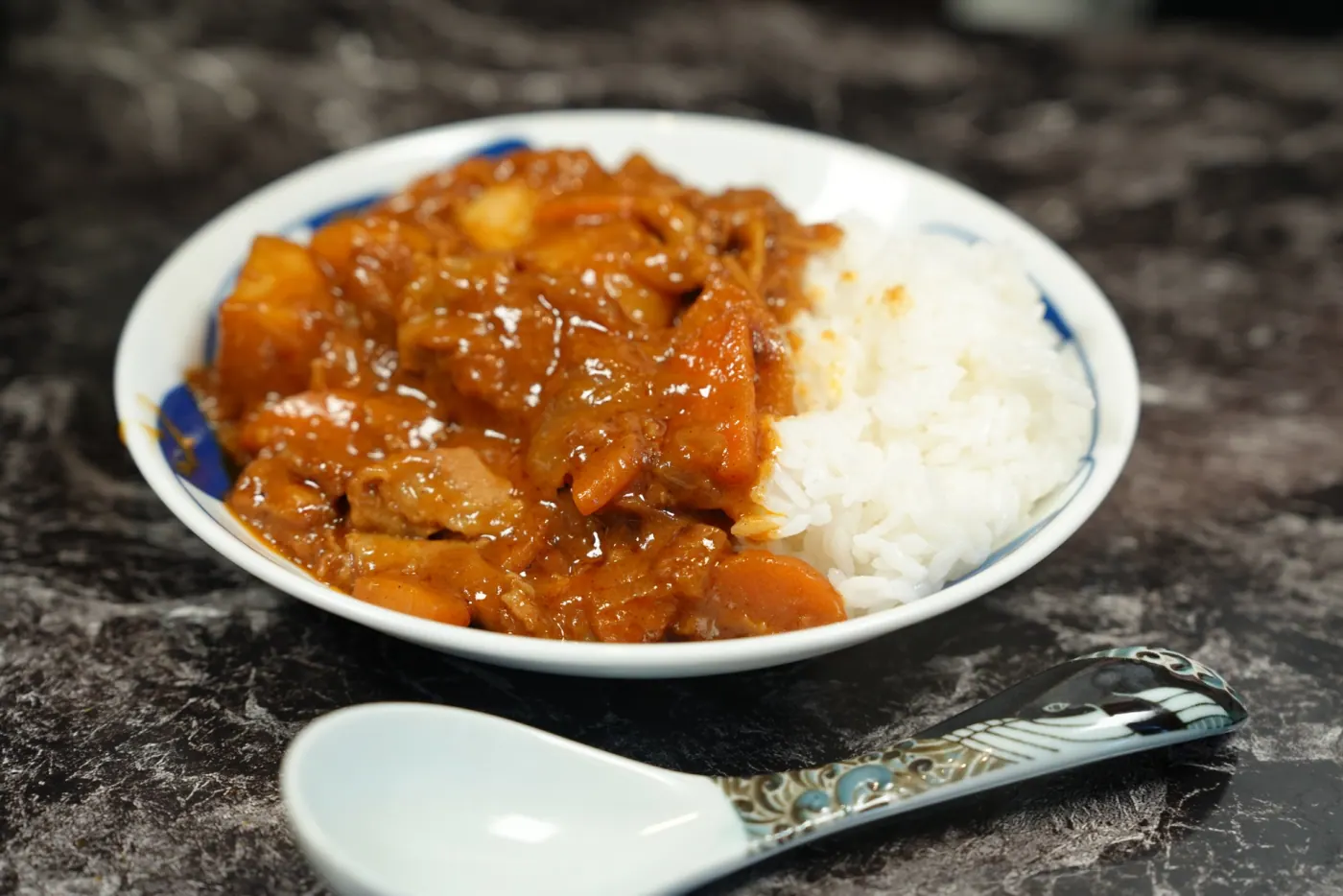
- Prep
- 15 min
- Cook
- 40 min
- Total
- 55 min
- Servings
- 4
- Difficulty
- Beginner
What is Japanese Curry from Scratch?
Japanese curry is usually made with boxed curry roux cubes, but they aren't always easy to find outside Japan. This recipe makes Japanese curry from scratch with curry powder, no roux cubes needed. You make a simple roux from butter, flour and curry powder, and dashi, ketchup, Worcestershire sauce and oyster sauce give it the rich, savory flavor of the real thing.
It's a beginner-friendly curry with tender pork belly and naturally sweet vegetables, finished with a splash of milk for a mild, creamy taste that both adults and kids love. If you can get curry roux cubes, try our Japanese curry rice with Golden Curry blocks too.
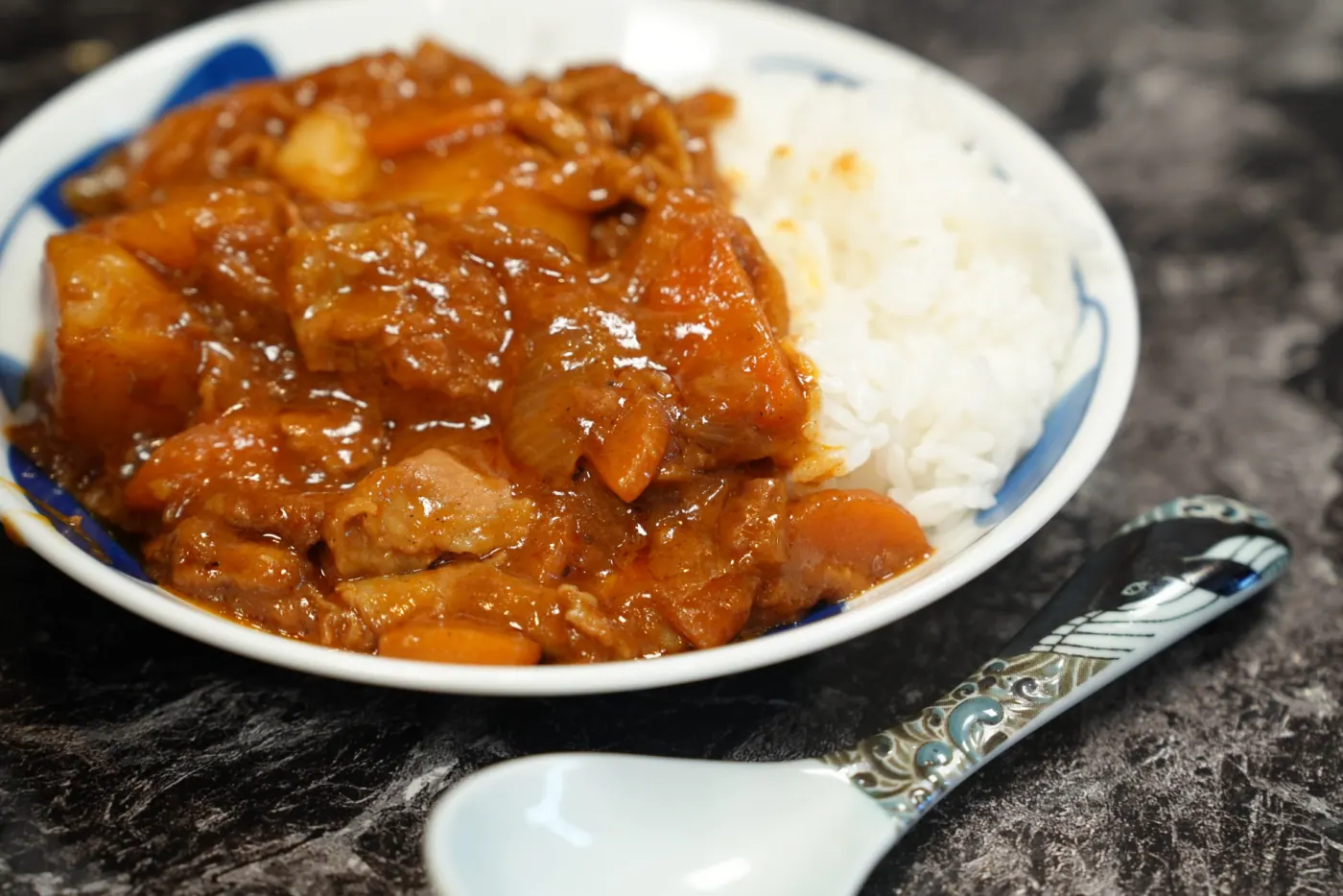
Why You'll Love This Recipe
- No curry roux cubes - Made with curry powder and pantry ingredients
- Beginner-friendly - Simple steps and small-cut vegetables that cook quickly
- Rich, savory flavor - Dashi, pork belly and a few sauces build deep umami
- Mild and creamy - A little milk makes it a curry kids love too
Key Points of This Recipe
- Cook the garlic and ginger slowly over low heat to flavor the oil
- Stir-fry the ketchup, Worcestershire sauce and oyster sauce to cook off the ketchup's acidity
- Use dashi, not water, as the base of the curry
- Loosen the homemade roux with dashi before adding it to the pot so it doesn't form lumps
Required Equipment
- Knife and cutting board
- Deep frying pan or wide pot
- Small frying pan (for the roux)
- Wooden spatula
- Measuring cup
- Bamboo skewer (to check the potatoes)
Japanese Curry from Scratch Ingredients (Serves 4)
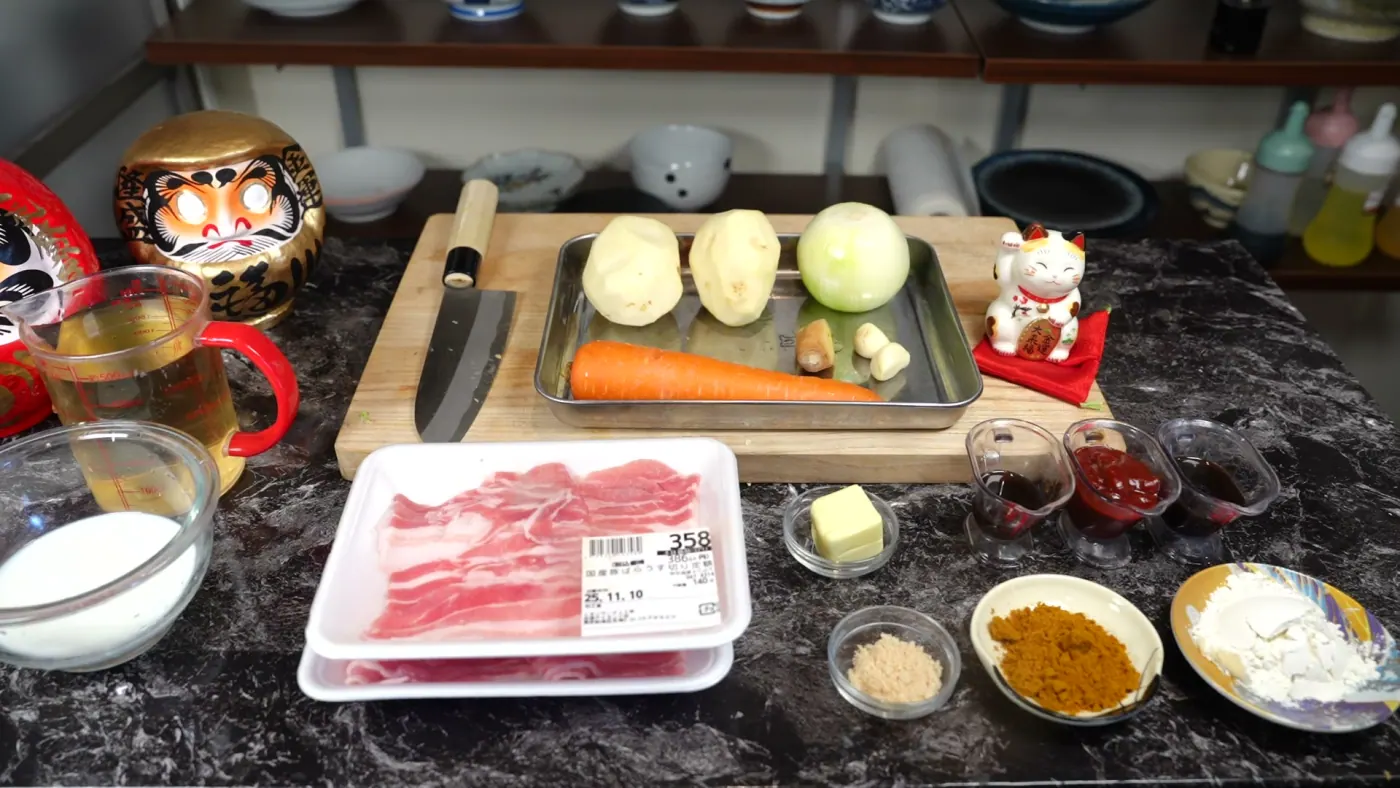
18 ingredients · 4 servings
Carrot, onion, potatoes, thinly sliced pork belly, garlic, fresh ginger, vegetable oil, ketchup, Worcestershire sauce, oyster sauce, dashi stock, chicken stock powder, butter, all-purpose flour, curry powder, milk, cooked Japanese rice.
From scratch: how to make dashi · how to cook Japanese rice
Full amounts in the recipe cardIngredient Substitutions
- Oyster sauce: 1 tablespoon soy sauce + 1/2 teaspoon sugar
- Milk: Soy milk works too
- Dashi: Make it with a dashi pack, or see how to make dashi. Use dashi rather than water, because it's the base of the curry's flavor
- Potatoes: Yellow-fleshed potatoes hold their shape better when simmered
- Pork belly: Look for thinly sliced pork belly at Japanese or Asian grocery stores. It's raw pork, not bacon
Before You Start: Make the Dashi
You need 500ml of dashi in total: 400ml for the curry and 100ml for the curry paste. Make it before you start cooking. The video uses a dashi pack, or see how to make dashi.
Video Tutorial
The video shows how big to cut the vegetables, the color to look for when you cook the garlic and the roux, and how smooth the curry paste should be.

How to Make Japanese Curry from Scratch
Prep the Ingredients
Cut the carrot
The skin of a carrot is very thin, so you don't need to peel it. Cut the carrot in half lengthwise, then slice it into 0.5cm (about 1/4-inch) half-moons. Carrots take a while to cook, so cut them small. They add natural sweetness to the curry.

Cut the onion
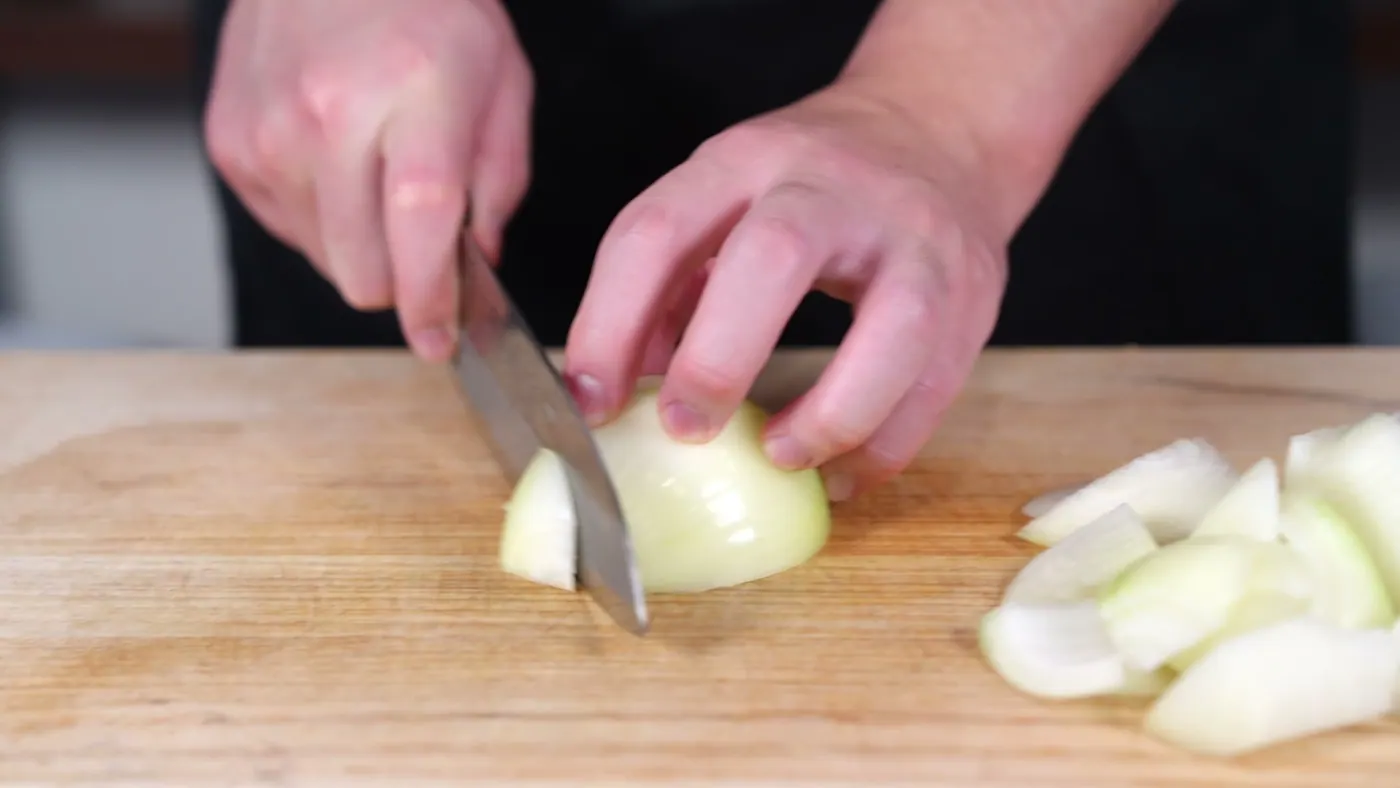
Cut the onion in half, then cut it into chunks: keep the angle of the knife the same and turn the onion a little after each cut. In this curry you don't cook the onion until it's deep brown. It's one of the ingredients you eat, so cut it into fairly large pieces.
Cut the potatoes
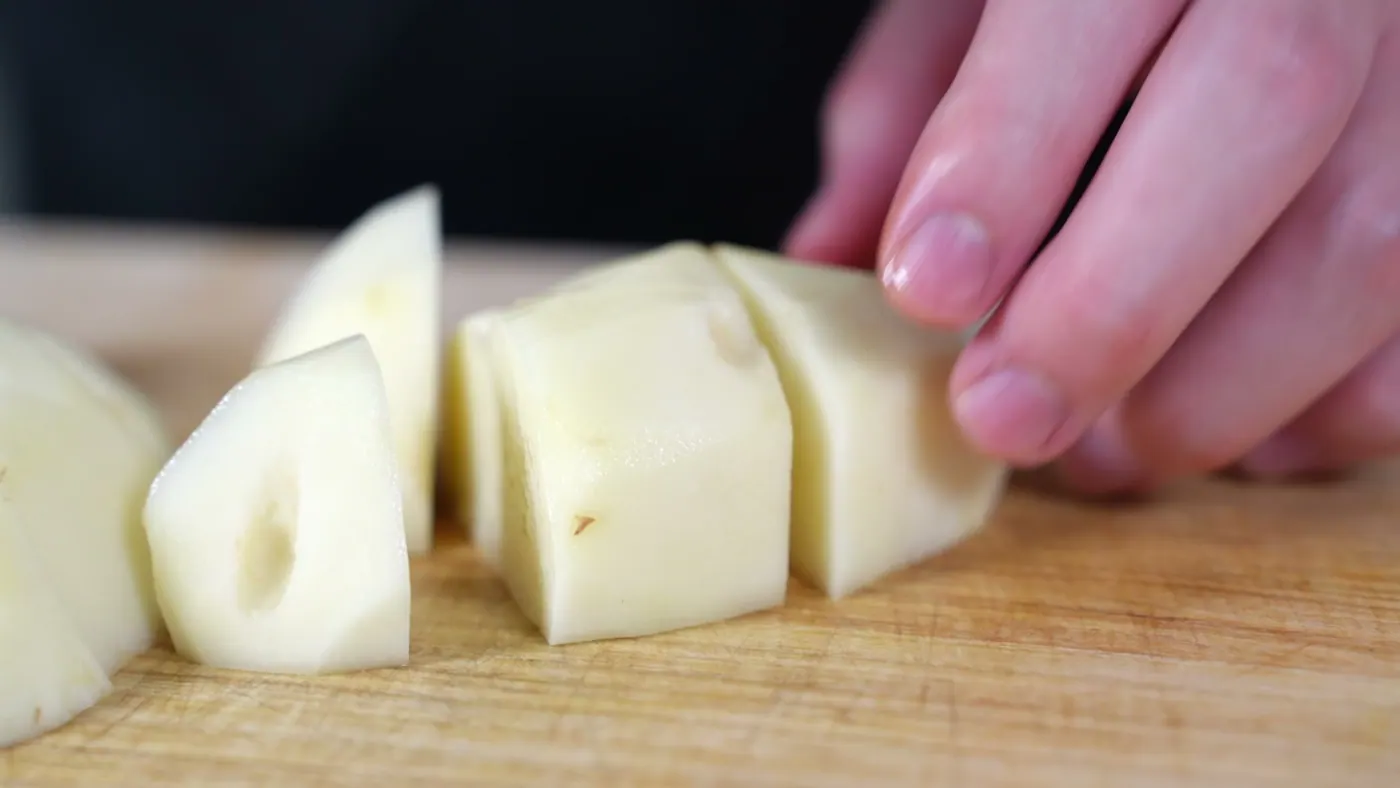
Peel the potatoes and cut each one into 6 to 8 bite-size pieces. Yellow-fleshed potatoes are best because they don't fall apart easily when simmered.
Mince the garlic and ginger
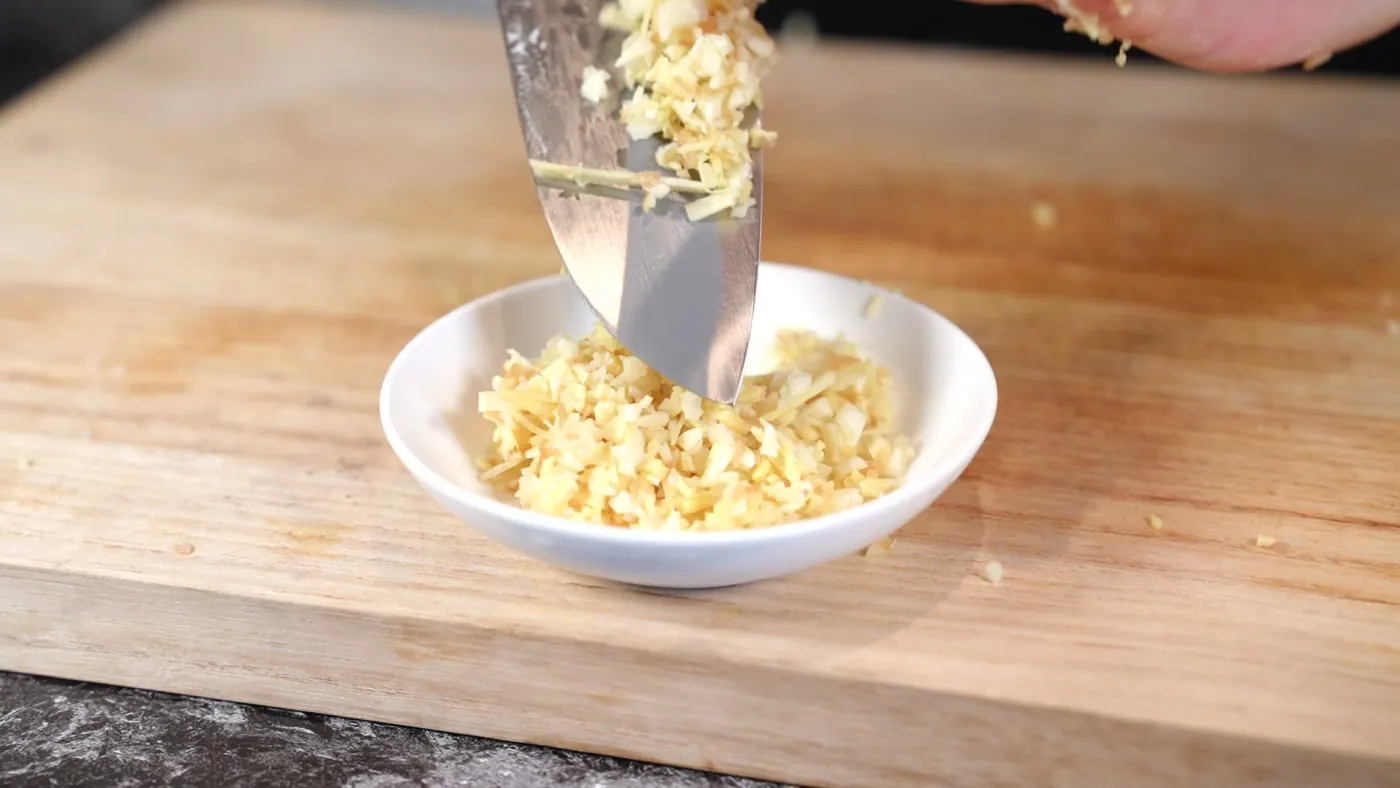
Mince 15g each of garlic and ginger. Because this curry doesn't use roux cubes, these two make a big difference: garlic adds punch and ginger adds a nice aroma. You add them at the same time, so you can put them in the same small dish.
Cut the pork belly
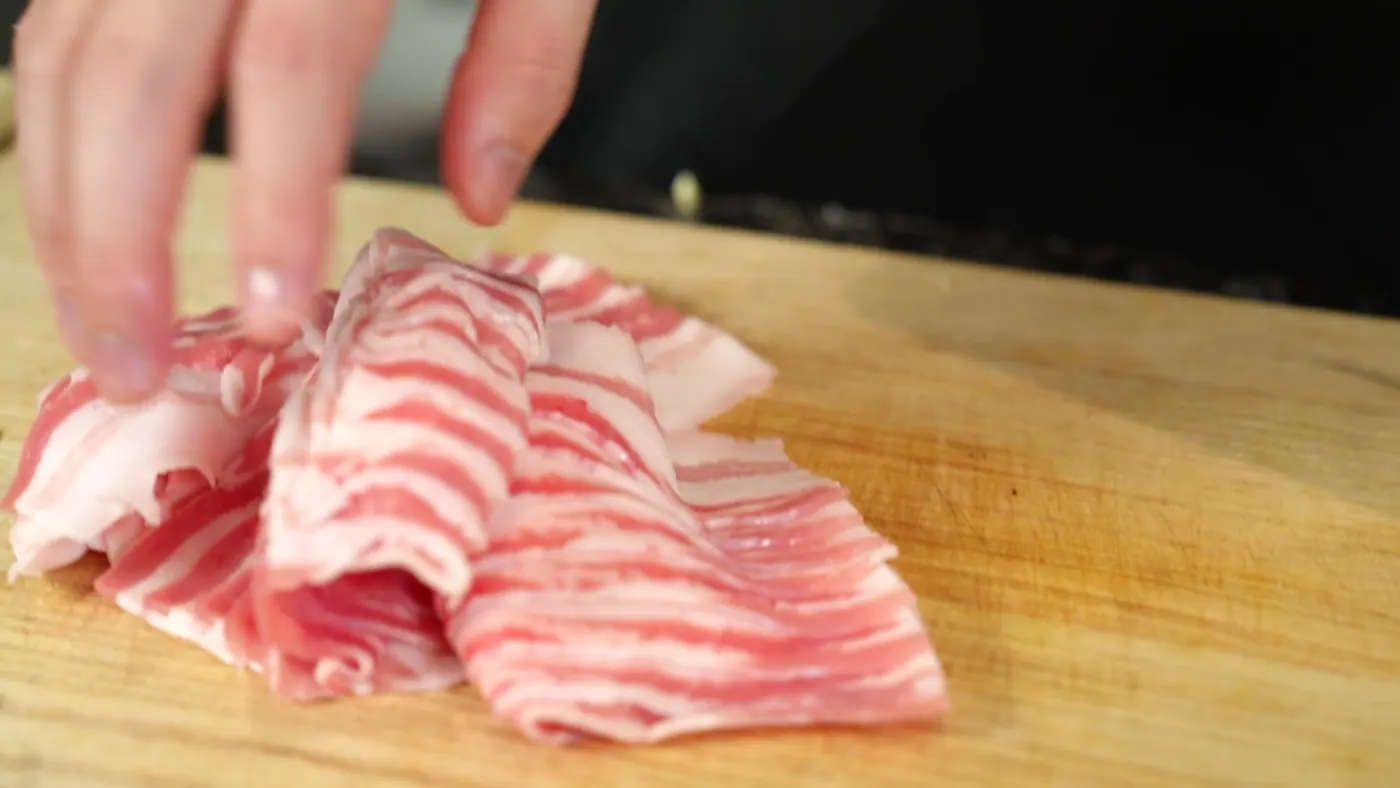
Cut 250g of thinly sliced pork belly into 5cm (2-inch) pieces. Pork belly is best because its fat adds flavor to the curry. It's raw pork, not bacon. In Japan, supermarkets sell pork sliced this thin.
Cook the Curry Base
Cook the garlic and ginger over low heat
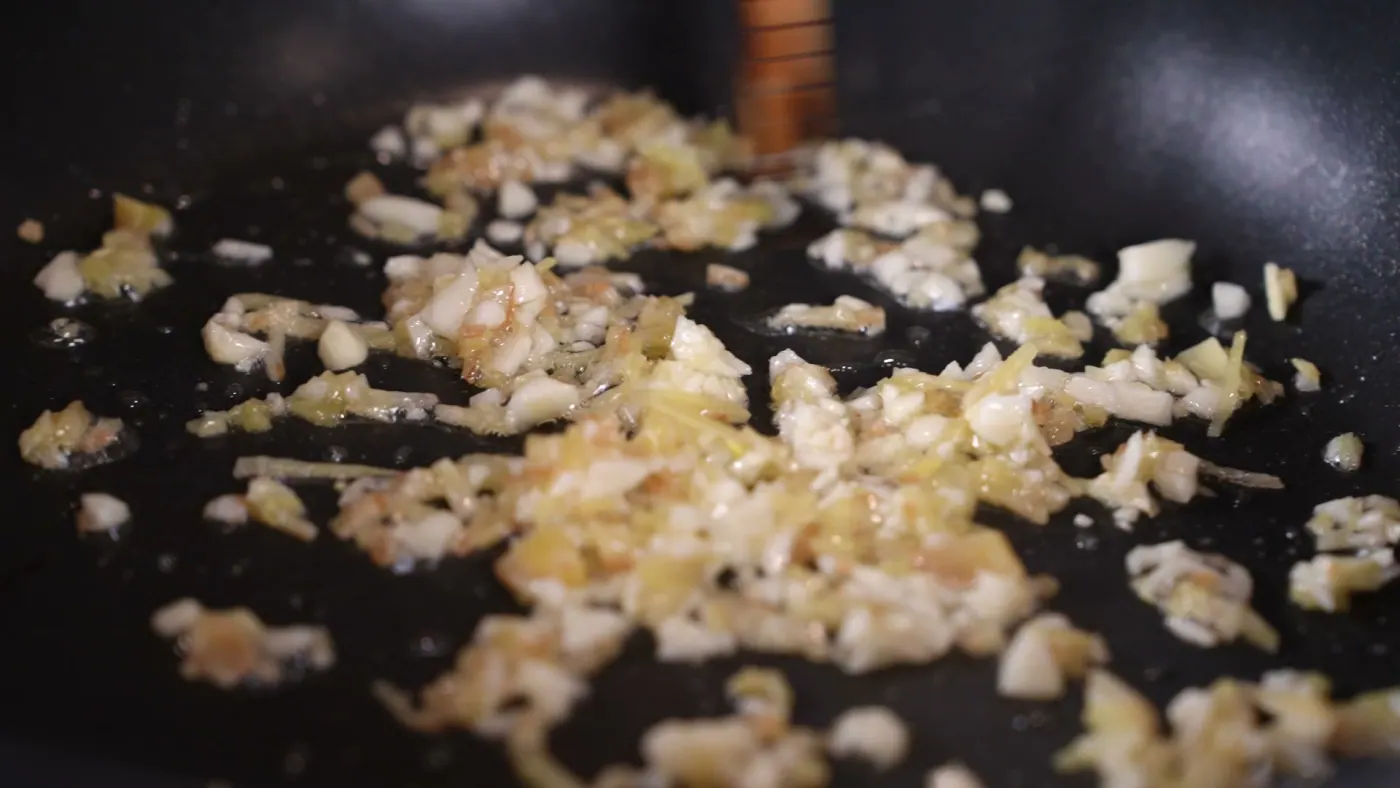
Set a deep frying pan on the stove and add 1 tablespoon of vegetable oil. Add the garlic and ginger and cook them slowly over low heat so their flavor goes into the oil. When the garlic starts to turn light brown in places, it's time to add the other ingredients. Don't let it burn, or it will taste bitter.
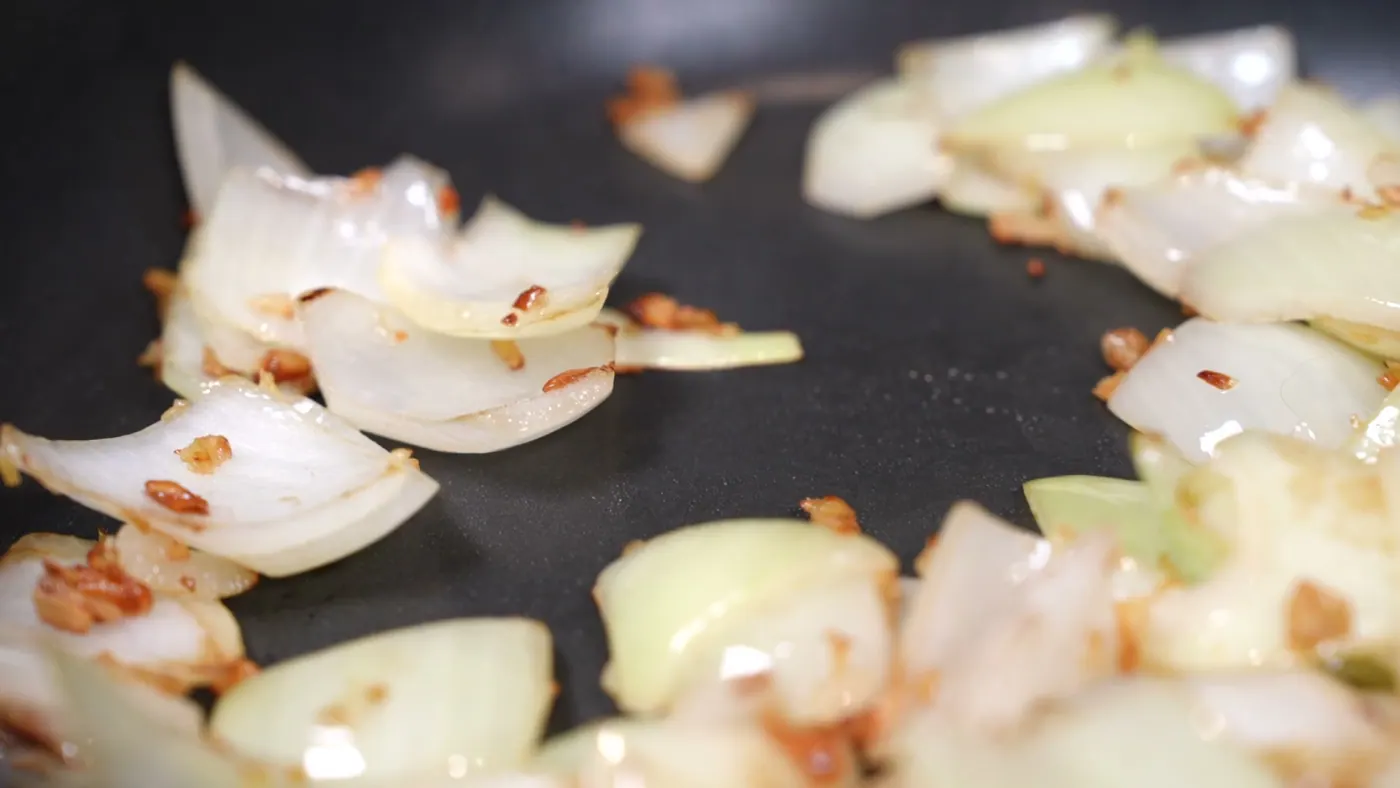
Cook the onion
Turn the heat up to medium, add the onion and cook it for about 5 minutes. Cooking it slowly brings out its sweetness. When the onion turns partly translucent, it's time to add the pork.
Cook the pork
Add the pork, separating the slices, and cook it lightly. It's done when the pork has turned mostly white.
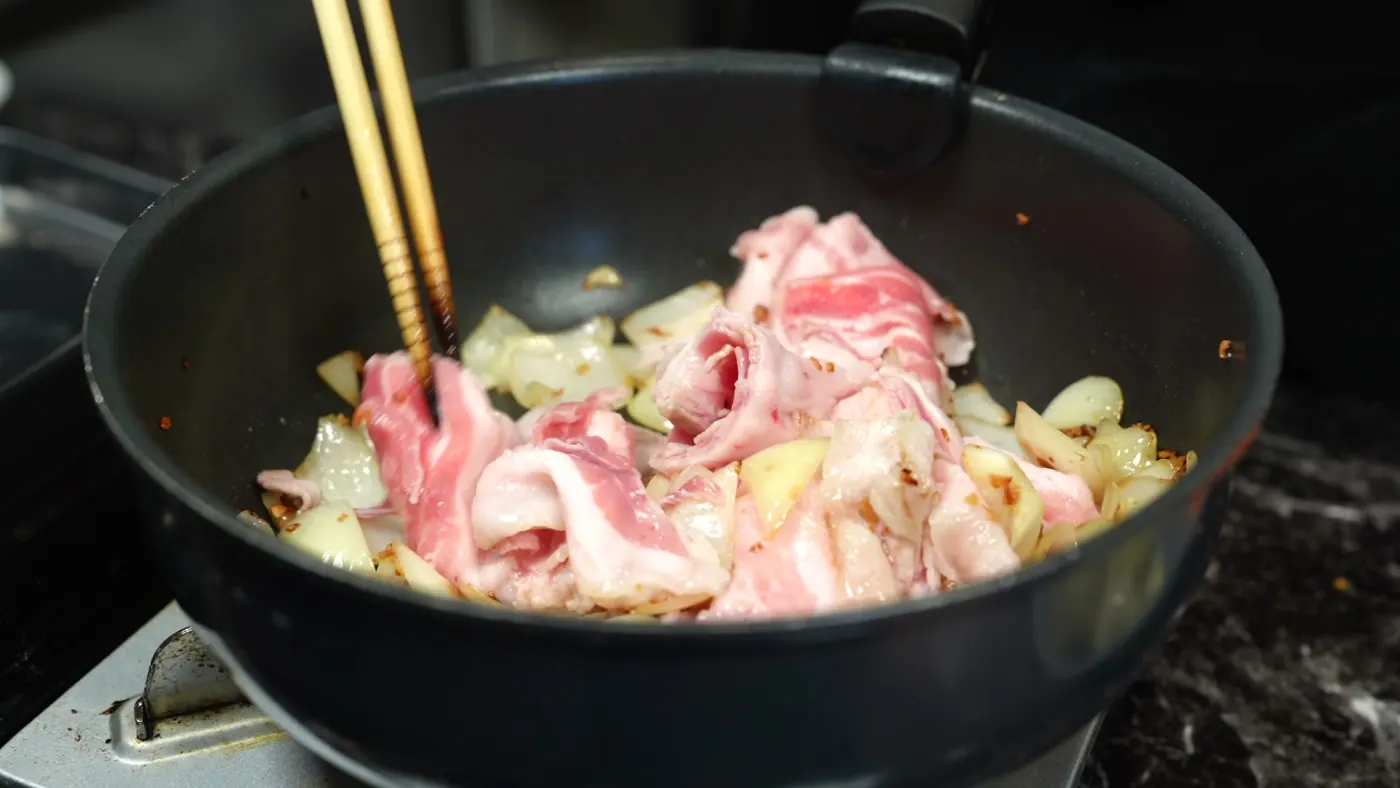
Add the carrot and potatoes
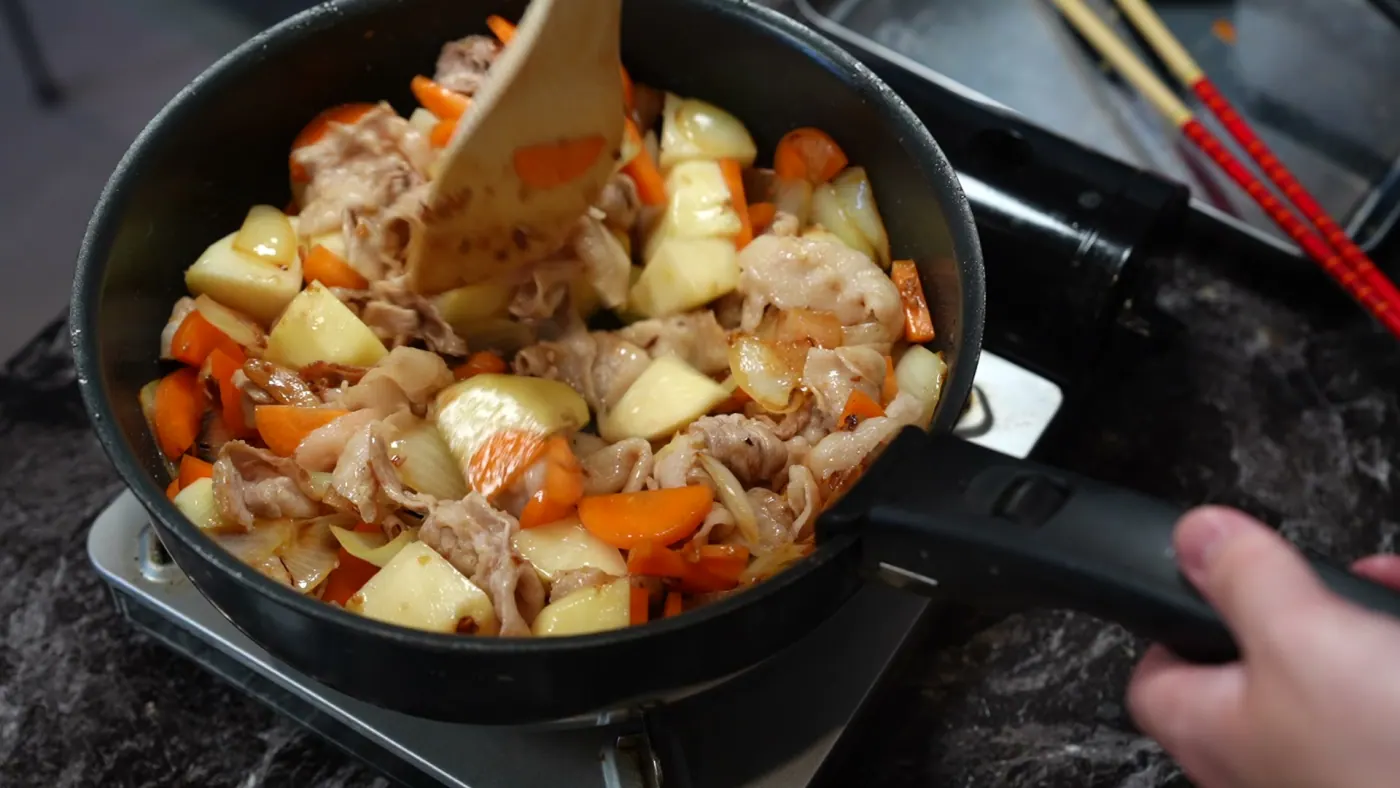
Add the carrot and potatoes. Stir so the oil, now full of garlic and ginger flavor, coats everything, and cook for 4 to 5 minutes. It's perfect when everything looks glossy with oil.
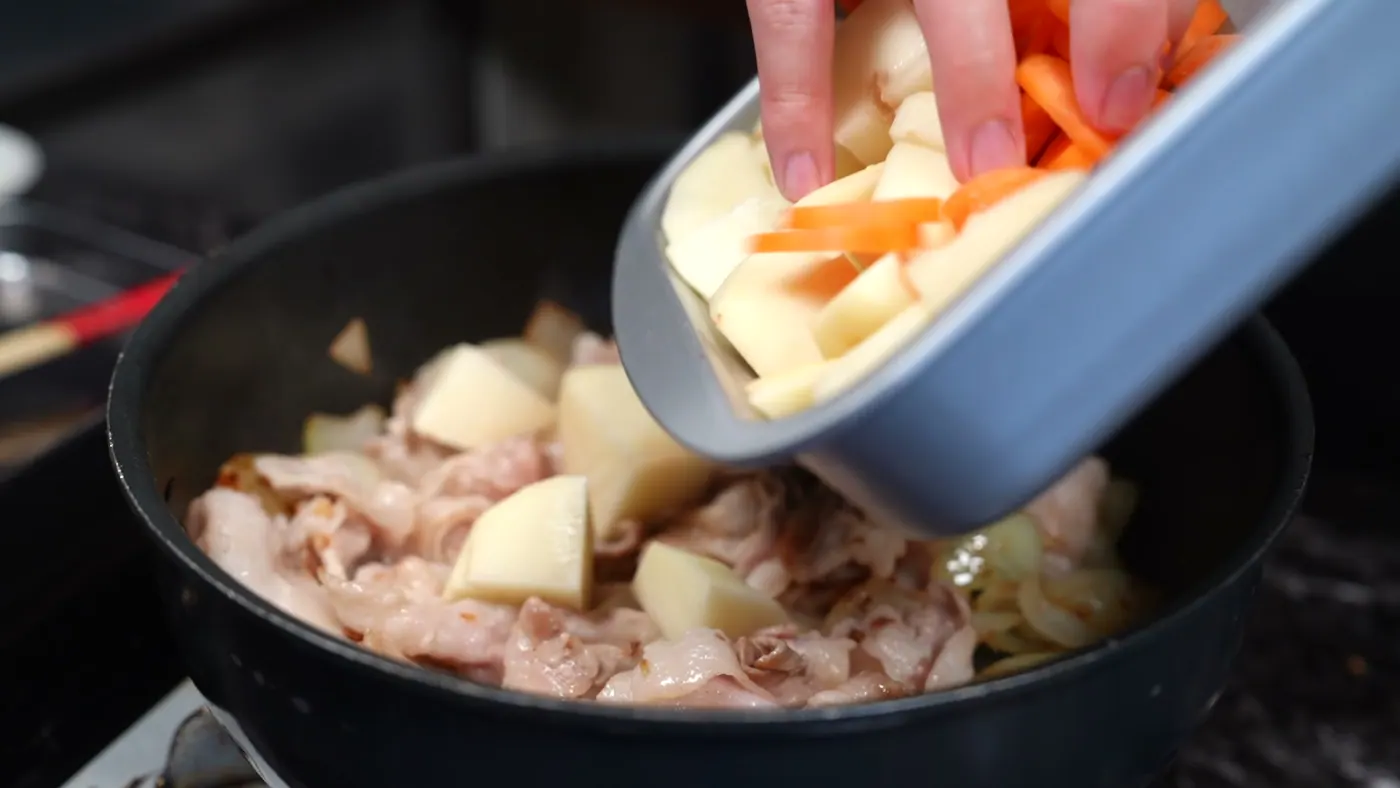
Add the seasonings
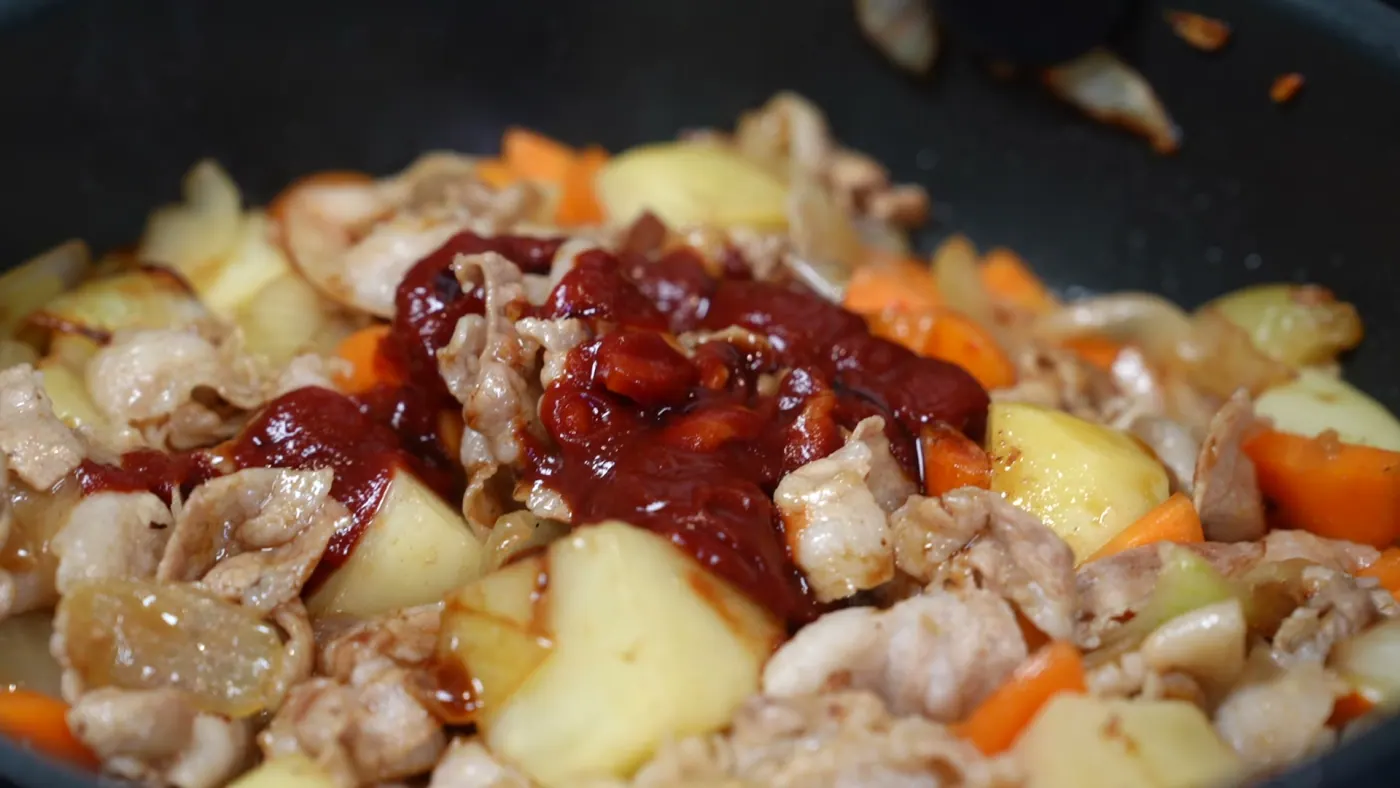
Since you're not using roux cubes, these seasonings give the curry its base flavor. Add 3 tablespoons of ketchup, 2 tablespoons of Worcestershire sauce and 1 1/2 tablespoons of oyster sauce. Stir well so they coat everything, and cook for another 4 to 5 minutes to cook off the acidity of the ketchup.

Add the dashi and chicken stock powder
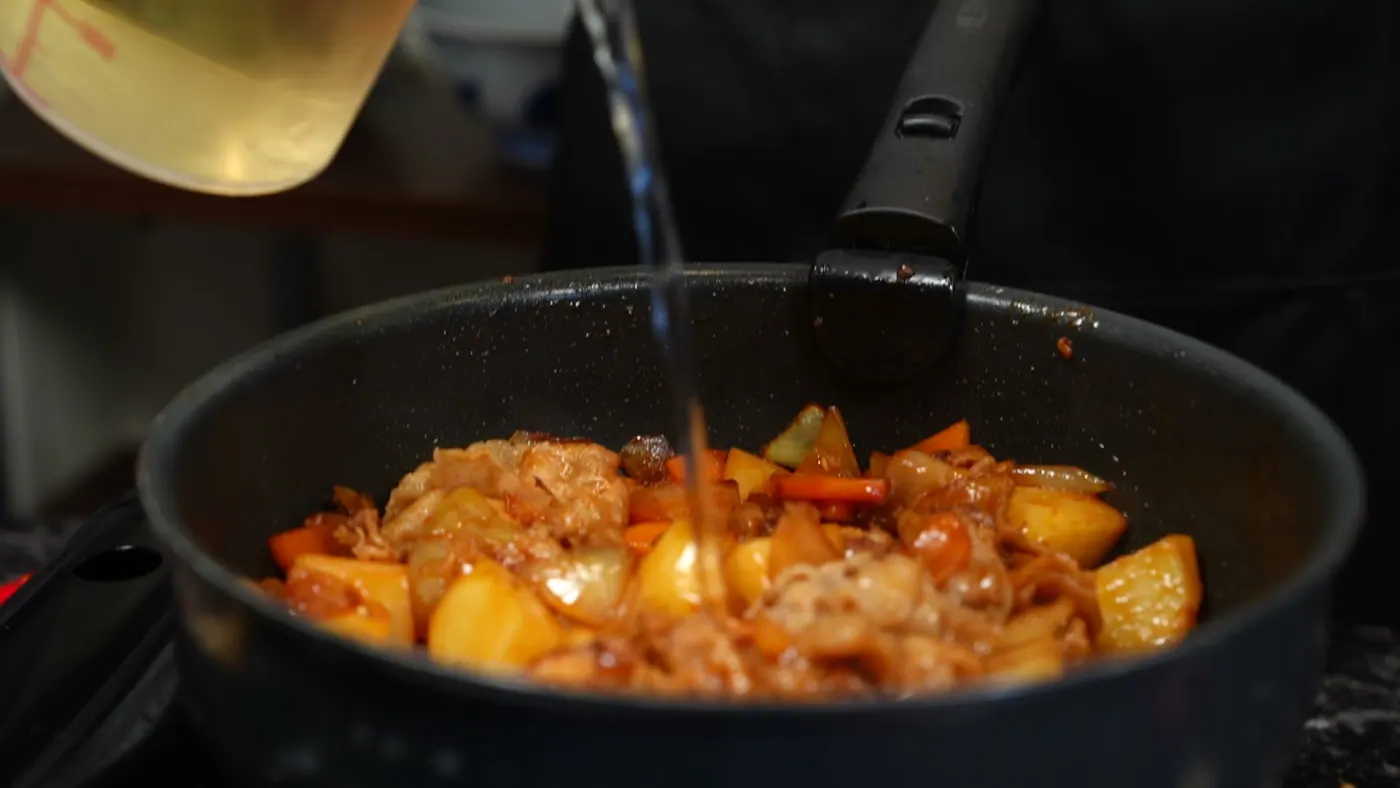
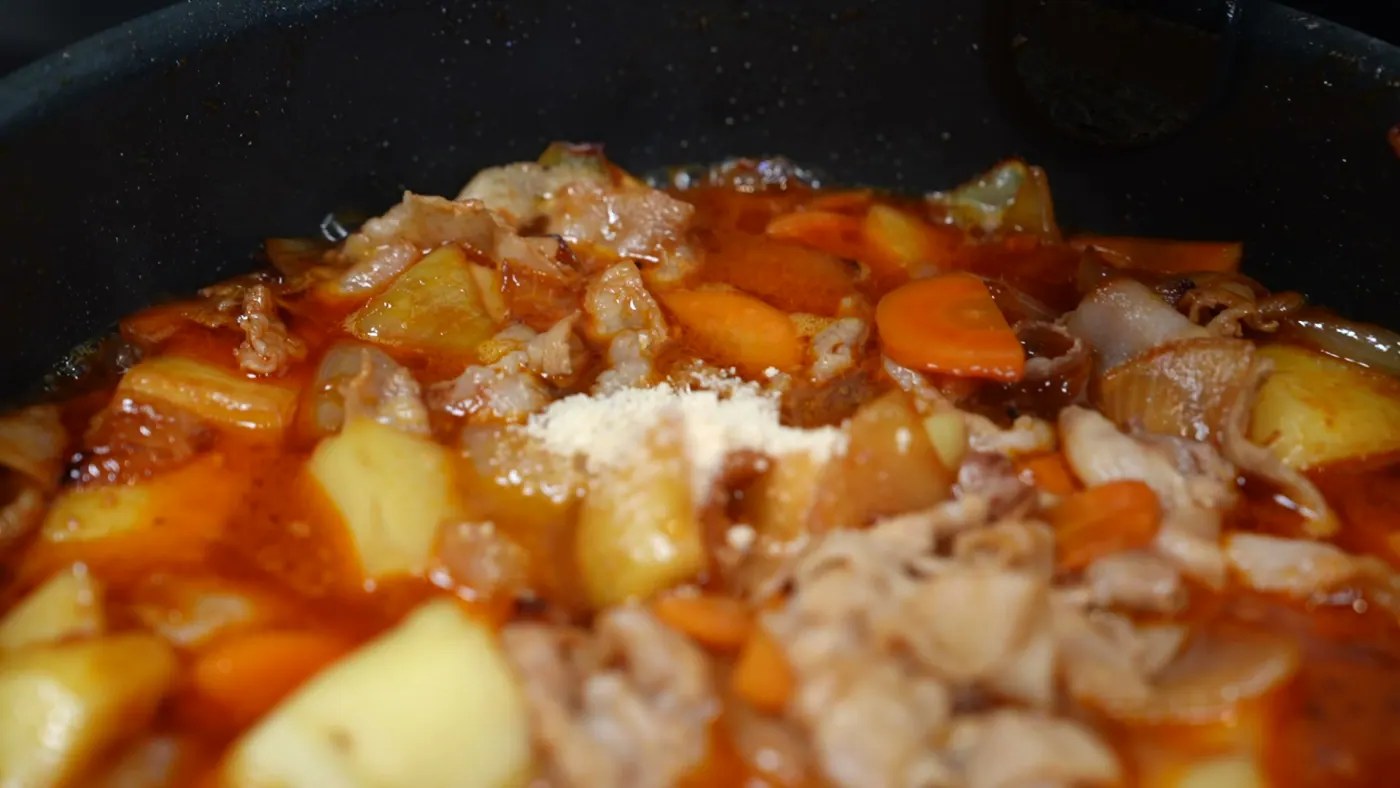
Pour in 400ml of dashi. The dashi is the base of the curry's umami, so be sure to use dashi, not water. Add 2 teaspoons of chicken stock powder for extra savory chicken flavor.
Simmer for 1 minute
Stir a little and simmer for about 1 minute. Then turn off the heat and take the pan off the stove for now.
Make the Curry Roux
Melt the butter and add the flour
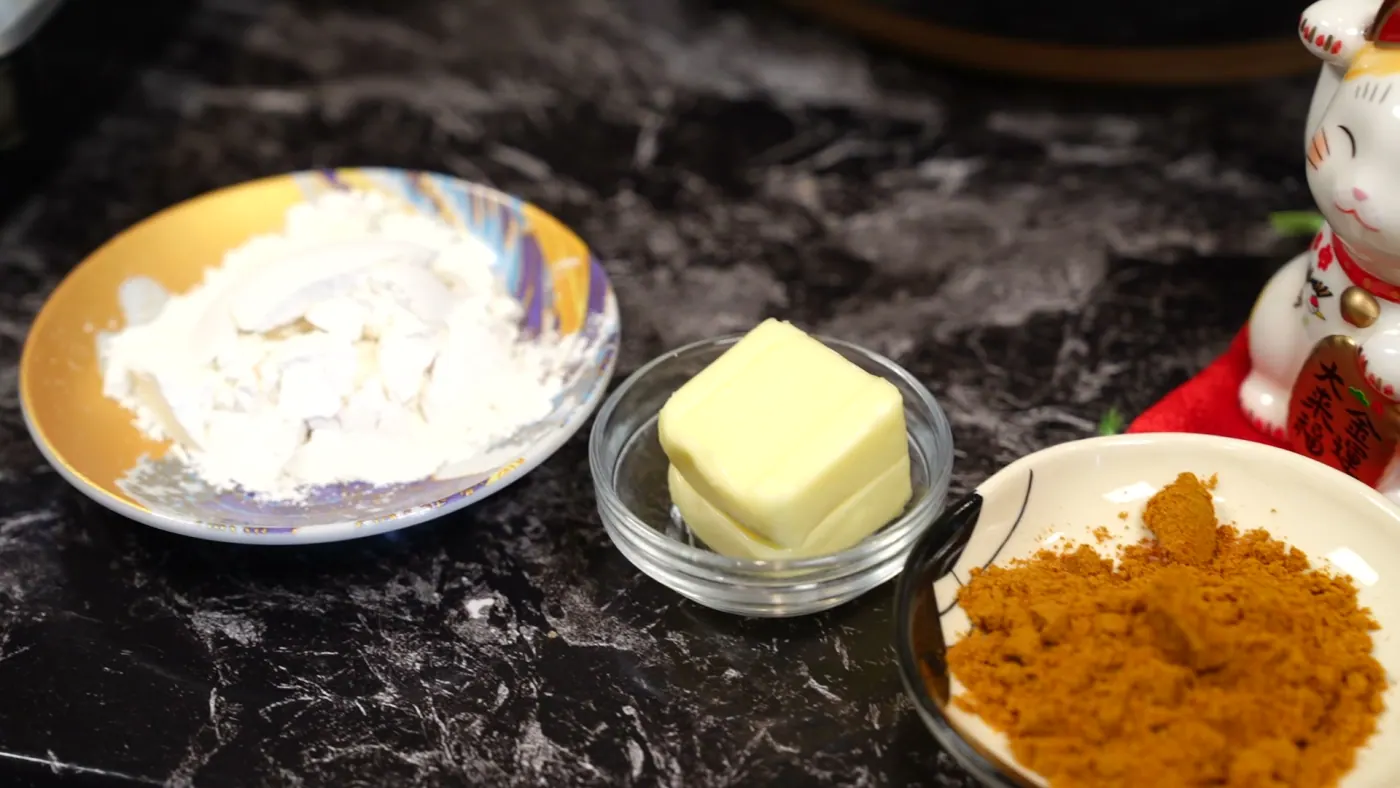
You need three ingredients for the roux: butter, flour and curry powder. In a small frying pan, melt 20g of butter over low heat. When it melts, add 3 tablespoons of all-purpose flour and mix well so the flour blends into the butter.
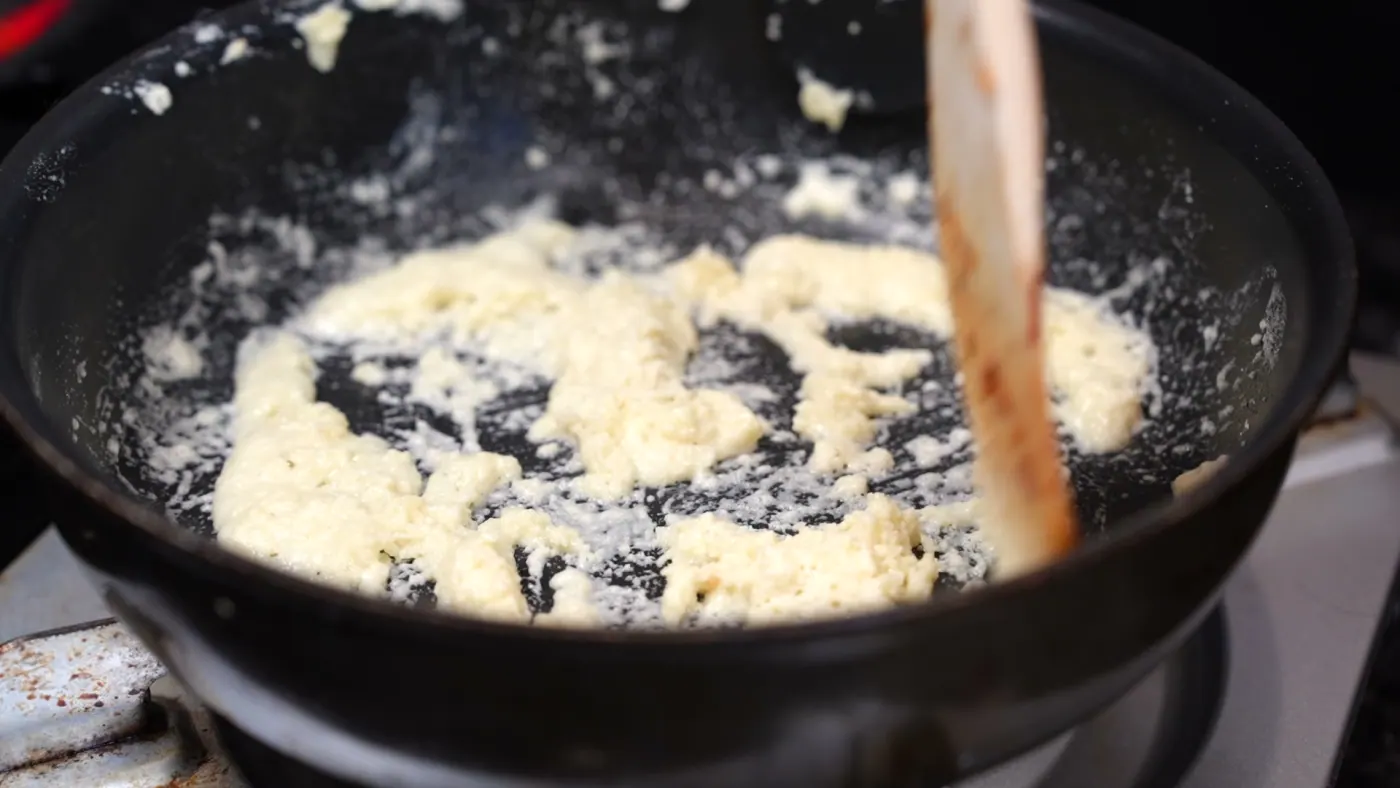
Cook until light brown
The roux burns easily, so keep the heat low and keep stirring. Little by little it turns brown. When it's a light brown, it's ready for the curry powder.
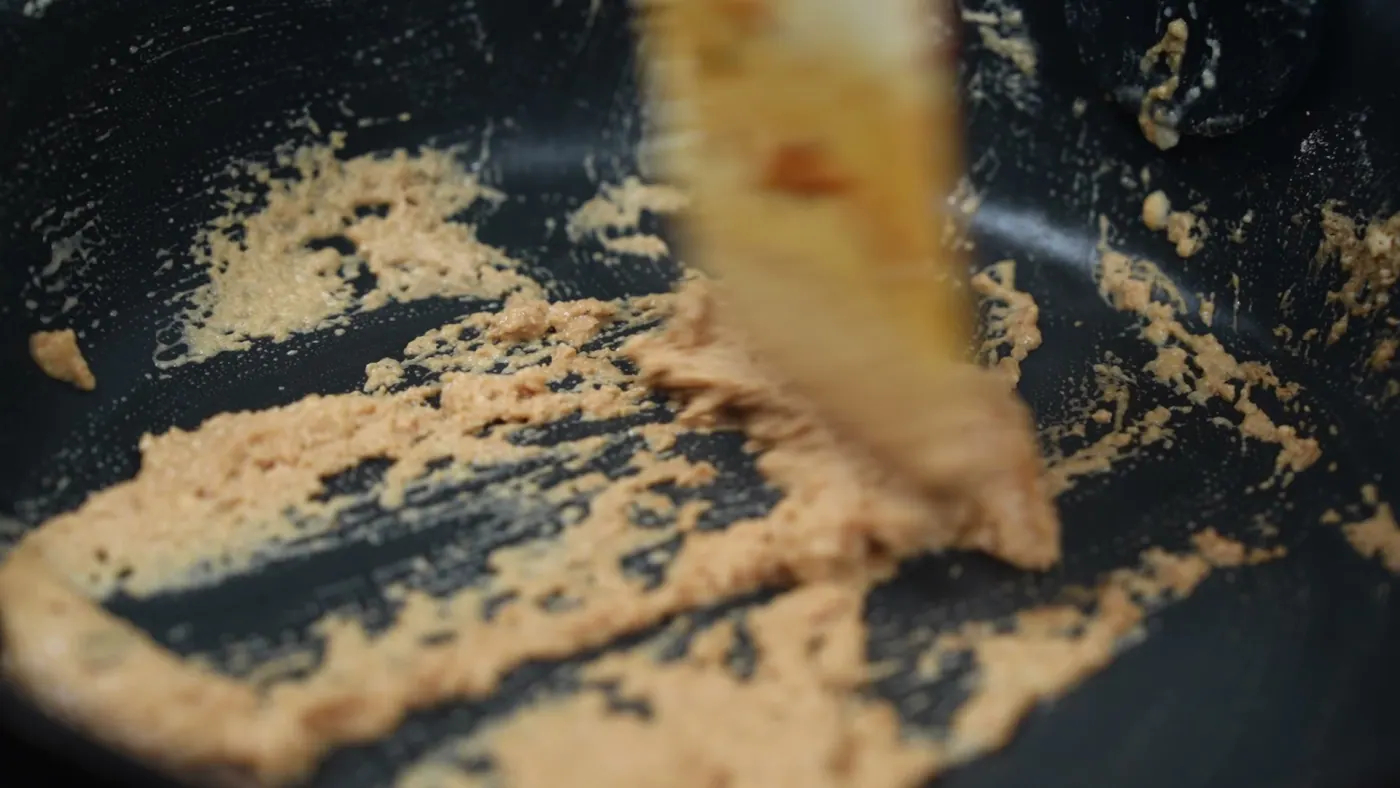
Add the curry powder
Add 2 tablespoons of curry powder and mix it in.
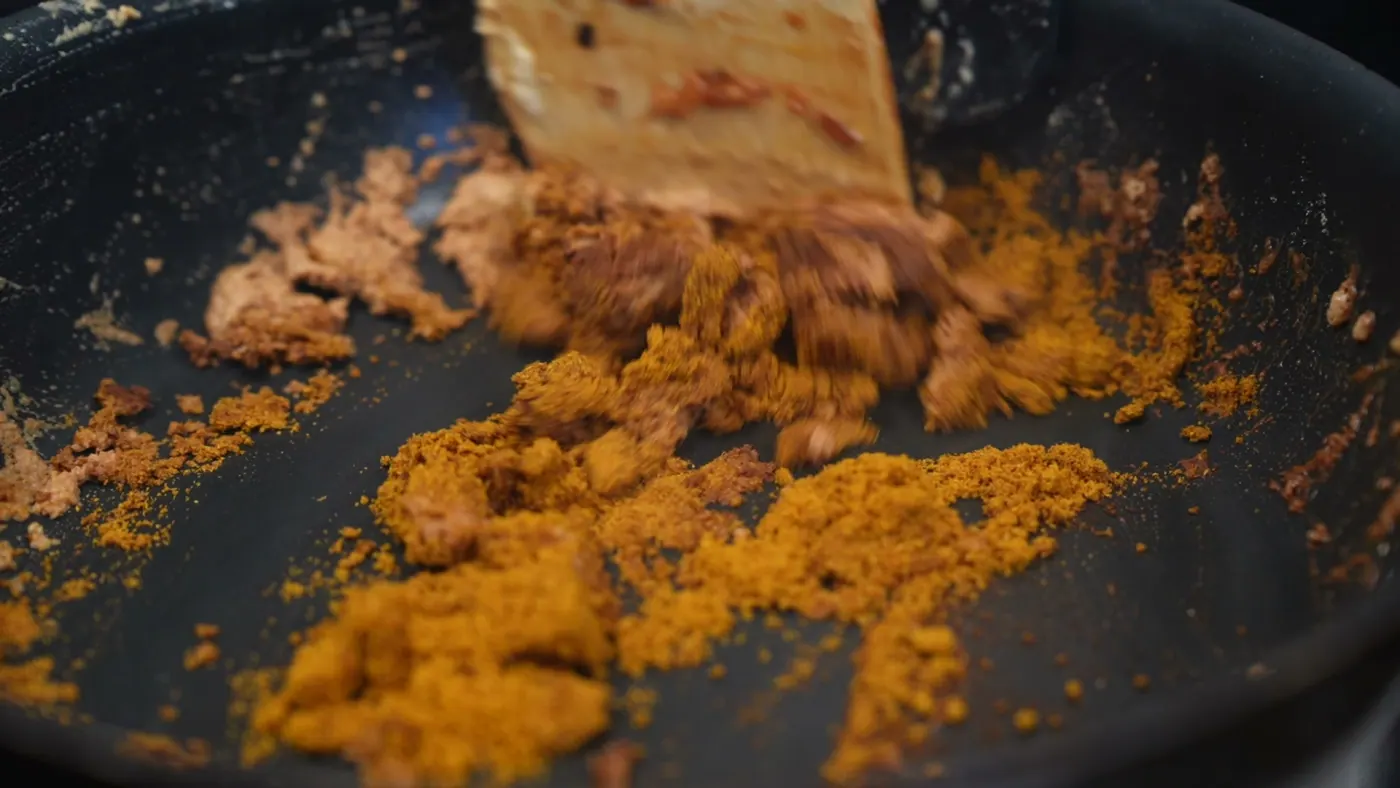
Loosen it with dashi
Add 100ml of dashi to turn the roux into a paste. If you add the powdery roux straight to the pot, it forms lumps, so loosening it first helps it blend in. Press out any big lumps with the spatula. It's ready when it's smooth.
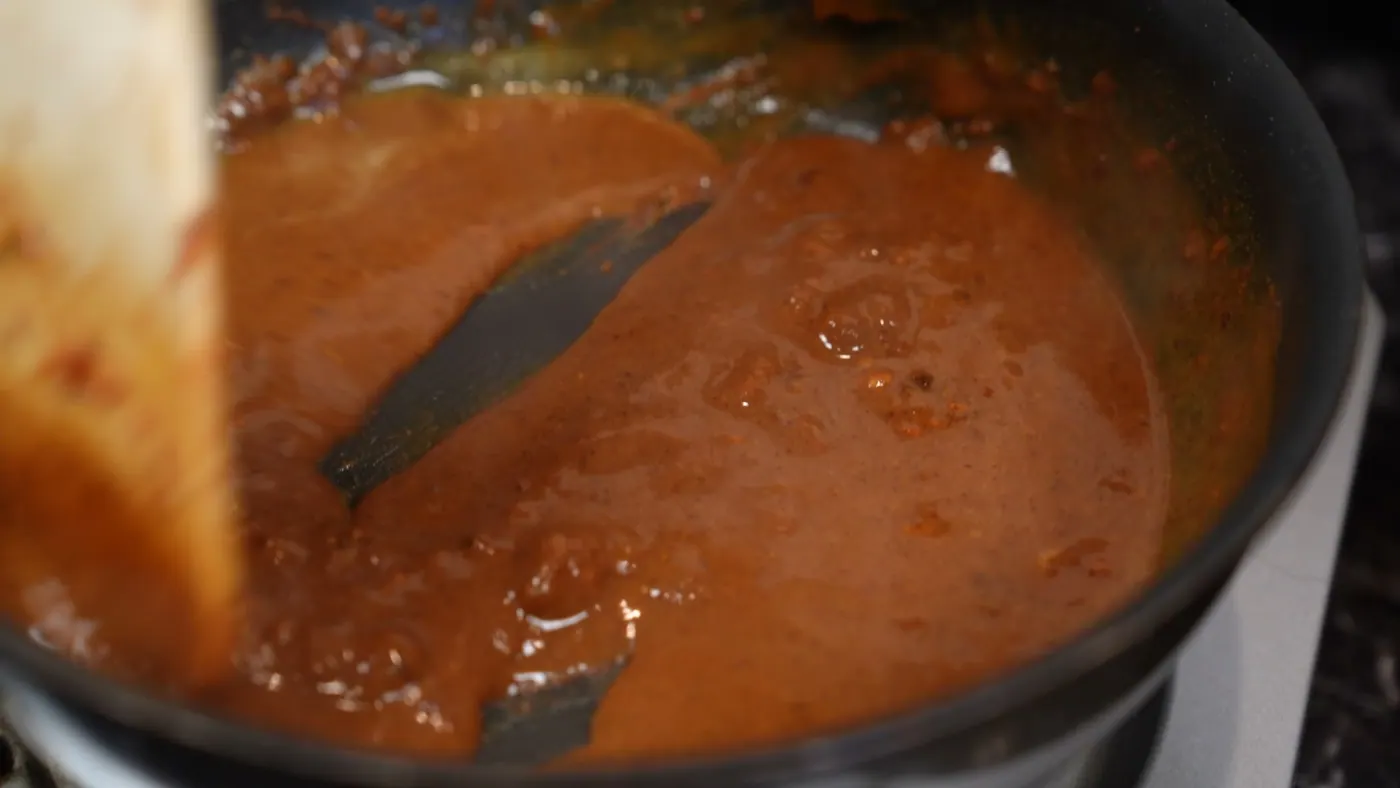
Finish the Curry
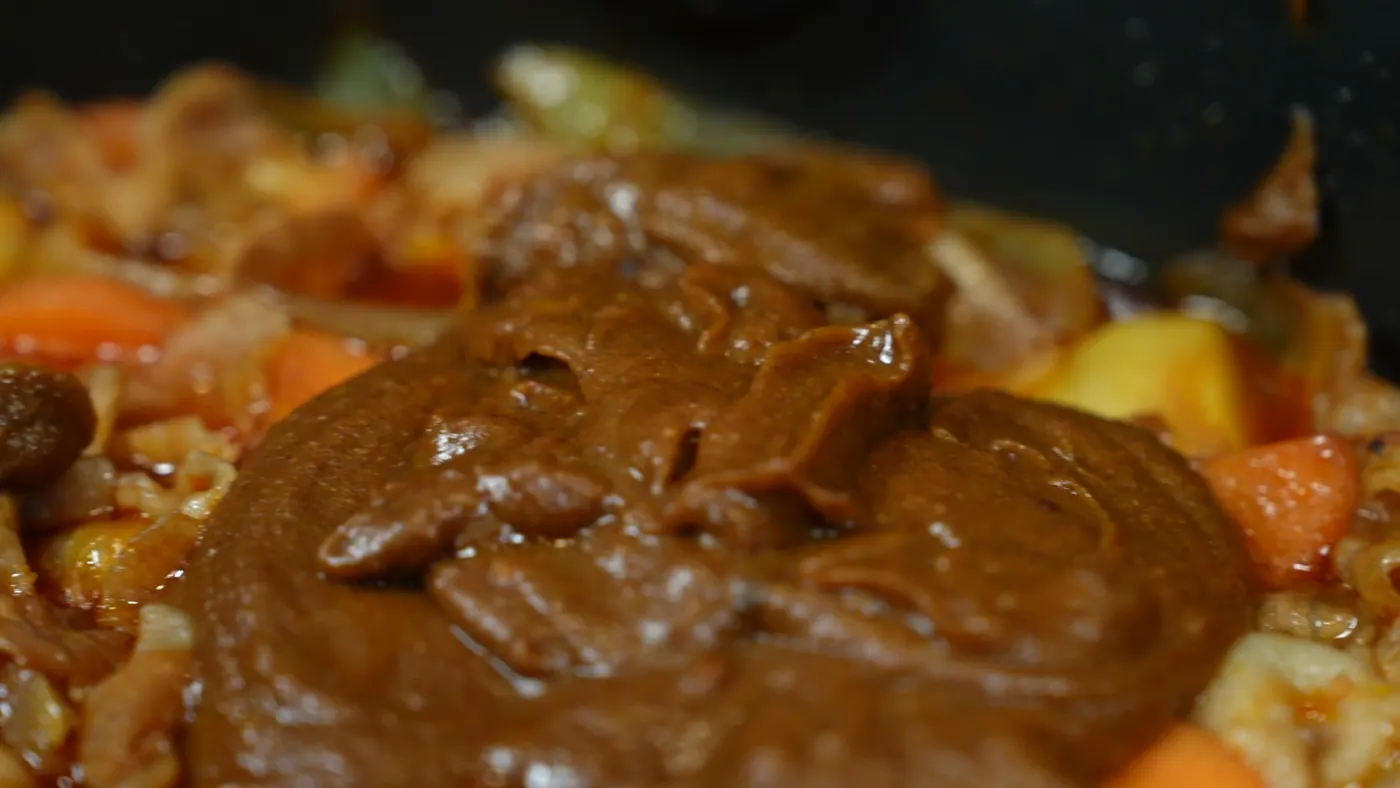
Add the paste and simmer
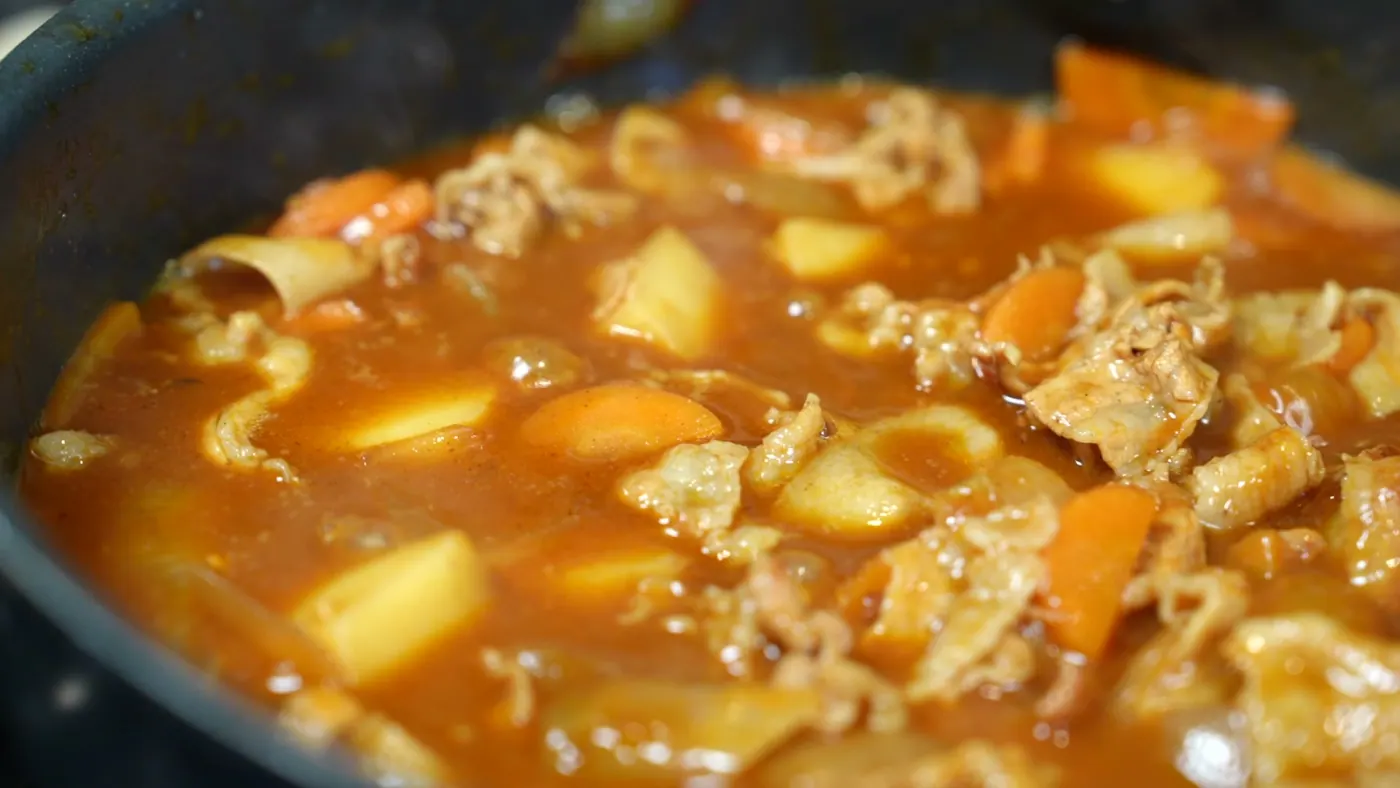
Add all of the curry paste to the first pan, put it back on the stove and heat it over medium. Stir well so the paste blends into the liquid, and simmer for about 15 minutes, until the potatoes are cooked through. The curry is thick now, so stir it from the bottom now and then so it doesn't stick and burn. If you're worried about scorching, turn the heat down to medium-low.
Check the potatoes
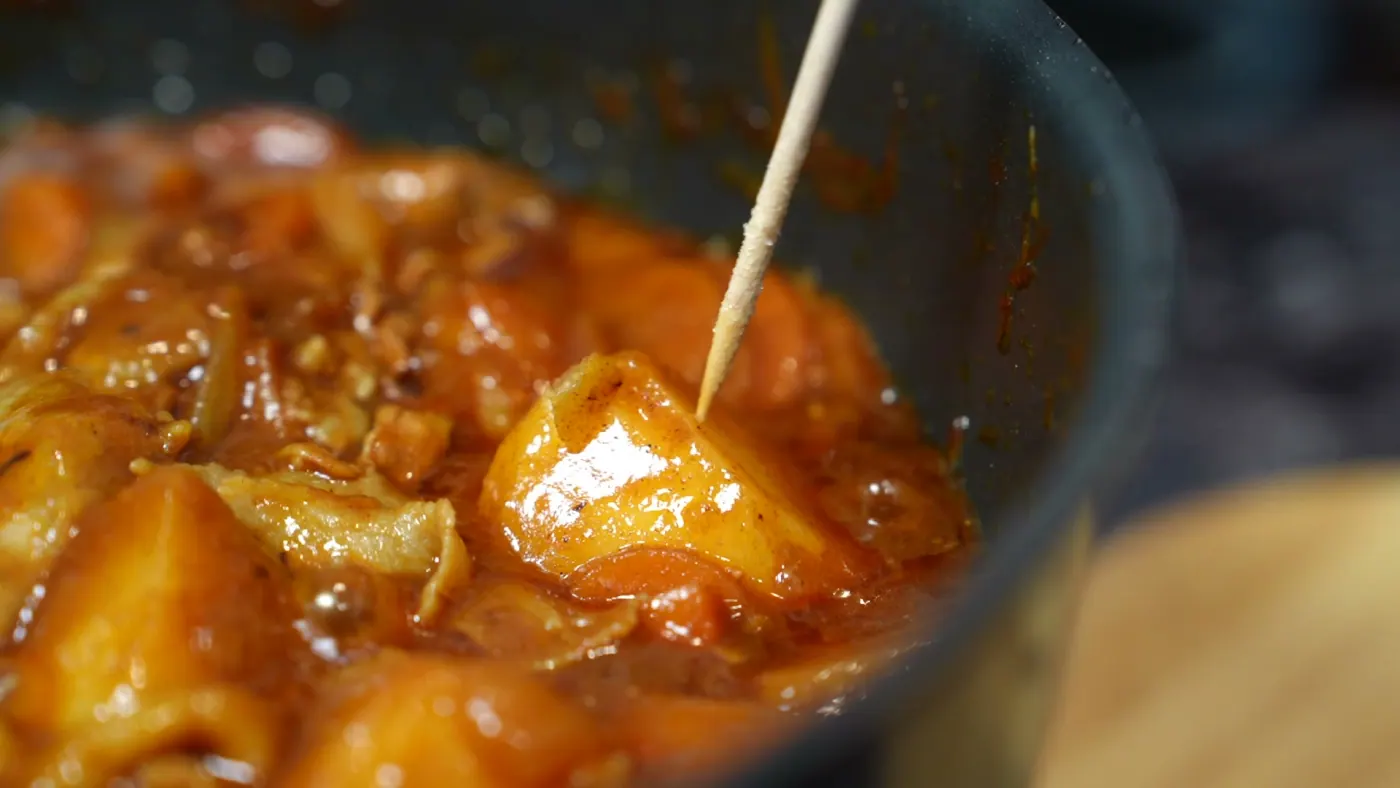
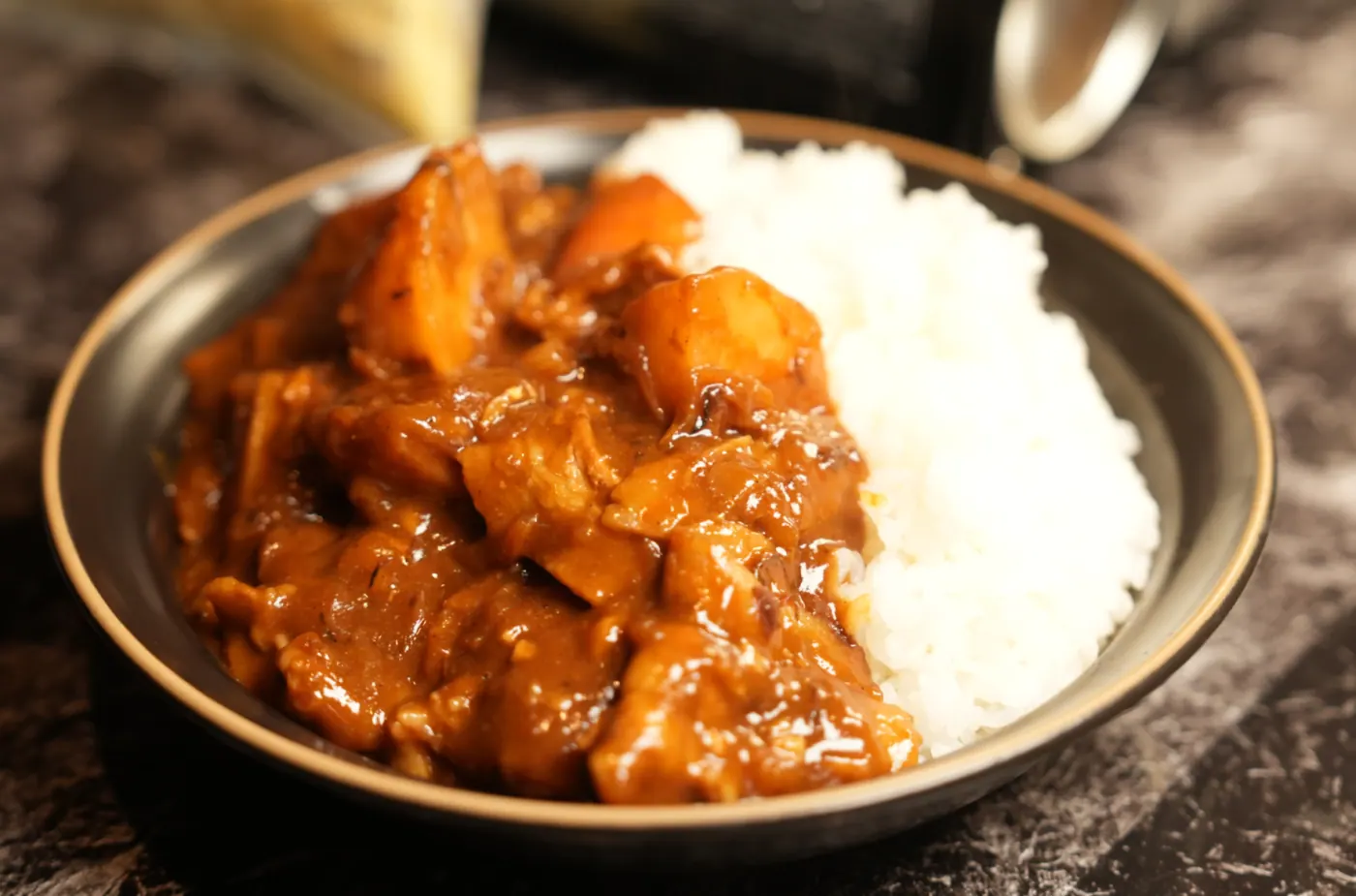
Now it really looks like curry. Poke a potato with a skewer. If the skewer slides in easily, it's done. Turn off the heat.
Add the milk
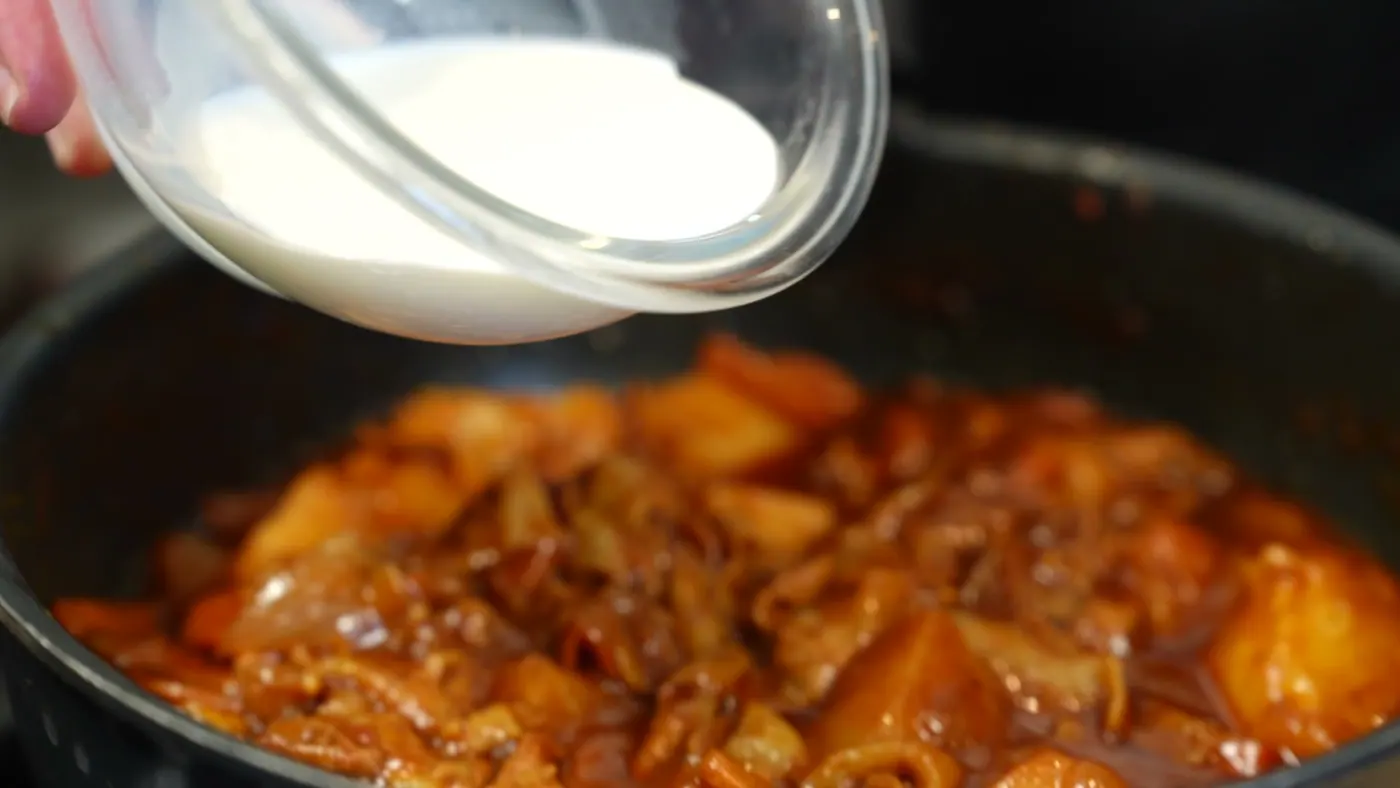
Finally, add 100ml of milk as a secret ingredient. It makes the curry milder and creamier, and takes it to the next level. If you don't drink milk, use soy milk.
Serve with rice
Put Japanese rice on a plate and spoon plenty of curry next to it.
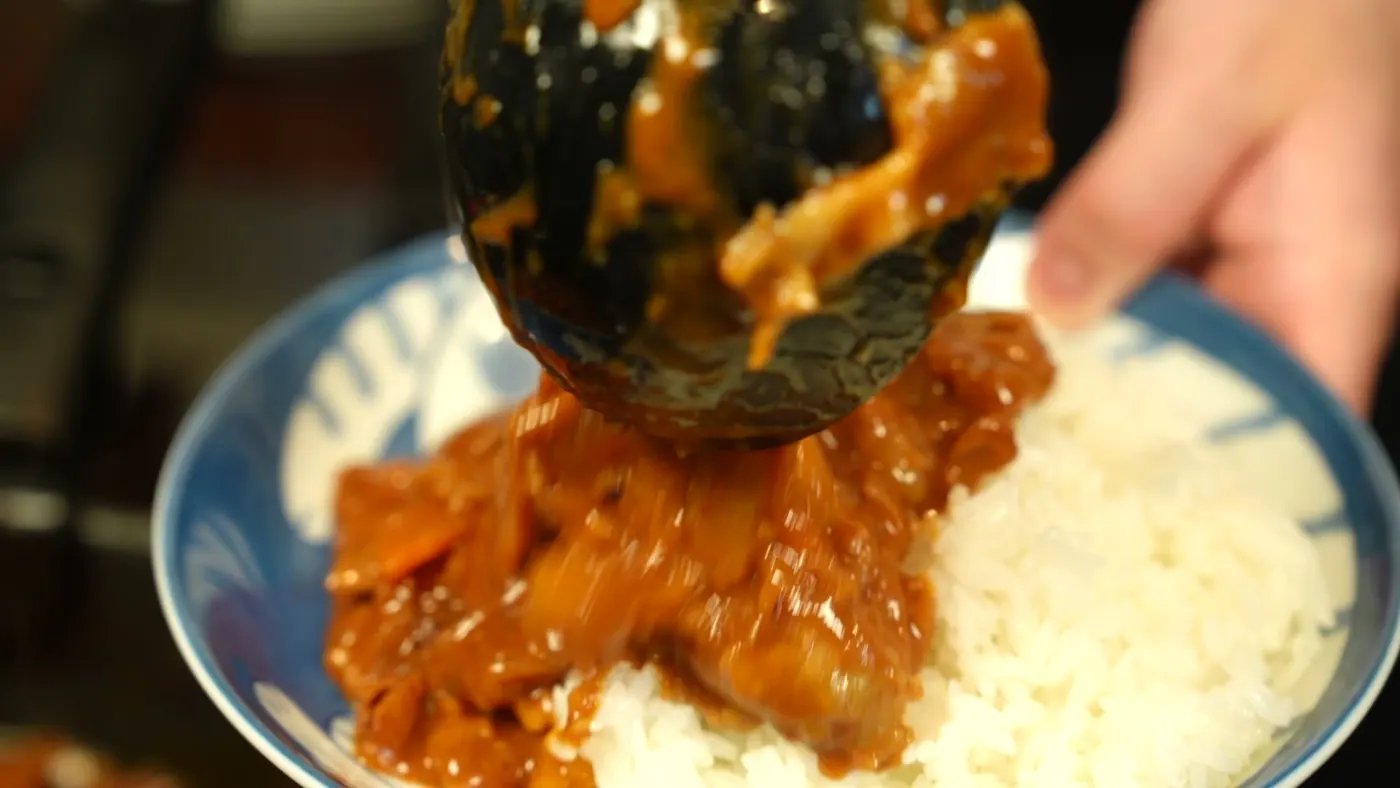
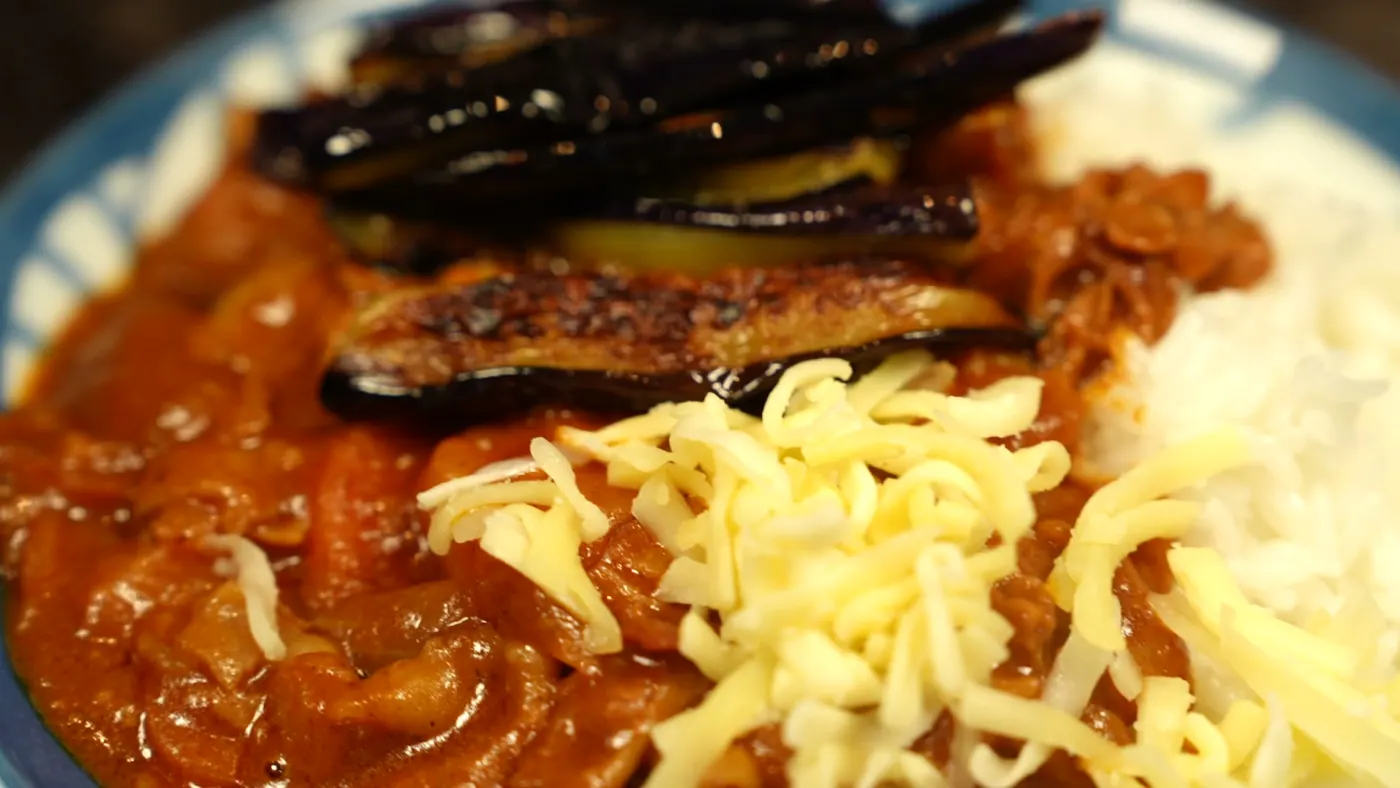
Variation: Cheese and Pan-Fried Eggplant
My favorite toppings for this curry are classic cheese and pan-fried eggplant. Cook sliced eggplant in a frying pan until soft, then put it on the curry with shredded cheese. These toppings are optional and are not part of the recipe card above.

Tips and Key Points
Low heat for the garlic and ginger
Cooking them slowly moves their flavor into the oil. Stop when the garlic is light brown in places, before it burns and turns bitter.
Cook off the ketchup's acidity
After you add the ketchup and sauces, keep stir-frying for 4 to 5 minutes so the sharp acidity cooks off.
Dashi is the base
Without roux cubes, the dashi carries the umami of the curry. Water makes it taste flat.
Turn the roux into a paste first
Loosen the butter, flour and curry powder roux with dashi before it goes into the pot, so the curry stays smooth and free of lumps.
Troubleshooting
Frequently Asked Questions
Can I make Japanese curry without roux cubes?
Yes. This recipe makes the roux from butter, flour and curry powder, and seasons the curry with ketchup, Worcestershire sauce, oyster sauce and dashi.
What can I use instead of oyster sauce?
1 tablespoon of soy sauce plus 1/2 teaspoon of sugar.
Can I use water instead of dashi?
Use dashi. It's the base of the curry's umami, and the curry tastes flat with water.
Is the pork bacon?
No. It's raw, thinly sliced pork belly, the kind sold in Japanese supermarkets.
What should I do if my curry has lumps?
Loosen the roux with dashi into a smooth paste before you add it to the pot. Adding the powdery roux directly makes lumps.
What should I do if the garlic tastes bitter?
It burned. Cook the garlic and ginger over low heat and move on as soon as the garlic is light brown in places.
Is this curry spicy?
No. The milk makes it mild and creamy, so it's a flavor both adults and kids enjoy.
Can I use something other than milk?
Yes, soy milk works.
Summary
Japanese curry without roux cubes starts with garlic and ginger cooked slowly in oil, then onion, pork belly, carrot and potatoes. Ketchup, Worcestershire sauce, oyster sauce, dashi and chicken stock powder build the flavor, and a homemade roux of butter, flour and curry powder, loosened with dashi, thickens it. Simmer until the potatoes are tender, finish with milk, and serve with rice.
For another way to enjoy Japanese curry, try curry udon.
主菜Main Dishルウを使わないカレー
Japanese Curry from Scratch (Homemade Curry Roux, No Cubes)
Japanese curry is usually made with boxed curry roux cubes, but they aren't always easy to find outside Japan.
No ratings yet
Rate this recipe
- Prep
- 15 min
- Cook
- 40 min
- Total
- 55 min
- Servings
- 4
- Difficulty
- Beginner
Ingredients
Vegetables and Meat
Aromatics
Seasonings
Homemade Curry Roux
To Finish
To Serve
Ingredient amounts are multiplied; cooking times and pan size may need adjusting.
Instructions
Amounts mentioned in the steps are for the original recipe (1x) — use the scaled amounts above.
Prep the Ingredients
Cut the carrot
The skin of a carrot is very thin, so you don't need to peel it. Cut the carrot in half lengthwise, then slice it into 0.5cm (about 1/4-inch) half-moons. Carrots take a while to cook, so cut them small. They add natural sweetness to the curry.
Cut the onion
Cut the onion in half, then cut it into chunks: keep the angle of the knife the same and turn the onion a little after each cut. In this curry you don't cook the onion until it's deep brown. It's one of the ingredients you eat, so cut it into fairly large pieces.
Cut the potatoes
Peel the potatoes and cut each one into 6 to 8 bite-size pieces. Yellow-fleshed potatoes are best because they don't fall apart easily when simmered.
Mince the garlic and ginger
Mince 15g each of garlic and ginger. Because this curry doesn't use roux cubes, these two make a big difference: garlic adds punch and ginger adds a nice aroma. You add them at the same time, so you can put them in the same small dish.
Cut the pork belly
Cut 250g of thinly sliced pork belly into 5cm (2-inch) pieces. Pork belly is best because its fat adds flavor to the curry. It's raw pork, not bacon. In Japan, supermarkets sell pork sliced this thin.
Cook the Curry Base
Cook the garlic and ginger over low heat
Set a deep frying pan on the stove and add 1 tablespoon of vegetable oil. Add the garlic and ginger and cook them slowly over low heat so their flavor goes into the oil. When the garlic starts to turn light brown in places, it's time to add the other ingredients. Don't let it burn, or it will taste bitter.
Cook the onion
Turn the heat up to medium, add the onion and cook it for about 5 minutes. Cooking it slowly brings out its sweetness. When the onion turns partly translucent, it's time to add the pork.
Cook the pork
Add the pork, separating the slices, and cook it lightly. It's done when the pork has turned mostly white.
Add the carrot and potatoes
Add the carrot and potatoes. Stir so the oil, now full of garlic and ginger flavor, coats everything, and cook for 4 to 5 minutes. It's perfect when everything looks glossy with oil.
Add the seasonings
Since you're not using roux cubes, these seasonings give the curry its base flavor. Add 3 tablespoons of ketchup, 2 tablespoons of Worcestershire sauce and 1 1/2 tablespoons of oyster sauce. Stir well so they coat everything, and cook for another 4 to 5 minutes to cook off the acidity of the ketchup.
Add the dashi and chicken stock powder
Pour in 400ml of dashi. The dashi is the base of the curry's umami, so be sure to use dashi, not water. Add 2 teaspoons of chicken stock powder for extra savory chicken flavor.
Simmer for 1 minute
Stir a little and simmer for about 1 minute. Then turn off the heat and take the pan off the stove for now.
Make the Curry Roux
Melt the butter and add the flour
You need three ingredients for the roux: butter, flour and curry powder. In a small frying pan, melt 20g of butter over low heat. When it melts, add 3 tablespoons of all-purpose flour and mix well so the flour blends into the butter.
Cook until light brown
The roux burns easily, so keep the heat low and keep stirring. Little by little it turns brown. When it's a light brown, it's ready for the curry powder.
Add the curry powder
Add 2 tablespoons of curry powder and mix it in.
Loosen it with dashi
Add 100ml of dashi to turn the roux into a paste. If you add the powdery roux straight to the pot, it forms lumps, so loosening it first helps it blend in. Press out any big lumps with the spatula. It's ready when it's smooth.
Finish the Curry
Add the paste and simmer
Add all of the curry paste to the first pan, put it back on the stove and heat it over medium. Stir well so the paste blends into the liquid, and simmer for about 15 minutes, until the potatoes are cooked through. The curry is thick now, so stir it from the bottom now and then so it doesn't stick and burn. If you're worried about scorching, turn the heat down to medium-low.
Check the potatoes
Now it really looks like curry. Poke a potato with a skewer. If the skewer slides in easily, it's done. Turn off the heat.
Add the milk
Finally, add 100ml of milk as a secret ingredient. It makes the curry milder and creamier, and takes it to the next level. If you don't drink milk, use soy milk.
Serve with rice
Put Japanese rice on a plate and spoon plenty of curry next to it.
Video
Watch the video · 7:36Open on YouTube
Jump to a part of the video (8 chapters)
Video: https://youtu.be/P8zJpiQMkEk
Notes
Substitutions
- Oyster sauce: 1 tablespoon soy sauce + 1/2 teaspoon sugar
- Milk: Soy milk works too
- Dashi: Make it with a dashi pack, or see how to make dashi. Use dashi rather than water, because it's the base of the curry's flavor
- Potatoes: Yellow-fleshed potatoes hold their shape better when simmered
- Pork belly: Look for thinly sliced pork belly at Japanese or Asian grocery stores. It's raw pork, not bacon
Nutrition estimated, per serving
- Calories
- 454 kcal
- Carbohydrates
- 35.8 g
- Protein
- 14.4 g
- Fat
- 30.9 g
- Saturated fat
- 12.7 g
- Fiber
- 5.5 g
- Sodium
- 1,137 mg
Estimated by us from the Standard Tables of Food Composition in Japan (MEXT, 2020). Optional ingredients and garnishes are not counted; soup and sauce are counted as fully eaten. Actual values depend on your brands and portion sizes. How we calculate this
Course: Main Dish · Cuisine: Japanese · Keyword: Japanese Curry from Scratch
Recipe from Japanese Cooking Ichie — https://japanesecookingichie.com/recipes/japanese-curry-roux/
Make it a meal
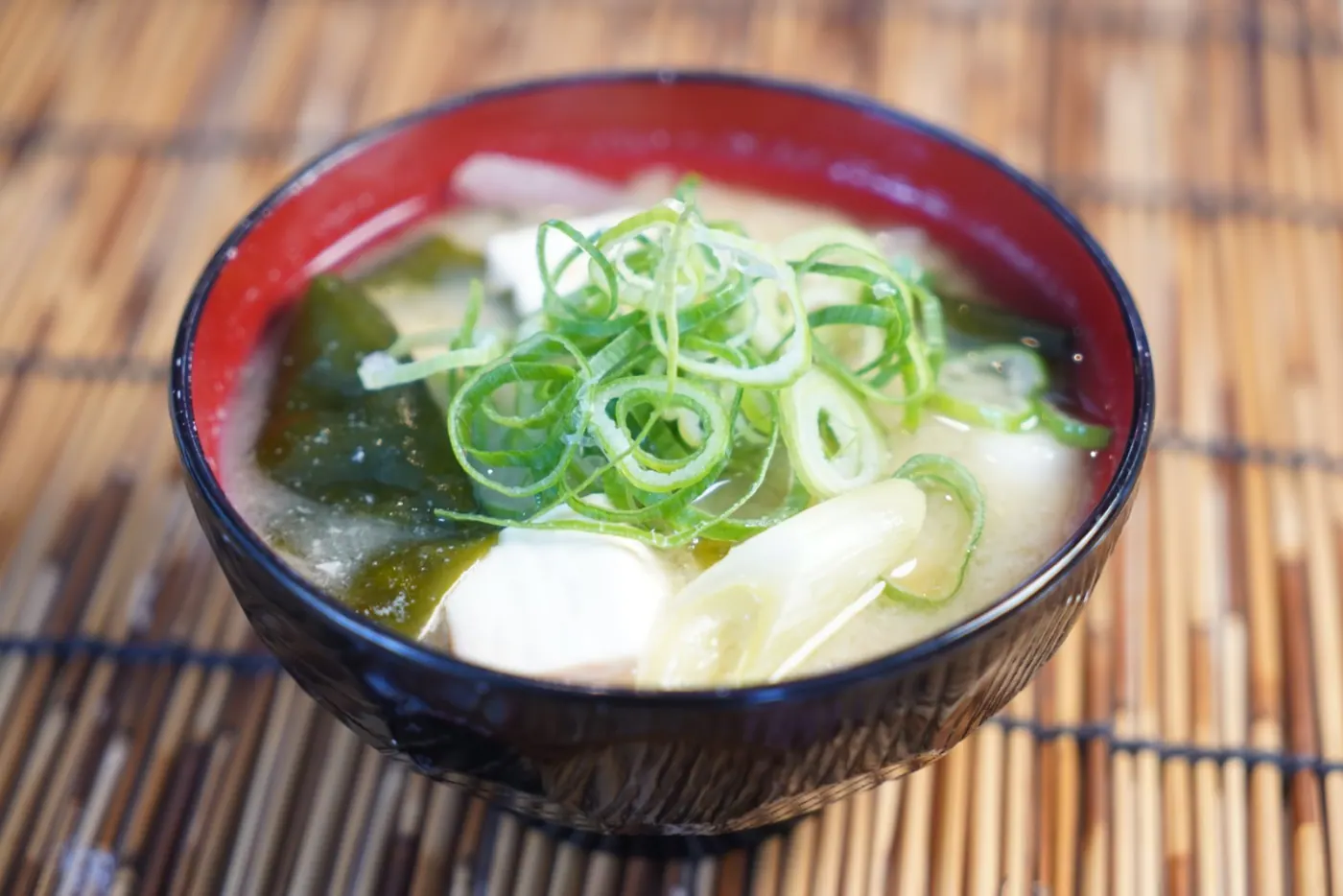
Add a side dish to round out the table.


Ratings & comments
No ratings yet — be the first to rate this recipe.
Comments