- Prep
- 10 min
- Cook
- 15 min
- Total
- 25 min
- Servings
- 1
- Difficulty
- Beginner
What is Curry Udon?
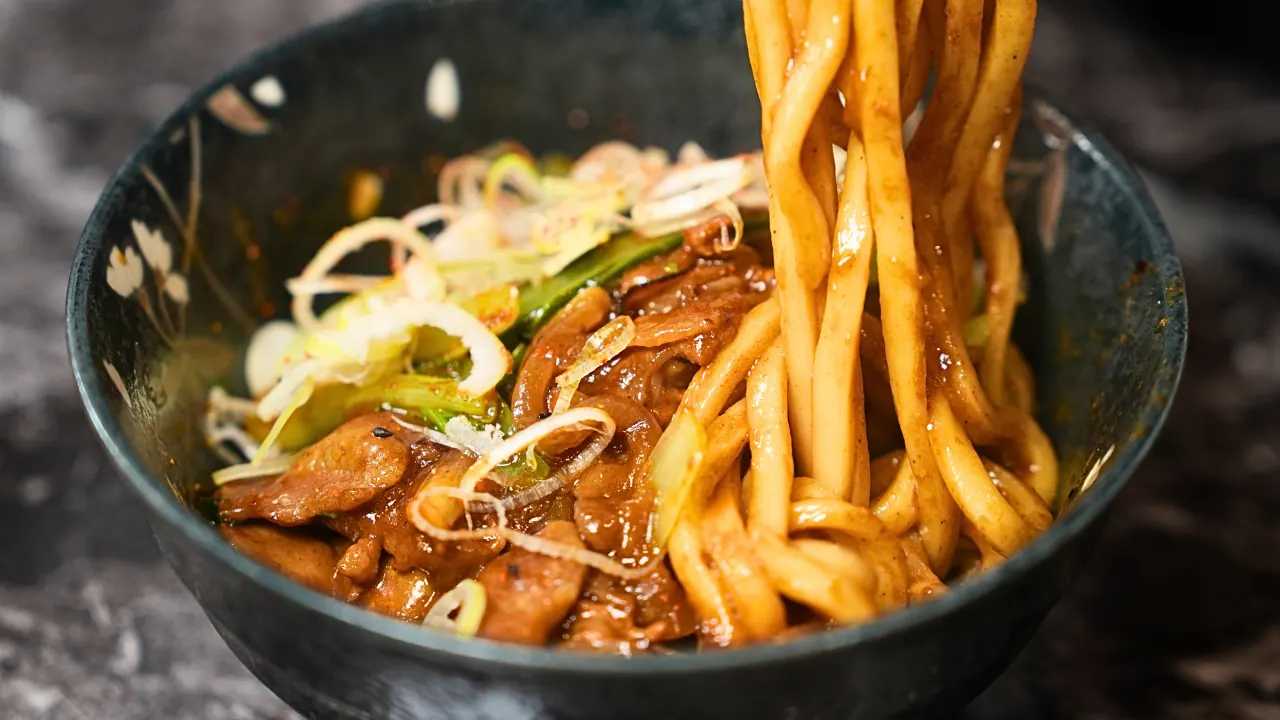
Curry udon is a beloved Japanese comfort food that combines thick, chewy udon noodles with a rich curry broth. The secret to amazing curry udon is making a thicker curry sauce that clings beautifully to the noodles instead of pooling at the bottom of your bowl.
What makes this recipe special is using less liquid than you'd typically use for curry. This creates a luscious, concentrated curry sauce that coats each noodle perfectly, delivering bold flavor in every bite. By caramelizing the onions, adding butter and garlic for depth, and balancing everything with a touch of sugar, you'll create restaurant-quality curry udon in just 25 minutes.
Why You'll Love This Recipe
- Ready in 25 minutes - Perfect for busy weeknight dinners
- One-pot meal - Everything cooks in a single small pot
- Thick, clingy curry sauce - Less liquid means maximum flavor in every bite
- Easy ingredients - Uses convenient curry roux blocks you can find at Asian grocery stores
- Customizable - Swap vegetables and proteins to suit your taste
Recipe Highlights
- Caramelize onions to bring out natural sweetness and aroma
- Build umami flavor with pork belly and sautéed onions
- Add butter and garlic for rich, aromatic depth
- Use reduced liquid to create a curry sauce that perfectly coats the noodles
Equipment Needed
- Small pot or saucepan
- Knife and cutting board
- Serving bowl
- Grater (for garlic)
- Plastic wrap (if microwaving udon)
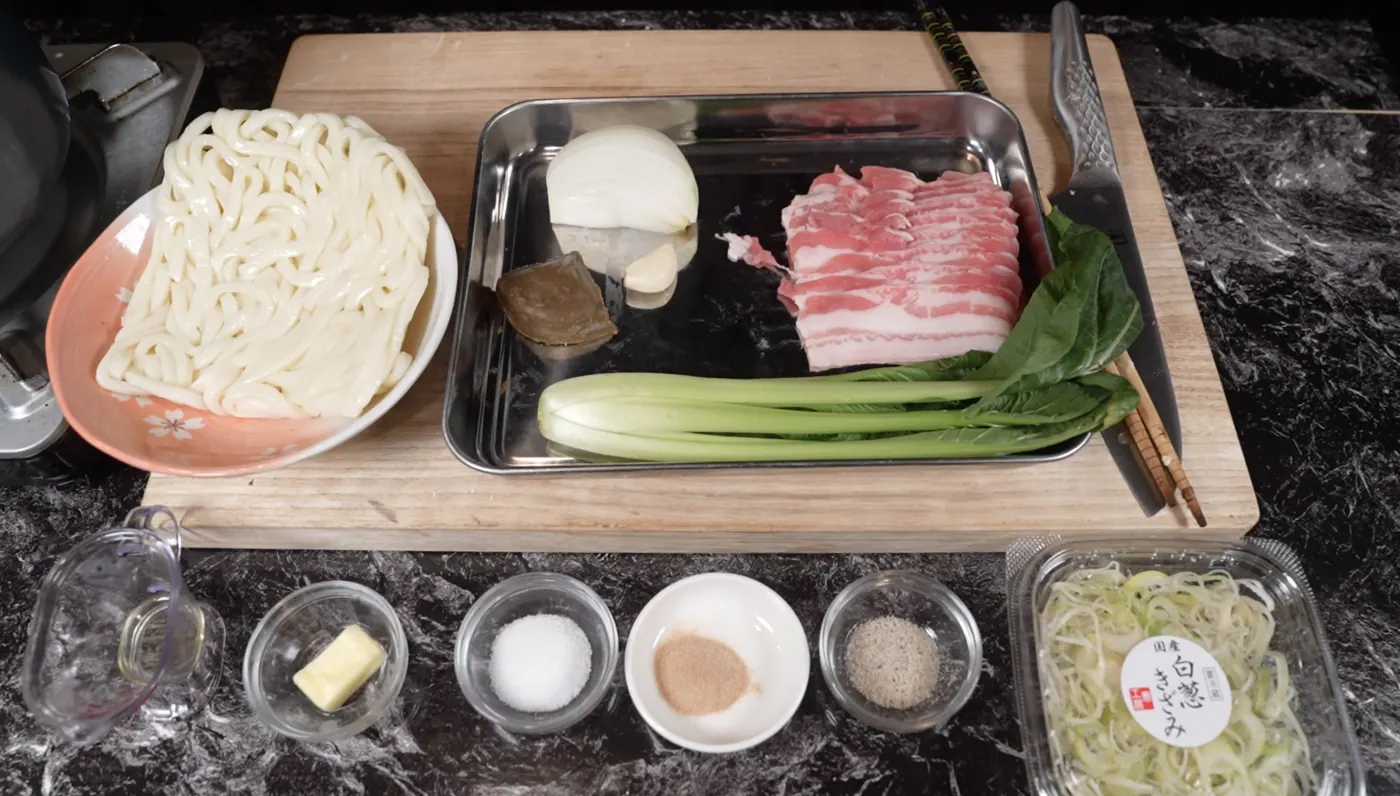
Curry Udon Ingredients (Serves 1)
14 ingredients · 1 serving
Pork belly, onion, komatsuna greens, garlic clove, udon noodles, vegetable oil, water, dashi powder, Japanese curry roux, butter, sugar, scant, julienned green onions, shichimi togarashi.
From scratch: how to make dashi
Full amounts in the recipe cardIngredient Substitutions
- Pork belly: The sweet fat from pork belly adds incredible flavor. If using a different cut, choose one with good marbling
- Komatsuna greens: Bok choy works perfectly as a substitute. You can omit the greens, but they add nice texture and color
- Dashi powder: For a more authentic taste, use homemade dashi made from kombu and bonito flakes instead of water and dashi powder
- Curry roux: Use your favorite brand. This recipe uses Golden Curry, but any Japanese curry roux will work
Video Tutorial
For a visual guide to this recipe, check out the video below. You'll see exactly how to caramelize the onions, build the curry broth, and cook the udon to perfection.

How to Make Curry Udon
Prep: Cutting the Ingredients
Prepare the garlic
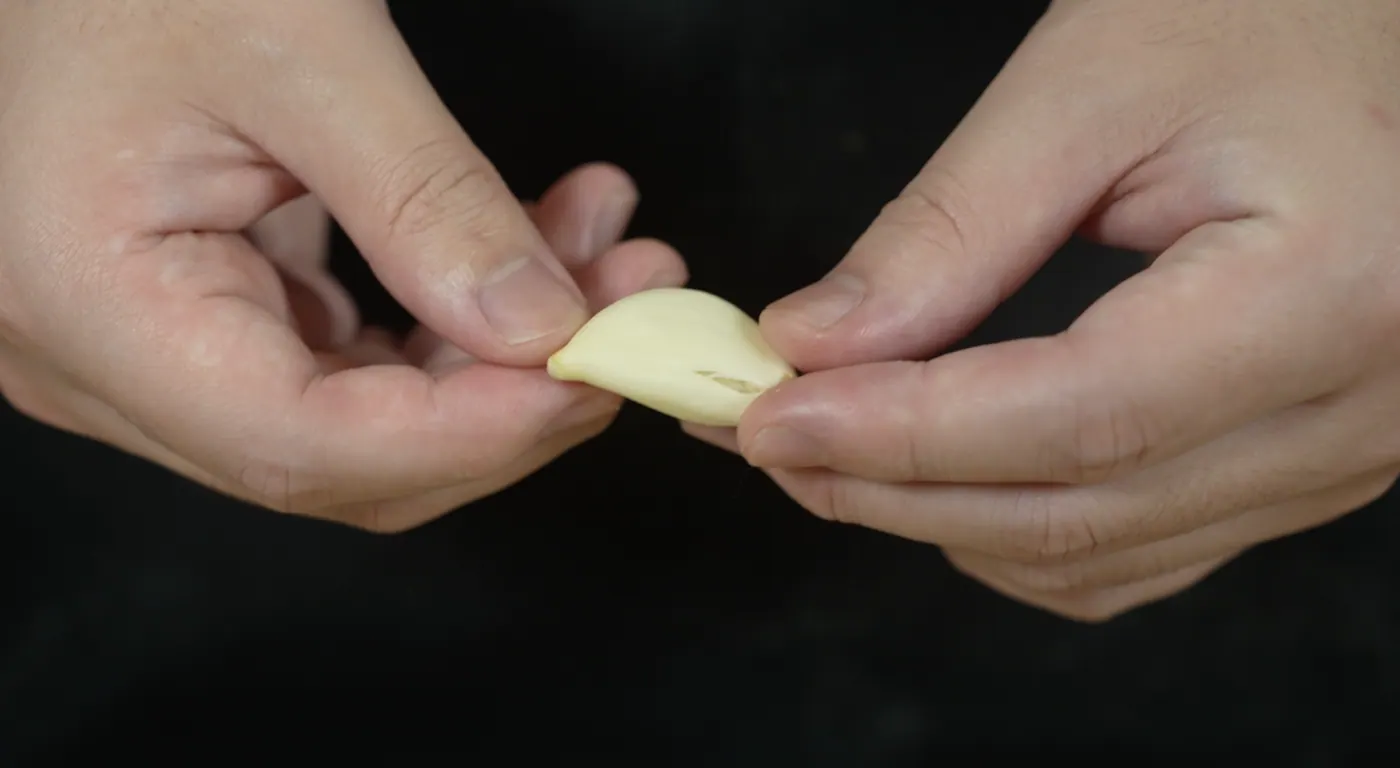
Peel 1 garlic clove and set aside for later use.
Slice the onion
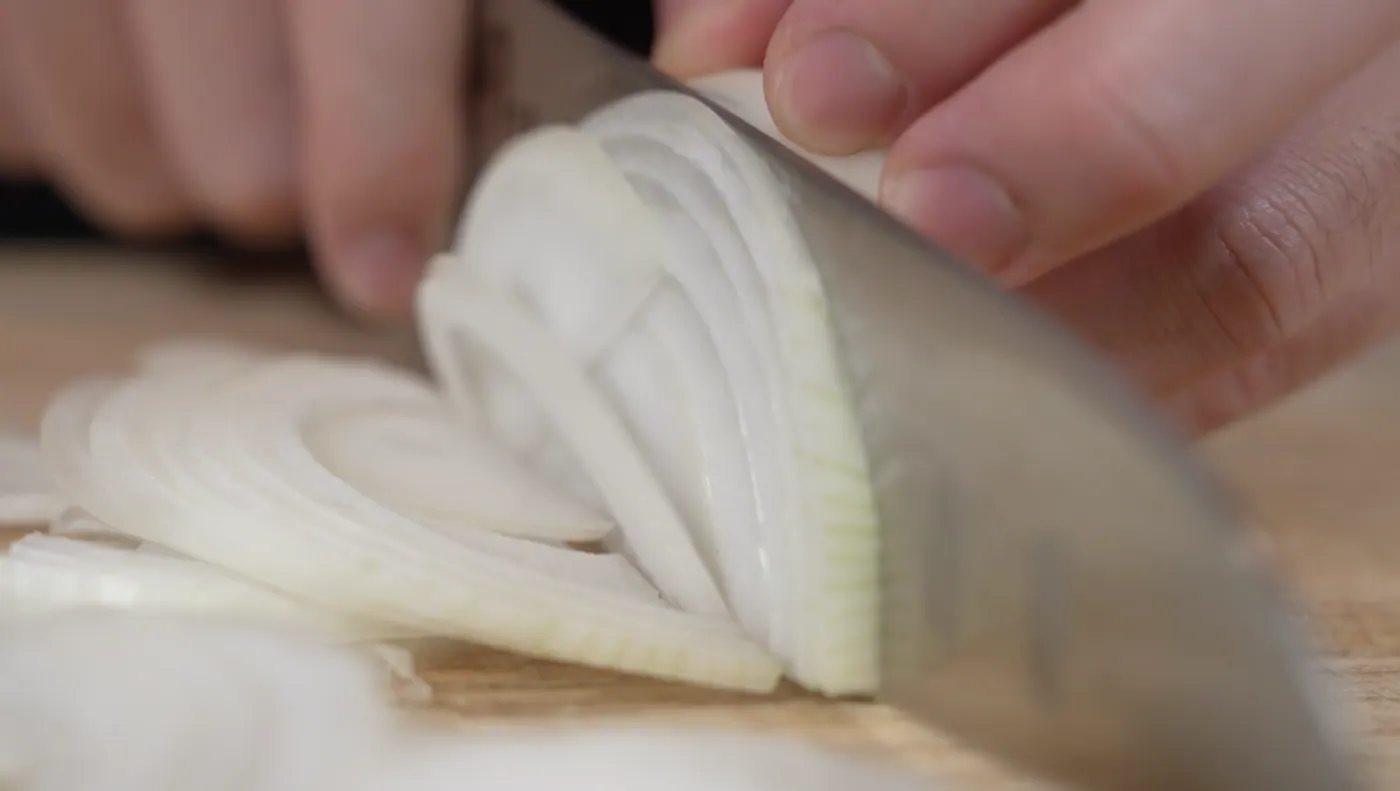
Take 1/4 onion and slice it thinly, about 2-3mm thick. These thin slices will caramelize beautifully and add sweetness to the curry broth.
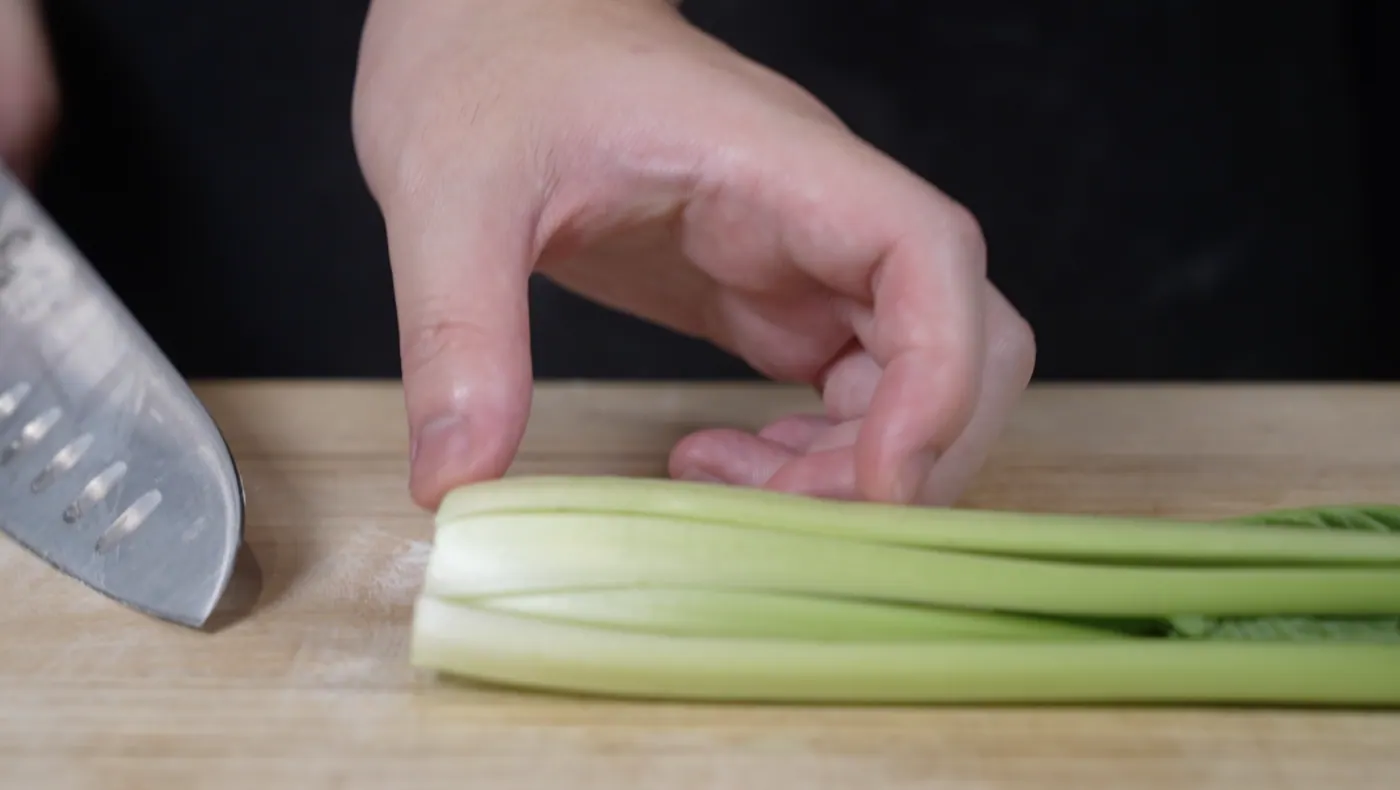
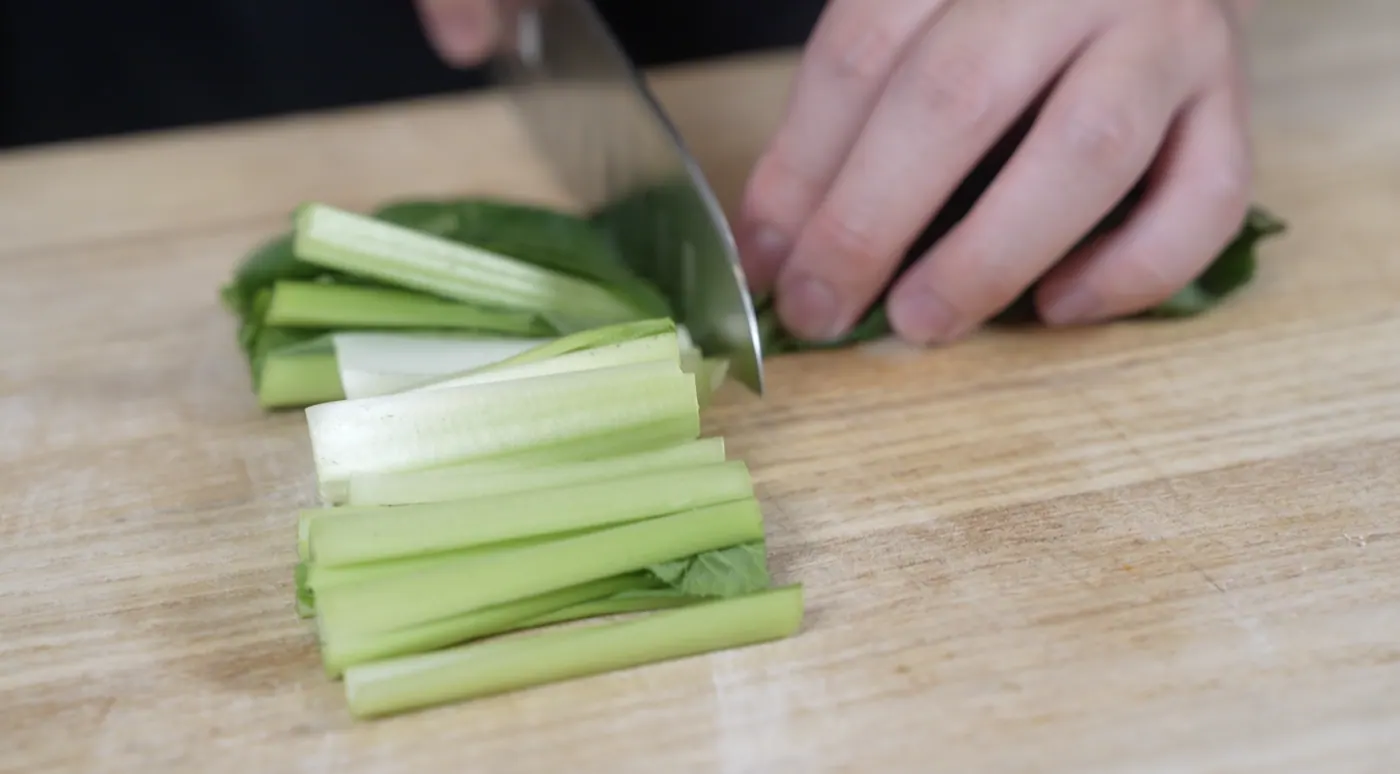
Cut the komatsuna greens
Trim off the tough root ends from 1 bunch of komatsuna and cut into 3-4cm pieces (about 1.5 inches). This length works perfectly with the udon noodles.
If you can't find komatsuna, bok choy is an excellent substitute. While you can omit the greens entirely, they add wonderful texture and freshness to the dish.
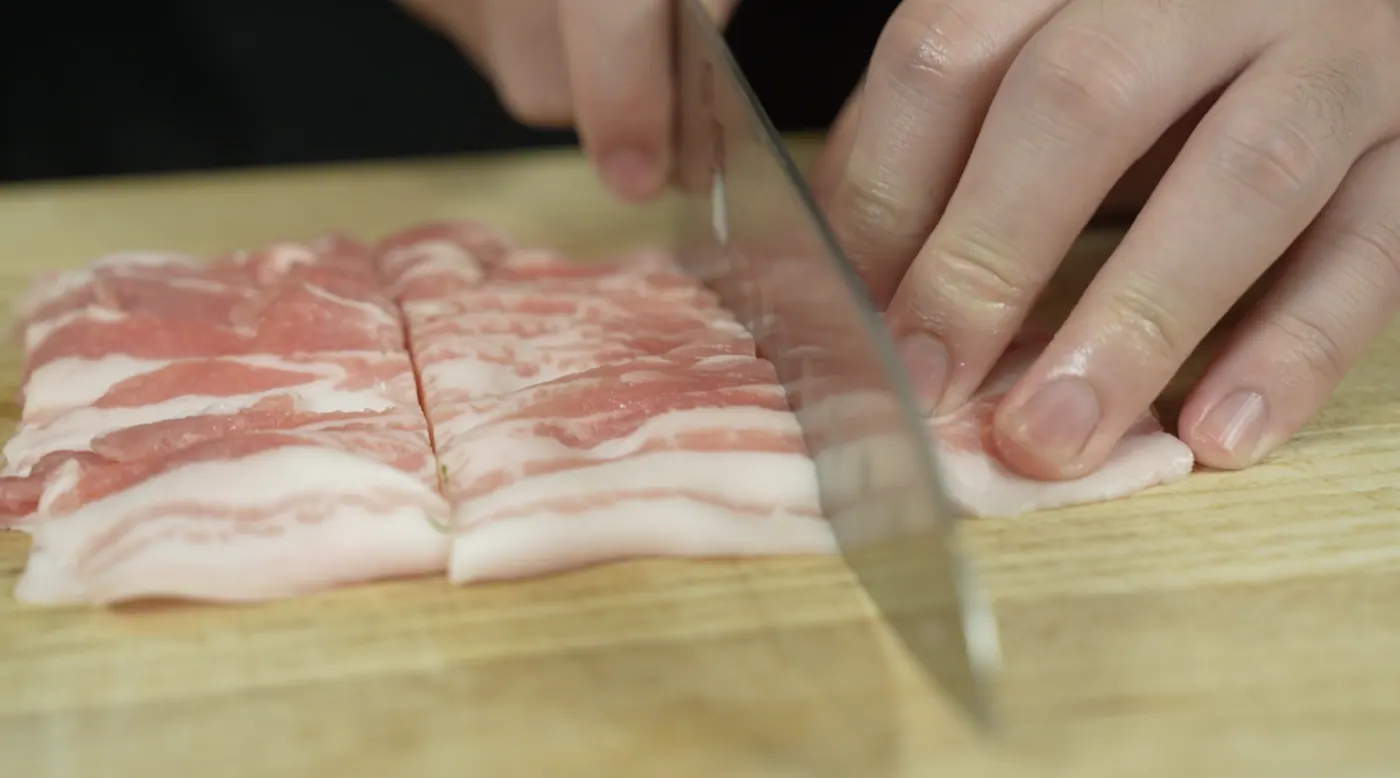
Cut the pork
Cut 80g of thinly sliced pork belly into bite-sized pieces, about 5cm wide.
The marbled fat in pork belly is key to this dish's rich flavor. If using a different cut, look for one with good fat content.
That's all the knife work! Now let's make the curry broth.
Cooking Steps
Caramelize the onions
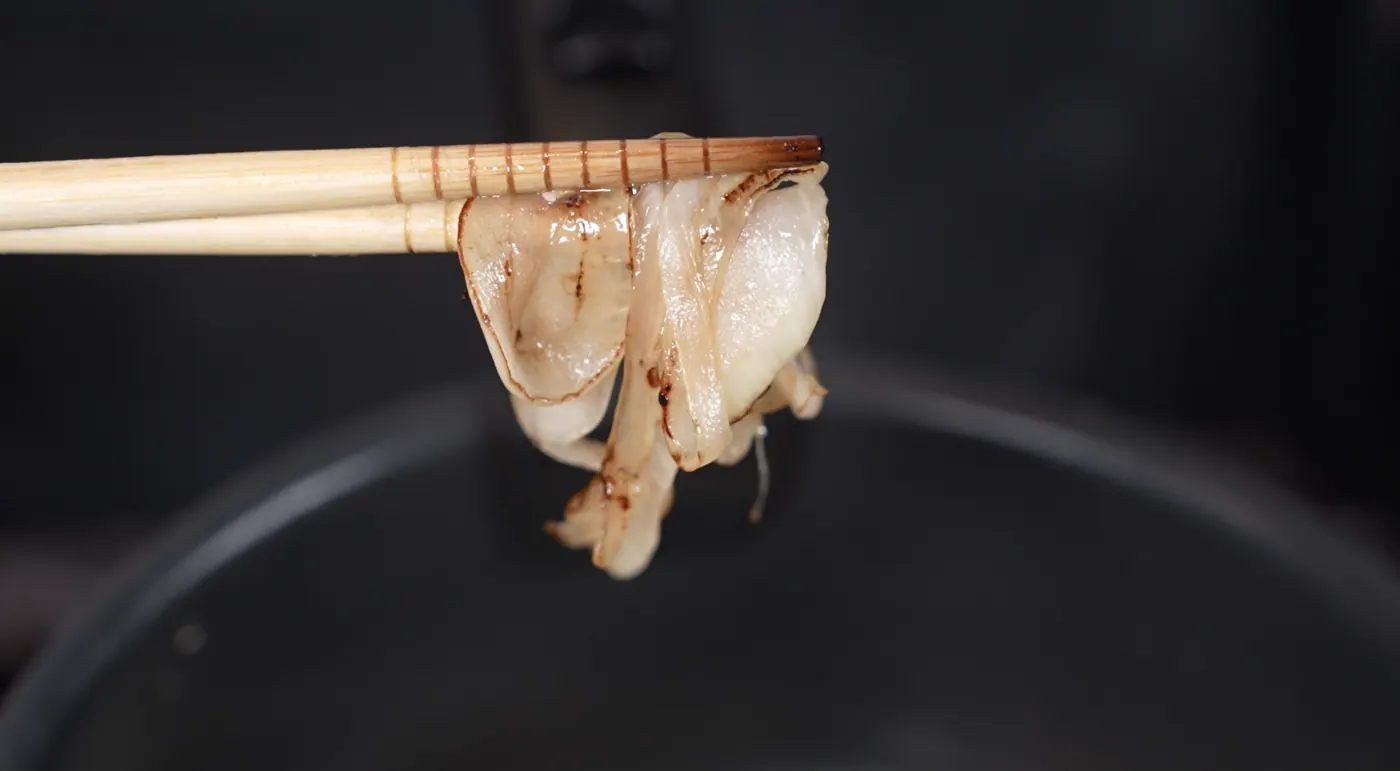
Heat 1 tsp oil in a small pot over medium heat. Add the sliced onions and sauté until lightly golden and softened.
This step is crucial - caramelizing the onions brings out their natural sweetness and creates a flavorful base for the curry.
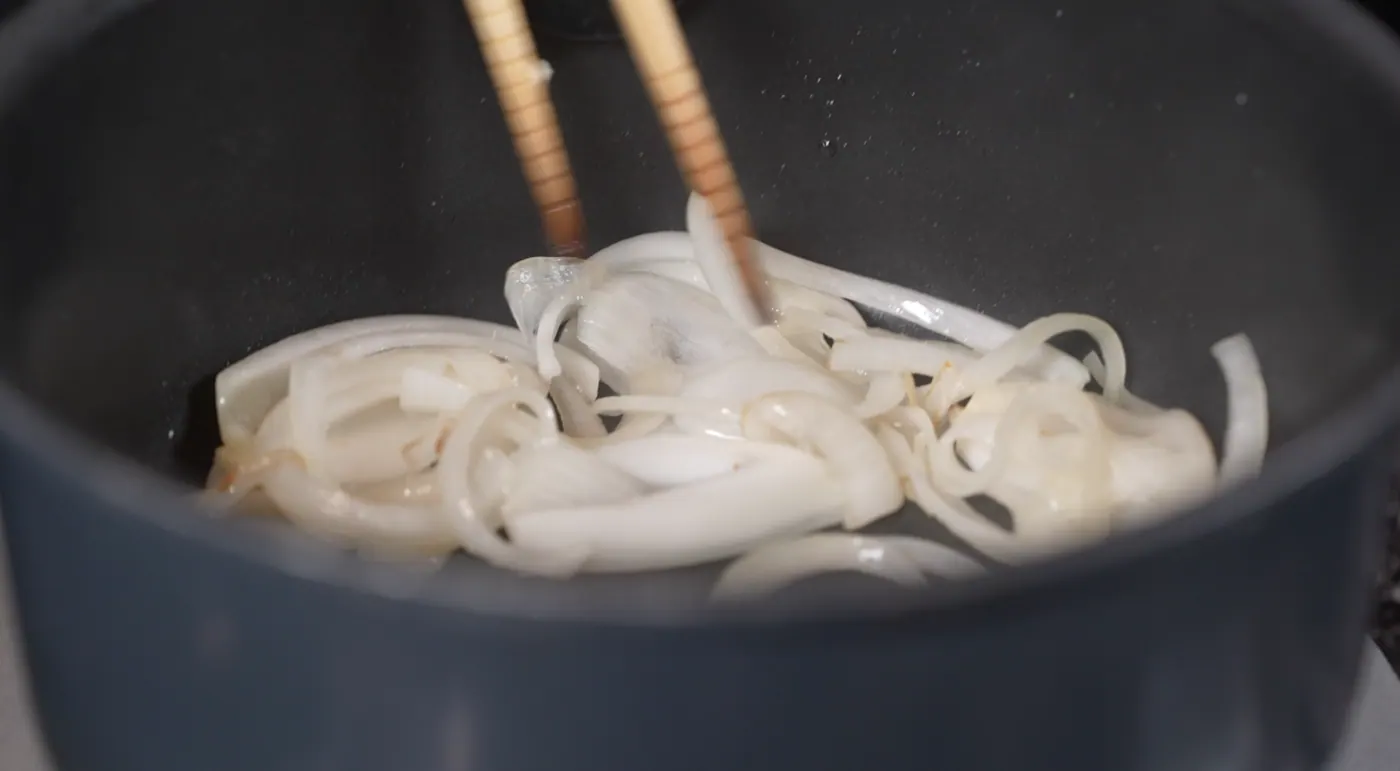
This may take a few minutes. Stir occasionally with chopsticks to ensure even browning.
Once the onions are nicely golden and tender, add the pork belly to the pot.
Cook the pork
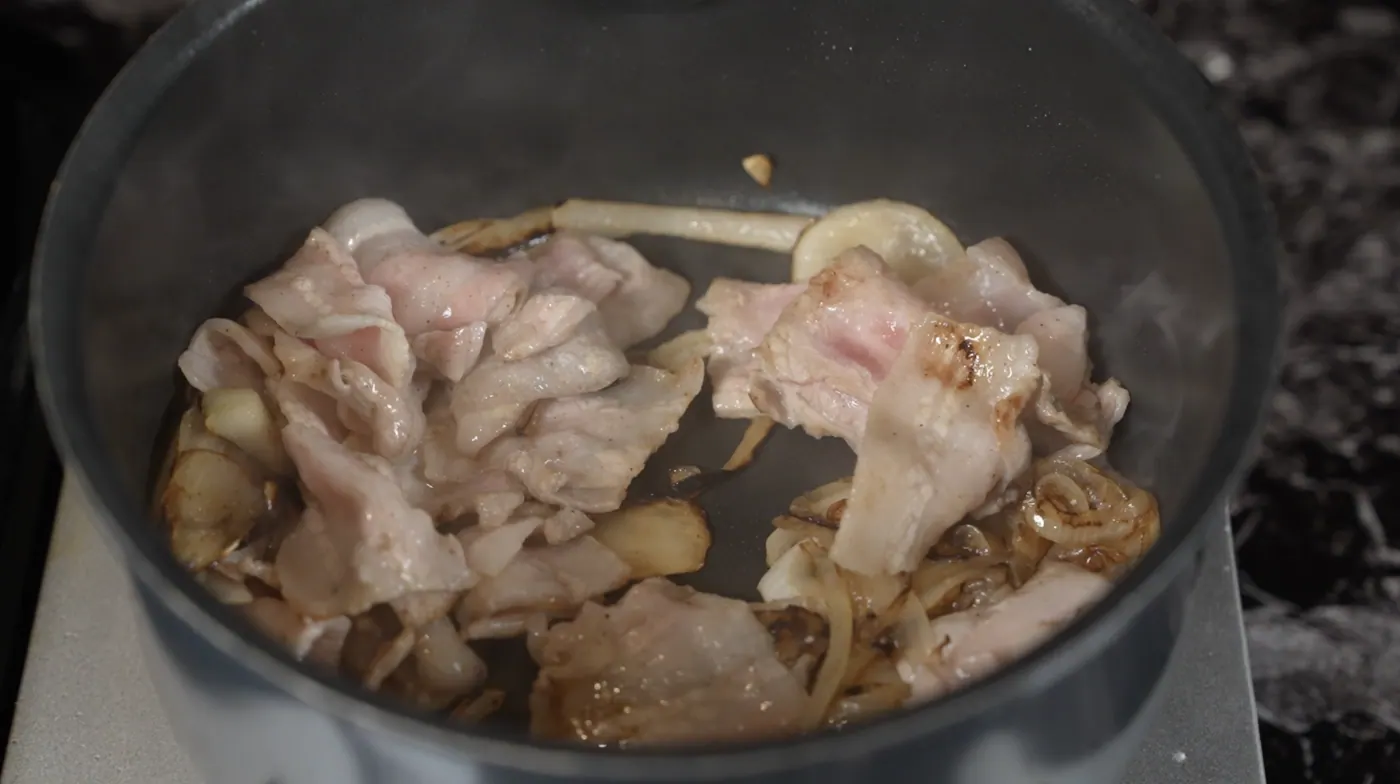
Season the pork with a scant 1/2 tsp of salt and pepper combined. Stir and cook until the pork is mostly cooked through.
Be careful not to overcook the pork or it will become tough. It's fine if there's still a little pink - it will finish cooking in the broth.
Add water and dashi
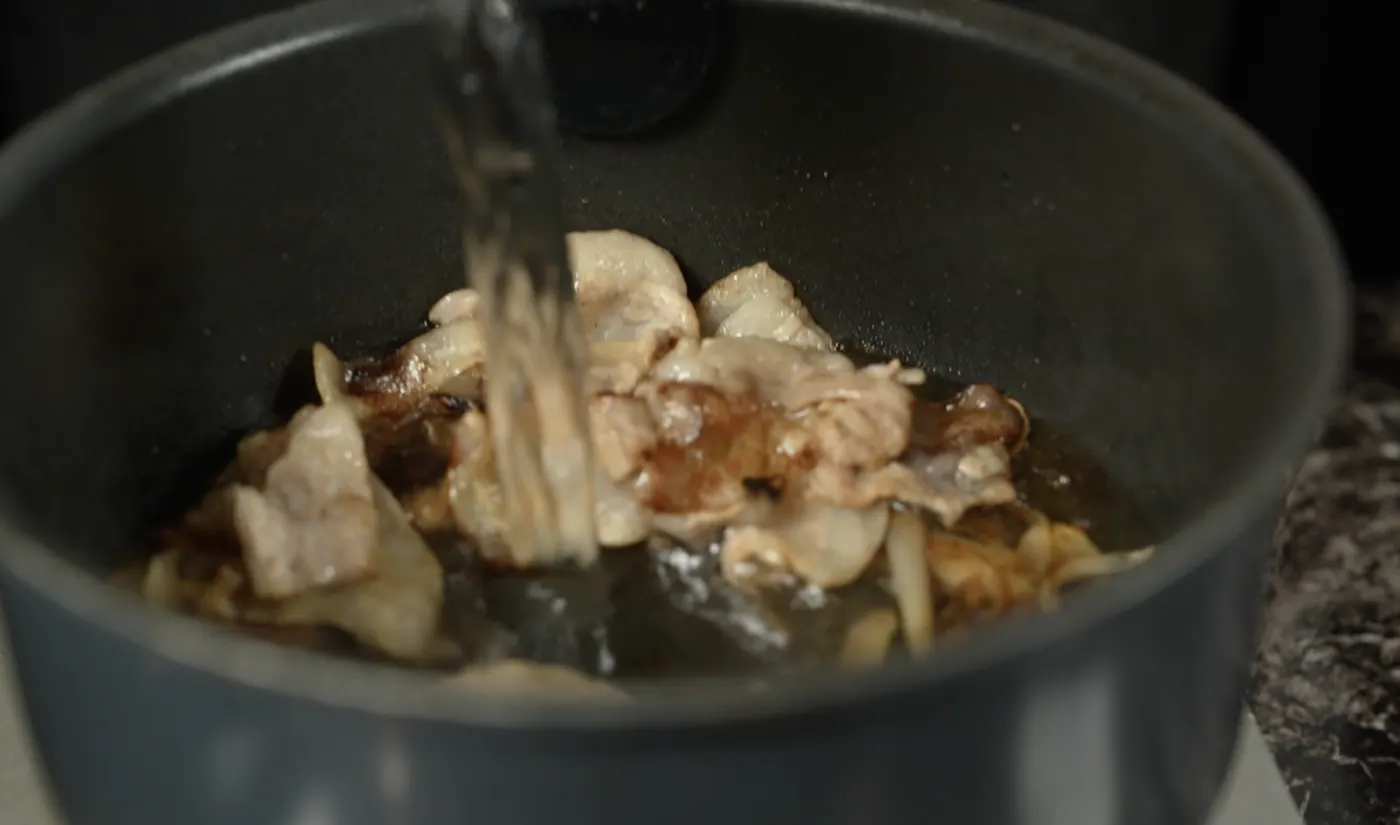
Turn off the heat momentarily. This is an important step to extract maximum flavor from the pork and onions.
Add 170ml water and 1/2 tsp dashi powder. For an even richer flavor, you can use 170ml of homemade dashi instead of water and dashi powder.
Dissolve the curry roux and butter
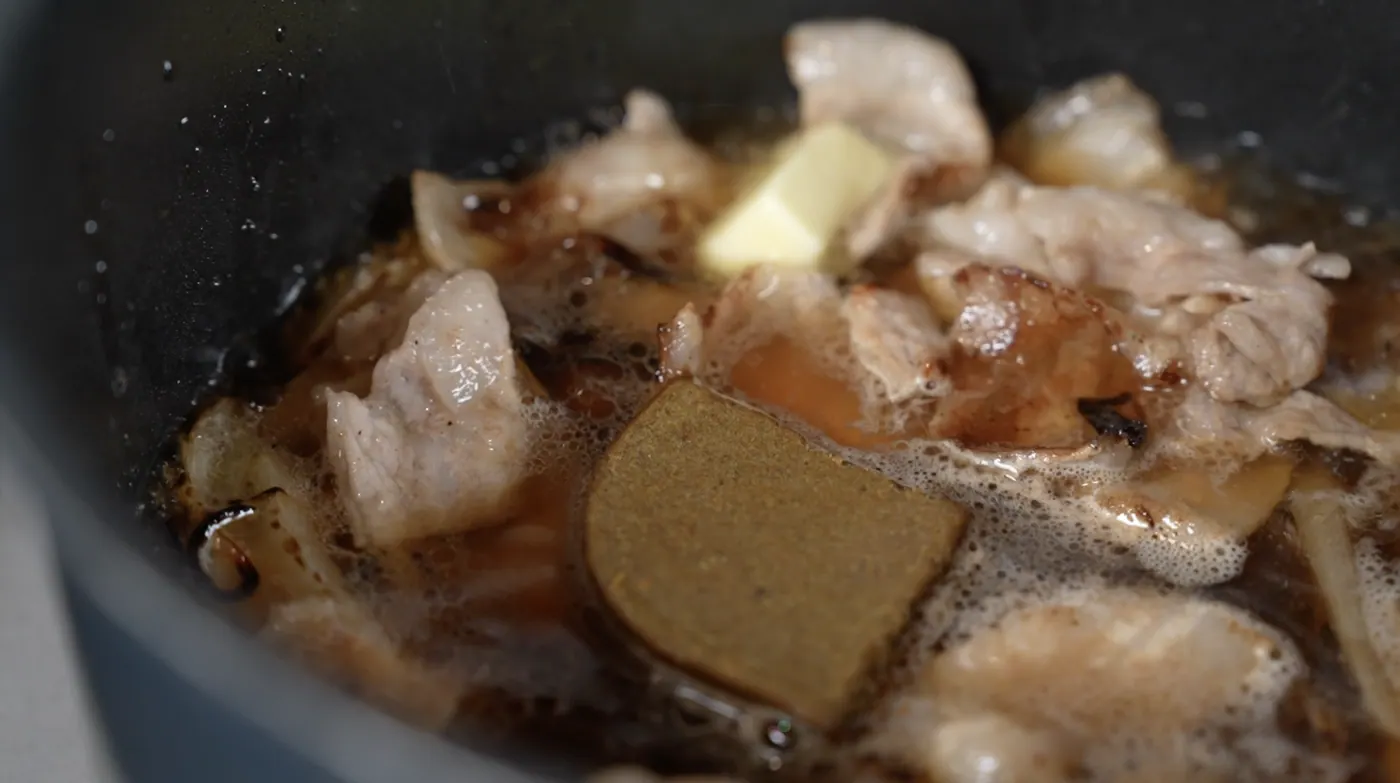
Turn the heat back on to low and add 1 curry roux block and 5g butter. Stir until completely dissolved.
The butter adds richness and a silky mouthfeel to the sauce.
Note: We turned off the heat earlier because curry roux dissolves more easily when the liquid isn't at a rolling boil.
Add sugar and garlic
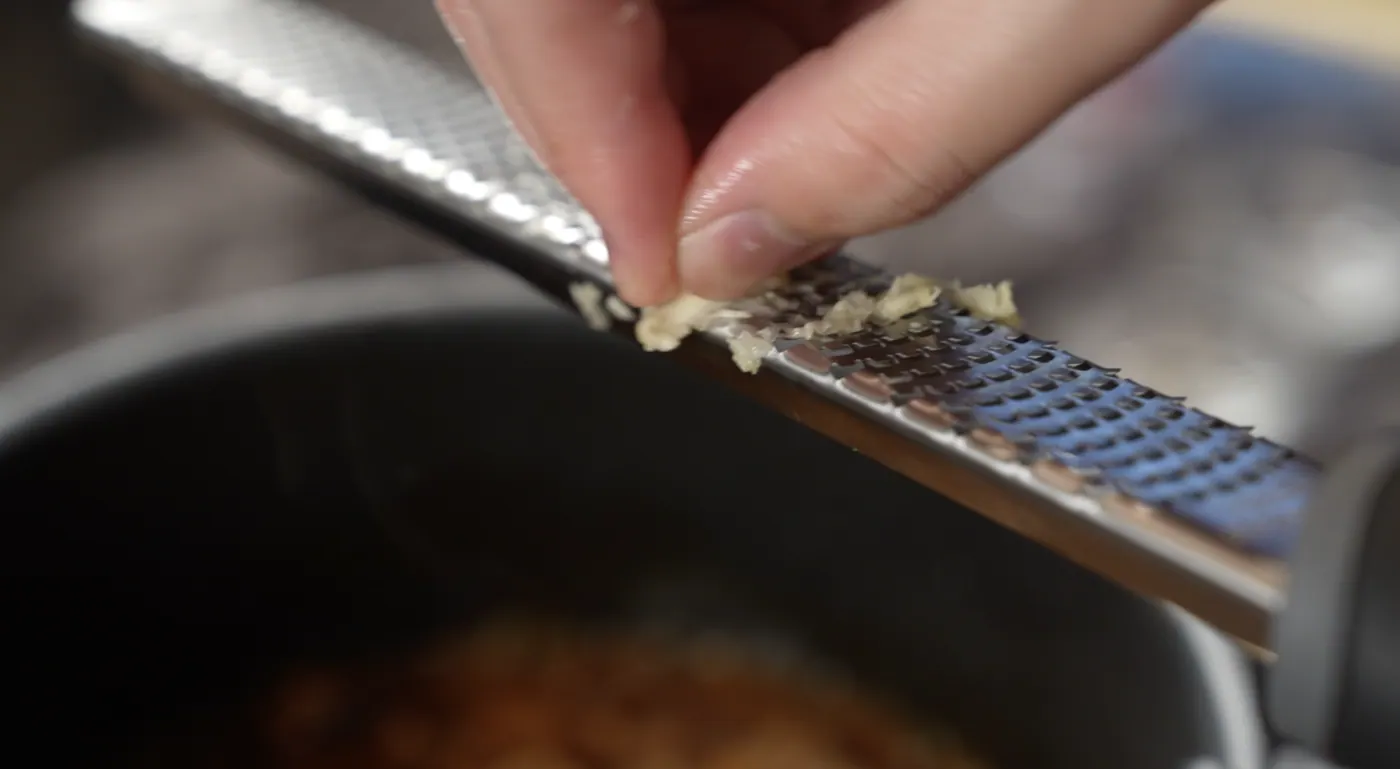
Add 1/2 tsp sugar for a subtle sweetness that balances the spices. Grate in 1 garlic clove for aromatic depth.
The sugar adds complexity and rounds out the flavors beautifully.
Add the greens
Add the komatsuna greens now. This timing ensures they keep a pleasant bite without becoming mushy.
If the liquid has reduced too much during cooking, add 1-2 tbsp of extra water (on top of the 170ml) to adjust. However, be careful not to add too much - remember, this recipe intentionally uses less liquid so the curry sauce clings to the noodles.
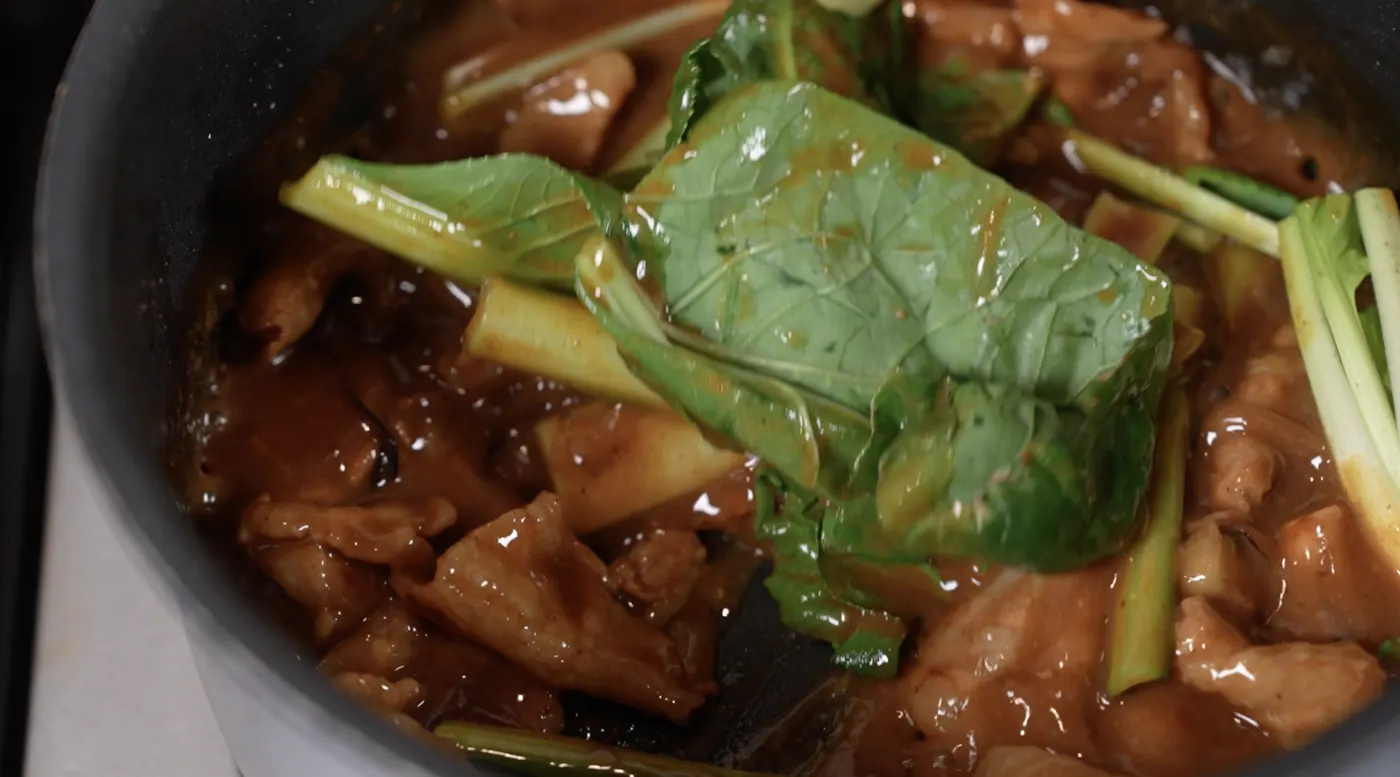
Once the greens are tender, your curry broth is ready! Turn off the heat and let's prepare the udon.
Cook the udon noodles
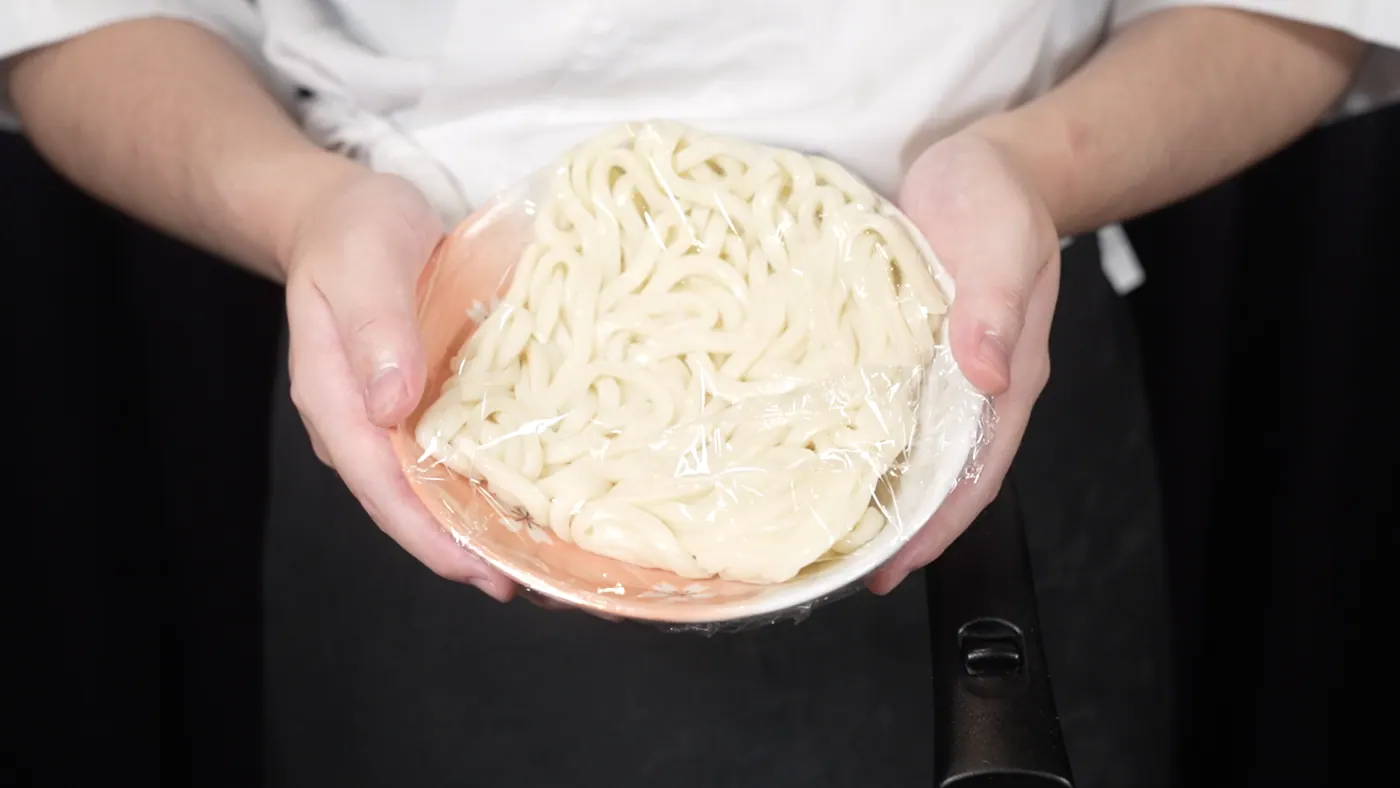
For convenience, we'll use the microwave. Place the udon in a microwave-safe dish, cover with plastic wrap, and heat at 500W for about 2 minutes.
If using frozen udon, microwave for 3-4 minutes instead. This microwave method is quick and saves you from boiling water - definitely worth trying!
Combine udon with curry broth
Add the cooked udon to the pot with the curry broth. Turn the heat to low and mix well, ensuring every noodle is coated with the rich sauce.
Once everything is well combined and heated through, your curry udon is complete!
Plating
Transfer to serving bowl
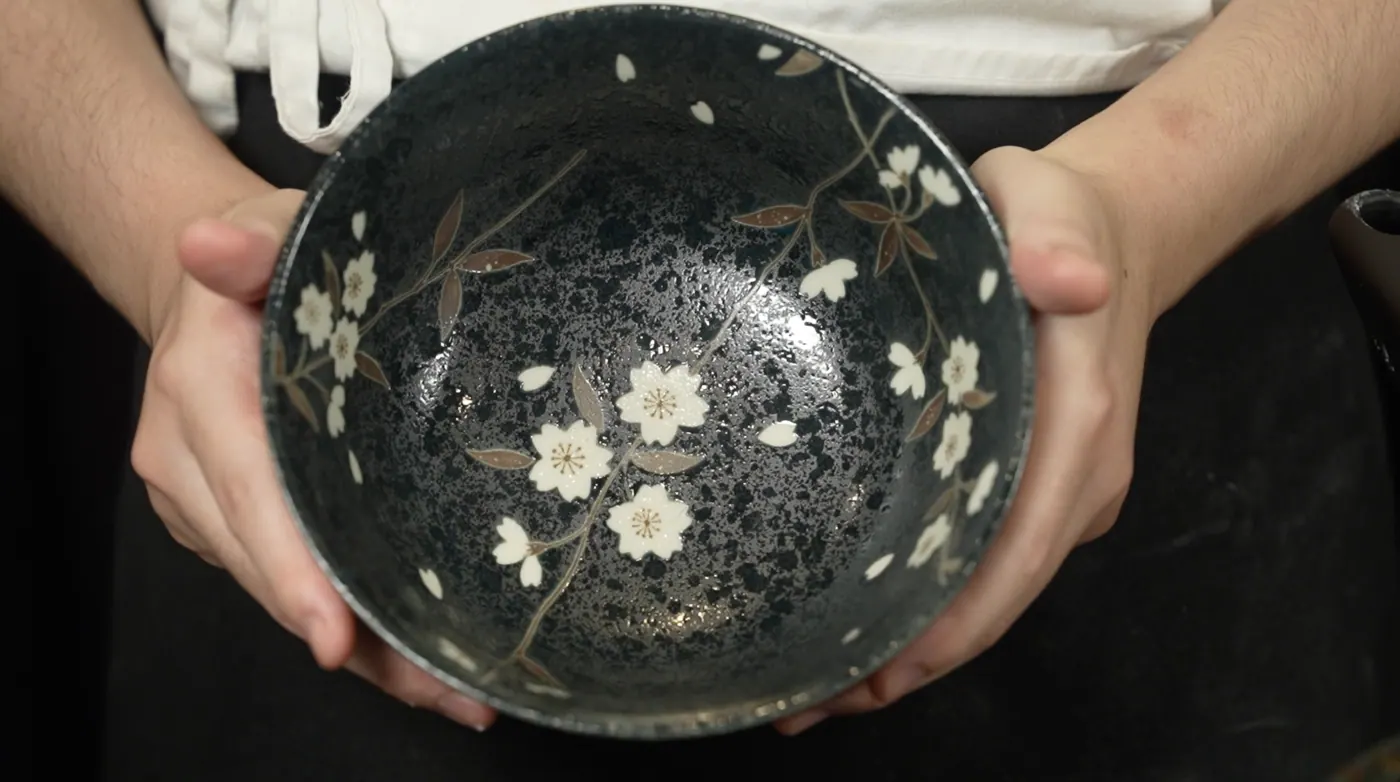
Transfer the udon noodles to a serving bowl first, then ladle the curry broth with all the toppings over the noodles. Arrange the komatsuna on top for a pop of color.
Add finishing touches
Garnish with julienned green onions for visual appeal and a fresh bite. If you enjoy heat, sprinkle some shichimi togarashi on top.
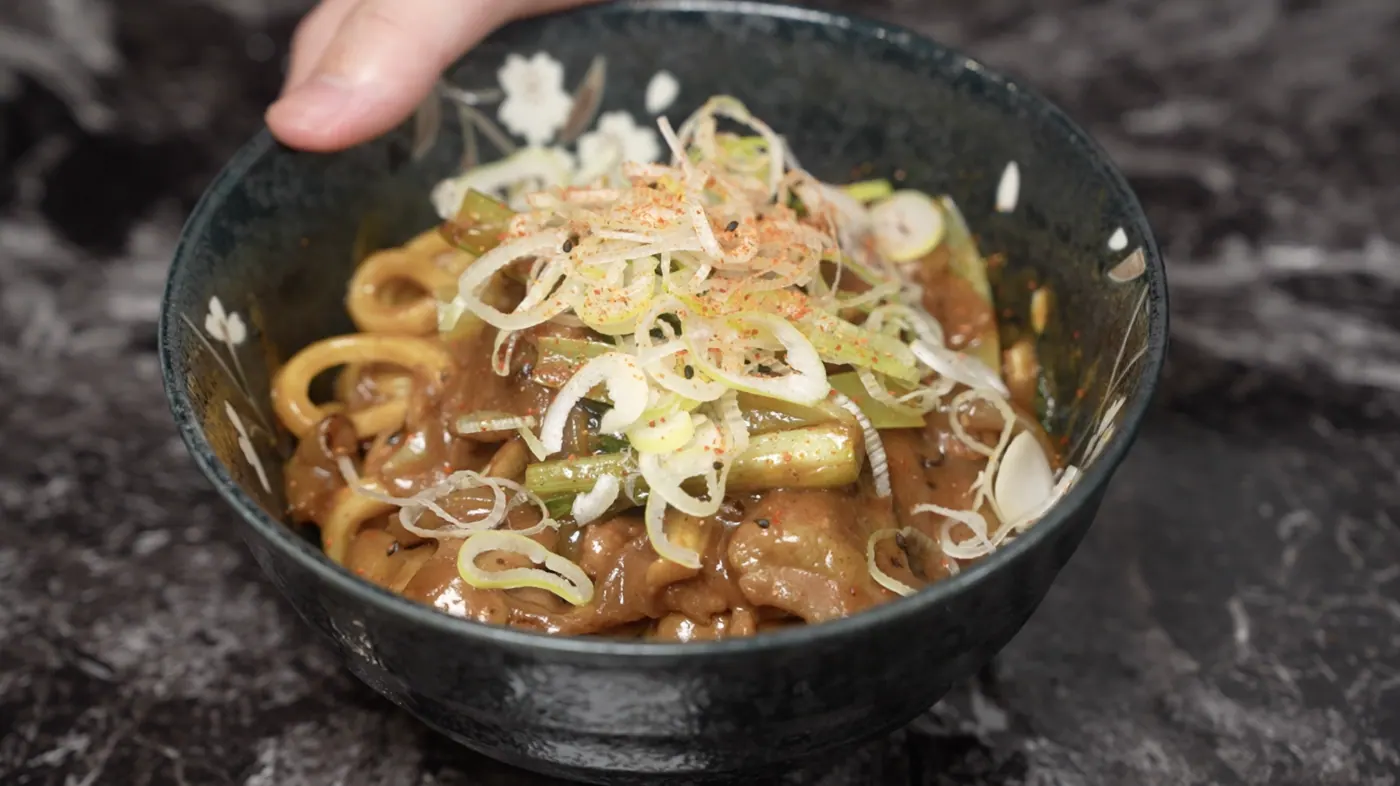
The aroma of caramelized onions, garlic, and butter is absolutely mouthwatering!
Tips & Techniques
Caramelize the onions for sweetness
Taking the time to lightly brown the onions brings out their natural sweetness and creates a more complex, flavorful curry broth.
Don't overcook the pork
Pork belly can become tough if overcooked. Remove from heat when there's still a touch of pink - it will finish cooking in the hot broth.
Butter adds richness
The butter contributes a silky texture and depth of flavor that makes this curry broth taste restaurant-quality.
Sugar balances the spices
A small amount of sugar adds complexity and balances the savory and spicy elements beautifully.
Less liquid is key
Using less water than typical curry creates a thick sauce that clings to the noodles, delivering concentrated flavor in every bite.
Microwave method is a time-saver
Microwaving the udon eliminates the need to boil water, making this recipe even quicker and easier.
Troubleshooting
Common Questions
What should I do if my curry tastes too mild?
Add more curry roux or reduce the water amount. You can also add extra dashi powder to boost the umami.
What should I do if the curry is too thick?
Add a small amount of water to thin it out. Just be careful not to add too much, or it won't cling to the noodles as well.
What should I do if my greens became too soft?
They may have been added too early. Add them near the end and cook just until tender to maintain their texture.
What should I do if the udon noodles are mushy?
They may have been overcooked. Follow the package instructions carefully and avoid overcooking.
Final Thoughts
The reduced liquid makes the curry sauce cling perfectly to the noodles - it's absolutely delicious!
The combination of savory pork, buttery richness, and subtle sweetness from the sugar creates incredible depth of flavor. The komatsuna greens add a fresh, crisp contrast that rounds out each bite.
This is such a satisfying dish - I hope you'll give it a try! It's perfect when you want to elevate simple udon noodles into something special.
How to Store Curry Udon
Leftover curry udon can be stored in an airtight container in the refrigerator for 1-2 days.
Reheating:
- Stovetop: Reheat gently over low heat. If the sauce has thickened too much, add a splash of water or dashi to loosen it
- Microwave: Heat at 600W for 2-3 minutes, checking and stirring halfway through
麺Noodlesカレーうどん
Curry Udon (Japanese Curry Noodles)
Curry udon is a beloved Japanese comfort food that combines thick, chewy udon noodles with a rich curry broth.
No ratings yet
Rate this recipe
- Prep
- 10 min
- Cook
- 15 min
- Total
- 25 min
- Servings
- 1
- Difficulty
- Beginner
Ingredients
Main Ingredients
Curry Broth Seasonings
Optional Toppings
Ingredient amounts are multiplied; cooking times and pan size may need adjusting.
Instructions
Amounts mentioned in the steps are for the original recipe (1x) — use the scaled amounts above.
Prep: Cutting the Ingredients
Prepare the garlic
Peel 1 garlic clove and set aside for later use.
Slice the onion
Take 1/4 onion and slice it thinly, about 2-3mm thick. These thin slices will caramelize beautifully and add sweetness to the curry broth.
Cut the komatsuna greens
Trim off the tough root ends from 1 bunch of komatsuna and cut into 3-4cm pieces (about 1.5 inches). This length works perfectly with the udon noodles.
If you can't find komatsuna, bok choy is an excellent substitute. While you can omit the greens entirely, they add wonderful texture and freshness to the dish.
Cut the pork
Cut 80g of thinly sliced pork belly into bite-sized pieces, about 5cm wide.
The marbled fat in pork belly is key to this dish's rich flavor. If using a different cut, look for one with good fat content.
That's all the knife work! Now let's make the curry broth.
Cooking Steps
Caramelize the onions
Heat 1 tsp oil in a small pot over medium heat. Add the sliced onions and sauté until lightly golden and softened.
This step is crucial - caramelizing the onions brings out their natural sweetness and creates a flavorful base for the curry.
This may take a few minutes. Stir occasionally with chopsticks to ensure even browning.
Once the onions are nicely golden and tender, add the pork belly to the pot.
Cook the pork
Season the pork with a scant 1/2 tsp of salt and pepper combined. Stir and cook until the pork is mostly cooked through.
Be careful not to overcook the pork or it will become tough. It's fine if there's still a little pink - it will finish cooking in the broth.
Add water and dashi
Turn off the heat momentarily. This is an important step to extract maximum flavor from the pork and onions.
Add 170ml water and 1/2 tsp dashi powder. For an even richer flavor, you can use 170ml of homemade dashi instead of water and dashi powder.
Dissolve the curry roux and butter
Turn the heat back on to low and add 1 curry roux block and 5g butter. Stir until completely dissolved.
The butter adds richness and a silky mouthfeel to the sauce.
Note: We turned off the heat earlier because curry roux dissolves more easily when the liquid isn't at a rolling boil.
Add sugar and garlic
Add 1/2 tsp sugar for a subtle sweetness that balances the spices. Grate in 1 garlic clove for aromatic depth.
The sugar adds complexity and rounds out the flavors beautifully.
Add the greens
Add the komatsuna greens now. This timing ensures they keep a pleasant bite without becoming mushy.
If the liquid has reduced too much during cooking, add 1-2 tbsp of extra water (on top of the 170ml) to adjust. However, be careful not to add too much - remember, this recipe intentionally uses less liquid so the curry sauce clings to the noodles.
Once the greens are tender, your curry broth is ready! Turn off the heat and let's prepare the udon.
Cook the udon noodles
For convenience, we'll use the microwave. Place the udon in a microwave-safe dish, cover with plastic wrap, and heat at 500W for about 2 minutes.
If using frozen udon, microwave for 3-4 minutes instead. This microwave method is quick and saves you from boiling water - definitely worth trying!
Combine udon with curry broth
Add the cooked udon to the pot with the curry broth. Turn the heat to low and mix well, ensuring every noodle is coated with the rich sauce.
Once everything is well combined and heated through, your curry udon is complete!
Plating
Transfer to serving bowl
Transfer the udon noodles to a serving bowl first, then ladle the curry broth with all the toppings over the noodles. Arrange the komatsuna on top for a pop of color.
Add finishing touches
Garnish with julienned green onions for visual appeal and a fresh bite. If you enjoy heat, sprinkle some shichimi togarashi on top.
The aroma of caramelized onions, garlic, and butter is absolutely mouthwatering!
Video
Watch the video · 5:52Open on YouTube
Jump to a part of the video (8 chapters)
Video: https://youtu.be/jYbJ_v2l120
Notes
Substitutions
- Pork belly: The sweet fat from pork belly adds incredible flavor. If using a different cut, choose one with good marbling
- Komatsuna greens: Bok choy works perfectly as a substitute. You can omit the greens, but they add nice texture and color
- Dashi powder: For a more authentic taste, use homemade dashi made from kombu and bonito flakes instead of water and dashi powder
- Curry roux: Use your favorite brand. This recipe uses Golden Curry, but any Japanese curry roux will work
To store
- Leftover curry udon can be stored in an airtight container in the refrigerator for 1-2 days.
- Stovetop: Reheat gently over low heat. If the sauce has thickened too much, add a splash of water or dashi to loosen it
- Microwave: Heat at 600W for 2-3 minutes, checking and stirring halfway through
Nutrition estimated, per serving
- Calories
- 686 kcal
- Carbohydrates
- 60.8 g
- Protein
- 19.8 g
- Fat
- 44.2 g
- Saturated fat
- 17.8 g
- Fiber
- 5.7 g
- Sugar
- 7.4 g
- Sodium
- 2,224 mg
Estimated by us from the Standard Tables of Food Composition in Japan (MEXT, 2020). Optional ingredients and garnishes are not counted; soup and sauce are counted as fully eaten. Actual values depend on your brands and portion sizes. How we calculate this
Course: Noodles · Cuisine: Japanese · Keyword: Curry Udon
Recipe from Japanese Cooking Ichie — https://japanesecookingichie.com/recipes/curry-udon/
Make it a meal
Add a side dish to round out the table.
Ratings & comments
No ratings yet — be the first to rate this recipe.
Comments