What Is Udon?
Udon (うどん) is one of Japan's three big noodle families, alongside soba (buckwheat) and ramen. The dough is simple: wheat flour, water and salt, kneaded hard to build a firm, elastic texture, then rolled out and cut into thick strands. Unlike ramen noodles, udon contains no alkaline salts, so the noodles stay white.
Udon is everyday comfort food in Japan. It is cheap, filling and quick, and it is eaten year-round: hot in winter, cold in summer.
Regional Types of Udon
Thickness and texture change from region to region. A few well-known styles:
- Sanuki udon from Kagawa Prefecture: thick, square-edged and firm with a strong chew.
- Inaniwa udon from Akita Prefecture: thinner, flatter and smooth. It is stretched by hand instead of cut, and usually sold dried.
- Kishimen from Nagoya: wide, flat ribbons.
- Ise udon from Mie Prefecture: thick and very soft, served with a dark, sweet soy-based sauce.
- Hoto from Yamanashi: flat noodles simmered in miso soup with vegetables such as kabocha squash.
Popular Udon Dishes
- Kake udon: plain udon in hot broth, topped with green onion.
- Kitsune udon: topped with sweet simmered fried tofu (aburaage).
- Tanuki udon: topped with crunchy bits of tempura batter.
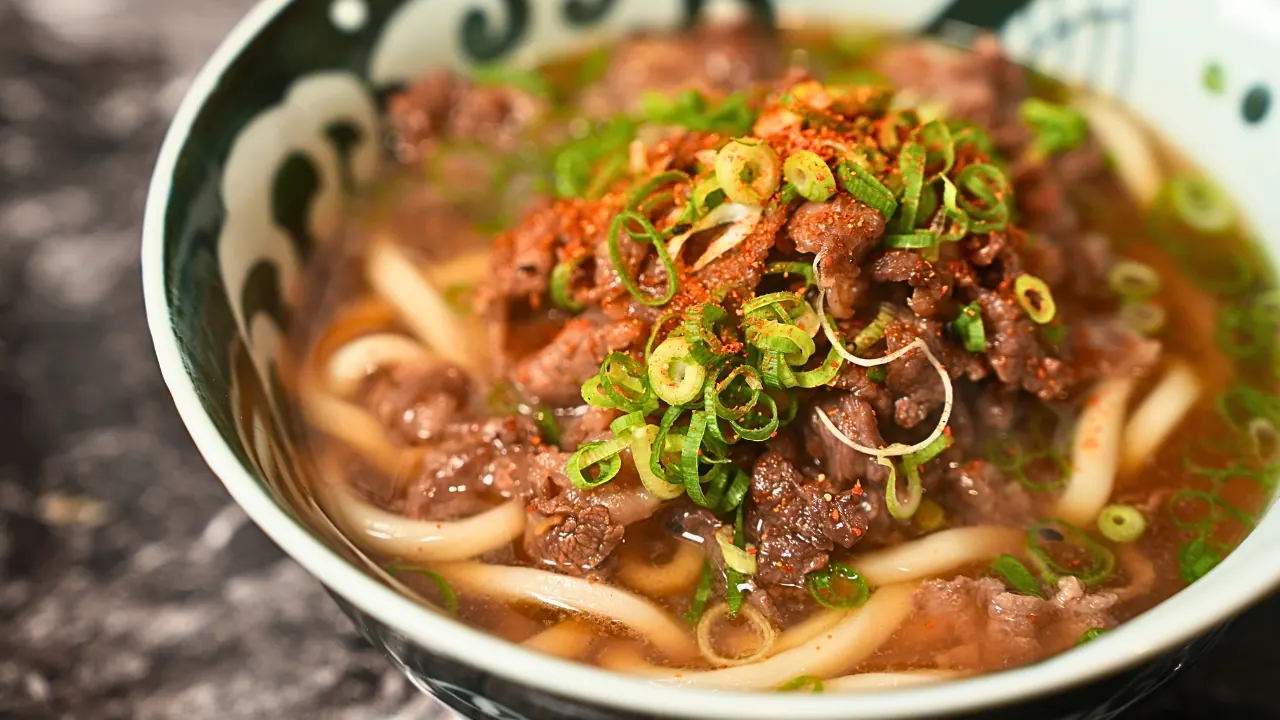
- Niku udon: topped with sweet, savory simmered beef. See our Niku Udon.
- Curry udon: udon in a thick curry broth. See our Curry Udon.
- Yaki udon: stir-fried udon with meat and vegetables.
- Zaru udon: chilled noodles served with a cold dipping sauce.
How to Cook Udon
Frozen udon has already been boiled and frozen, so it only needs to be heated through. Drop it straight from the freezer into plenty of boiling water and cook for the time on the package, usually one to two minutes, stirring gently to loosen the strands. Don't overcook it, or it loses its chew.
Dried udon needs a much longer boil, and the time depends on thickness, so follow the package. Rinse it in cold water after cooking to remove surface starch, then reheat it in the broth if serving hot.
Shelf-stable precooked udon (vacuum packs) just needs a quick dip in boiling water or a minute in the broth.
The broth matters as much as the noodles. Most udon broth starts with dashi; for the basics, see our dashi recipe. Eastern Japan tends to season it with dark soy sauce, while western Japan uses light soy sauce for a paler, clearer broth.
Where to Buy Udon
Asian grocers stock udon in three places: the freezer (frozen udon, usually several single portions per bag), the noodle shelf (dried udon) and sometimes the chilled section (fresh or vacuum-packed udon). Frozen sanuki-style udon is the easiest way to get a texture close to a Japanese udon shop at home. Some large supermarkets carry vacuum-packed udon in the Asian aisle.
Udon Substitutes
- Dried udon is the best stand-in for frozen. The texture is a little less springy.
- Other thick wheat noodles, such as thick Chinese wheat noodles, work in soups and stir-fries.
How to Store Udon
Keep dried udon in a cool, dark, dry place. Frozen udon goes straight back into the freezer and cooks from frozen; don't thaw it first. Fresh or precooked udon belongs in the refrigerator; check the date on the pack. Cooked udon is best eaten right away, as it turns soft and loses its chew as it sits.
Recipes using Udon noodles
Frequently asked questions
Is udon gluten-free?
No. Udon is made from wheat flour and contains gluten, so it is not suitable for people with a wheat allergy or celiac disease.
What is the difference between udon and ramen noodles?
Udon is made from wheat flour, water and salt, and is thick, white and soft-chewy. Ramen noodles also contain kansui, an alkaline solution that makes them thinner, yellowish and springier.
Do I need to thaw frozen udon before cooking?
No. Put it straight into boiling water or simmering broth. It is already cooked and only needs to be heated through.
Which type of udon is best to buy?
Frozen sanuki-style udon gives the chewiest, most springy texture at home and cooks in a minute or two. Dried udon is a good pantry backup.