- Prep
- 5 min
- Cook
- 15 min
- Total
- 20 min
- Servings
- 2
- Difficulty
- Intermediate
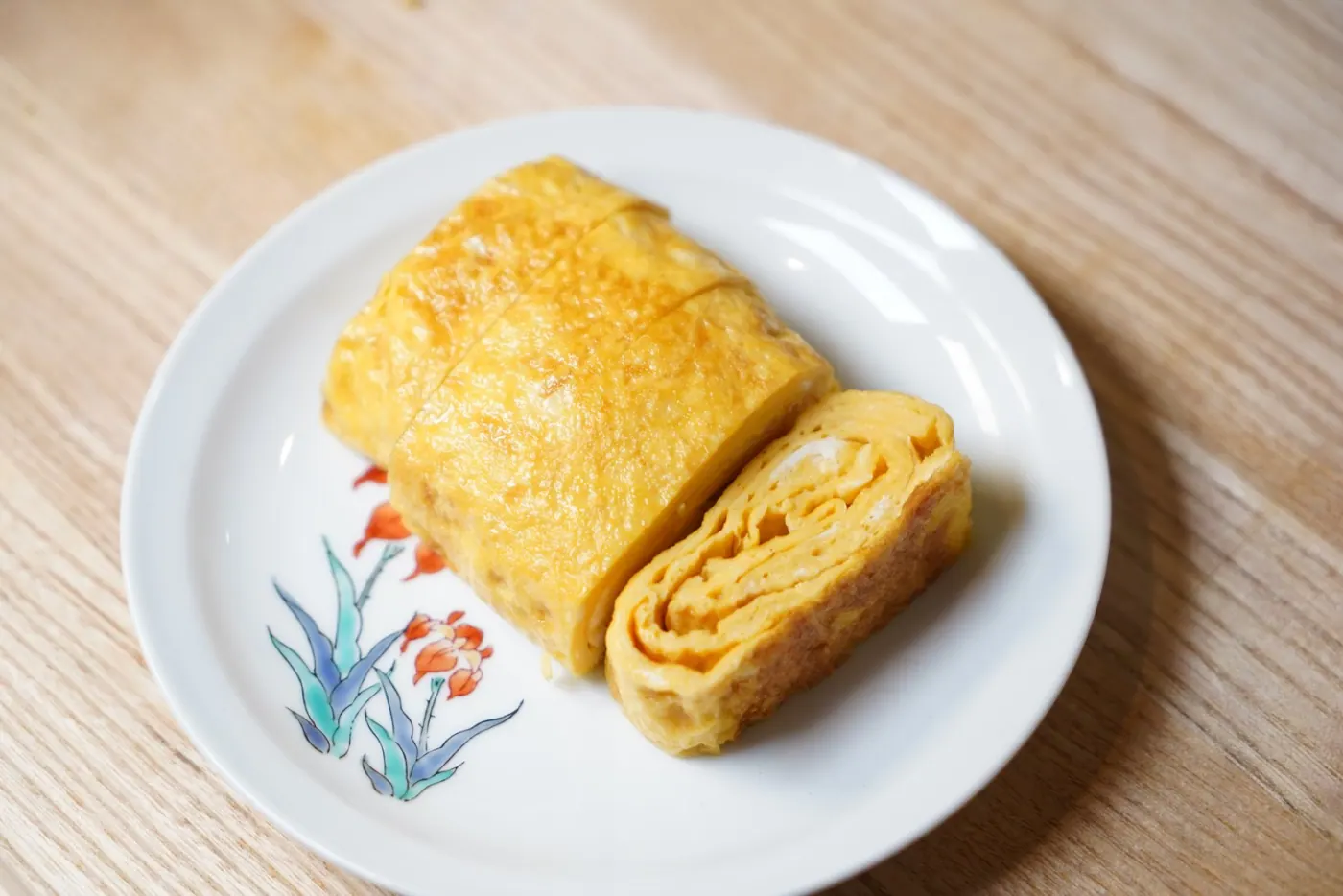
What is Tamagoyaki?
In Japan there's a special rectangular pan just for tamagoyaki, but it's hard to find outside Japan. This recipe shows how to make tamagoyaki in a regular round frying pan. The trick is to cut the round edges off each layer with a spatula so the egg folds into a neat rectangle, and cook slowly over low heat. A little water and potato starch keep it juicy and soft even after it cools.
This version is savory, made without dashi, mirin or sugar. If you have a rectangular tamagoyaki pan, there's also a cheese tamagoyaki made in a square pan further down the page. It uses 2 eggs, so it's a separate recipe with its own amounts.
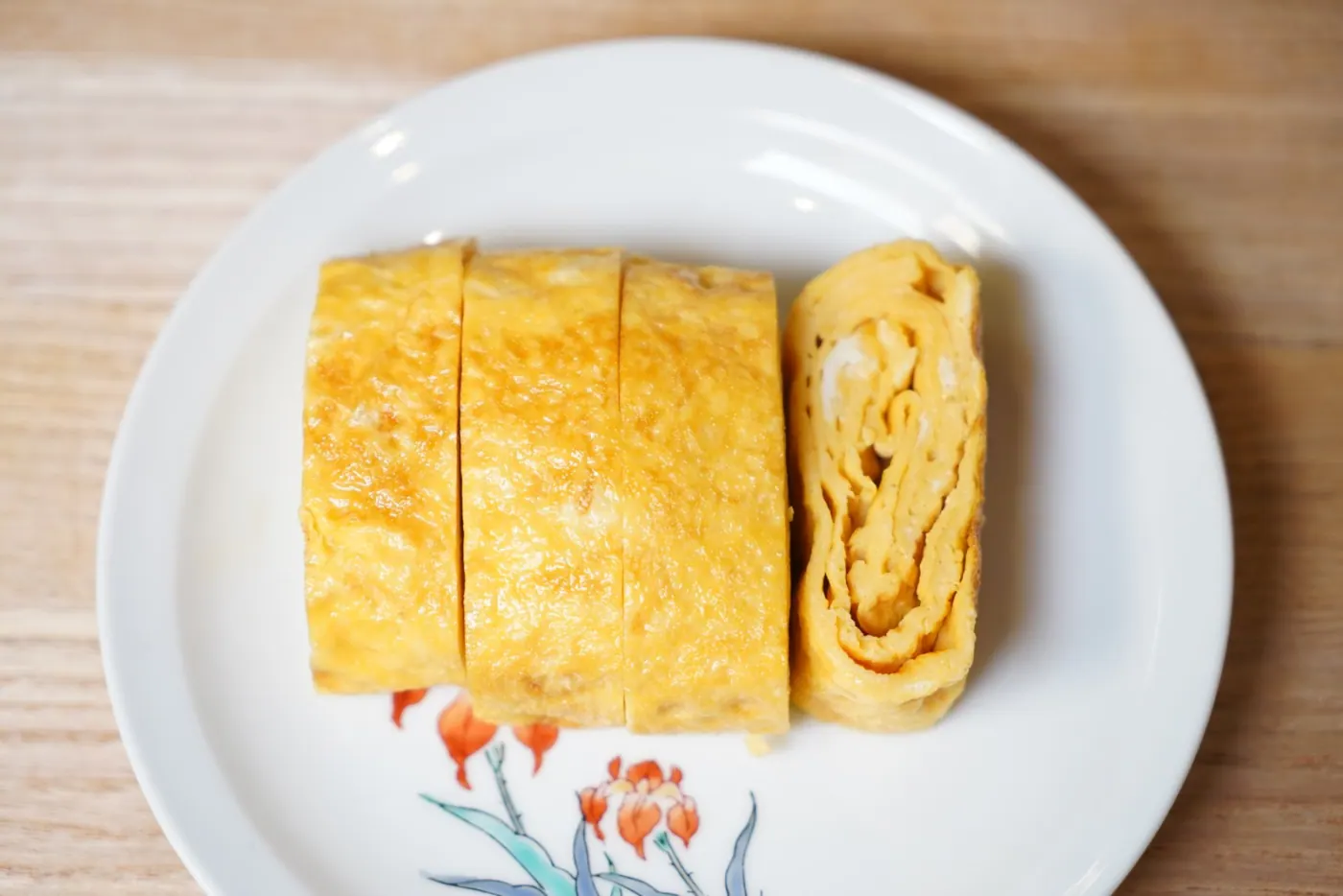
Why You'll Love This Recipe
- No special pan needed - Made in a regular round frying pan
- Juicy and soft - Water and potato starch keep the egg moist even after it cools
- Four ingredients - Eggs, soy sauce, water and potato starch
- Savory or sweet - Add sugar if you like it sweet
Key Points of This Recipe
- Mix the eggs well until no lumps of egg white are left
- Heat the pan well over low heat before the first layer
- Cut off the round edges with a spatula so the egg folds easily
- Lift the cooked egg and let the new egg mixture flow underneath
- Never turn up the heat to hurry it
Required Equipment
- Small round frying pan
- Spatula
- Ladle
- Small bowl
- Kitchen paper soaked in oil
- Chopsticks
- Knife and cutting board
Tamagoyaki Ingredients (Serves 2)
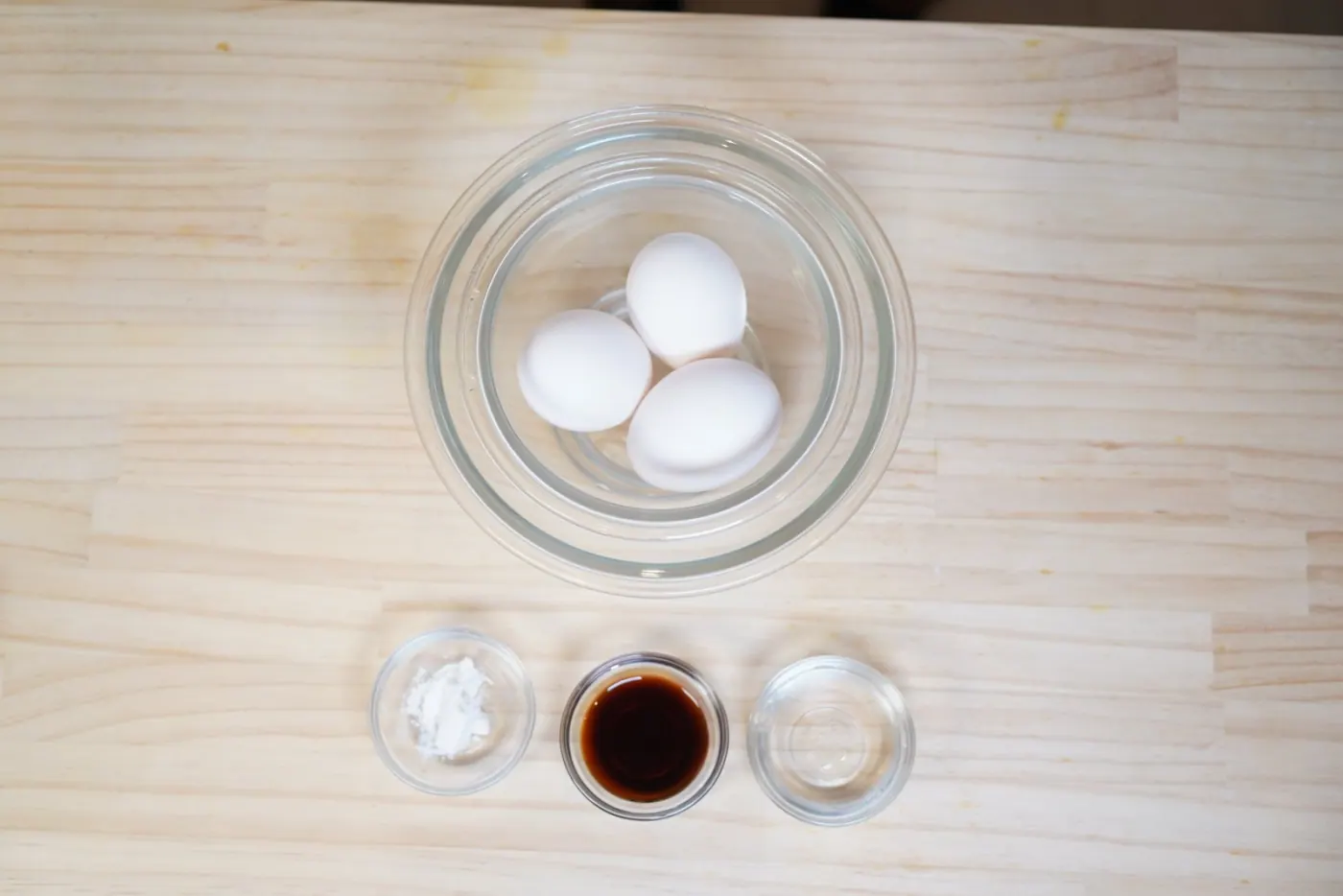
5 ingredients · 2 servings
Eggs, soy sauce, water, potato starch, cooking oil.
Full amounts in the recipe cardIngredient Substitutions
- More eggs: 4 eggs work too
- Sweet tamagoyaki: Add 1 tablespoon of sugar to the egg mixture. In Japan, people are split about half and half between sweet and savory tamagoyaki. Sugar burns easily, so keep the heat low
Video Tutorial
The video shows the round frying pan first, then a cheese tamagoyaki in a square pan.

How to Make Tamagoyaki
Make the Egg Mixture
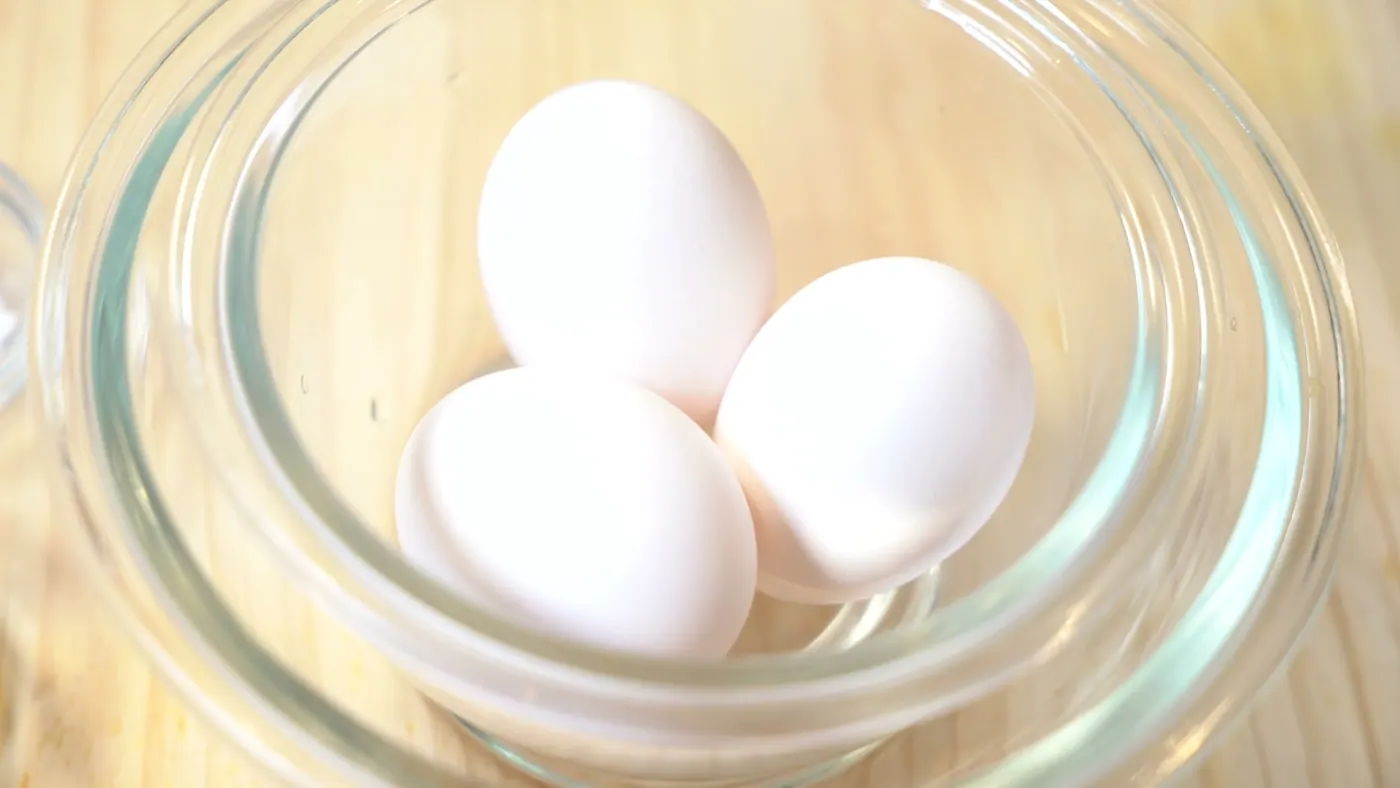
Crack the eggs
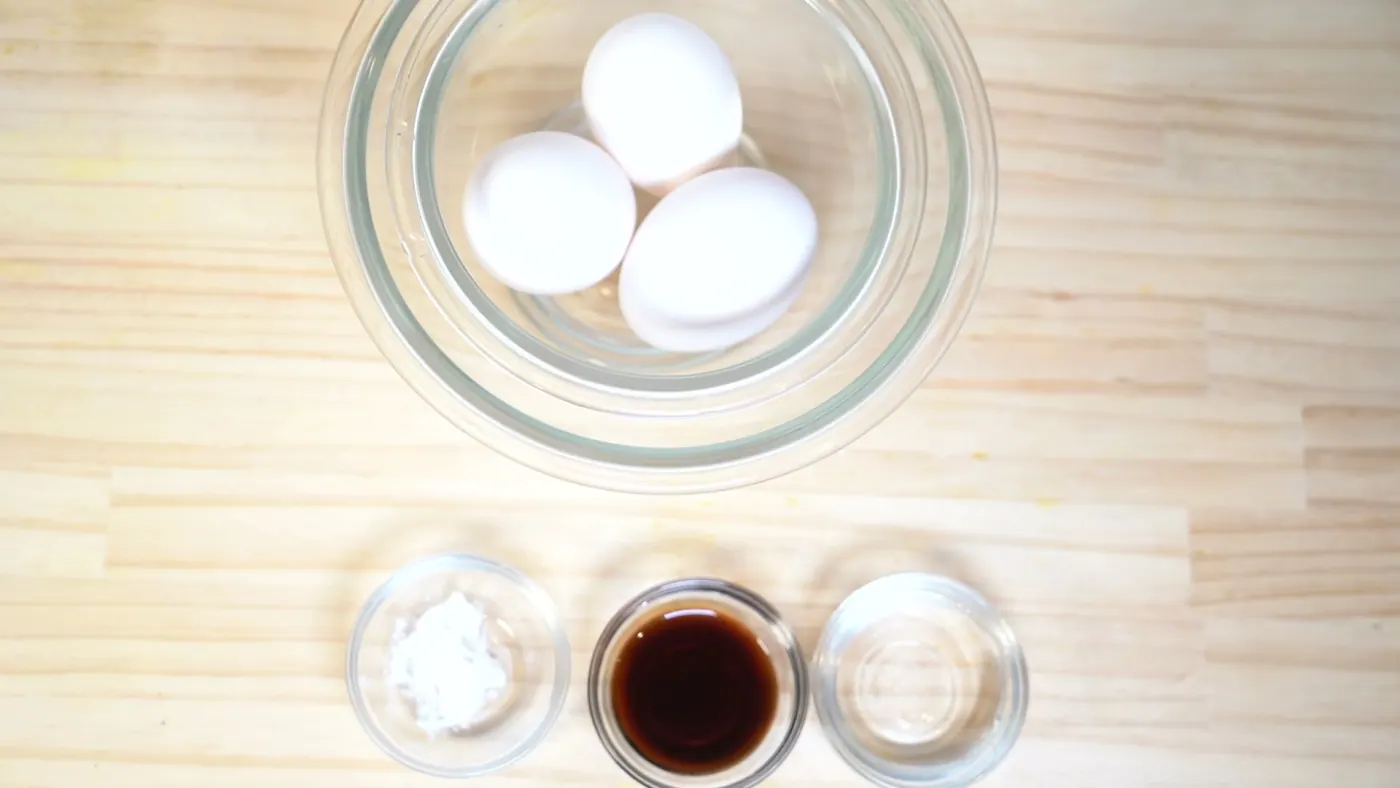
Crack 3 eggs into a small bowl.
Add the seasonings
Add the seasonings:
- 1/2 tablespoon soy sauce, for umami
- 2 tablespoons water, to make it juicier
- 1/2 teaspoon potato starch
Potato starch holds in the moisture, so the tamagoyaki stays tasty even after some time.
Mix well
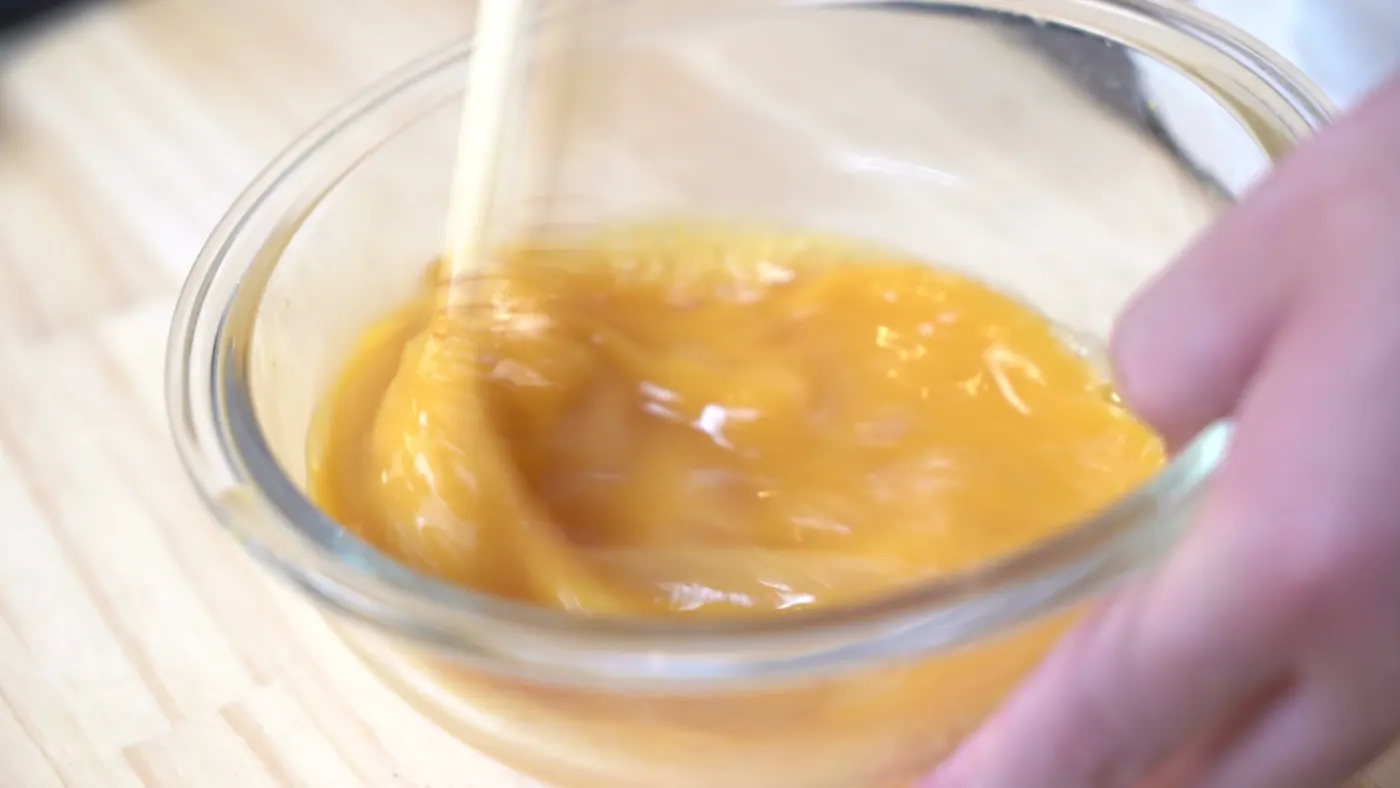
Mix thoroughly to break up the egg whites and combine them with the yolks.
Why mix so well?
Egg yolks and egg whites set at different temperatures. If they aren't fully mixed, the texture of the tamagoyaki suffers.
Check with a ladle
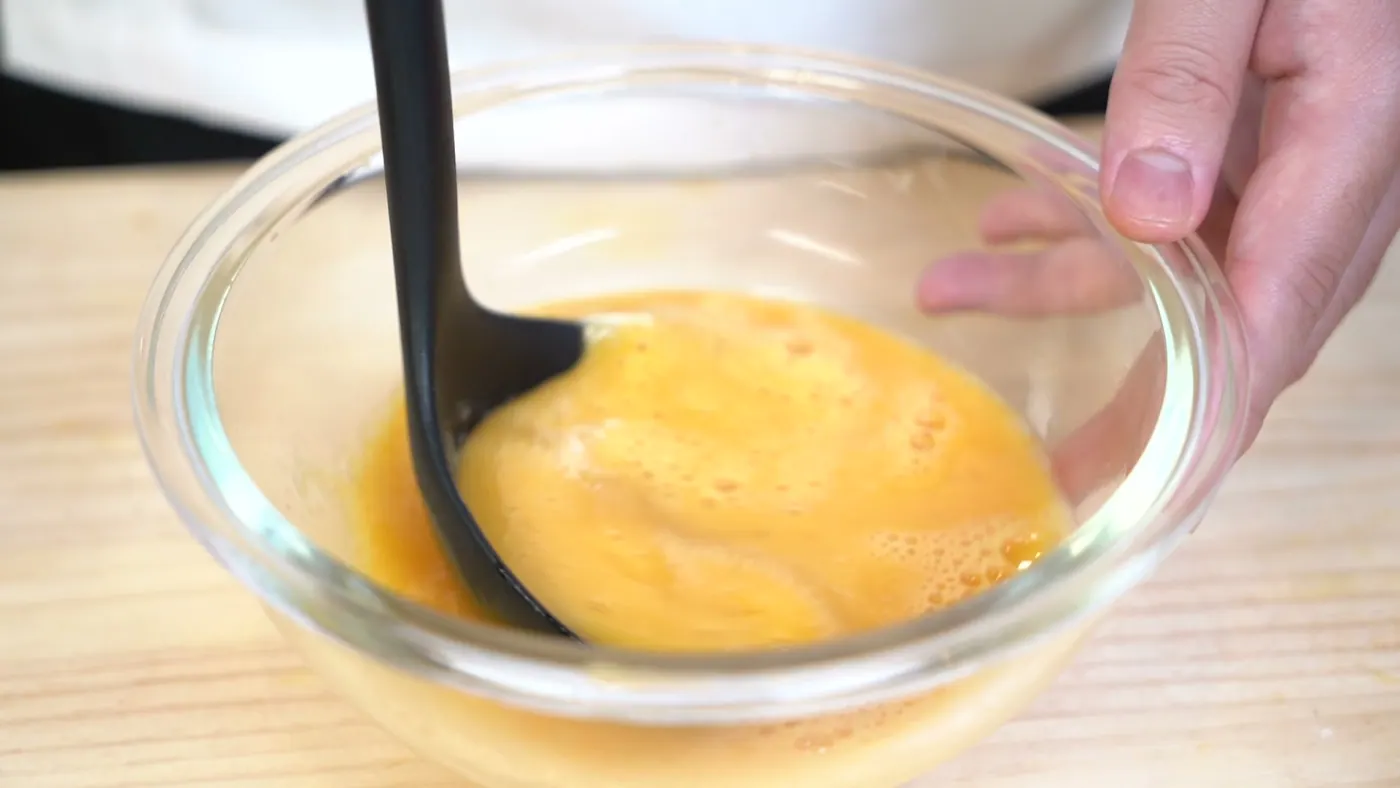
Scoop up some of the egg mixture with a ladle. If you can't see any egg white, it's well mixed.
Prepare the Pan
Get the pan and oil ready
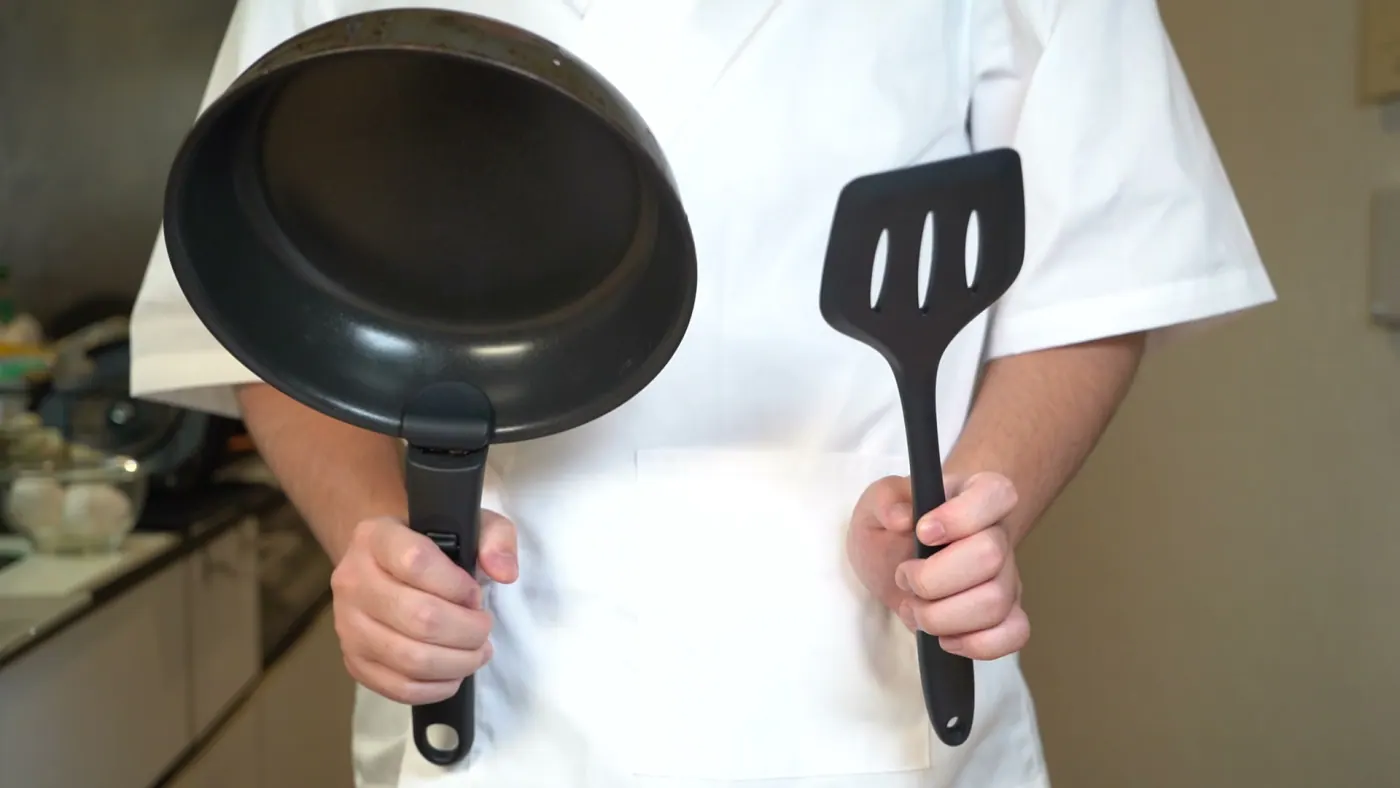
Prepare a small round frying pan and a spatula. A small pan is easier. Also prepare kitchen paper soaked in oil. You'll oil the pan several times while cooking, so it's handy to have it ready.
Oil the pan
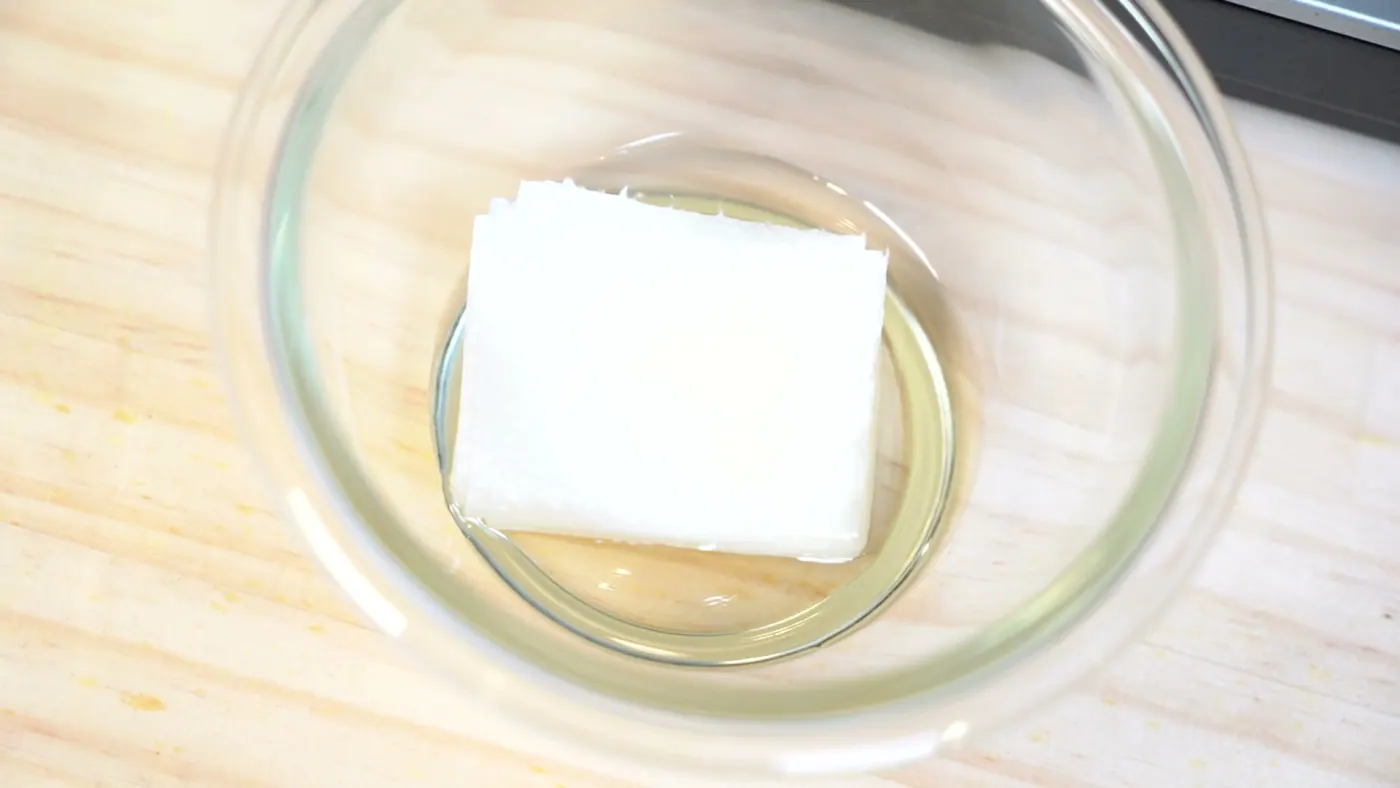
Place the frying pan in the center of the burner and spread oil over the whole surface with the kitchen paper. Without oil, the egg sticks to the pan and you can't fold it properly.
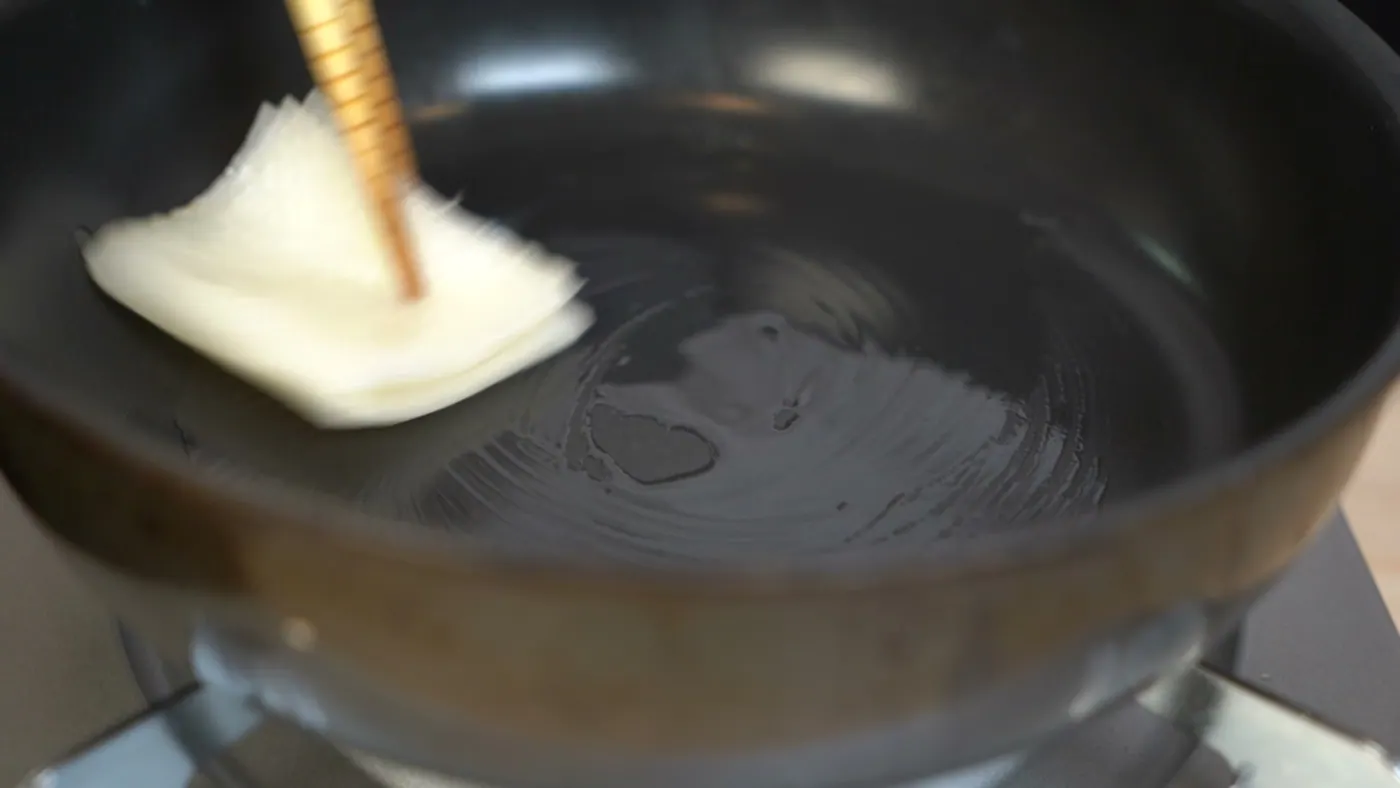
Heat the pan over low heat
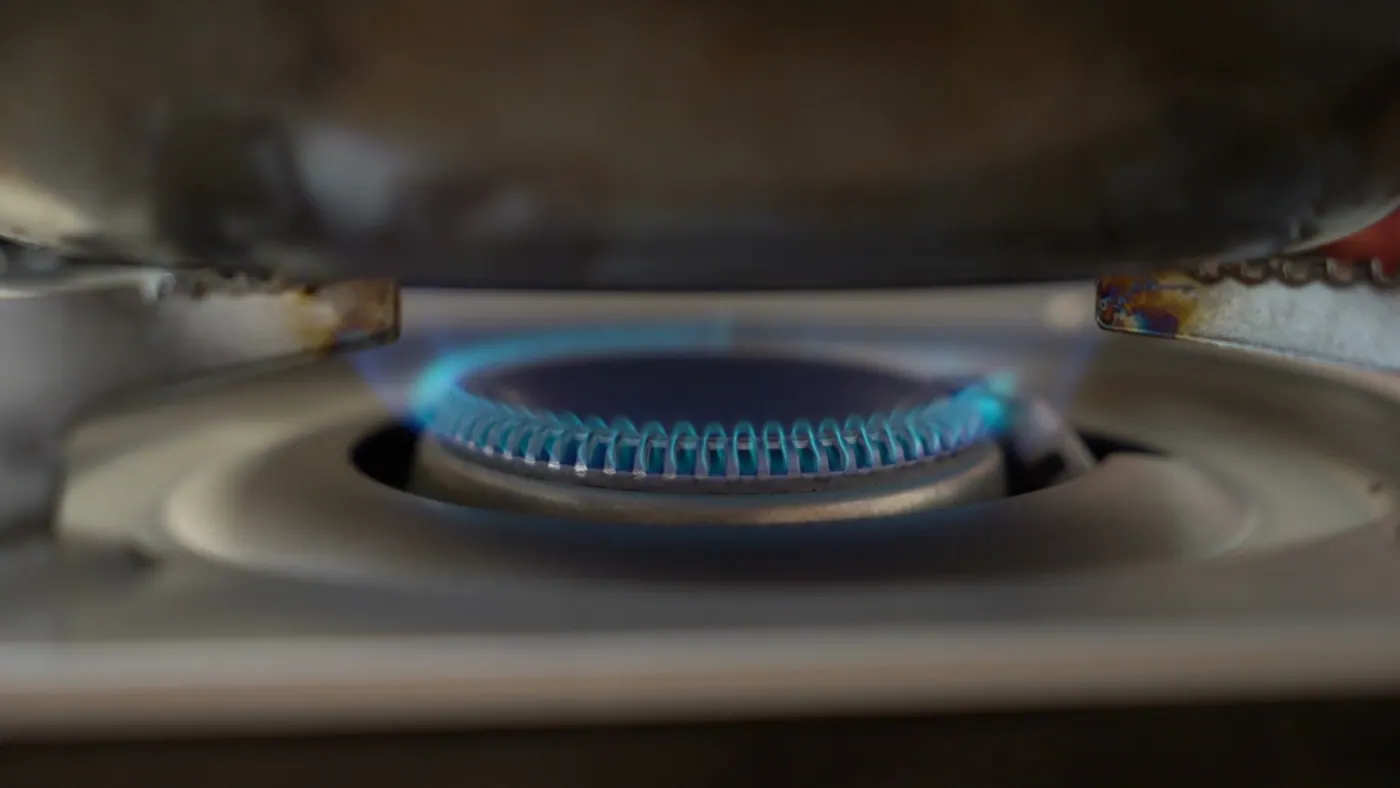
Turn on the heat and warm the pan over low heat. Cooking slowly over low heat gives a fluffy finish.
Check that the pan is hot
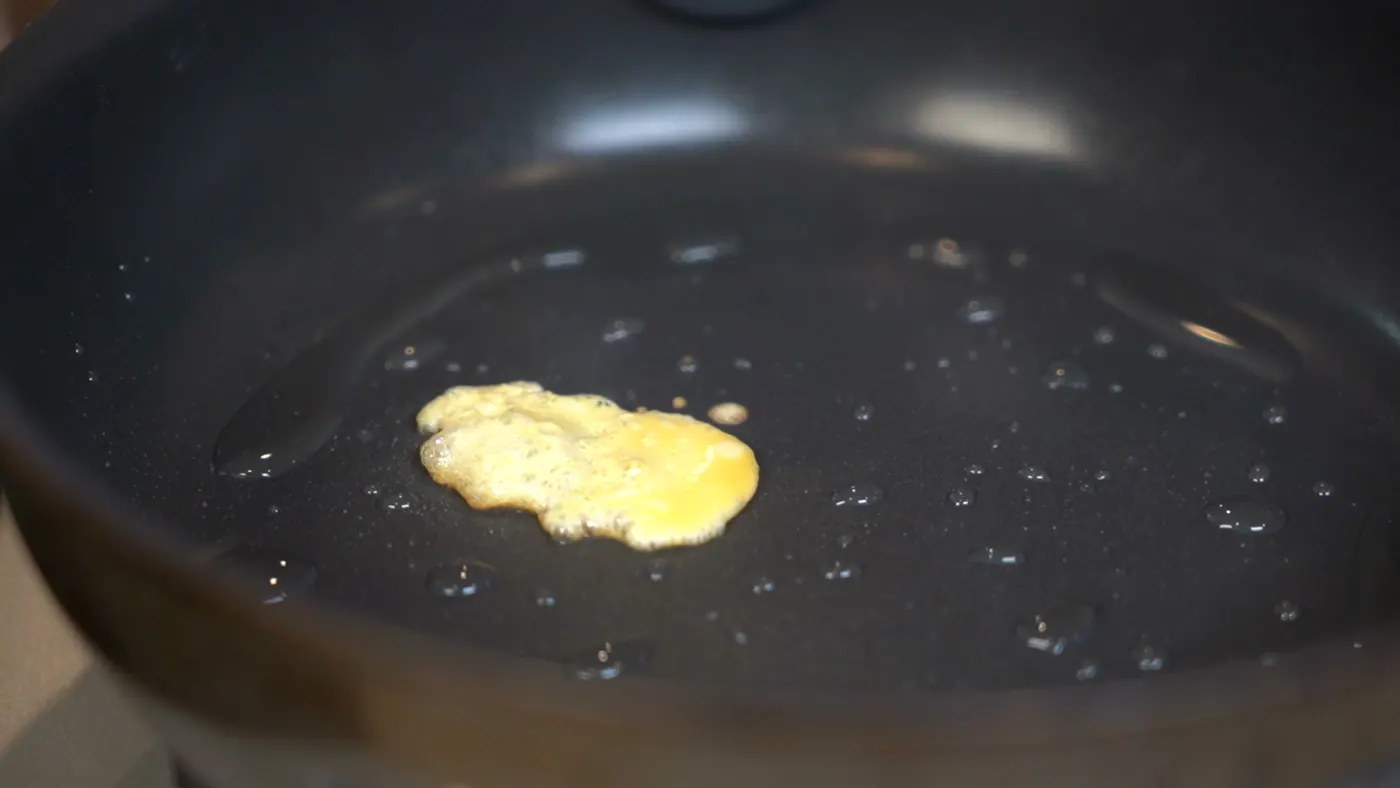
After 2-3 minutes, drop a little egg mixture into the pan. If it sizzles, the pan is hot enough. If the pan isn't hot, the tamagoyaki turns out soggy.
Cook and Fold the Layers
Pour in the first ladleful
Pour one ladleful of the egg mixture into the pan. Stir it gently and spread it over the whole pan so it sets faster. Cook until only a little liquid is left on top.
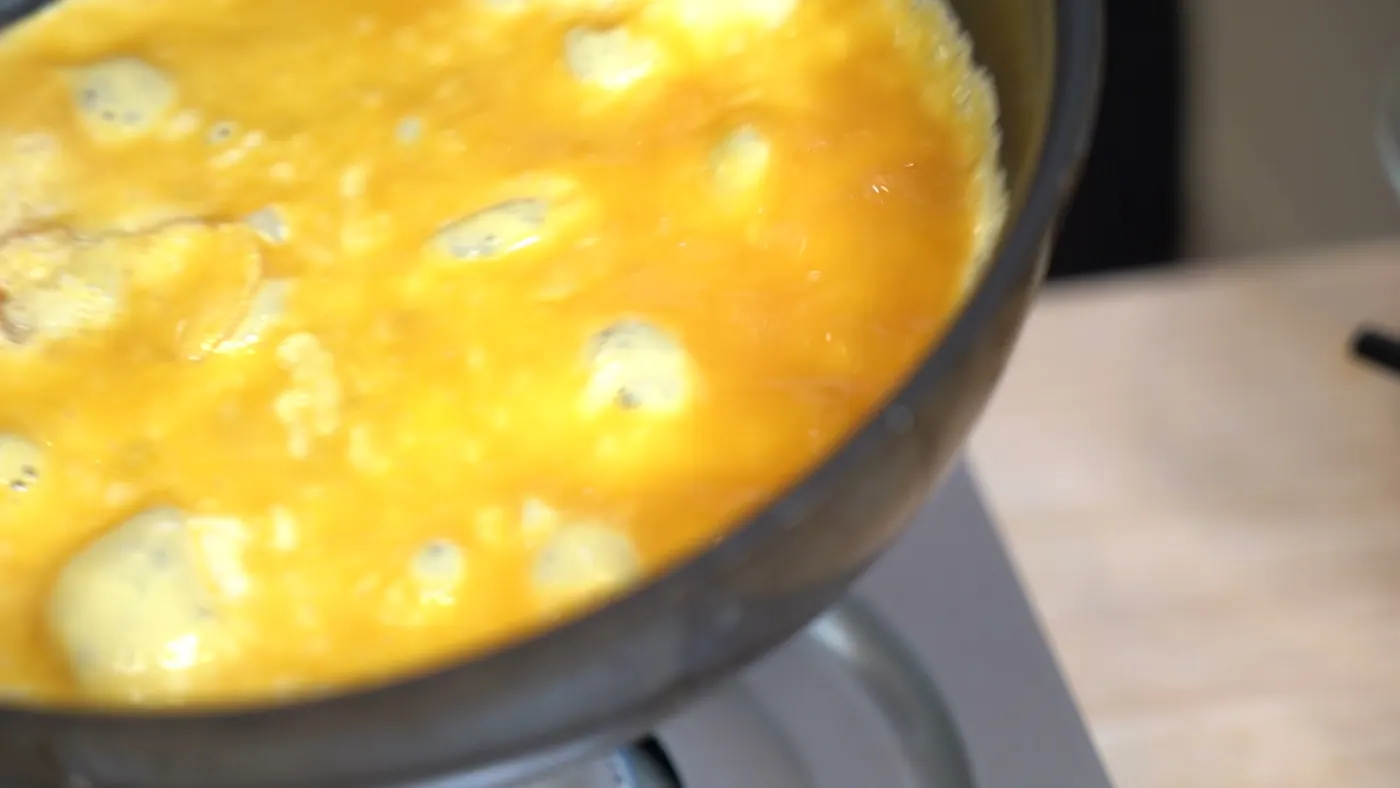
Cut the edges with the spatula
This is the most important step. Cut off the round edge of the egg with the spatula to shape it so it's easier to fold, and put the cut piece on top of the egg sheet. You can fold with chopsticks instead, but cutting with a spatula is easier.
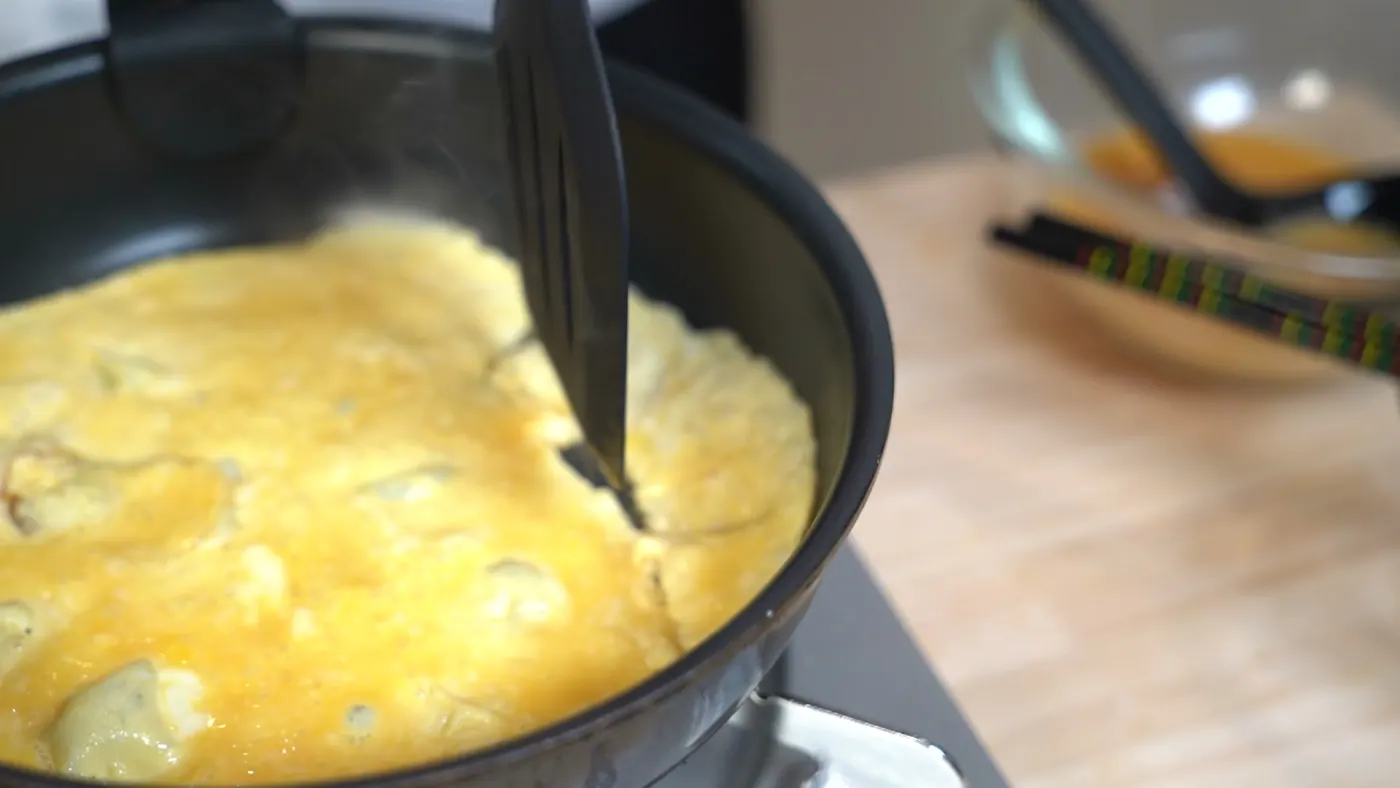
Fold from the far side
Fold the egg from the far side toward you. It's easier this way. When it's folded, move it back to the far side of the pan for the next layer.
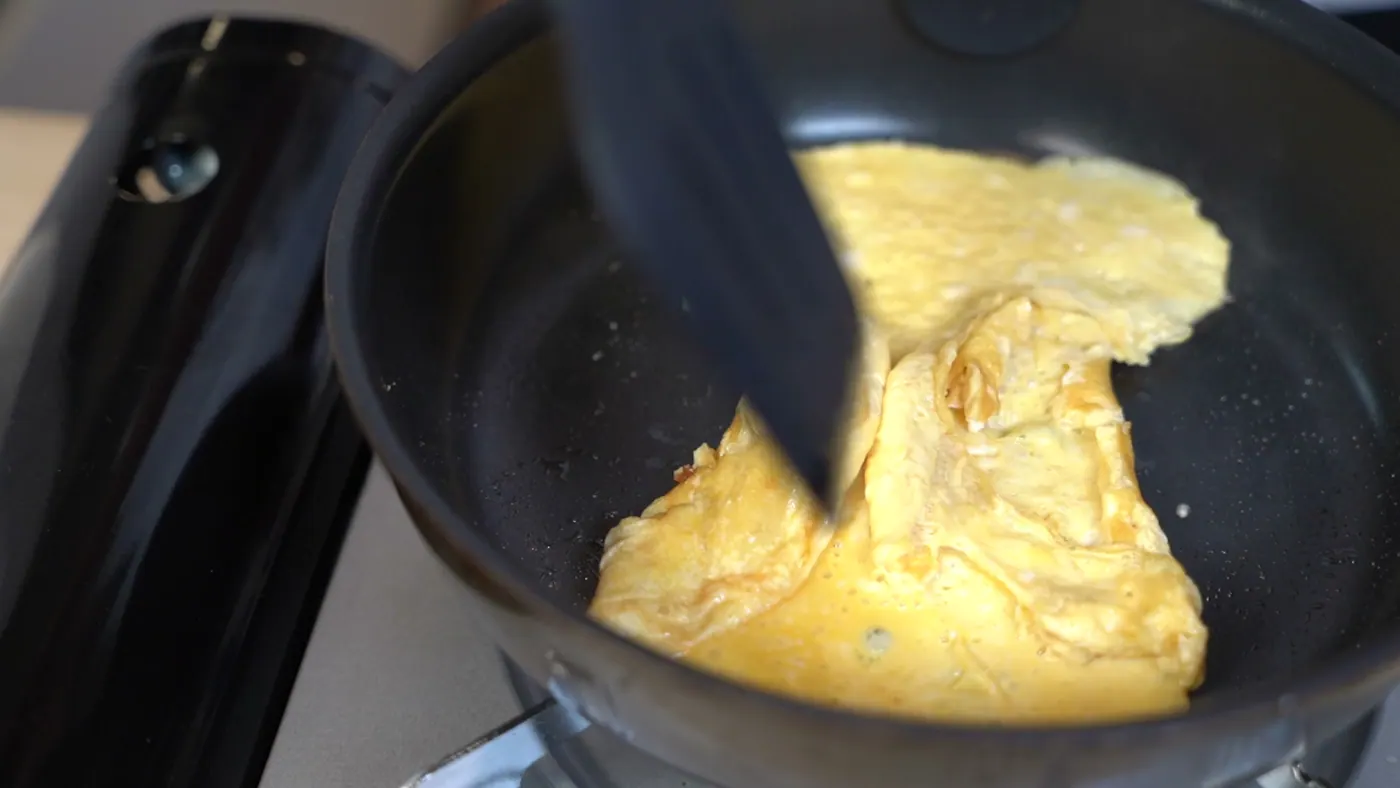
Oil the pan again
Spread oil over the whole pan again with the kitchen paper. This repeated oiling is why the oil-soaked paper is so handy.
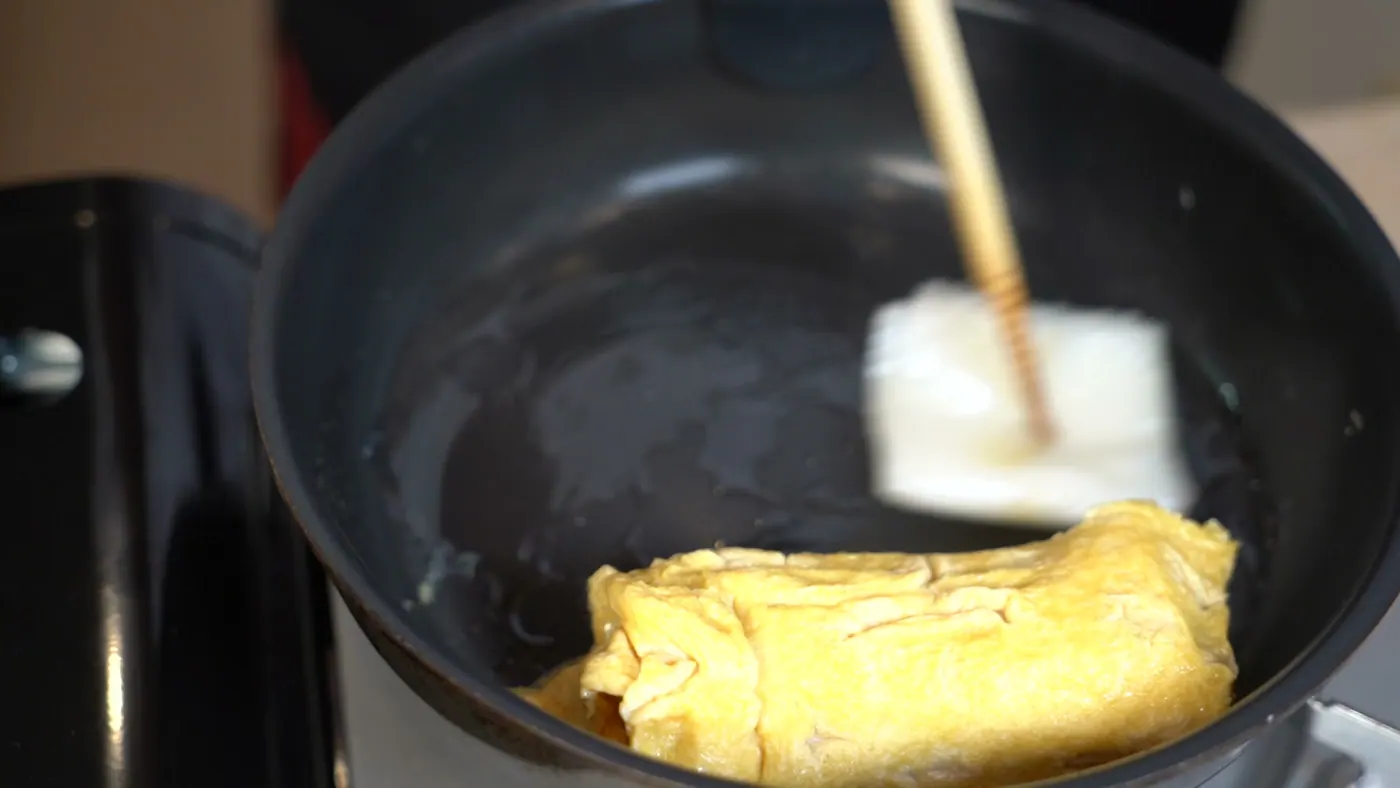
Pour the second ladleful under the first layer
Pour in a second ladleful of egg mixture. Here's the key point: lift the folded egg and let the egg mixture flow underneath it. This makes the egg easier to fold. If you skip it, the egg can tear while you fold.
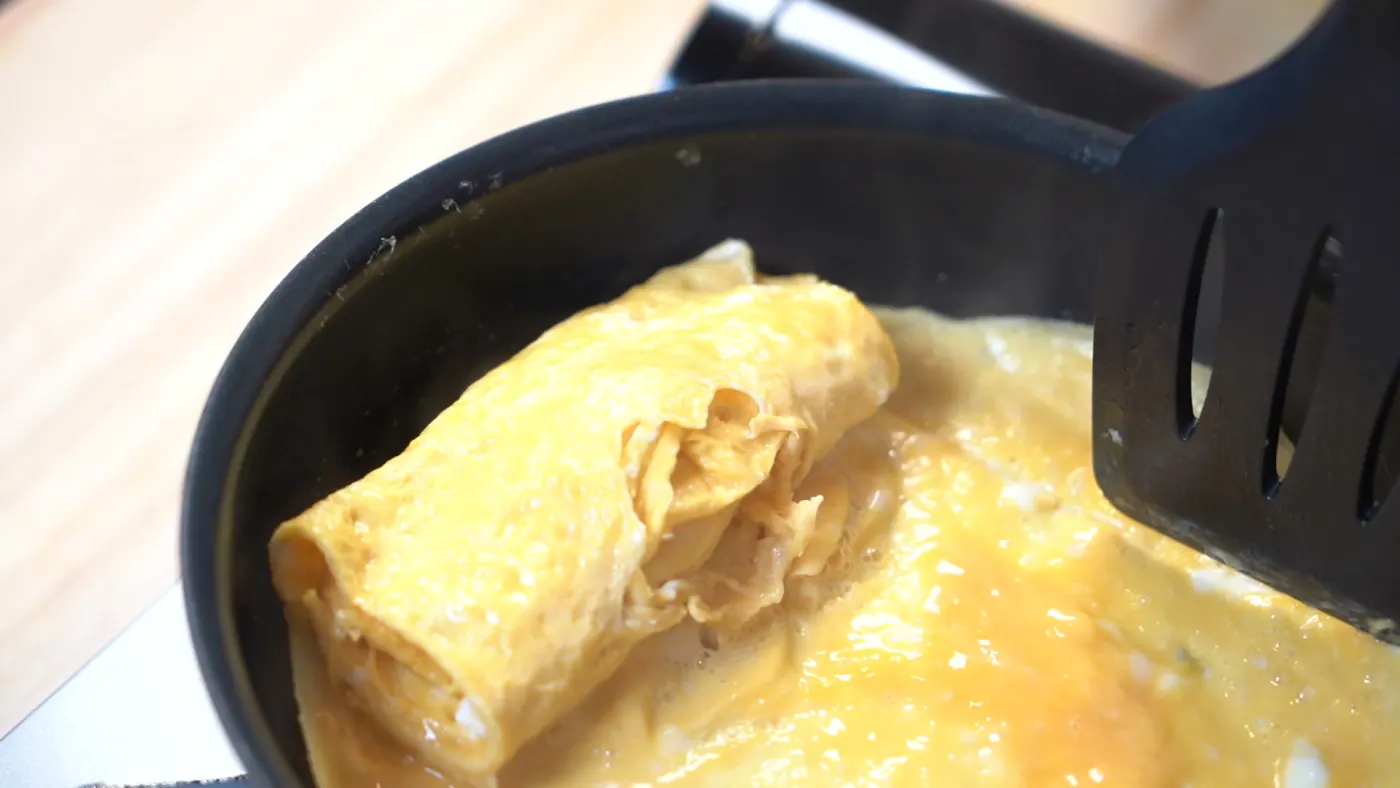
Cut the edges and fold again
As before, cook until only a little liquid is left, then cut the edges with the spatula. If the egg isn't cooked enough, it's hard to cut. Put the cut pieces as close to the center as you can, then fold from the far side. Move the tamagoyaki back to the far side when you're done.
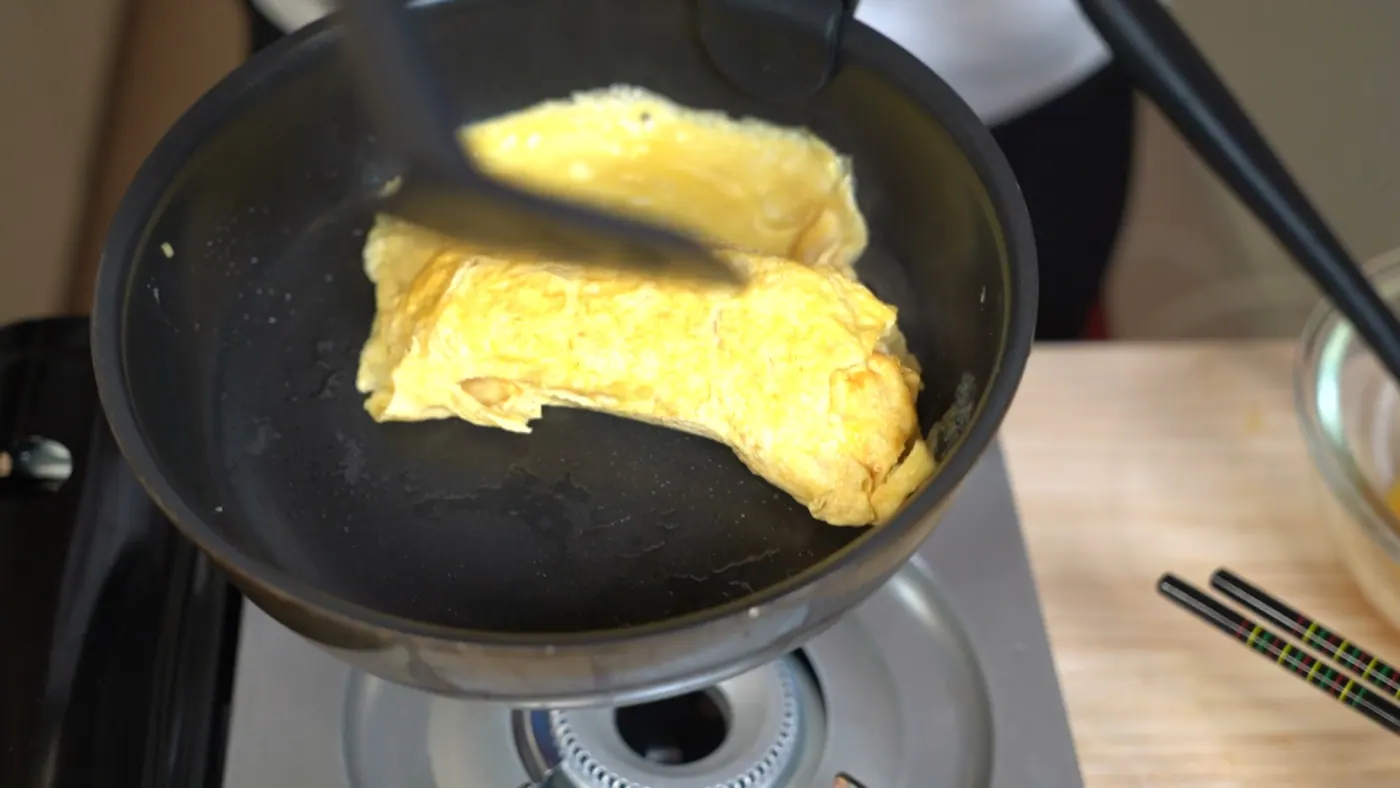
Repeat until the egg mixture is used up
Repeat the same steps until all the egg mixture is used. Too little egg is hard to fold, so the last round should be more than one ladleful: when less than two ladlefuls are left, pour in all of it at once.
More egg mixture cools the pan, so it takes a little longer to set. Don't turn up the heat to speed it up. That's what makes tamagoyaki fail. Spread the egg over the whole pan and cook it slowly over low heat.
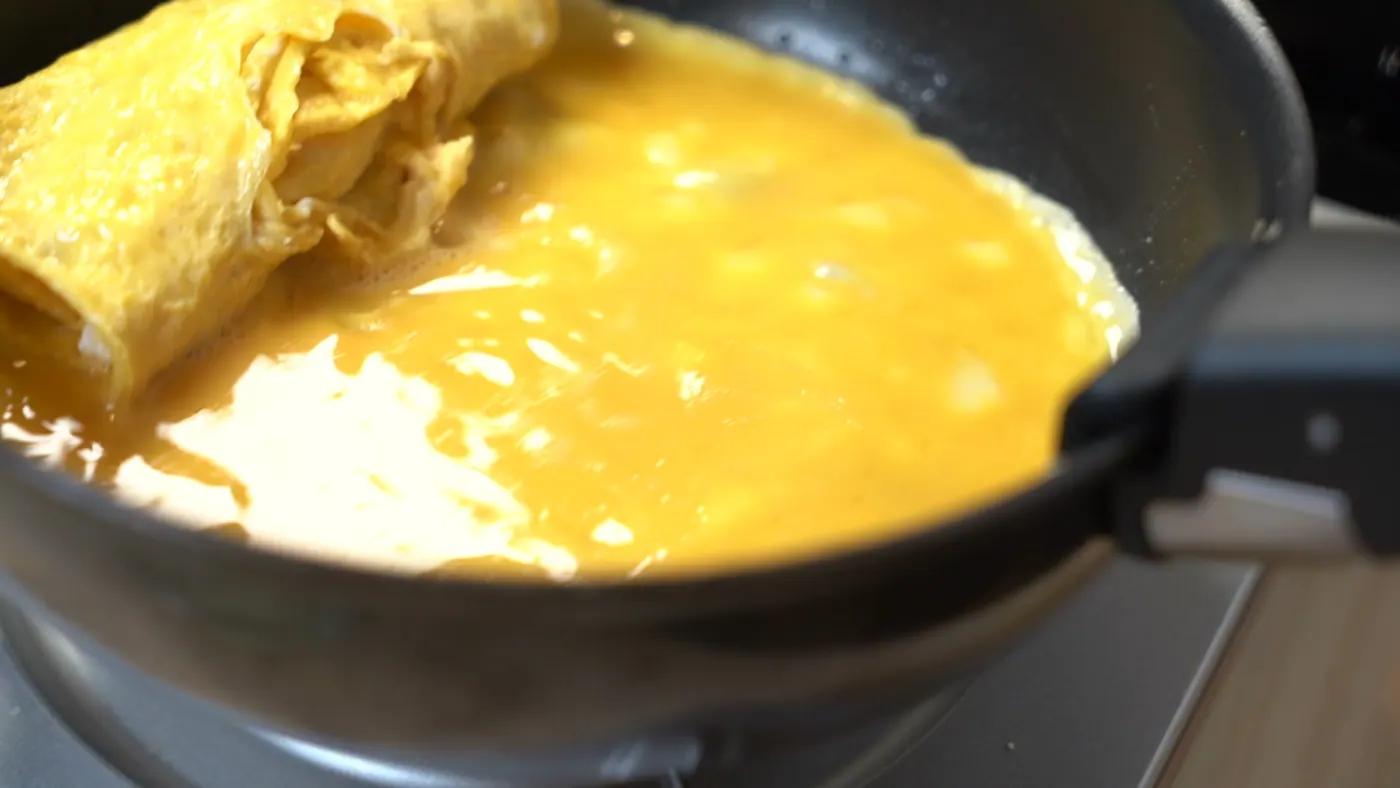
Tilt the pan for the last fold
Cut the edges one last time, move them to the center and fold. As the tamagoyaki gets bigger, it's harder to fold. Tilt the pan toward the far side so the spatula slides under the tamagoyaki more easily.
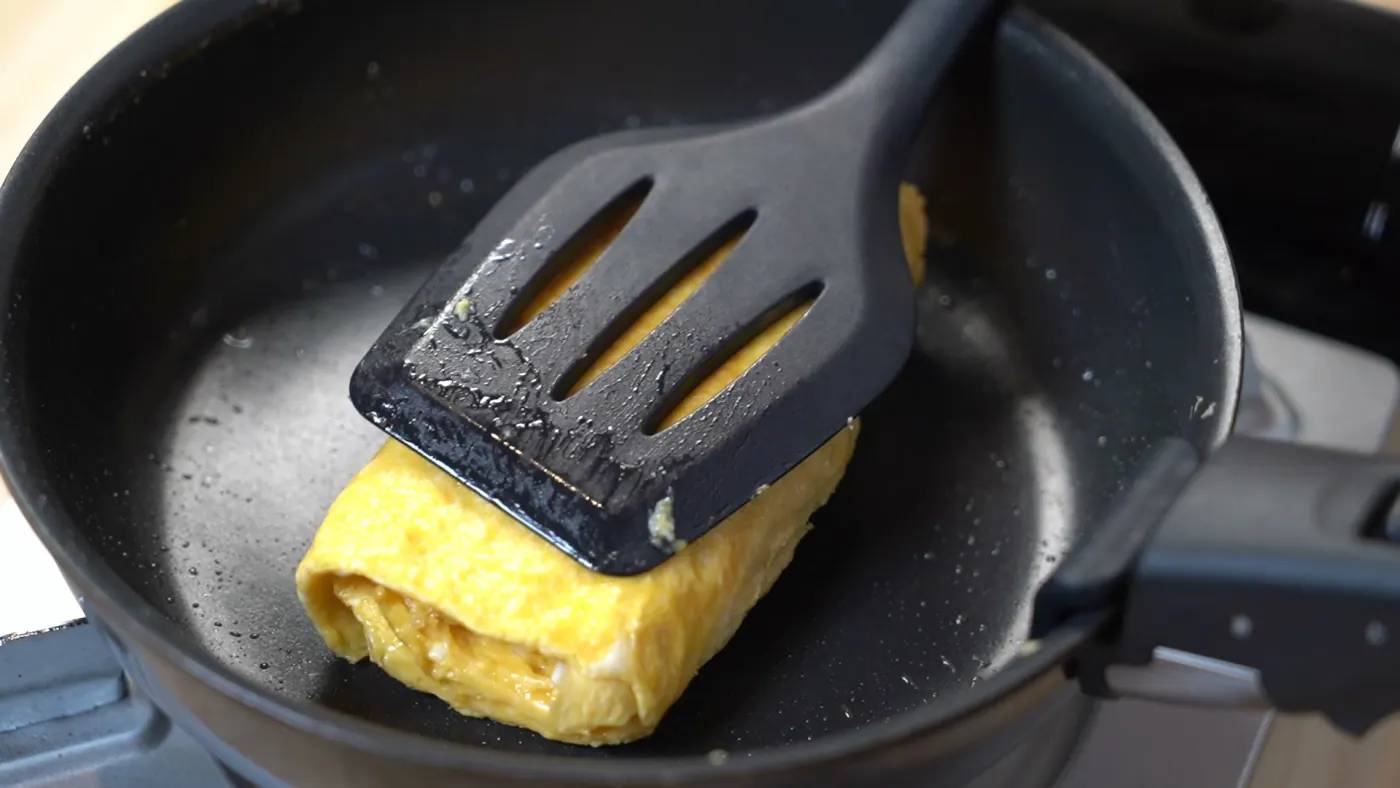
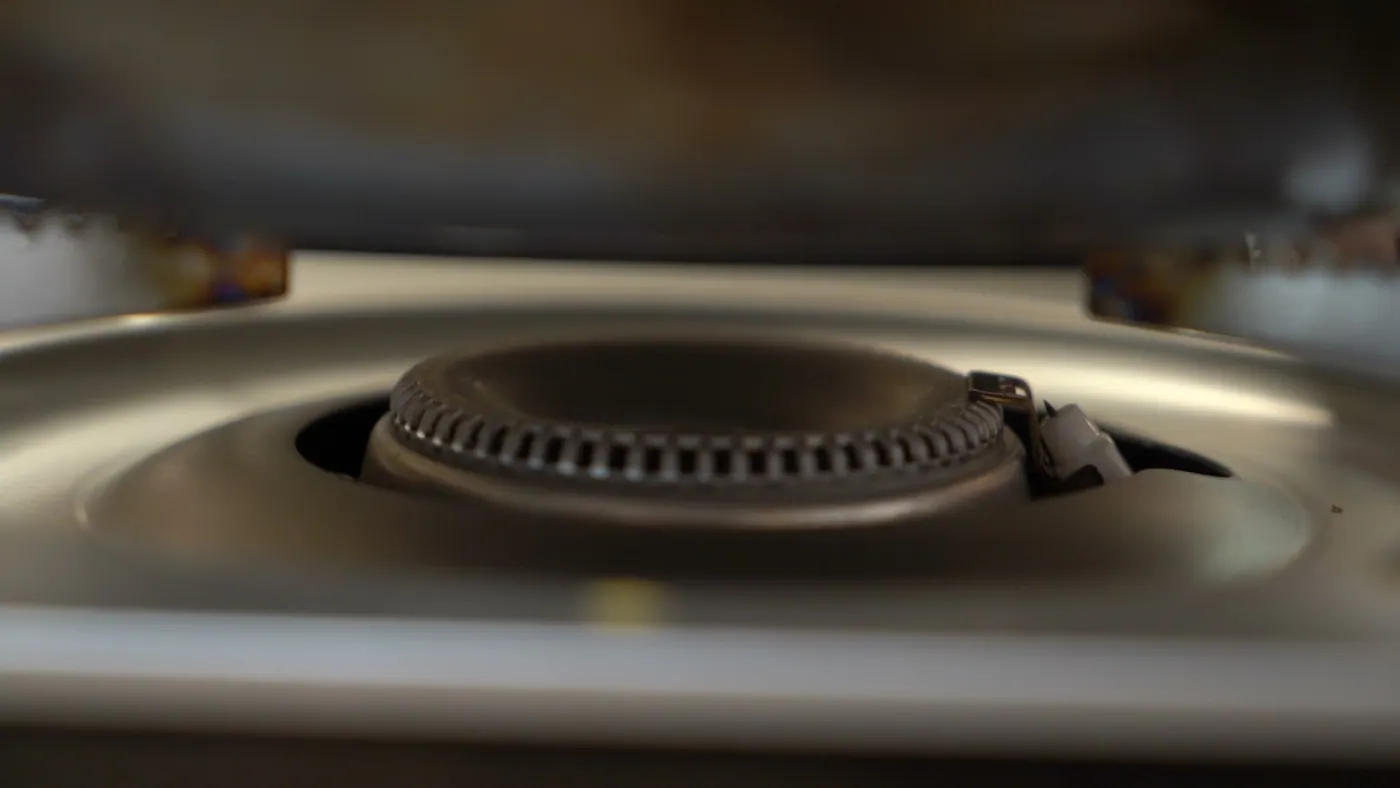
Turn off the heat and shape it
Turn off the heat and let the tamagoyaki sit in the pan for 1 minute, shaping it with the spatula while the leftover heat finishes cooking it. If you plan to eat it later, it's safer to keep the heat on for 1 more minute.
Cut and Serve
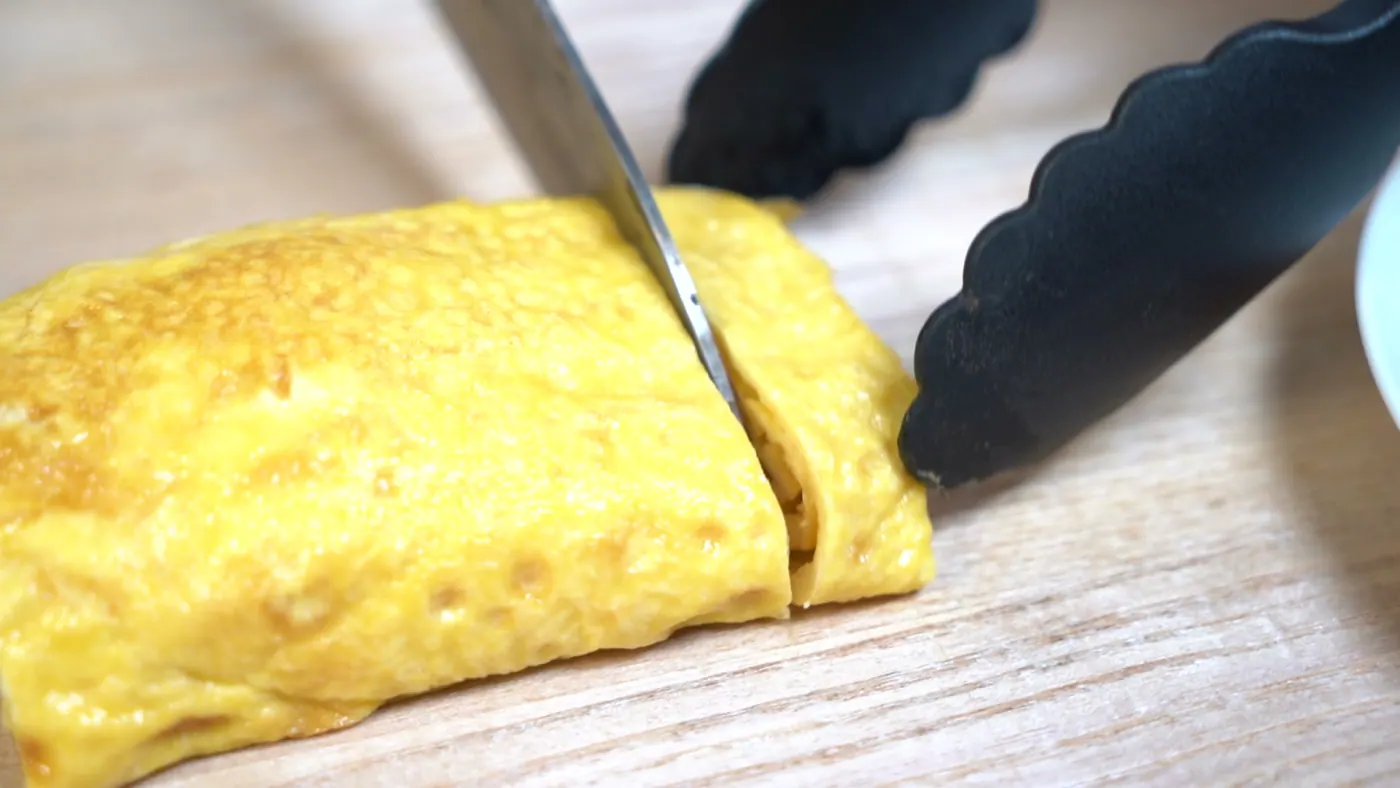
Slice the tamagoyaki
Move the tamagoyaki to a cutting board. Trim the ends for a neater look, then cut it into 4 equal, bite-sized pieces.
Serve
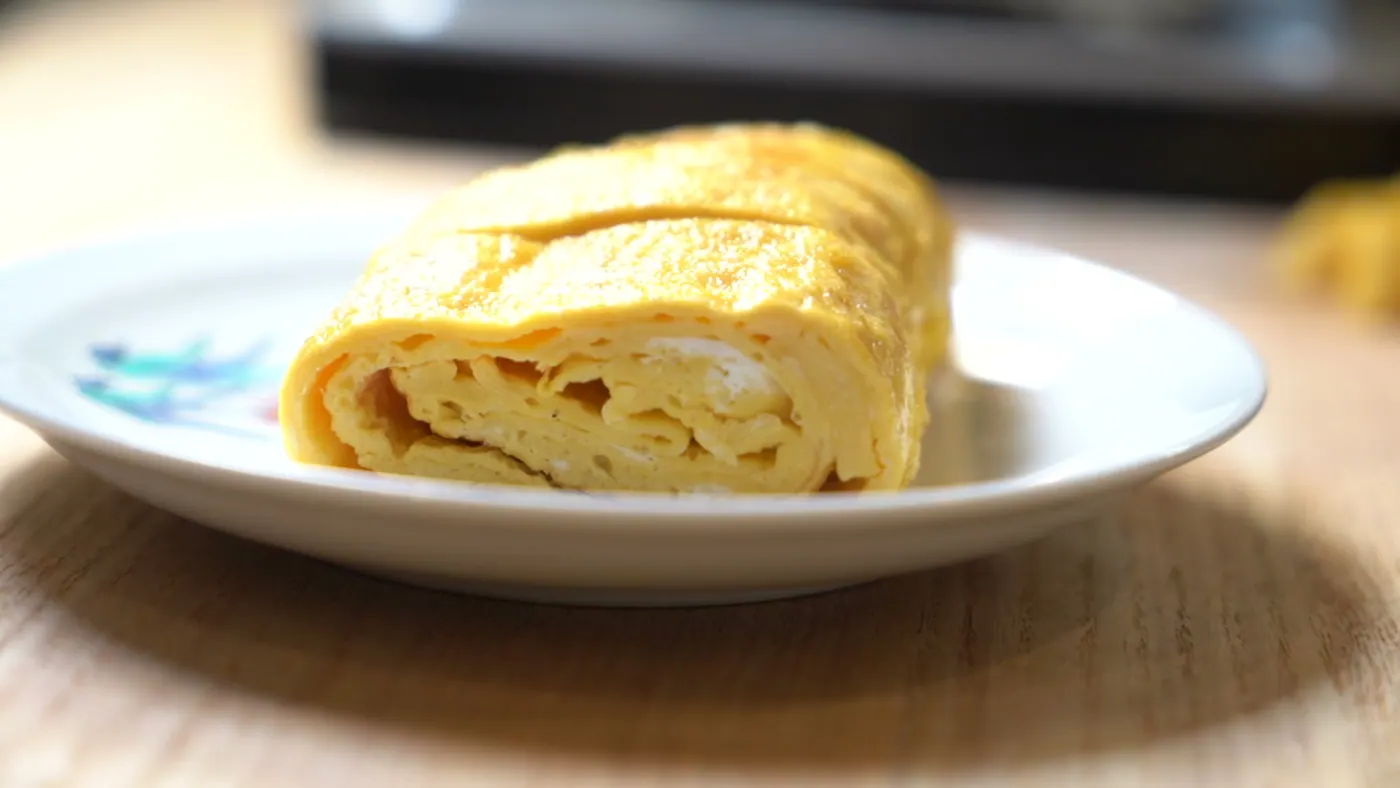
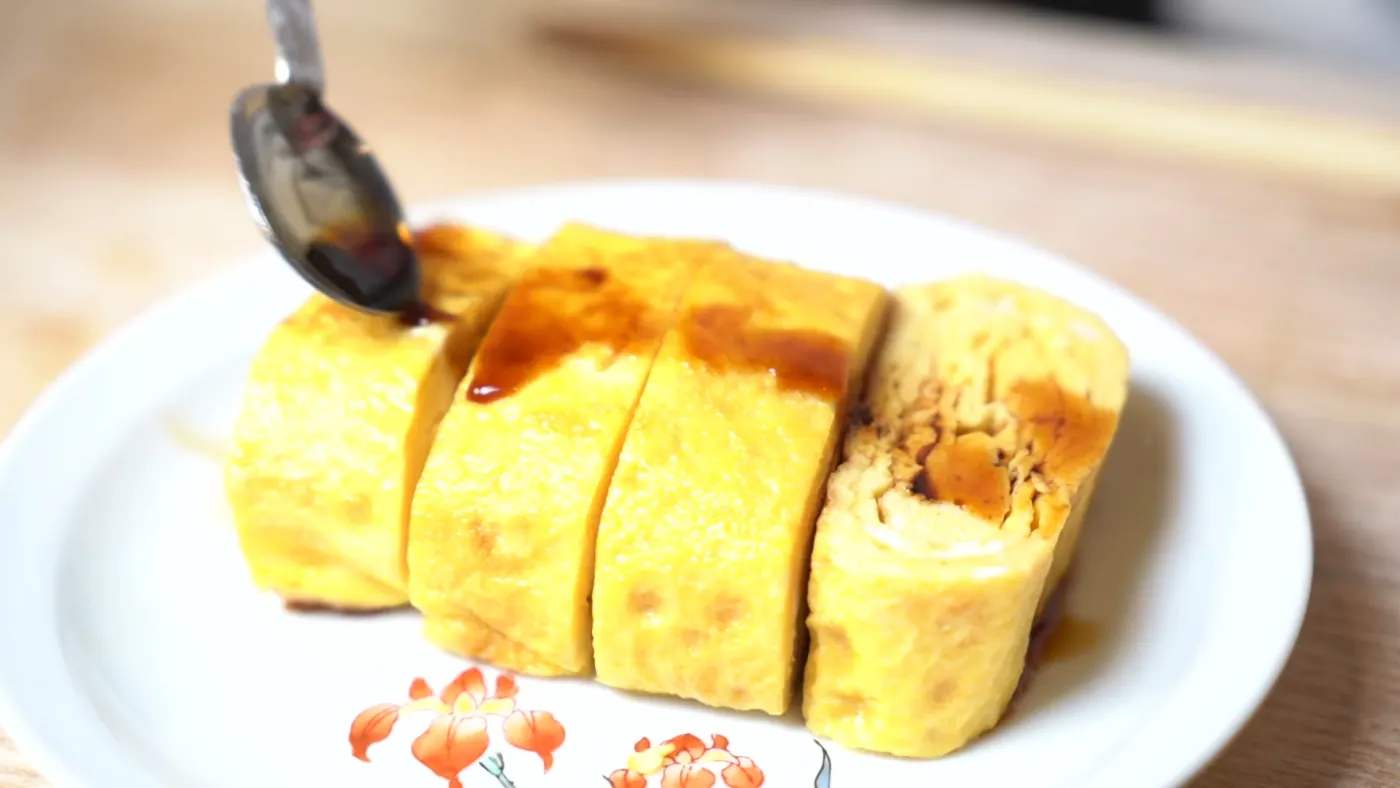
Put the slices on a plate. The jiggly, soft texture comes from the potato starch and water. We recommend eating it with a little soy sauce.
Variation: Cheese Tamagoyaki in a Square Pan
If you have a rectangular tamagoyaki pan, try this cheese-filled version. The method is the same, but you don't need to cut the edges, and the pan is sized so that 3 folds make a neat tamagoyaki. This is a separate recipe made with 2 eggs. The amounts are not part of the recipe card above, which is for the round-pan tamagoyaki with 3 eggs.
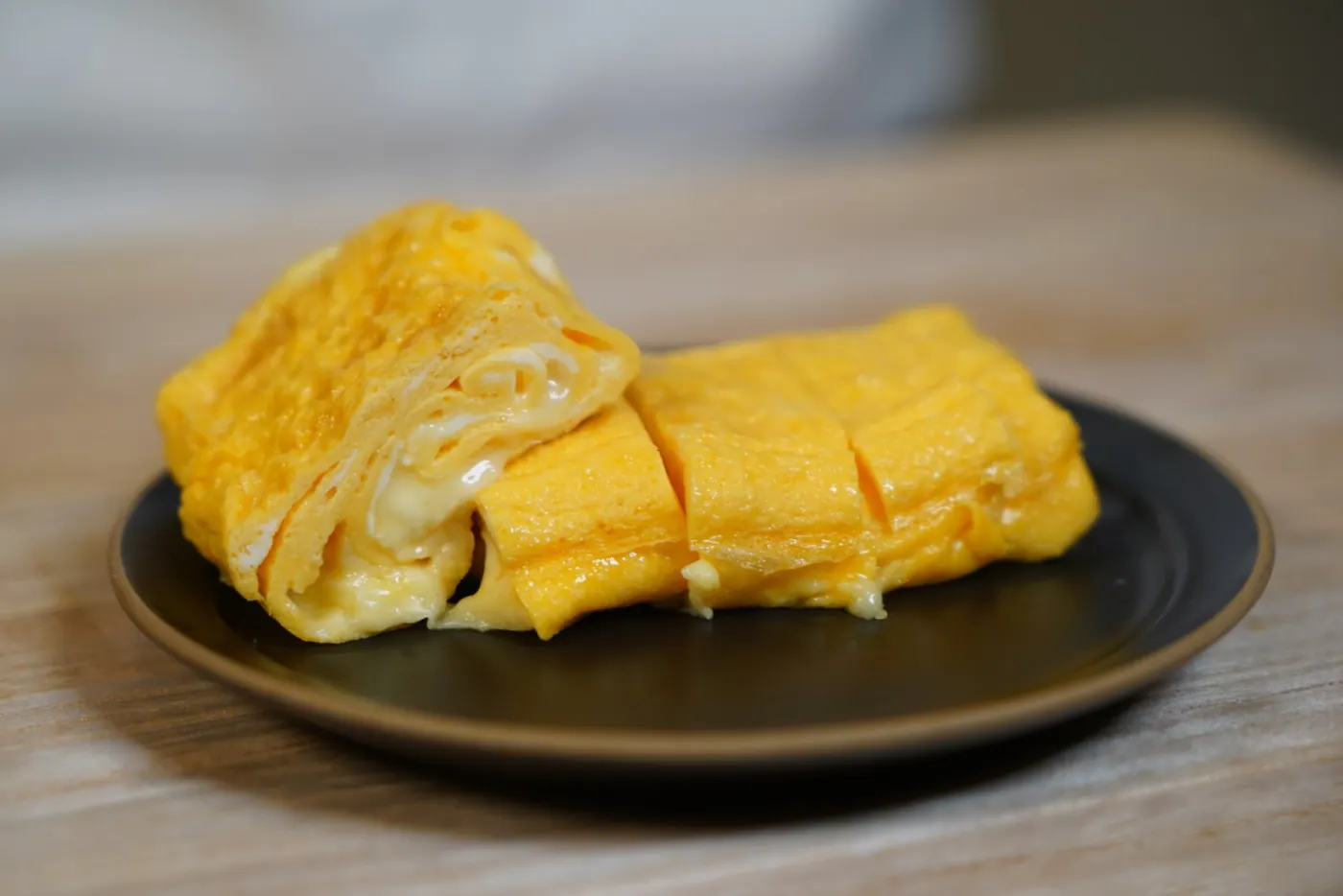
Ingredients
- 2 eggs
- 1 teaspoon soy sauce
- 4 teaspoons water
- 1/3 teaspoon potato starch
- 2 handfuls shredded cheese (1 handful for each fold)
- Cooking oil, for the pan
The video uses 2 eggs but doesn't give the seasoning amounts for this version. The soy sauce, water and potato starch above are the main recipe scaled down to 2 eggs.
How to make it
- Mix the eggs and seasonings well, as in the main recipe. Heat the square pan, spread oil over it and check the temperature after about 1 minute with a drop of egg.
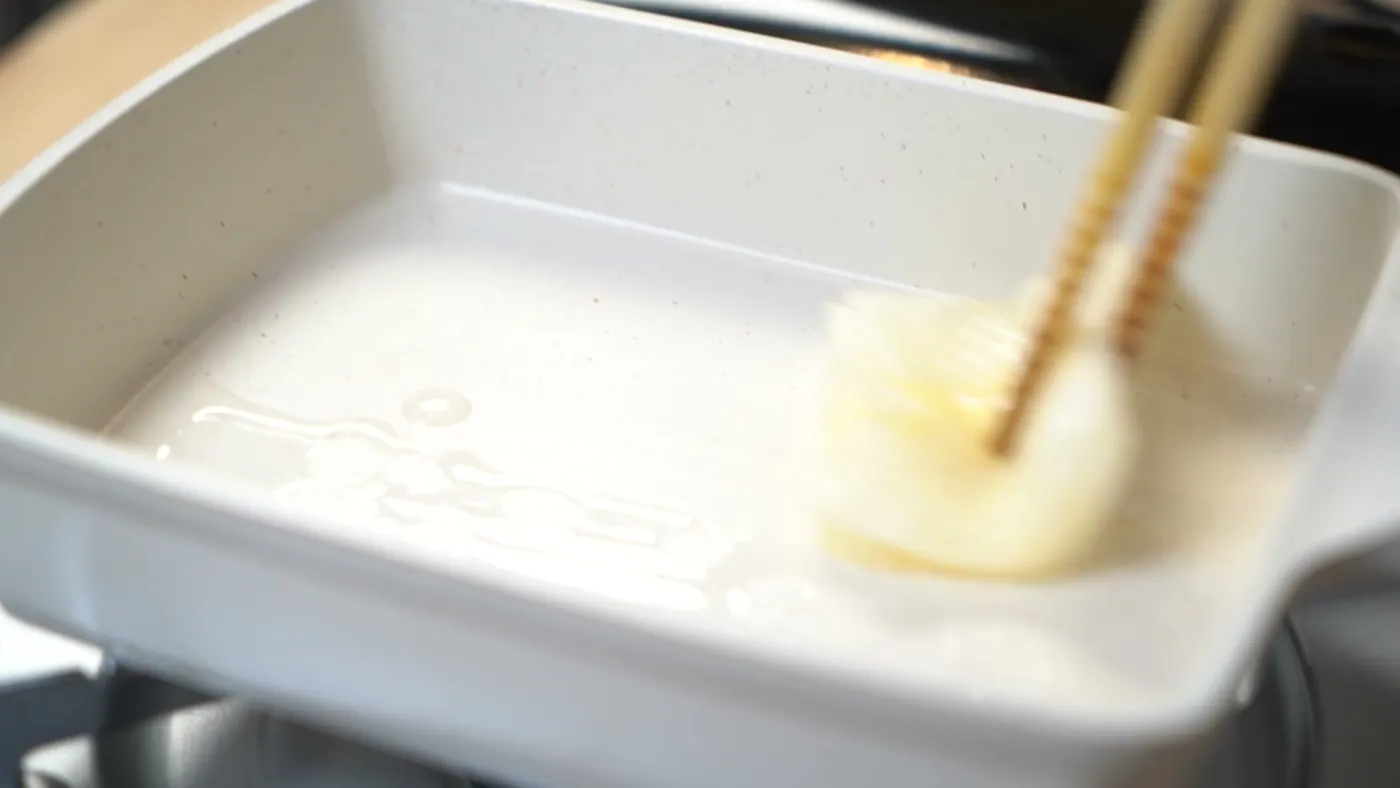
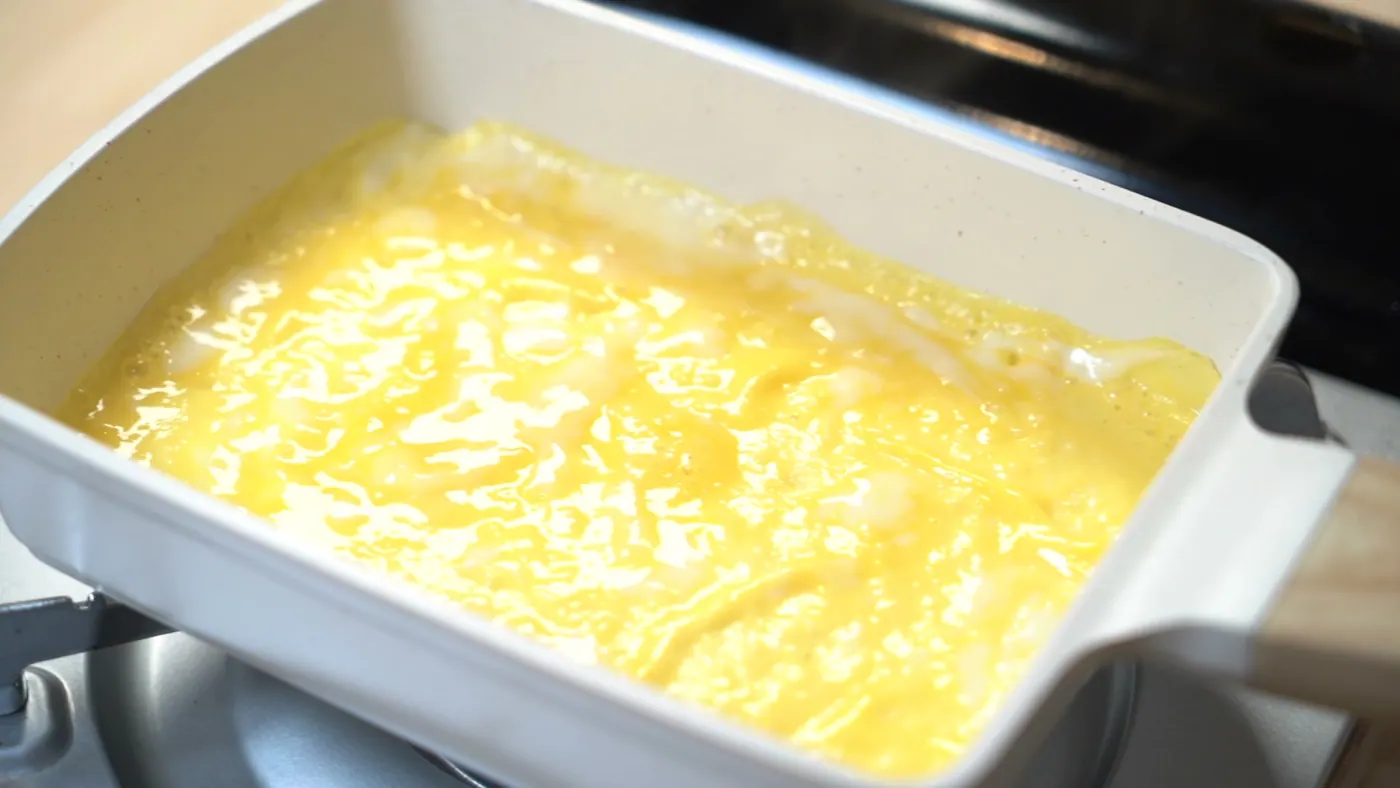
- Pour in a ladleful of egg mixture and spread it over the pan. In a square pan, you don't need to cut the edges.
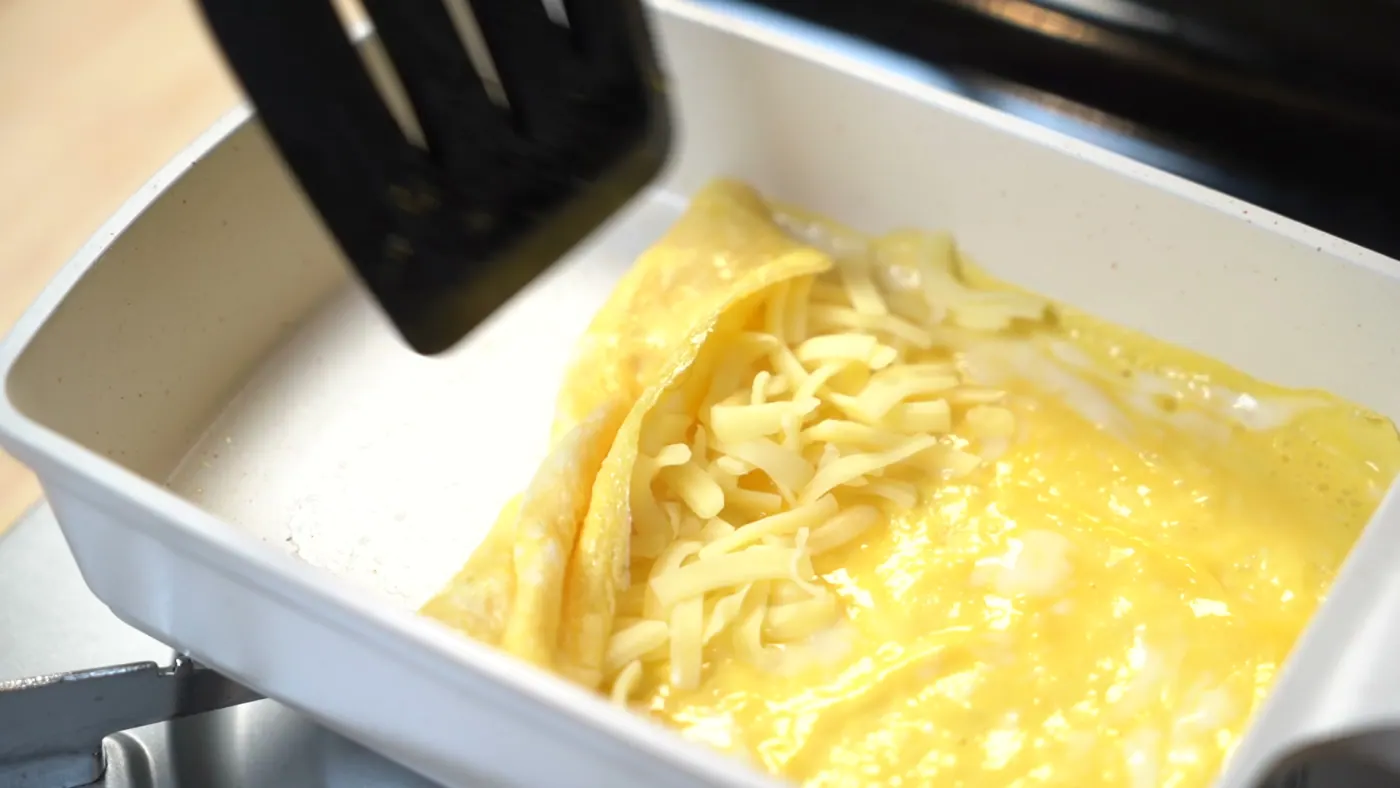
- Put a handful of cheese around the center and fold from the far side. Move the egg to the far side and oil the pan again.
- With only 2 eggs, pour in all the remaining egg mixture. Lift the cooked egg and let the mixture flow underneath. Keep the heat low, just as with the round pan.
- Add another handful of cheese and fold. Supporting the near side with chopsticks while you fold makes it easier.
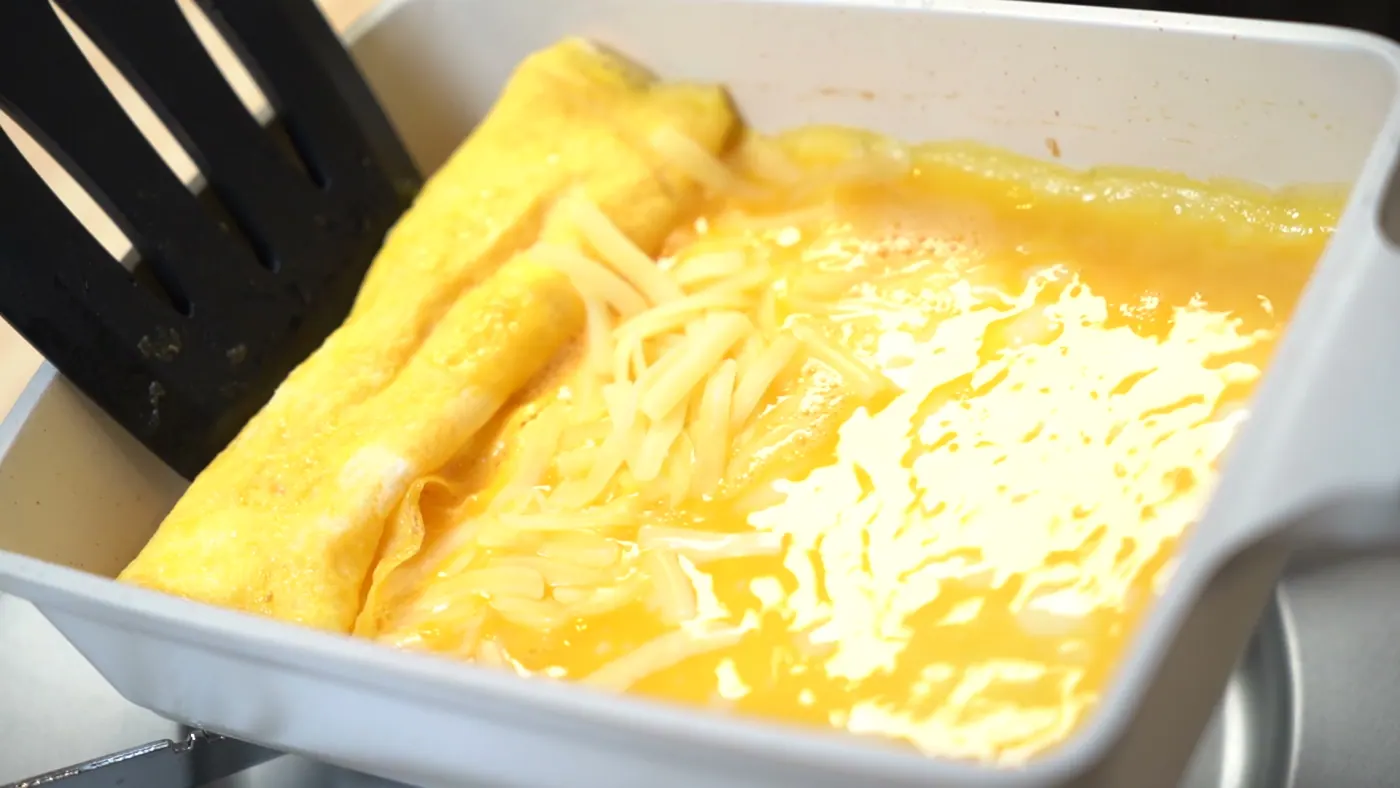
- Shape it a little with the spatula and cook for about 1 more minute.
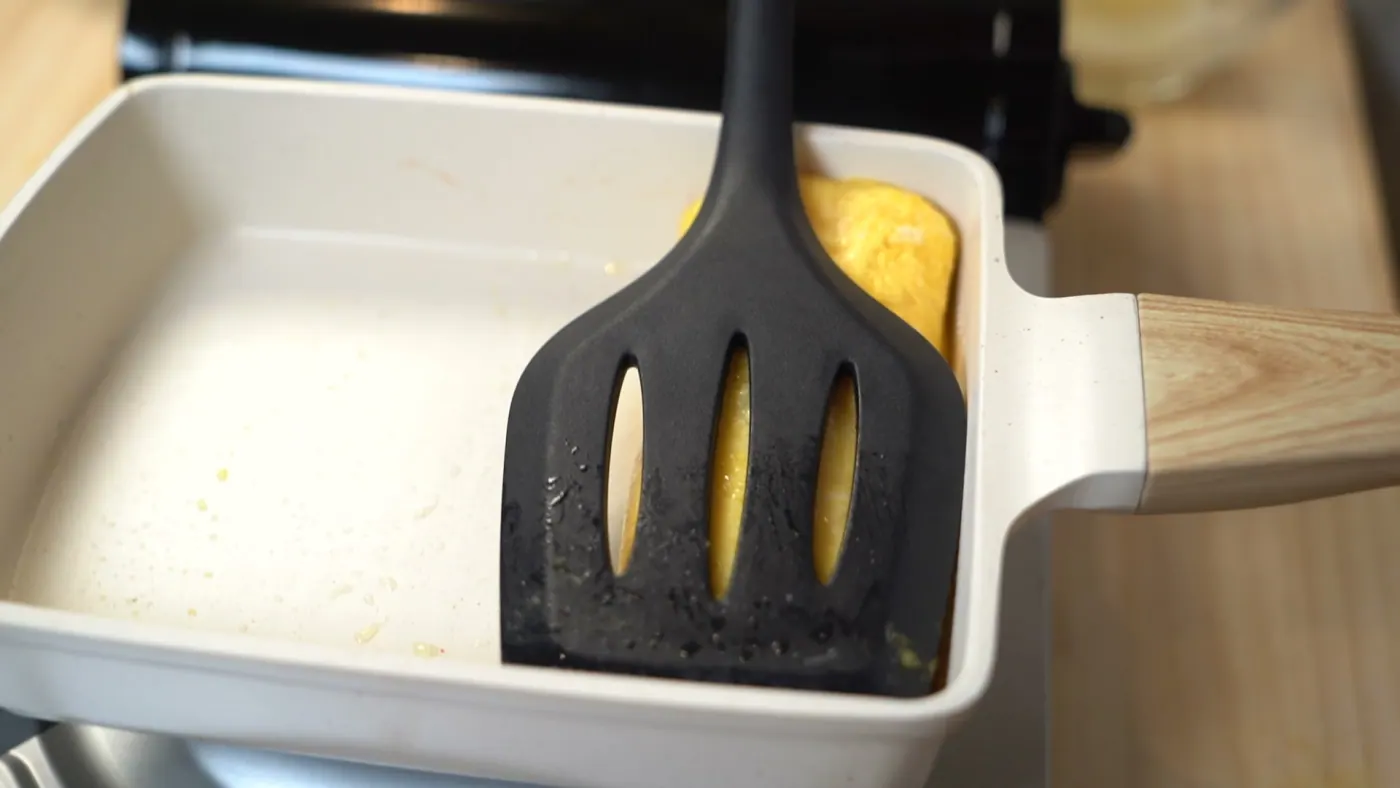
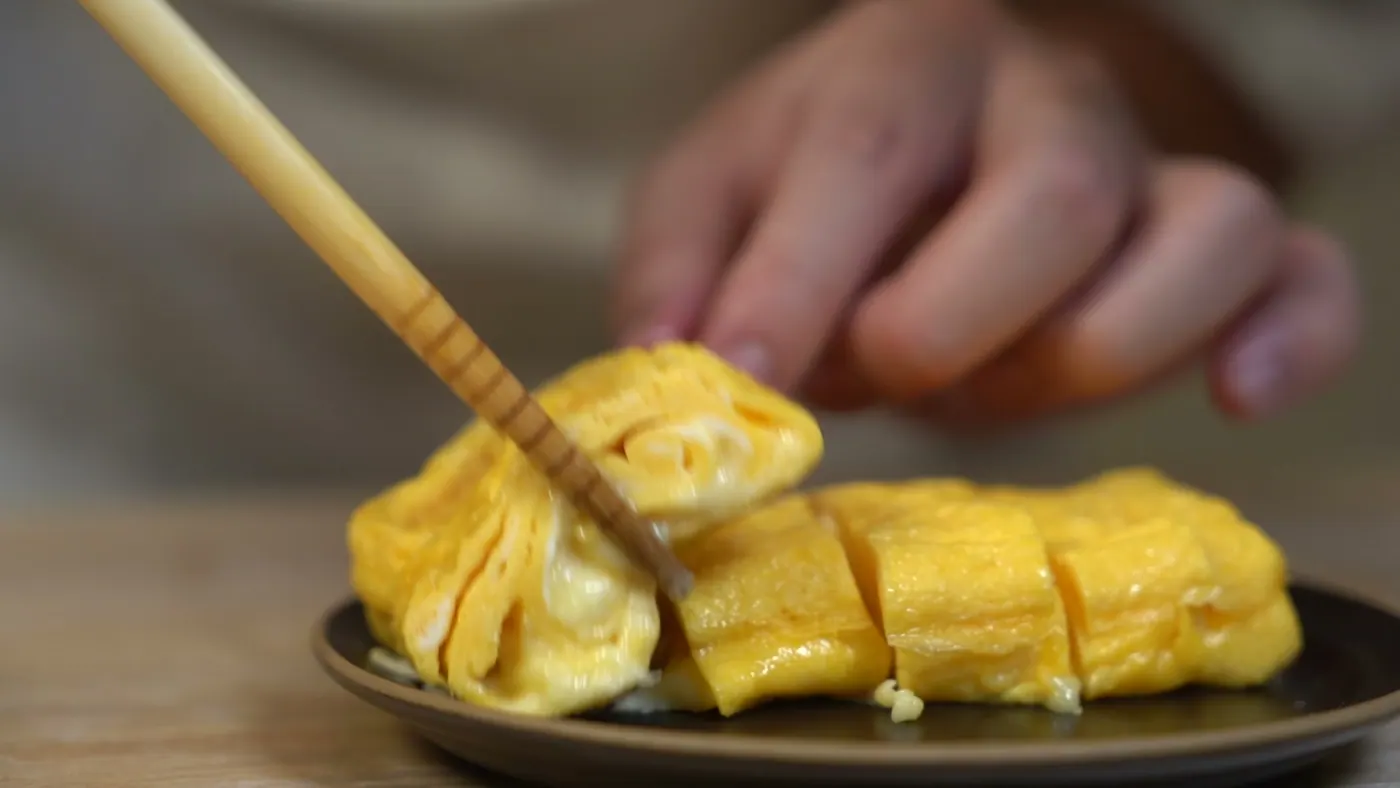
- Move it to a cutting board and cut it into bite-sized pieces while the cheese is still melted. The ends come out neat in a square pan, so you don't need to trim them.
Tips and Key Points
Mix until no egg white is visible
Yolks and whites set at different temperatures, so mix until a ladleful shows no egg white.
Keep the heat low the whole time
A hot pan for the first drop of egg, then slow, low heat for every layer. Turning up the heat to speed things up makes tamagoyaki fail. If you add sugar, it burns even more easily.
Cut, fold, oil, lift
Cut the round edges with the spatula, fold from the far side, oil the pan again, and lift the cooked egg so the new egg flows underneath. Repeat that rhythm for every layer.
Troubleshooting
Frequently Asked Questions
Can I make tamagoyaki without a square pan?
Yes. In a round frying pan, cut the round edges of each layer off with a spatula and put them on top of the egg sheet, then fold.
Why did my tamagoyaki turn out soggy?
The pan probably wasn't hot enough. Heat it over low heat for 2-3 minutes and check that a drop of egg mixture sizzles before you start.
Why does the egg tear when I fold it?
Lift the cooked egg and let the new egg mixture flow underneath it before it sets. Also make sure there's enough egg in each layer. Too little egg is hard to fold.
Why add water and potato starch?
Water makes the tamagoyaki juicier, and potato starch holds in the moisture so it stays tasty even after it cools.
Can I make it sweet?
Yes. Add 1 tablespoon of sugar to the egg mixture and keep the heat low, because sugar burns easily.
Summary
Tamagoyaki doesn't need a special pan. Mix 3 eggs well with soy sauce, water and potato starch, heat a round frying pan over low heat, and build the layers: cut the edges, fold from the far side, oil the pan and let new egg flow underneath. Slow, low heat gives you a soft, juicy rolled omelette.
For another Japanese egg classic, try the egg salad sandwich tamago sando.
小鉢Appetizers & Sides卵焼き
Tamagoyaki (Japanese Rolled Omelette in a Round Frying Pan)
In Japan there's a special rectangular pan just for tamagoyaki, but it's hard to find outside Japan.
No ratings yet
Rate this recipe
- Prep
- 5 min
- Cook
- 15 min
- Total
- 20 min
- Servings
- 2
- Difficulty
- Intermediate
Ingredients
Egg Mixture
For Cooking
Ingredient amounts are multiplied; cooking times and pan size may need adjusting.
Instructions
Amounts mentioned in the steps are for the original recipe (1x) — use the scaled amounts above.
Make the Egg Mixture
Crack the eggs
Crack 3 eggs into a small bowl.
Add the seasonings
Add the seasonings:
- 1/2 tablespoon soy sauce, for umami
- 2 tablespoons water, to make it juicier
- 1/2 teaspoon potato starch
Potato starch holds in the moisture, so the tamagoyaki stays tasty even after some time.
Mix well
Mix thoroughly to break up the egg whites and combine them with the yolks.
Check with a ladle
Scoop up some of the egg mixture with a ladle. If you can't see any egg white, it's well mixed.
Prepare the Pan
Get the pan and oil ready
Prepare a small round frying pan and a spatula. A small pan is easier. Also prepare kitchen paper soaked in oil. You'll oil the pan several times while cooking, so it's handy to have it ready.
Oil the pan
Place the frying pan in the center of the burner and spread oil over the whole surface with the kitchen paper. Without oil, the egg sticks to the pan and you can't fold it properly.
Heat the pan over low heat
Turn on the heat and warm the pan over low heat. Cooking slowly over low heat gives a fluffy finish.
Check that the pan is hot
After 2-3 minutes, drop a little egg mixture into the pan. If it sizzles, the pan is hot enough. If the pan isn't hot, the tamagoyaki turns out soggy.
Cook and Fold the Layers
Pour in the first ladleful
Pour one ladleful of the egg mixture into the pan. Stir it gently and spread it over the whole pan so it sets faster. Cook until only a little liquid is left on top.
Cut the edges with the spatula
This is the most important step. Cut off the round edge of the egg with the spatula to shape it so it's easier to fold, and put the cut piece on top of the egg sheet. You can fold with chopsticks instead, but cutting with a spatula is easier.
Fold from the far side
Fold the egg from the far side toward you. It's easier this way. When it's folded, move it back to the far side of the pan for the next layer.
Oil the pan again
Spread oil over the whole pan again with the kitchen paper. This repeated oiling is why the oil-soaked paper is so handy.
Pour the second ladleful under the first layer
Pour in a second ladleful of egg mixture. Here's the key point: lift the folded egg and let the egg mixture flow underneath it. This makes the egg easier to fold. If you skip it, the egg can tear while you fold.
Cut the edges and fold again
As before, cook until only a little liquid is left, then cut the edges with the spatula. If the egg isn't cooked enough, it's hard to cut. Put the cut pieces as close to the center as you can, then fold from the far side. Move the tamagoyaki back to the far side when you're done.
Repeat until the egg mixture is used up
Repeat the same steps until all the egg mixture is used. Too little egg is hard to fold, so the last round should be more than one ladleful: when less than two ladlefuls are left, pour in all of it at once.
More egg mixture cools the pan, so it takes a little longer to set. Don't turn up the heat to speed it up. That's what makes tamagoyaki fail. Spread the egg over the whole pan and cook it slowly over low heat.
Tilt the pan for the last fold
Cut the edges one last time, move them to the center and fold. As the tamagoyaki gets bigger, it's harder to fold. Tilt the pan toward the far side so the spatula slides under the tamagoyaki more easily.
Turn off the heat and shape it
Turn off the heat and let the tamagoyaki sit in the pan for 1 minute, shaping it with the spatula while the leftover heat finishes cooking it. If you plan to eat it later, it's safer to keep the heat on for 1 more minute.
Cut and Serve
Slice the tamagoyaki
Move the tamagoyaki to a cutting board. Trim the ends for a neater look, then cut it into 4 equal, bite-sized pieces.
Serve
Put the slices on a plate. The jiggly, soft texture comes from the potato starch and water. We recommend eating it with a little soy sauce.
Video
Watch the video · 8:28Open on YouTube
Jump to a part of the video (17 chapters)
Video: https://youtu.be/SAqbVX9hZaY
Notes
Substitutions
- More eggs: 4 eggs work too
- Sweet tamagoyaki: Add 1 tablespoon of sugar to the egg mixture. In Japan, people are split about half and half between sweet and savory tamagoyaki. Sugar burns easily, so keep the heat low
Nutrition estimated, per serving
- Calories
- 112 kcal
- Carbohydrates
- 1.3 g
- Protein
- 9.5 g
- Fat
- 7.7 g
- Saturated fat
- 2.3 g
- Fiber
- 0 g
- Sugar
- 0.3 g
- Sodium
- 362 mg
Estimated by us from the Standard Tables of Food Composition in Japan (MEXT, 2020). Optional ingredients and garnishes are not counted; soup and sauce are counted as fully eaten. Actual values depend on your brands and portion sizes. How we calculate this
Course: Appetizers & Sides · Cuisine: Japanese · Keyword: Tamagoyaki
Recipe from Japanese Cooking Ichie — https://japanesecookingichie.com/recipes/tamagoyaki/
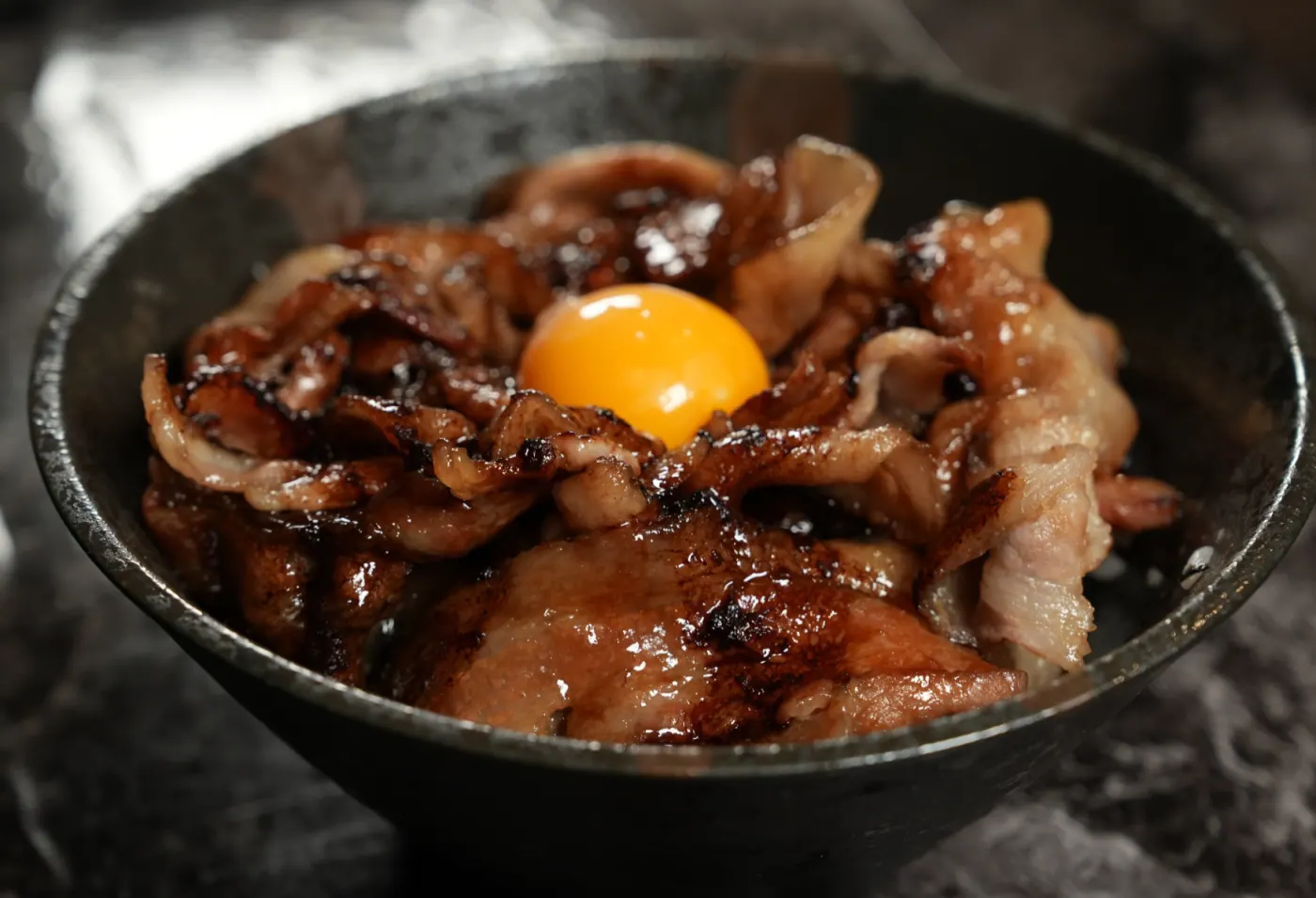
Make it a meal
Serve it alongside one of these mains.
Ratings & comments
No ratings yet — be the first to rate this recipe.
Comments