- Prep
- 10 min
- Cook
- 25 min
- Marinating
- 12 hr (half a day) in the refrigerator
- Total
- 12 hr 35 min (including marinating)
- Servings
- 4
- Difficulty
- Beginner
What is Ramen Egg?
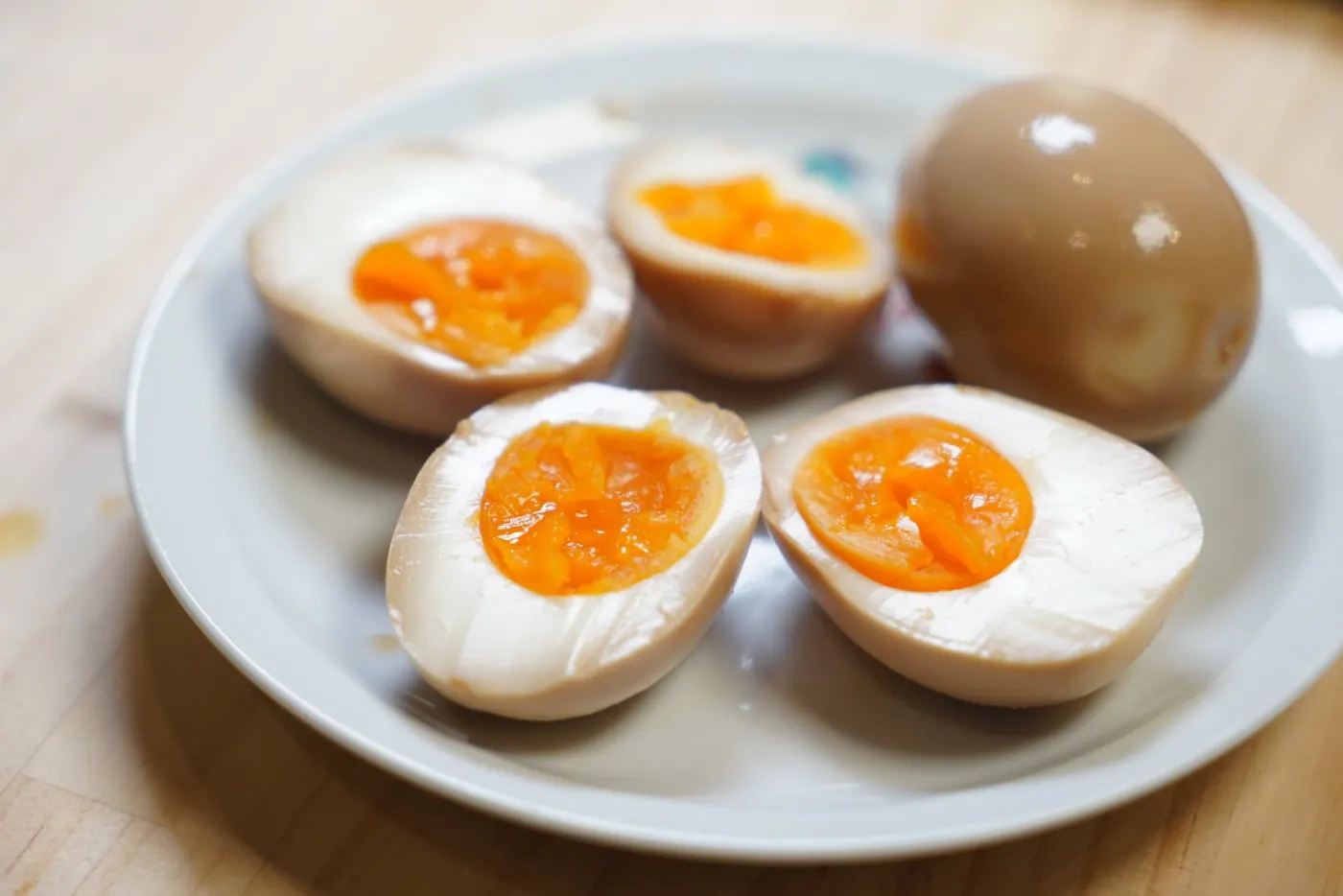
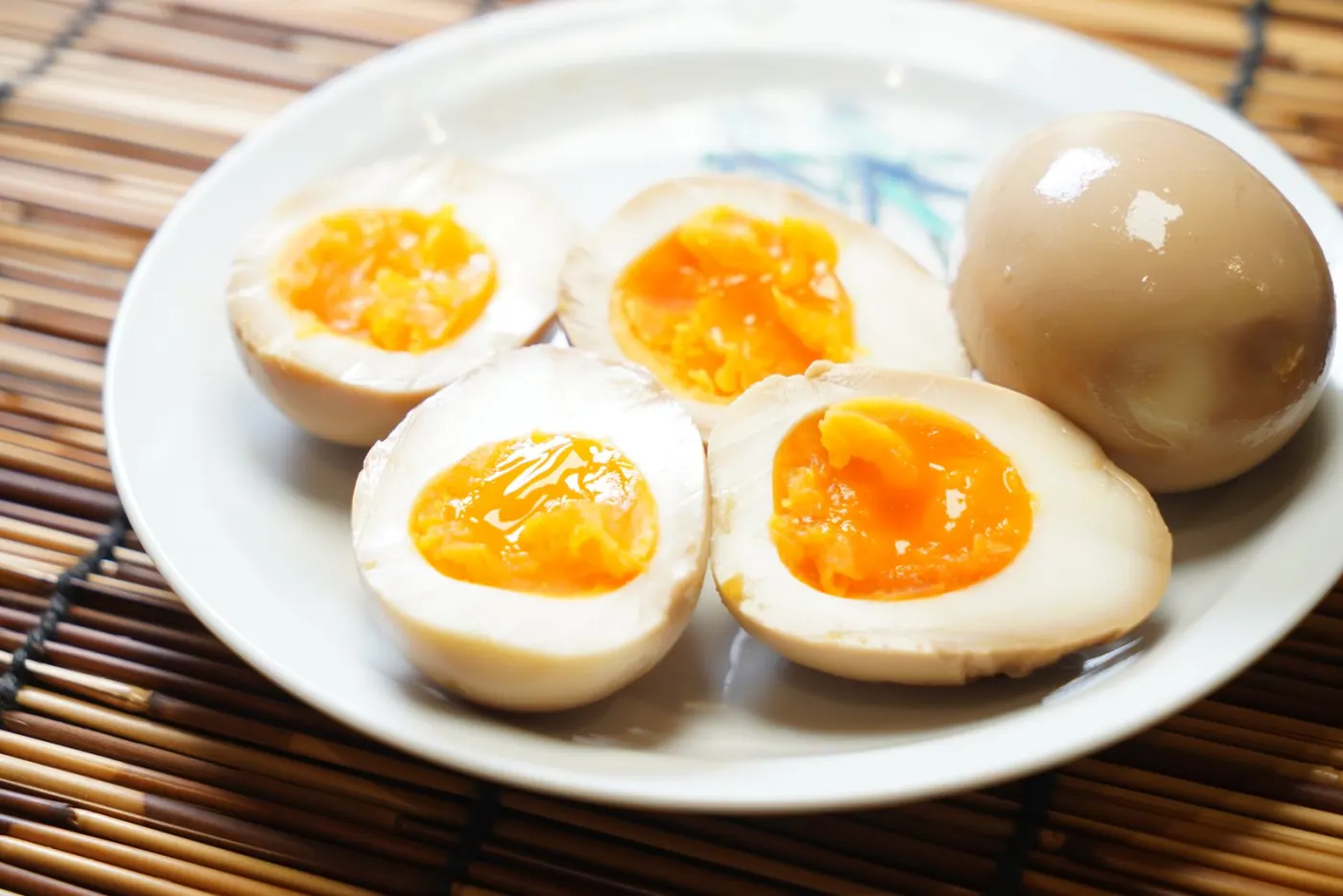
Ajitama, also called nitamago, is the soy-marinated egg you often see on top of ramen at ramen shops, and it's easy to make at home. This recipe makes 4 ramen eggs marinated in soy sauce, mirin, sake, sugar and bonito flakes, with the boiling times for both soft, jammy yolks and firmer yolks, and a simple trick that makes the eggs much easier to peel.
Why You'll Love This Recipe
- Ramen-shop eggs at home - Just eggs and five pantry ingredients
- Soft or firm, your choice - Boil 7-8 minutes for jammy yolks or 10-12 minutes for firmer yolks
- Easy to peel - A simple cracking trick before peeling
- Make ahead - Marinate them in the refrigerator for half a day
Key Points of This Recipe
- Add bonito flakes to the marinade for much more umami
- Use eggs straight from the refrigerator, because the boiling times are for cold eggs
- Lower the eggs in gently with a ladle and roll them while they boil
- Crack the shells all over in cold water before peeling
- Squeeze the air out of the bag so the marinade covers every egg
Required Equipment
- Frying pan or small pot (for the marinade)
- Fine sieve
- Deep frying pan or pot (for boiling the eggs)
- Ladle
- Timer
- 2 bowls of cold water
- Zip-top bag
Ramen Egg Ingredients (Serves 4)
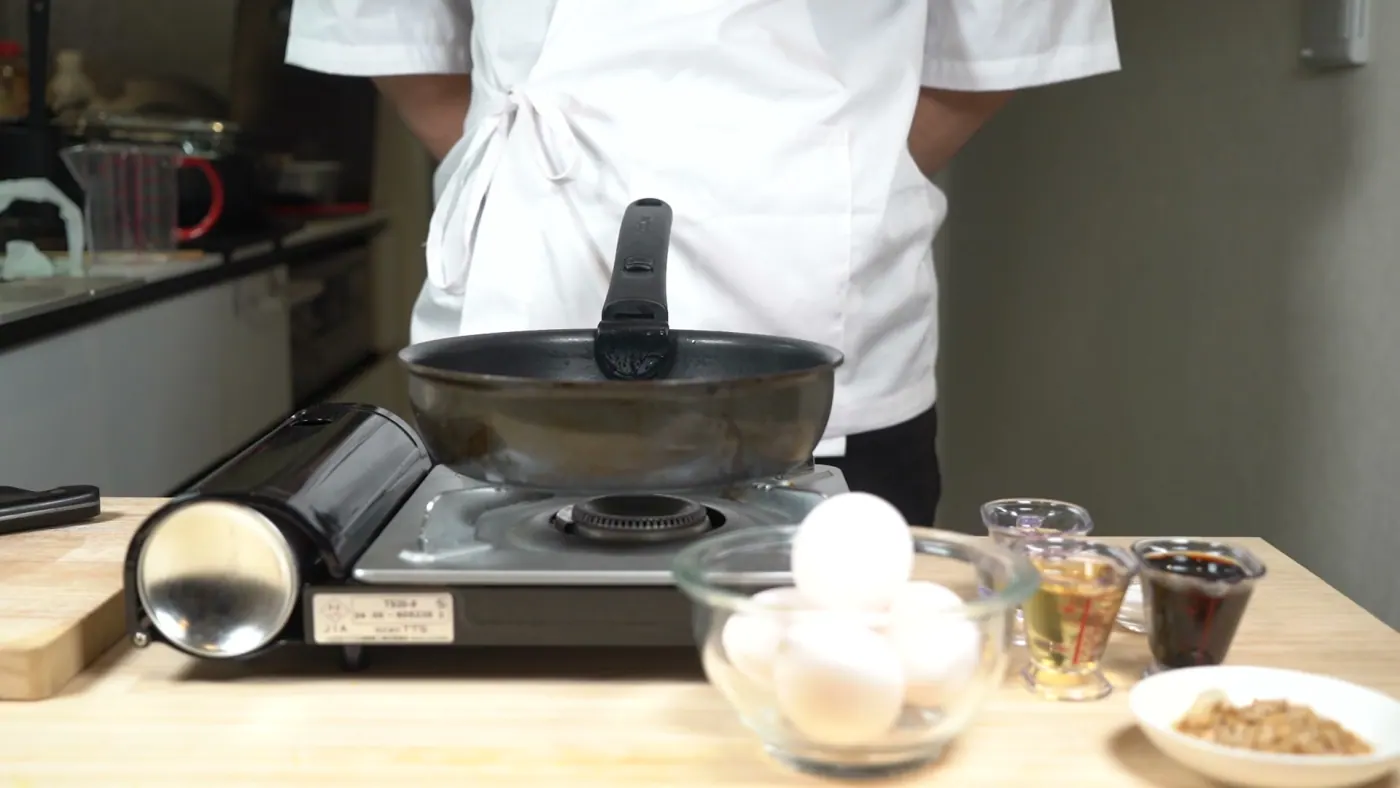
7 ingredients · 4 servings
Cooking sake, mirin, soy sauce, sugar, bonito flakes, eggs, water.
Full amounts in the recipe cardIngredient Substitutions
- More eggs: The same marinade works for 4 to 5 eggs
- Mirin: If you don't have mirin, mix sake and sugar instead. See our mirin substitute recipe
Video Tutorial

How to Make Ramen Egg
Make the Marinade
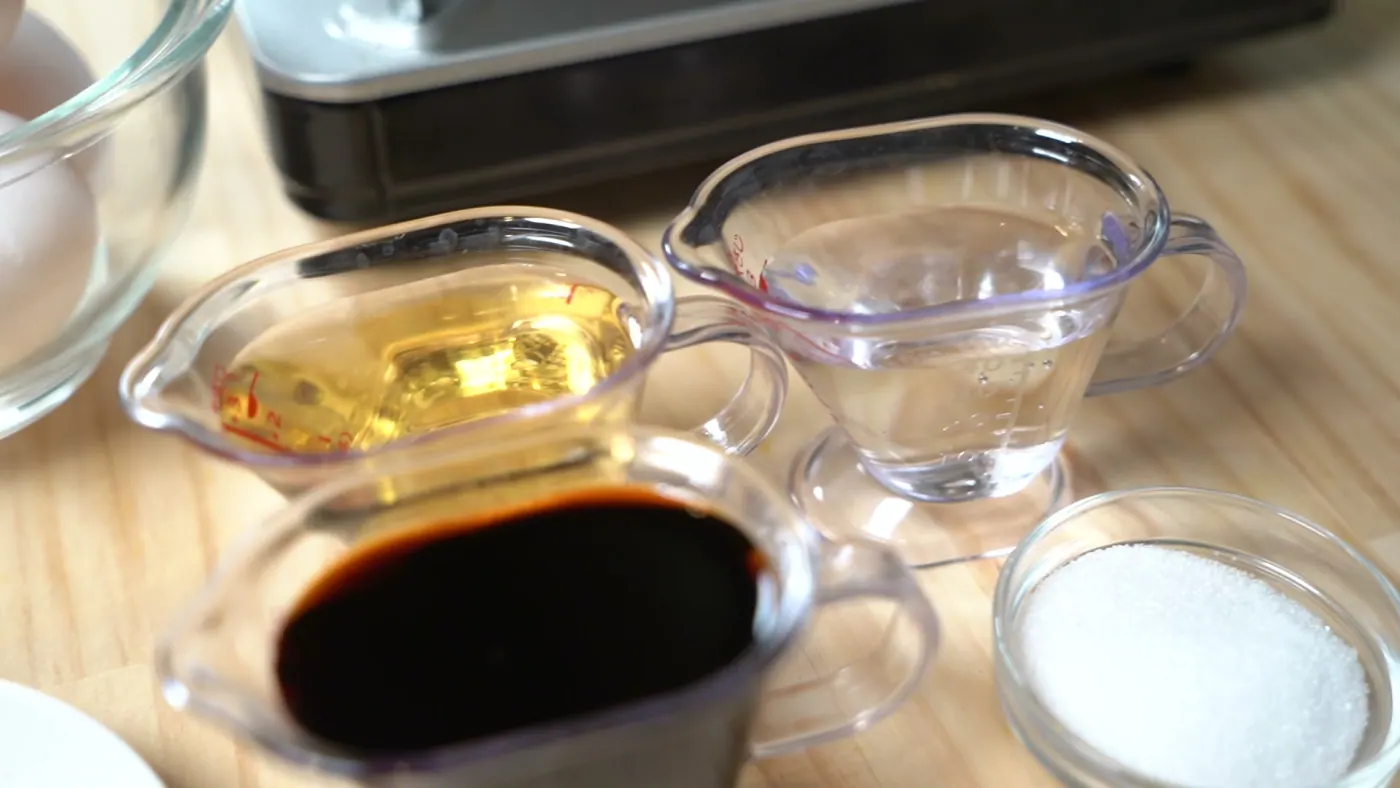
Put the seasonings in a pan
Put the marinade ingredients in a frying pan:
- 3 tablespoons cooking sake
- 4 tablespoons mirin
- 4 tablespoons soy sauce
- 1 tablespoon sugar
- 5g bonito flakes
Bonito flakes have lots of umami, so be sure to add them. They make a big difference in the flavor.
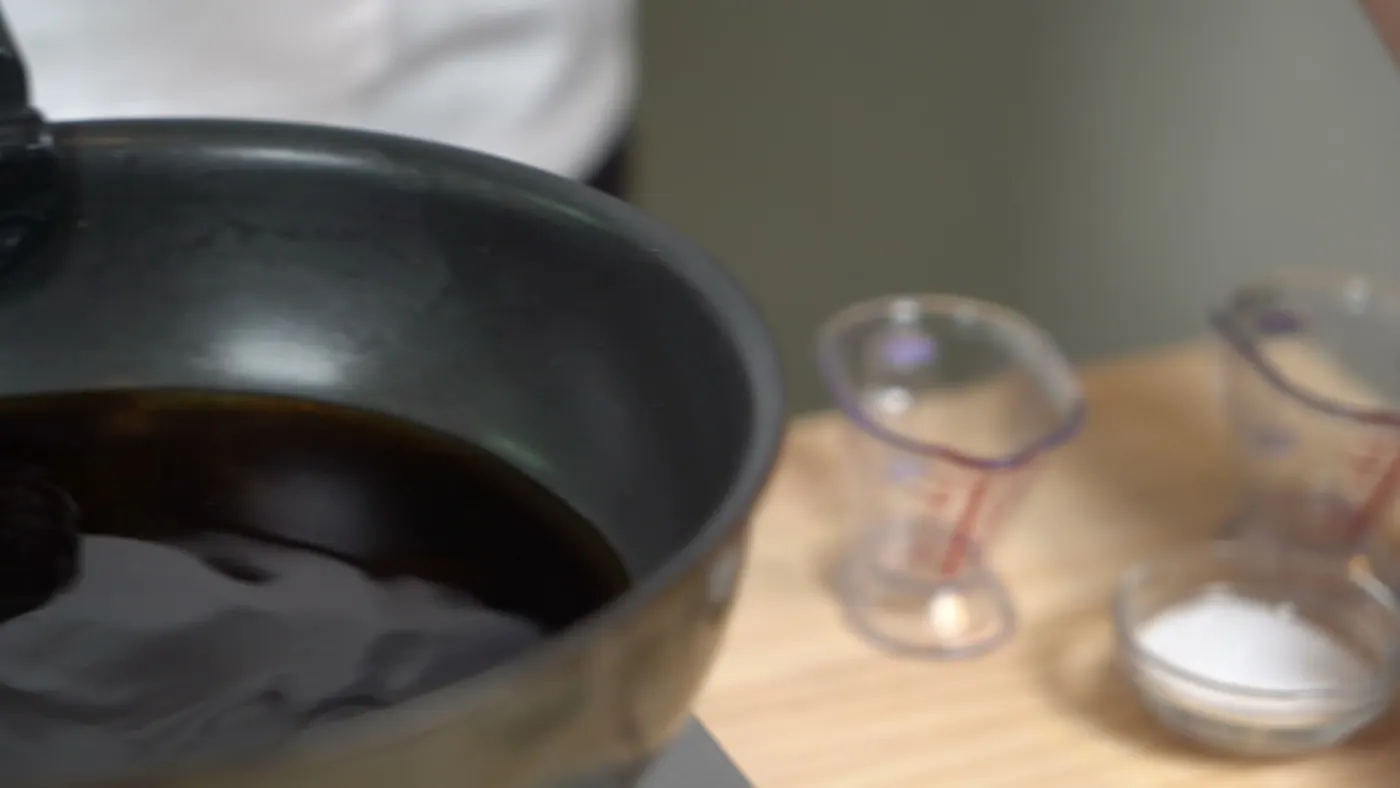
Bring it to a boil
Heat over medium heat and bring it to a boil. Boiling is needed to cook off the alcohol in the mirin and sake.
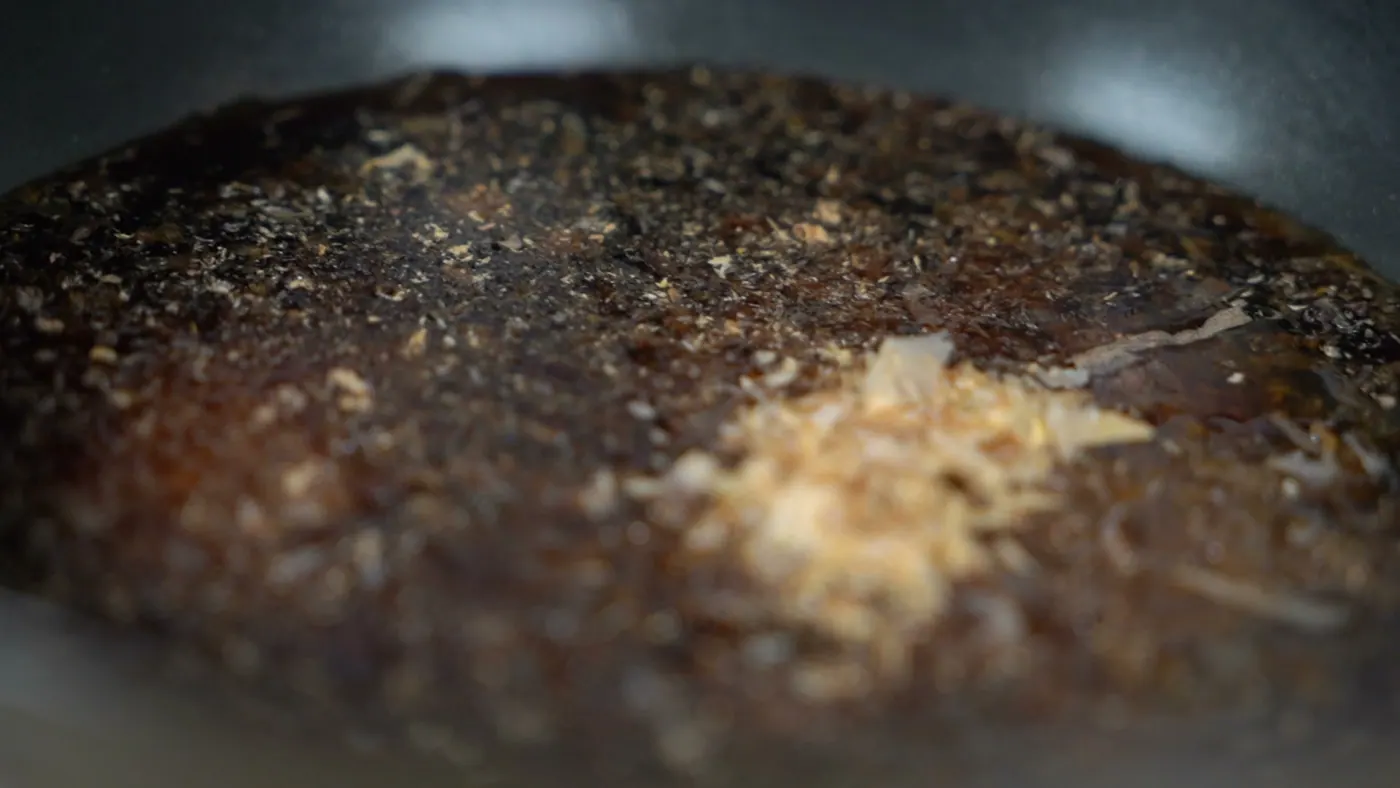
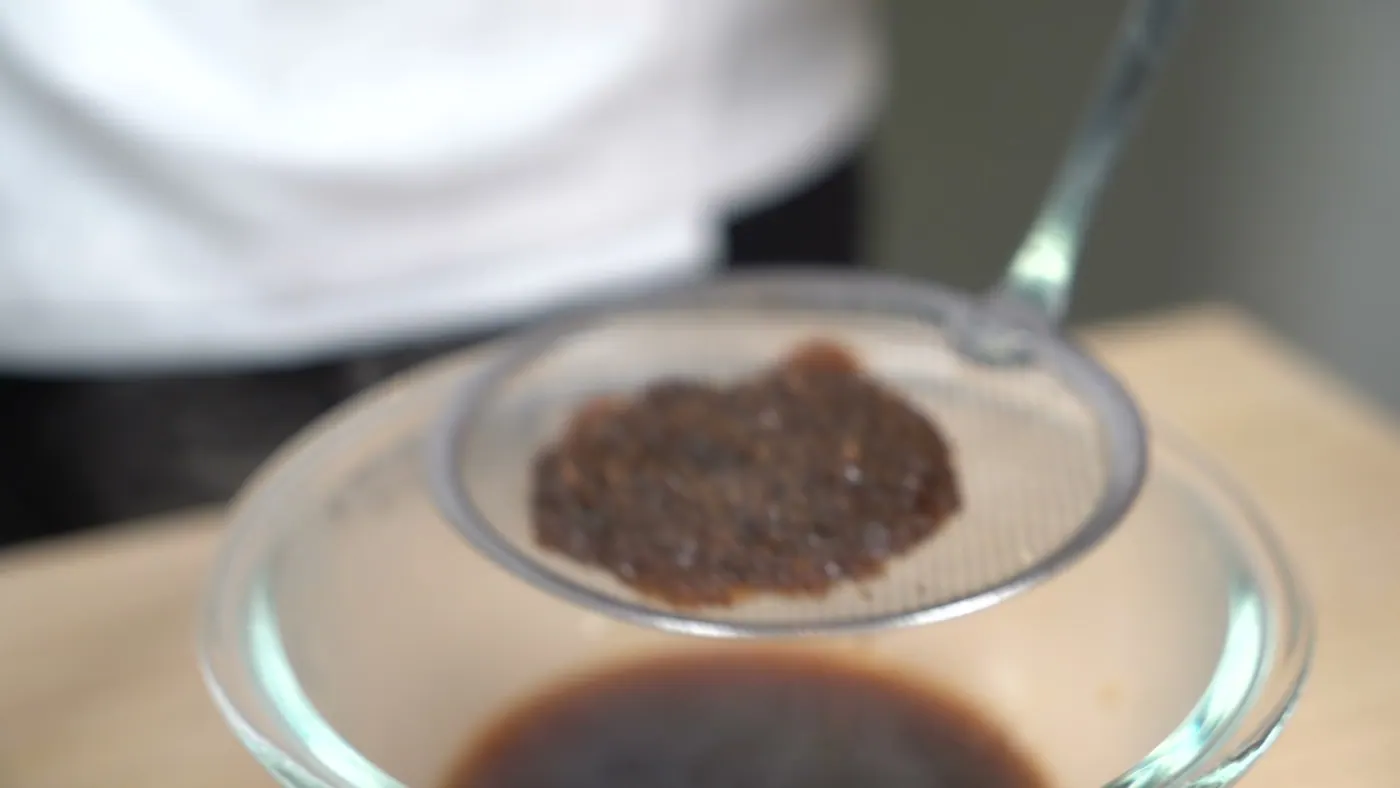
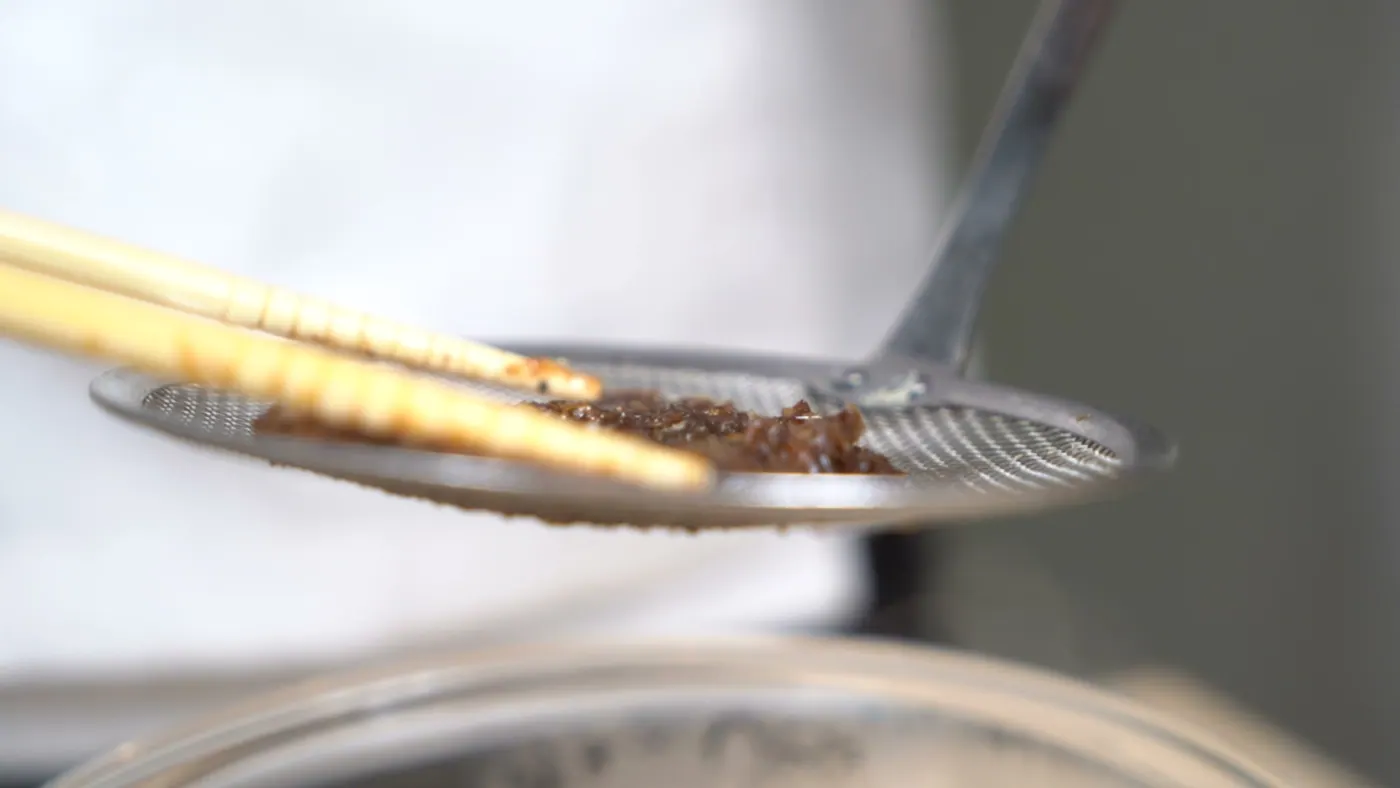
Simmer, strain and cool
Once it boils, turn the heat down to low and simmer for about 1 minute to draw the umami out of the bonito flakes. Strain the marinade through a fine sieve and squeeze out the bonito flakes. Set the marinade somewhere it won't spill and let it cool.
Boil the Eggs
Bring the water to a boil
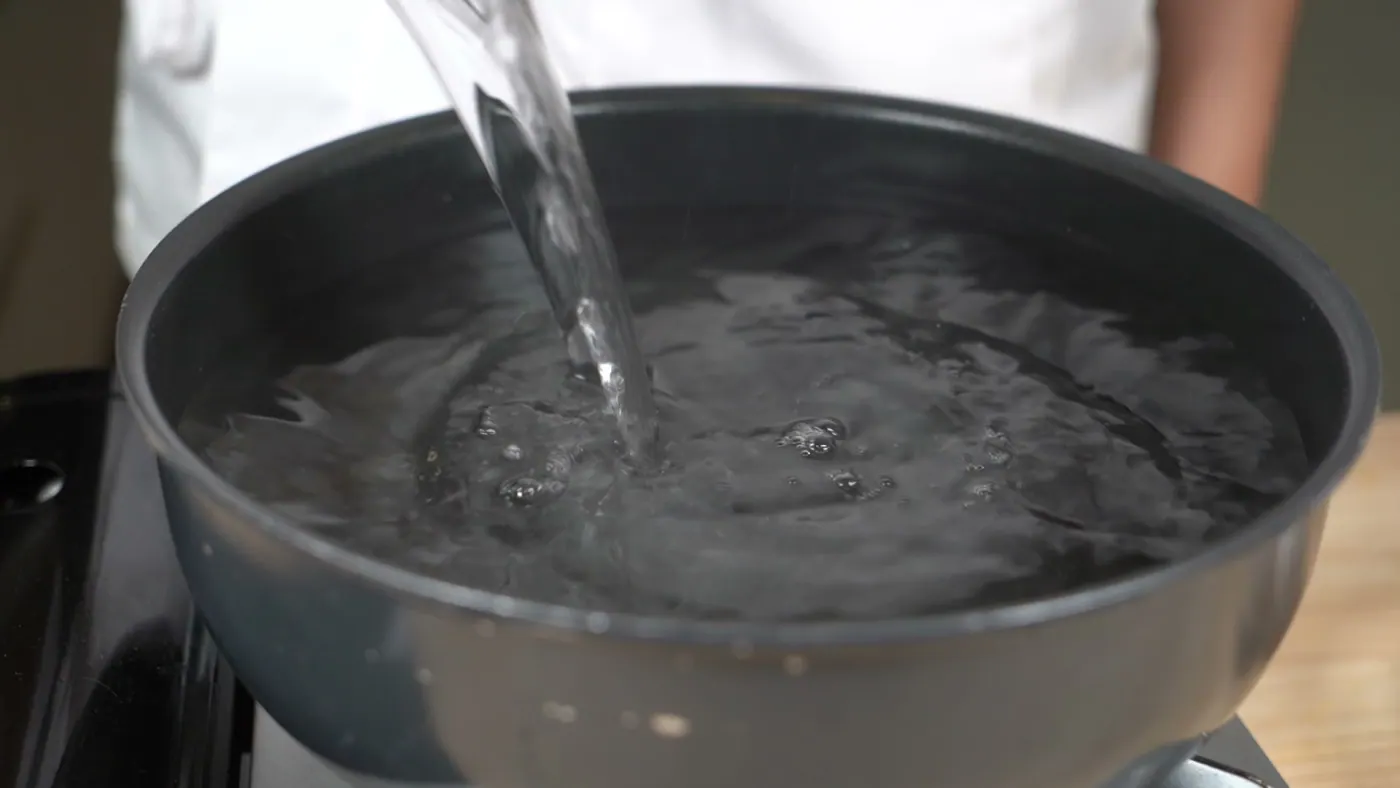
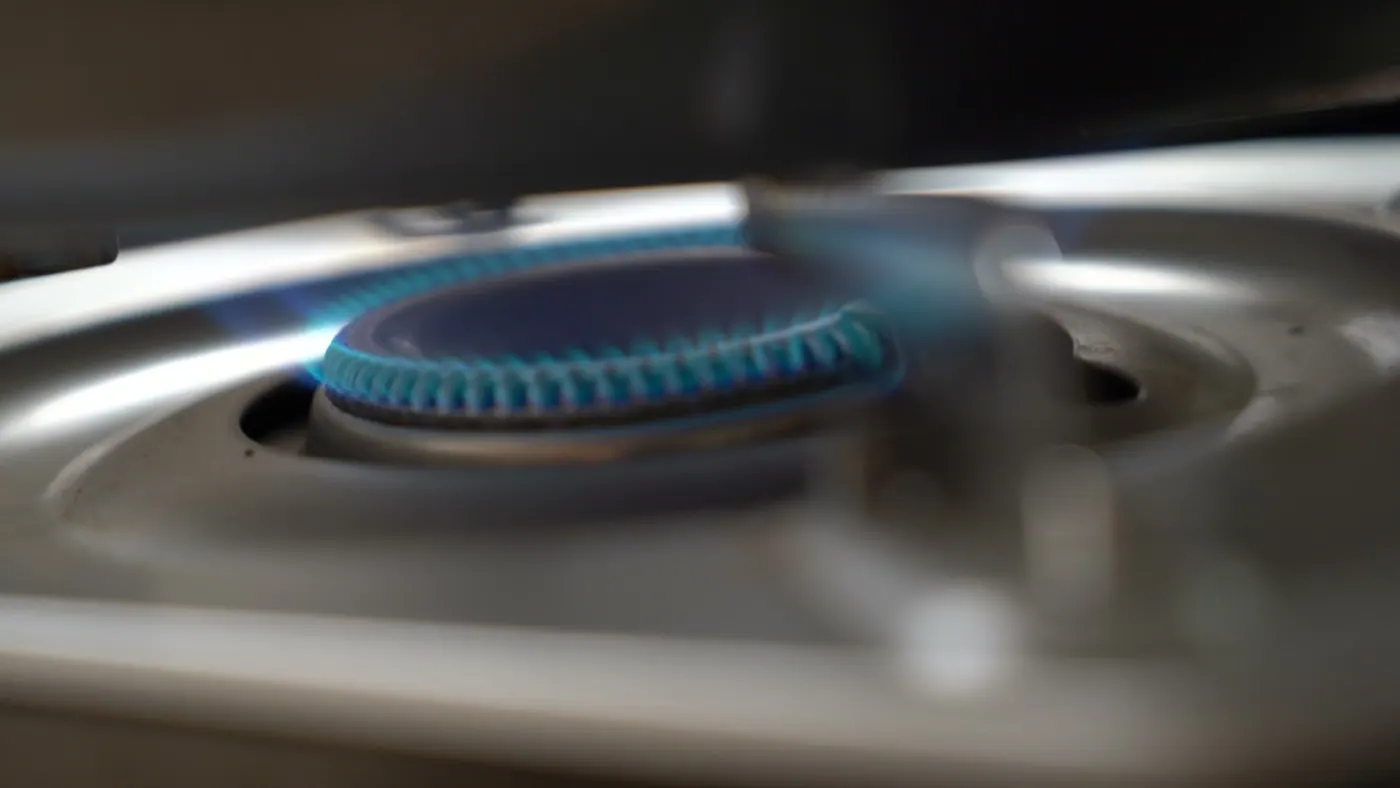
Fill a deep frying pan with enough water to cover the eggs completely and bring it to a boil. Once it boils, turn the heat down to slightly lower than medium.
Use eggs straight from the refrigerator
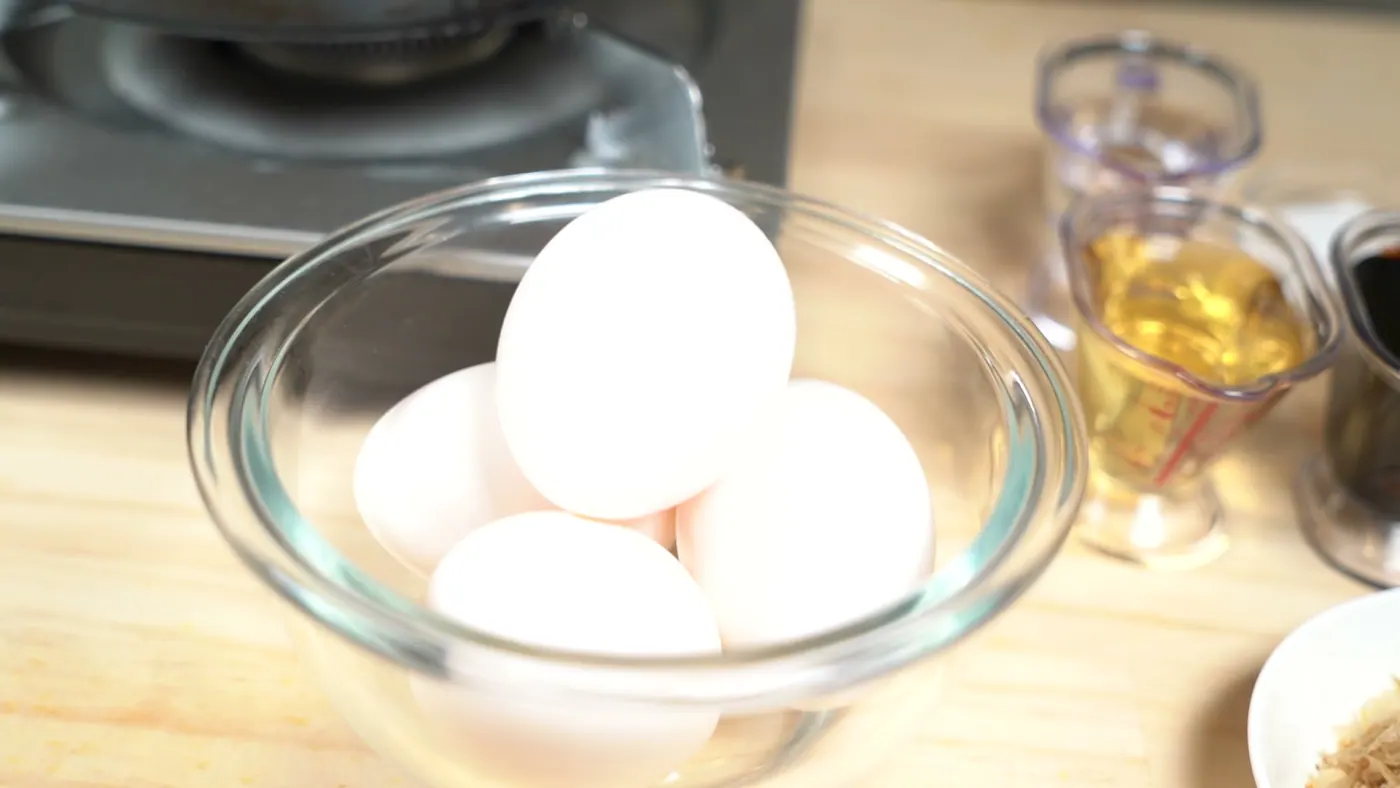
Take 4 eggs out of the refrigerator. The boiling times and heat in this recipe are for cold eggs straight from the refrigerator, so be sure to follow them.
Lower the eggs in with a ladle
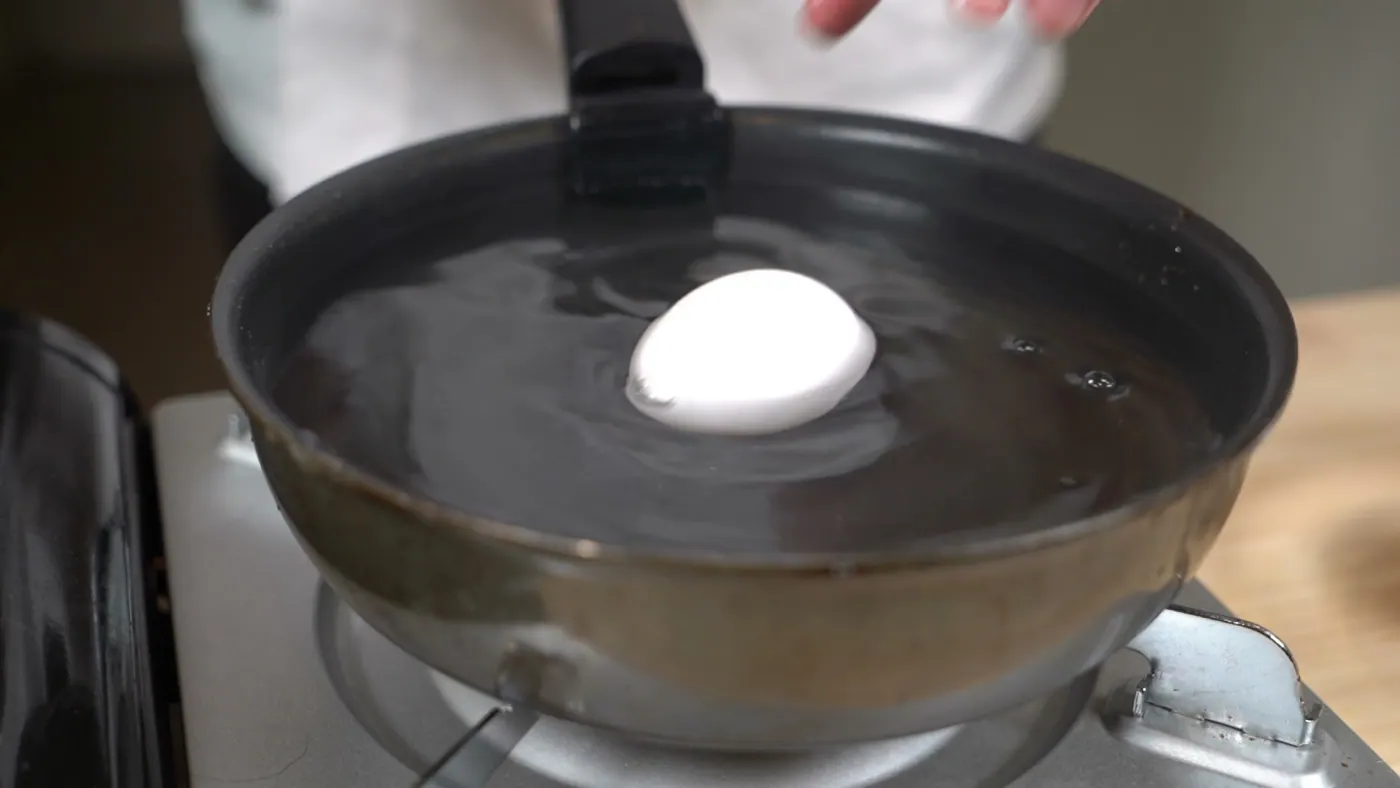
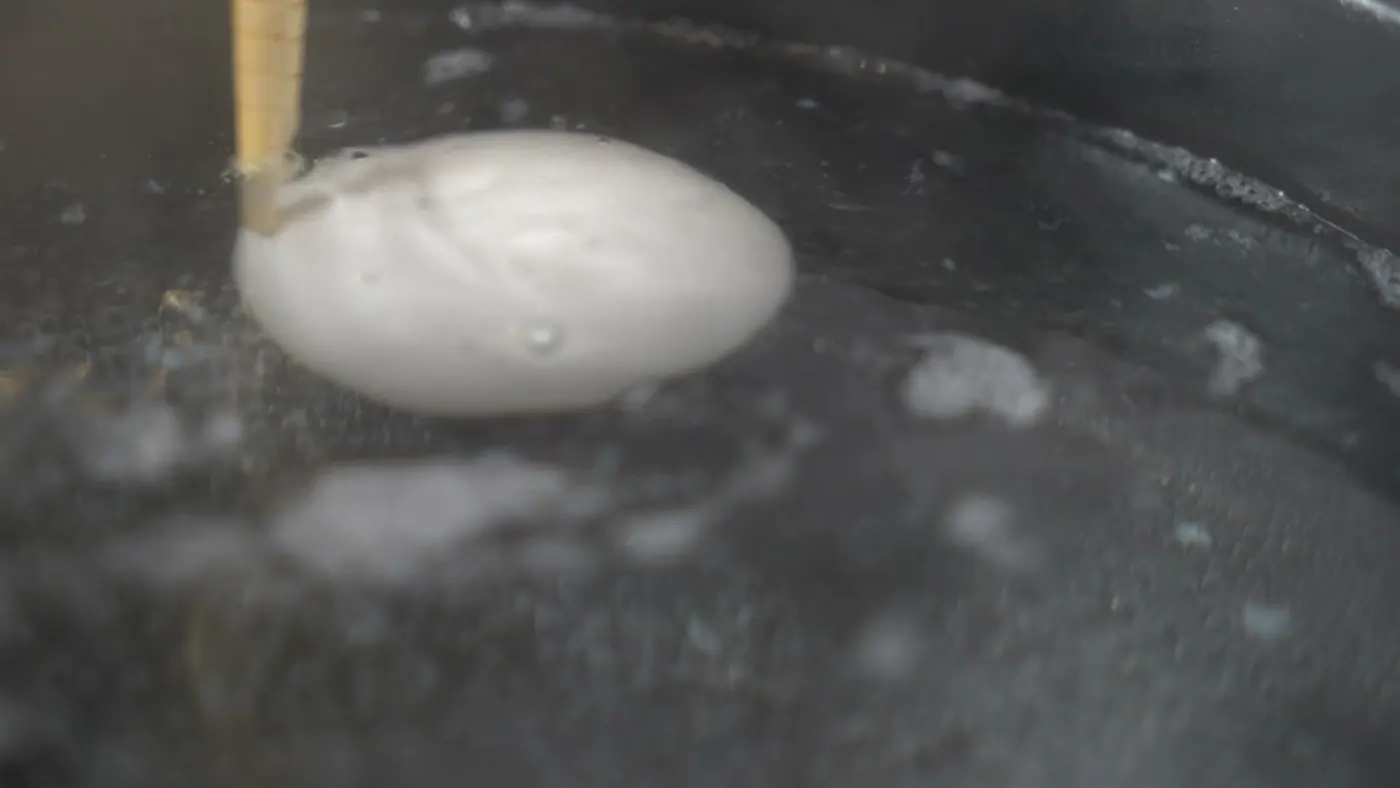
Put the eggs into the water gently, one at a time, with a ladle. If you drop them in, the shells can crack and the egg white leaks out.
Time it and roll the eggs
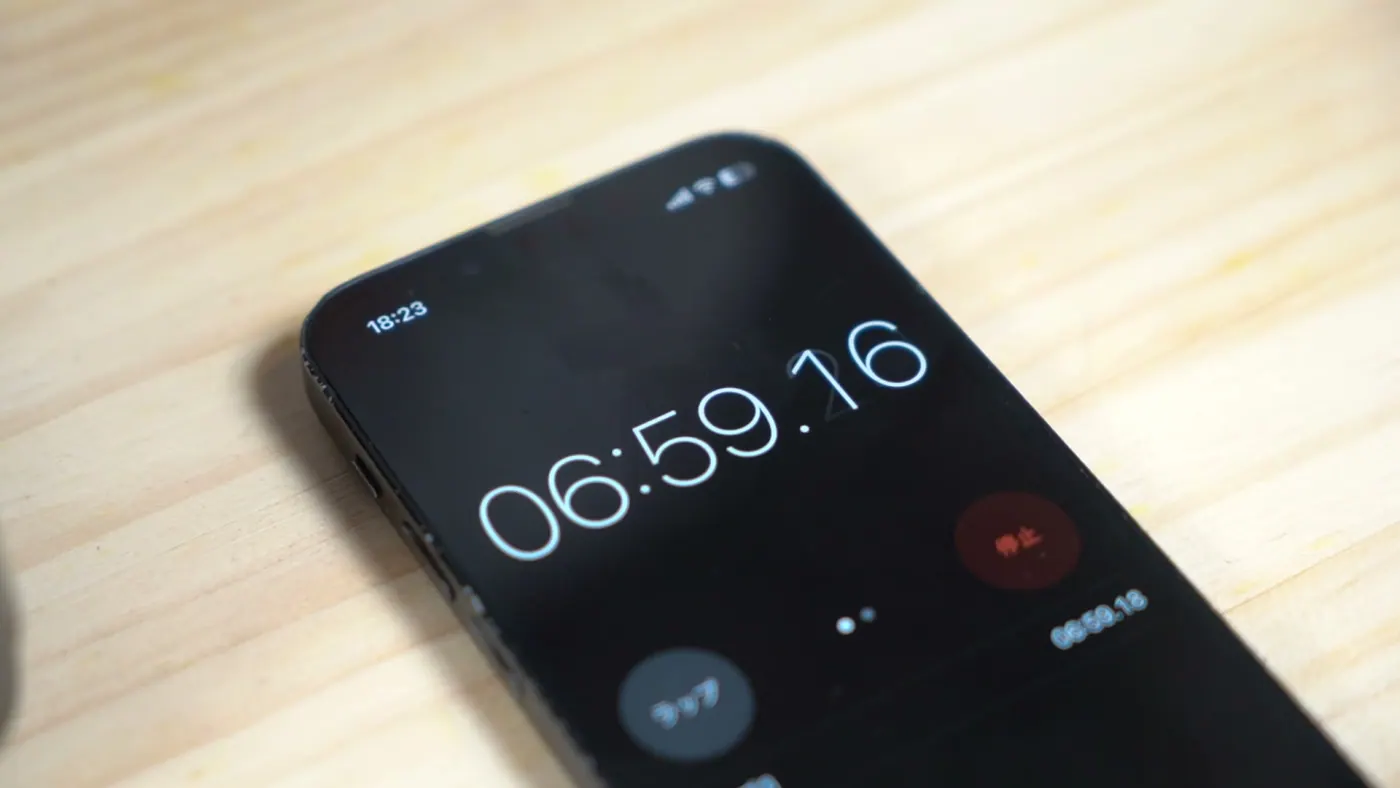
Once all the eggs are in, start a timer.
- 7-8 minutes for a soft, jammy yolk
- 10-12 minutes for a firmer yolk
While they boil, gently roll the eggs. This keeps the yolks in the center of the eggs.
Move the eggs into cold water
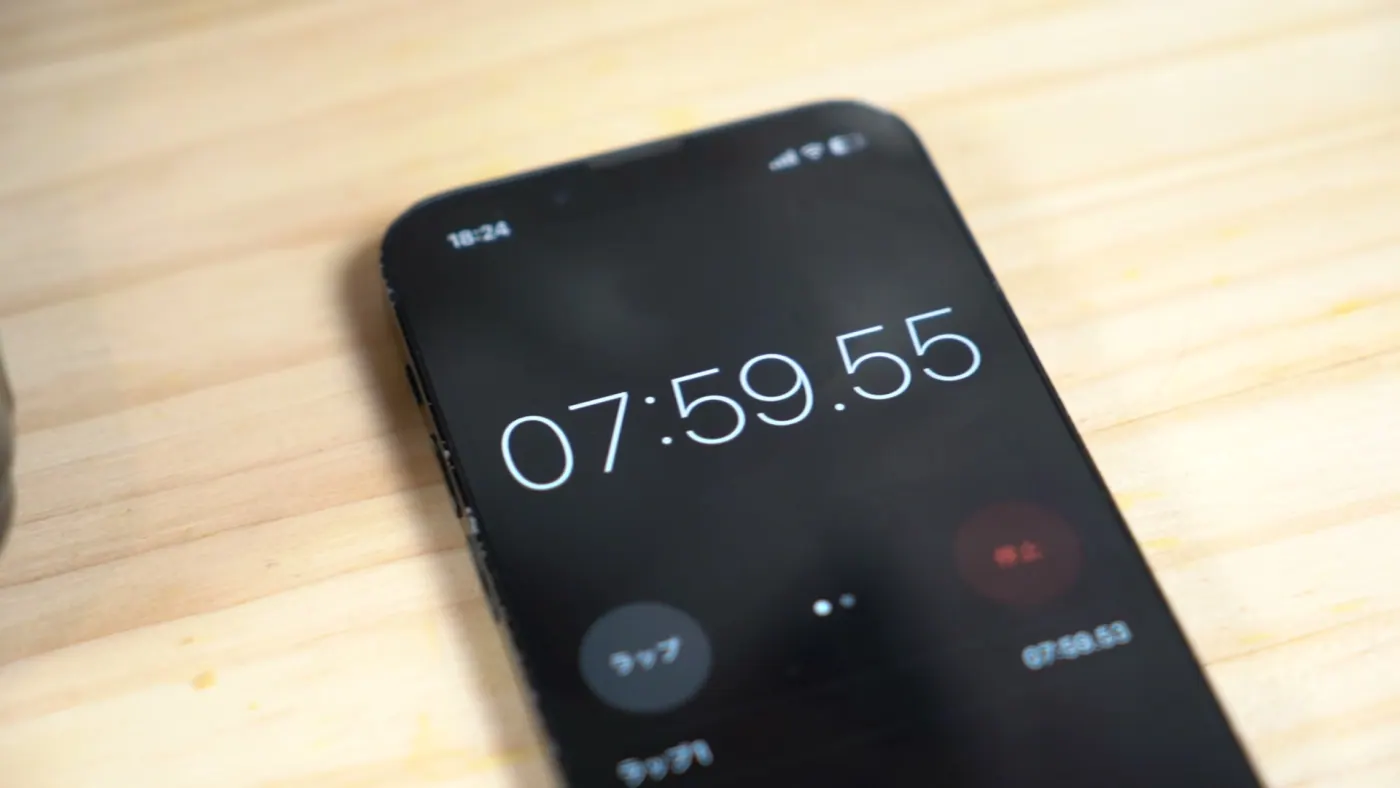
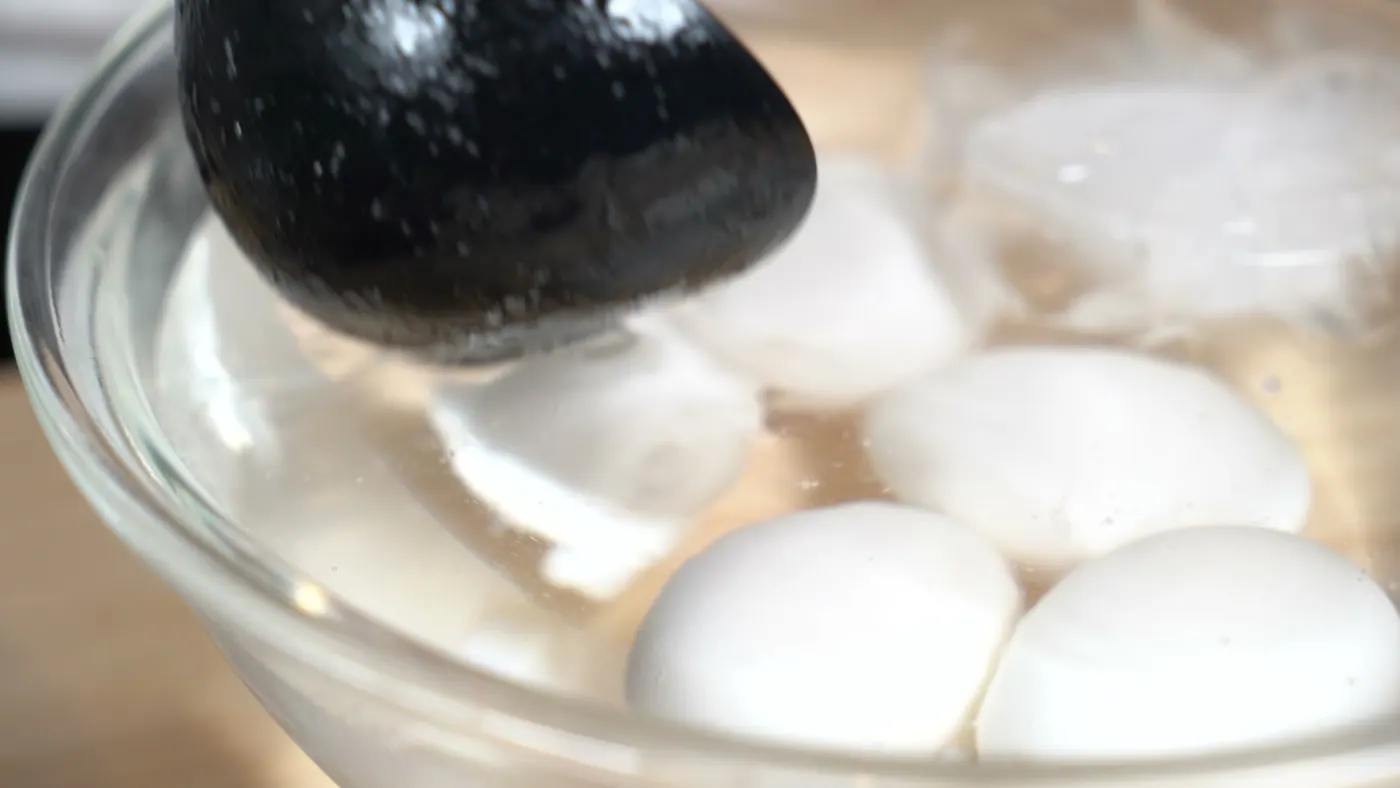
Prepare a bowl of cold water. Take the eggs out after 8 minutes for soft, jammy yolks, or after 11 minutes for firmer yolks. Move the eggs into the cold water and leave them for 2-3 minutes.
The cold water makes the egg whites shrink a little, which leaves a gap between the shell and the egg, so the eggs peel more easily.
Peel the Eggs
Crack the shells all over
Here's a tip to make peeling even easier. Gently crack the bottom of an egg, then make small cracks all over the shell. Put it back in the water and do the same with every egg. Water gets in through the cracks, between the shell and the egg, which makes peeling much easier.
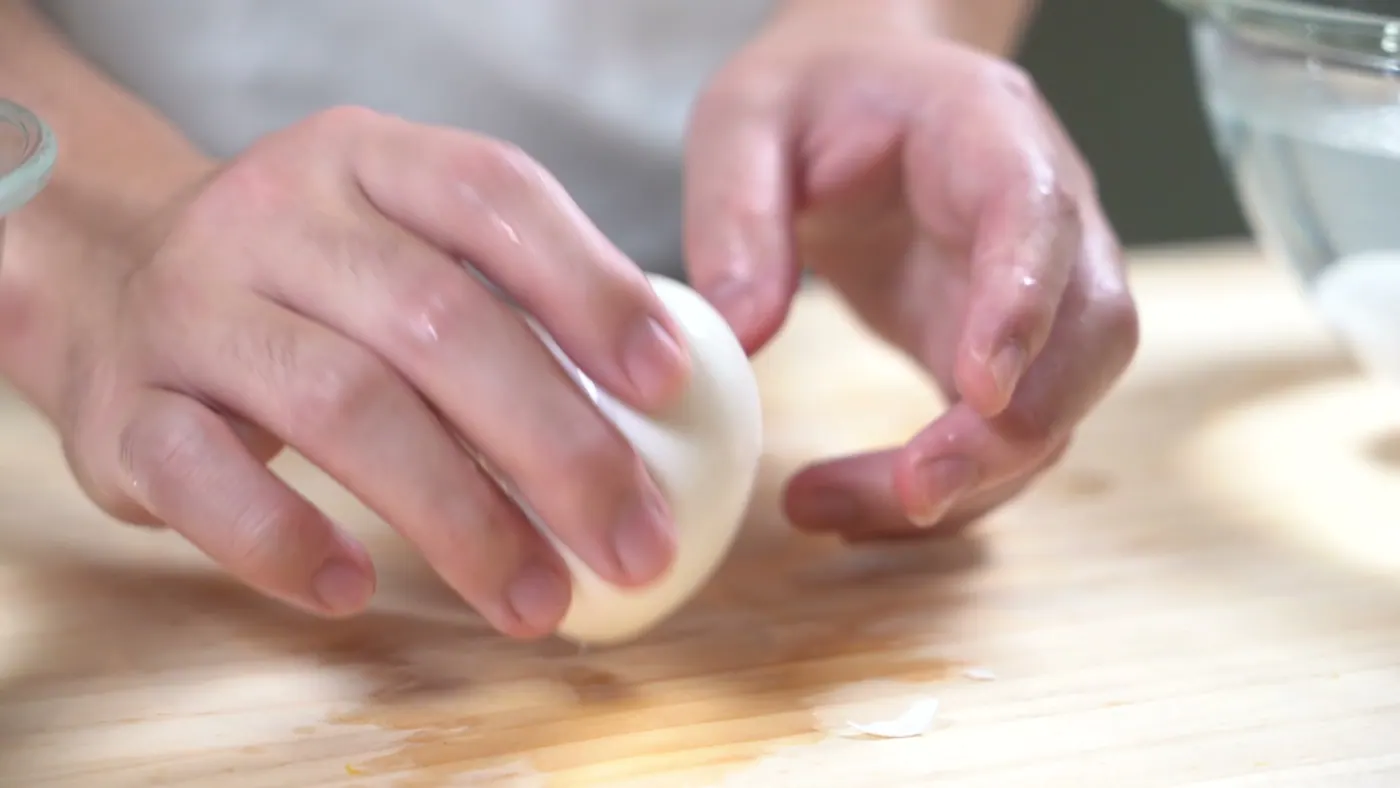
Peel the eggs in water
Prepare another bowl of water. Start peeling from the cracks at the bottom of the egg. Once the bottom of the shell is off, slide your finger between the shell and the egg and the shell comes off smoothly.
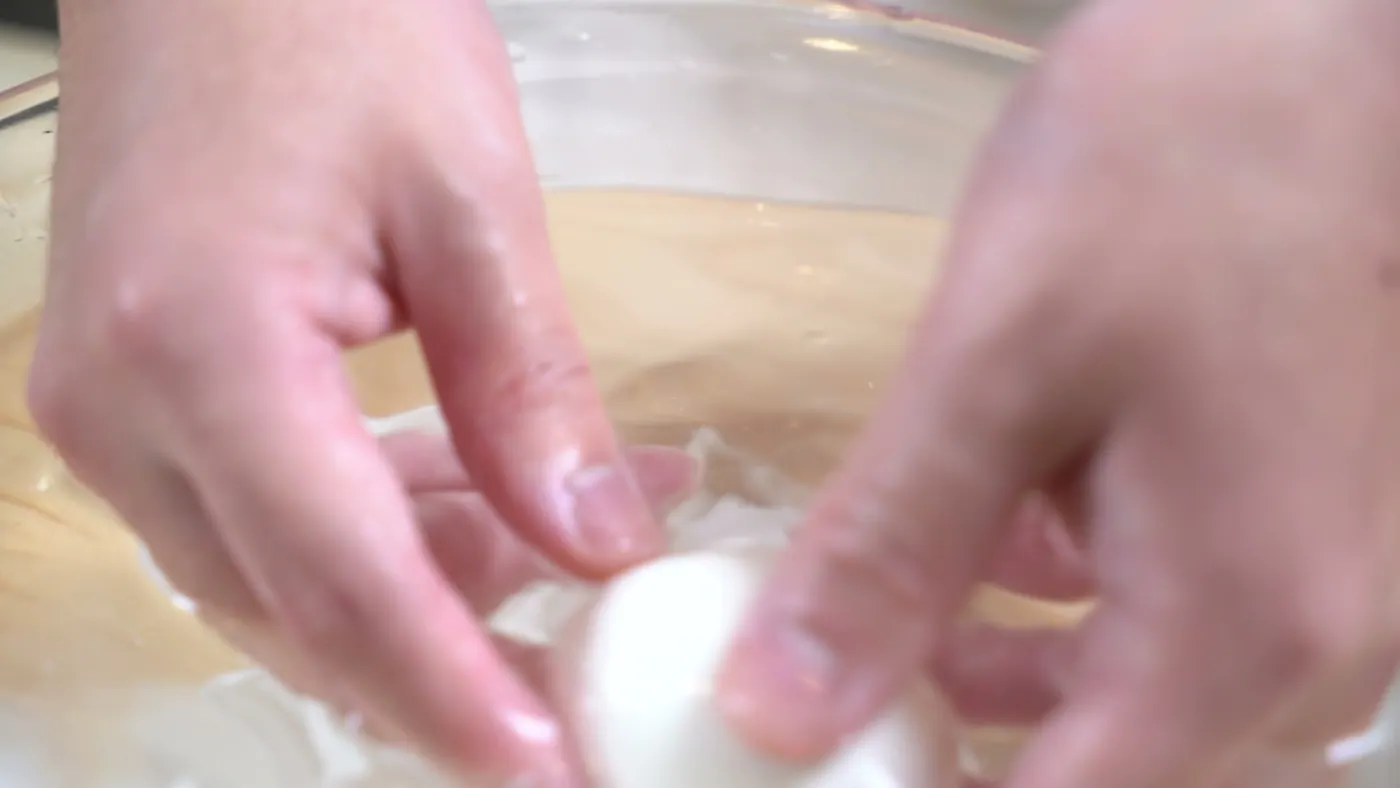
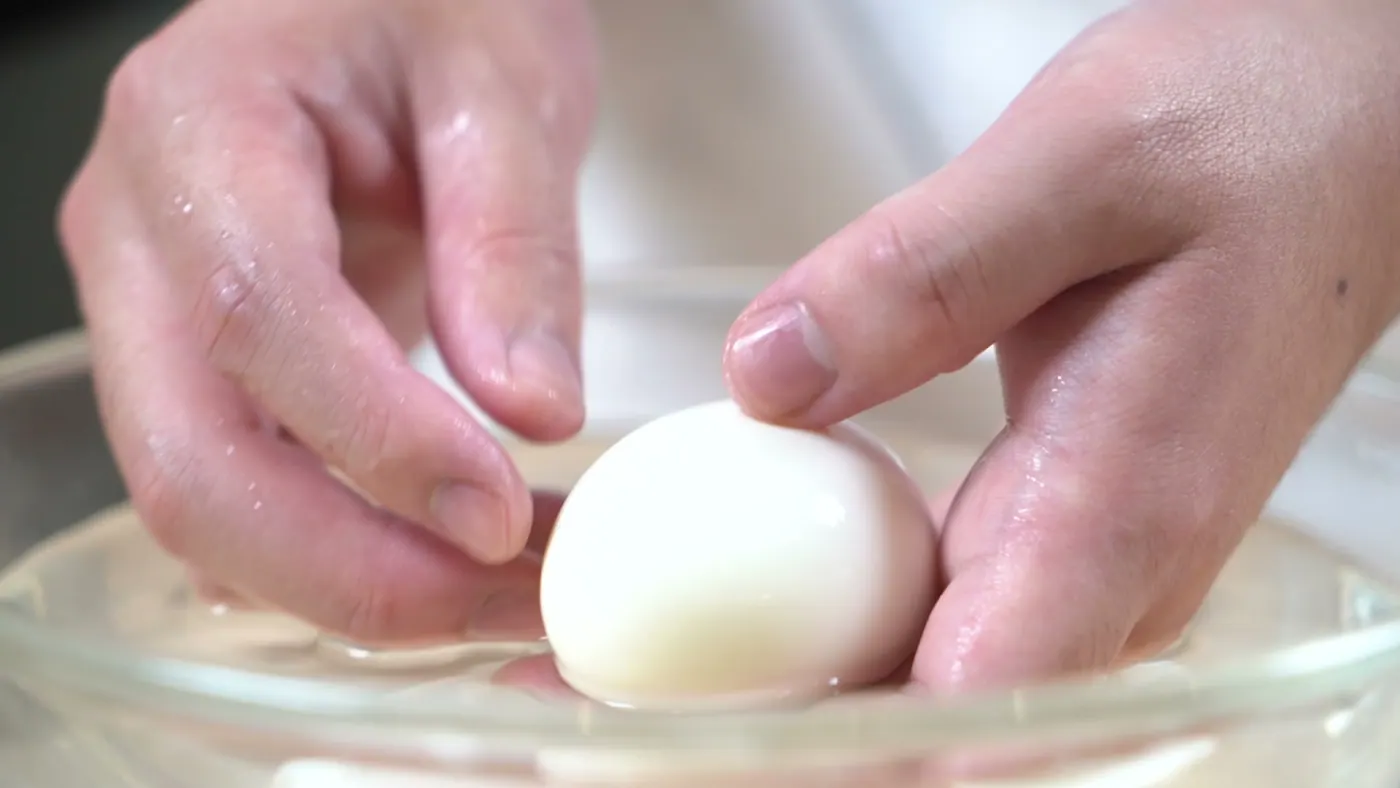
Keep the peeled eggs in water
Put the peeled eggs in the water so the soft-boiled eggs keep their shape. When all the eggs are peeled, check that no thin membrane is left on them. If it's left on, it feels strange when you eat the eggs.
Marinate the Eggs
Put the eggs and marinade in a bag
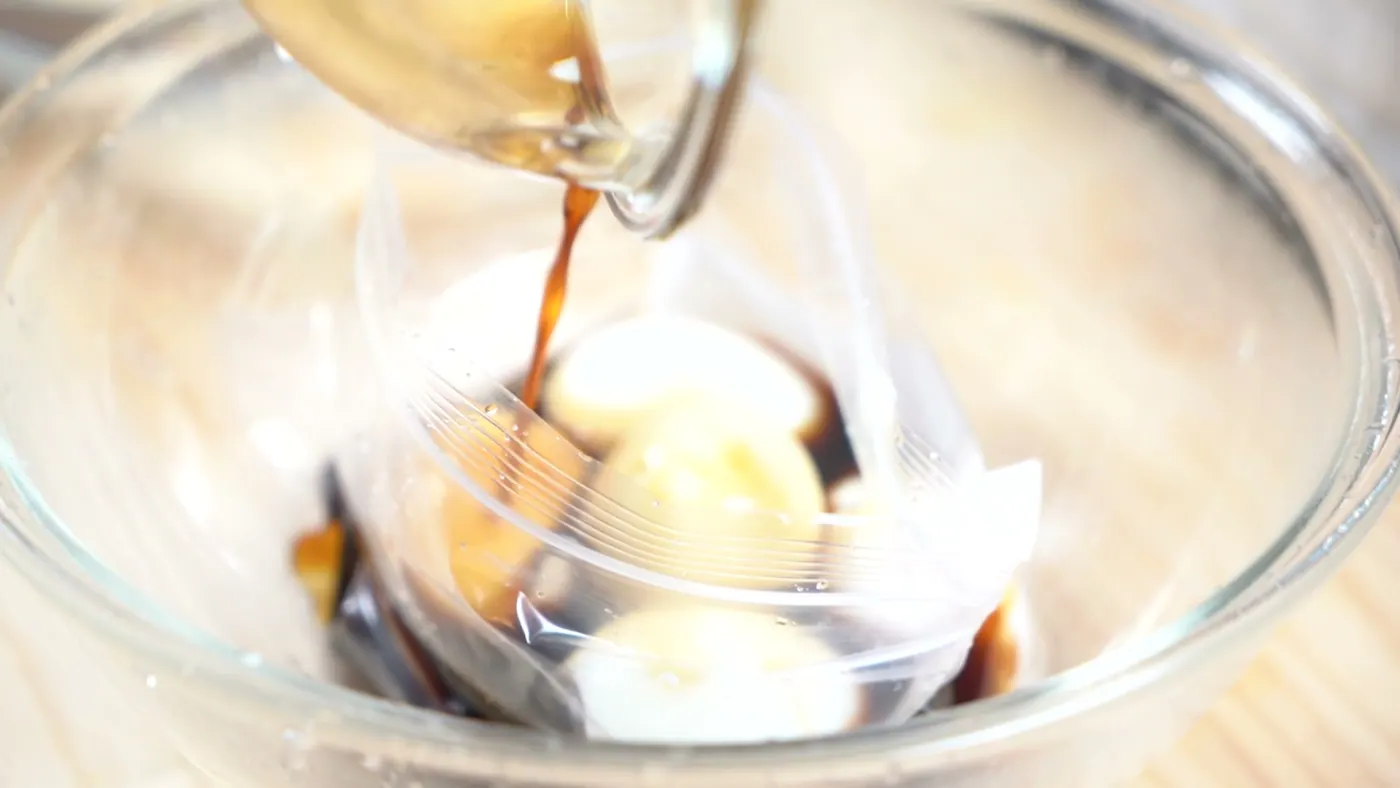
Set an open zip-top bag inside a bowl. Put all the eggs in the bag and pour the cooled marinade over them.
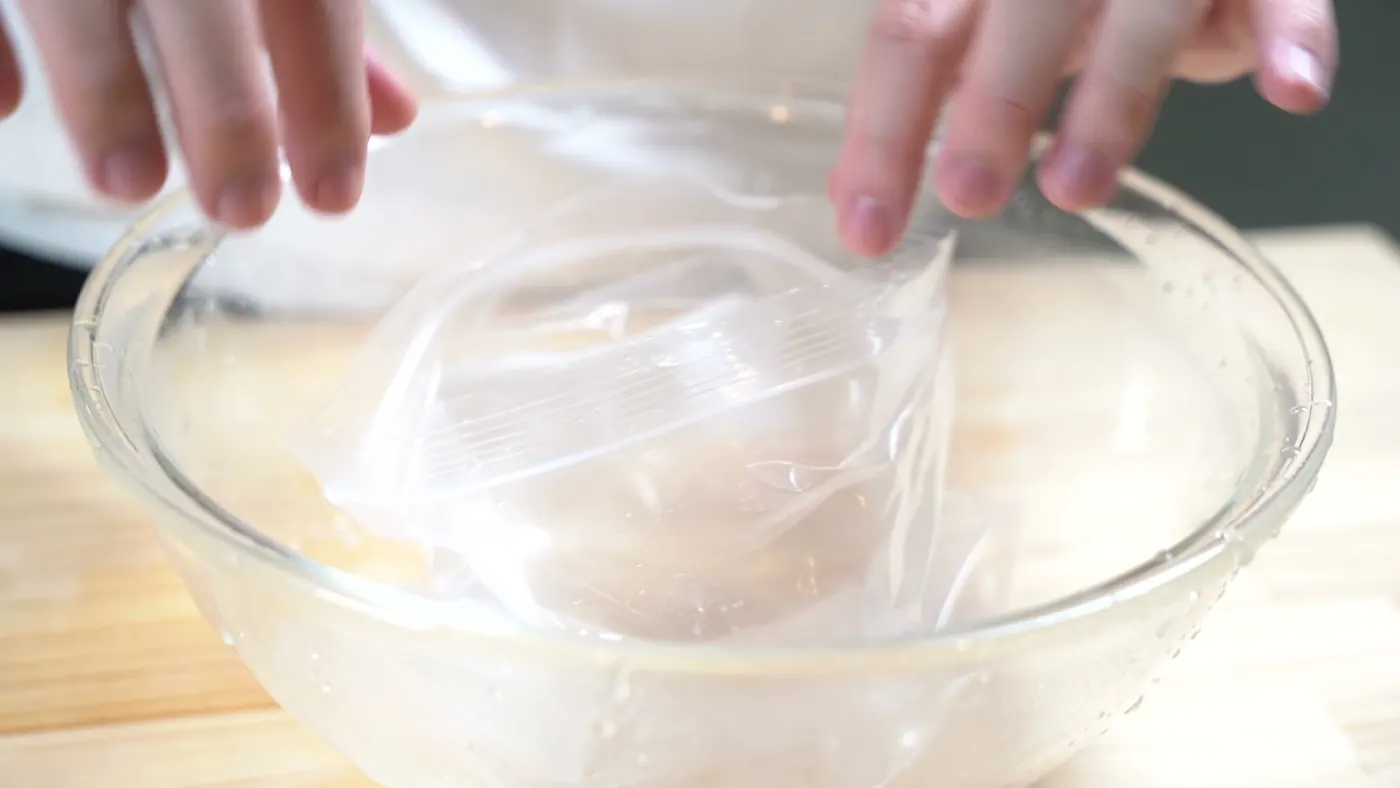
Squeeze out the air and seal
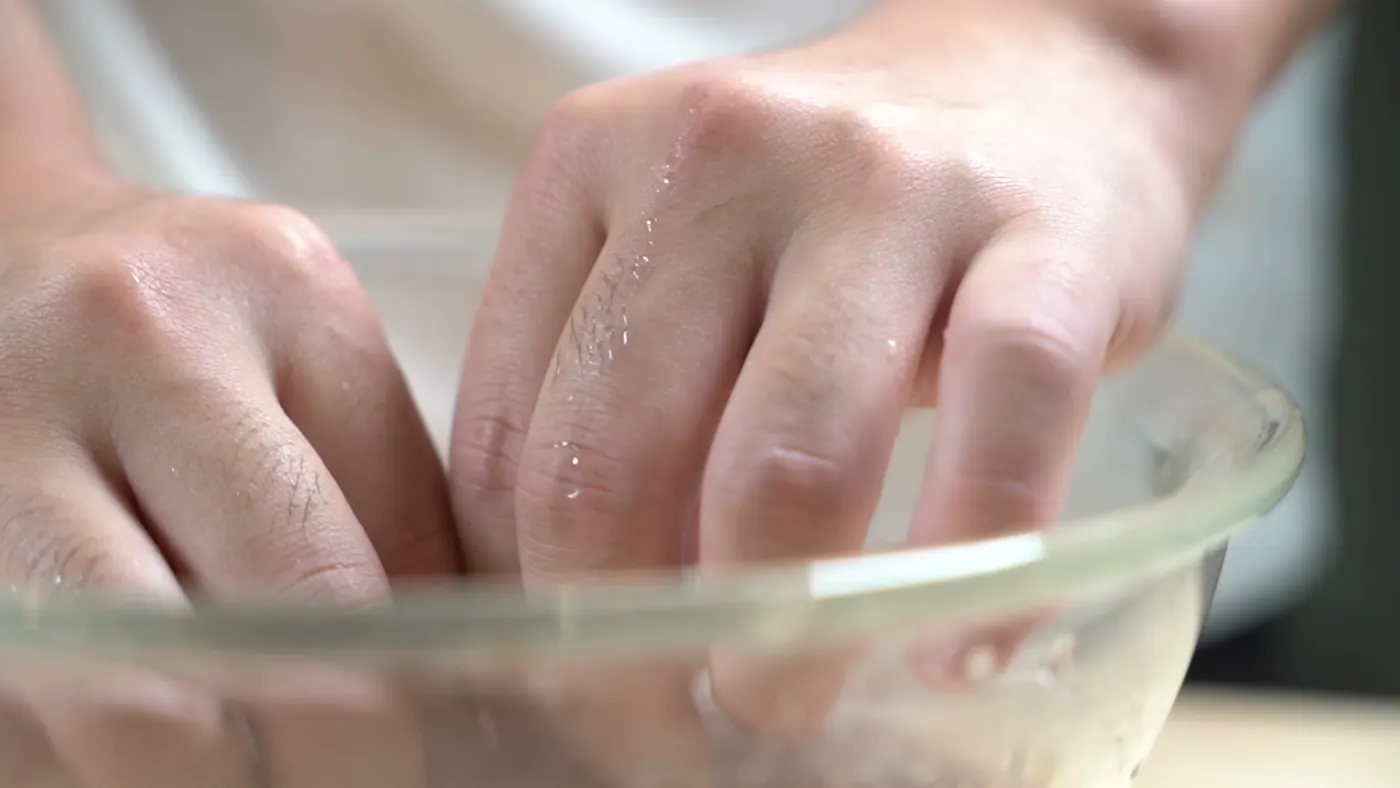
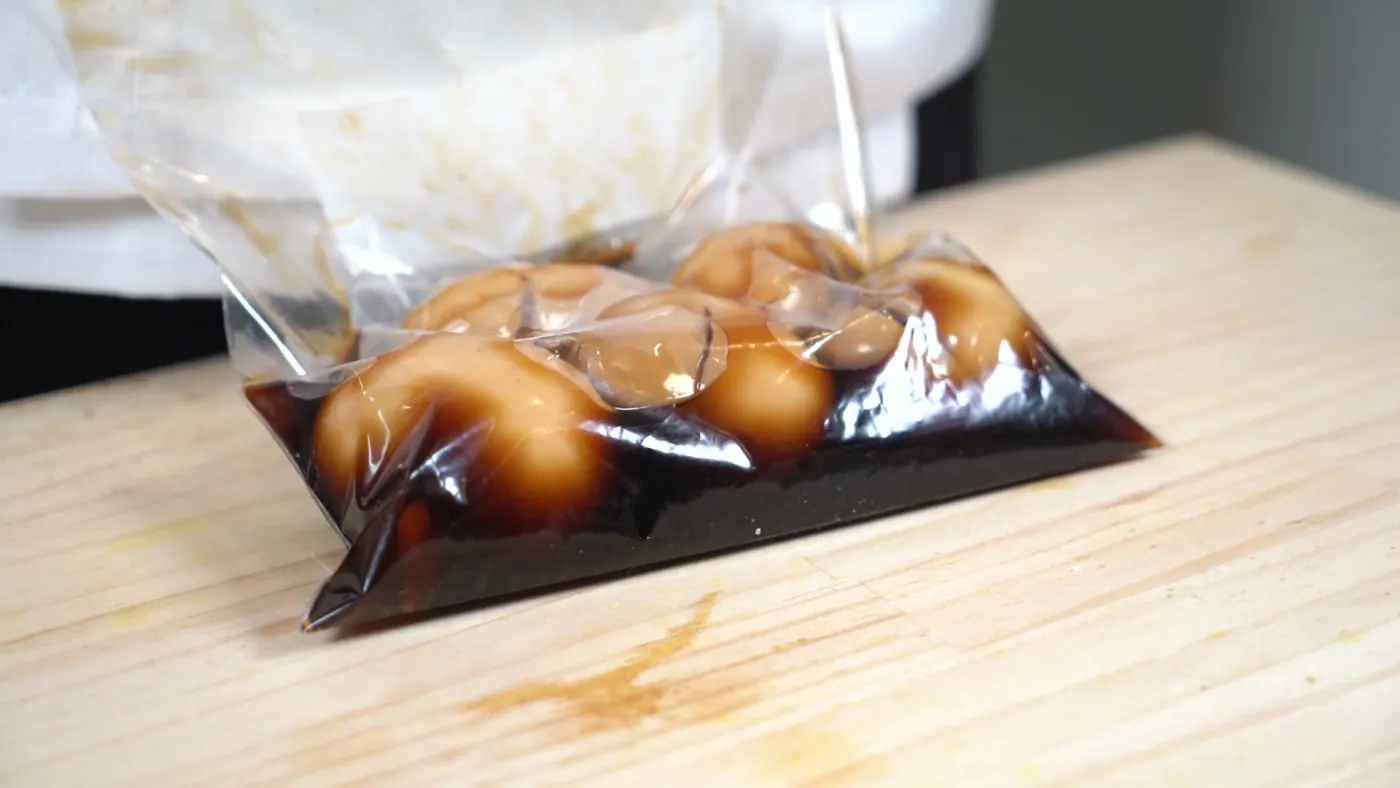
Close the bag while pushing the air out. This way the marinade covers the whole surface of every egg.
Marinate for half a day
Keep the bag in the refrigerator for about half a day so the marinade soaks into the eggs. Don't leave them too long, or the flavor gets too strong. Half a day is just right.
Slice and Serve
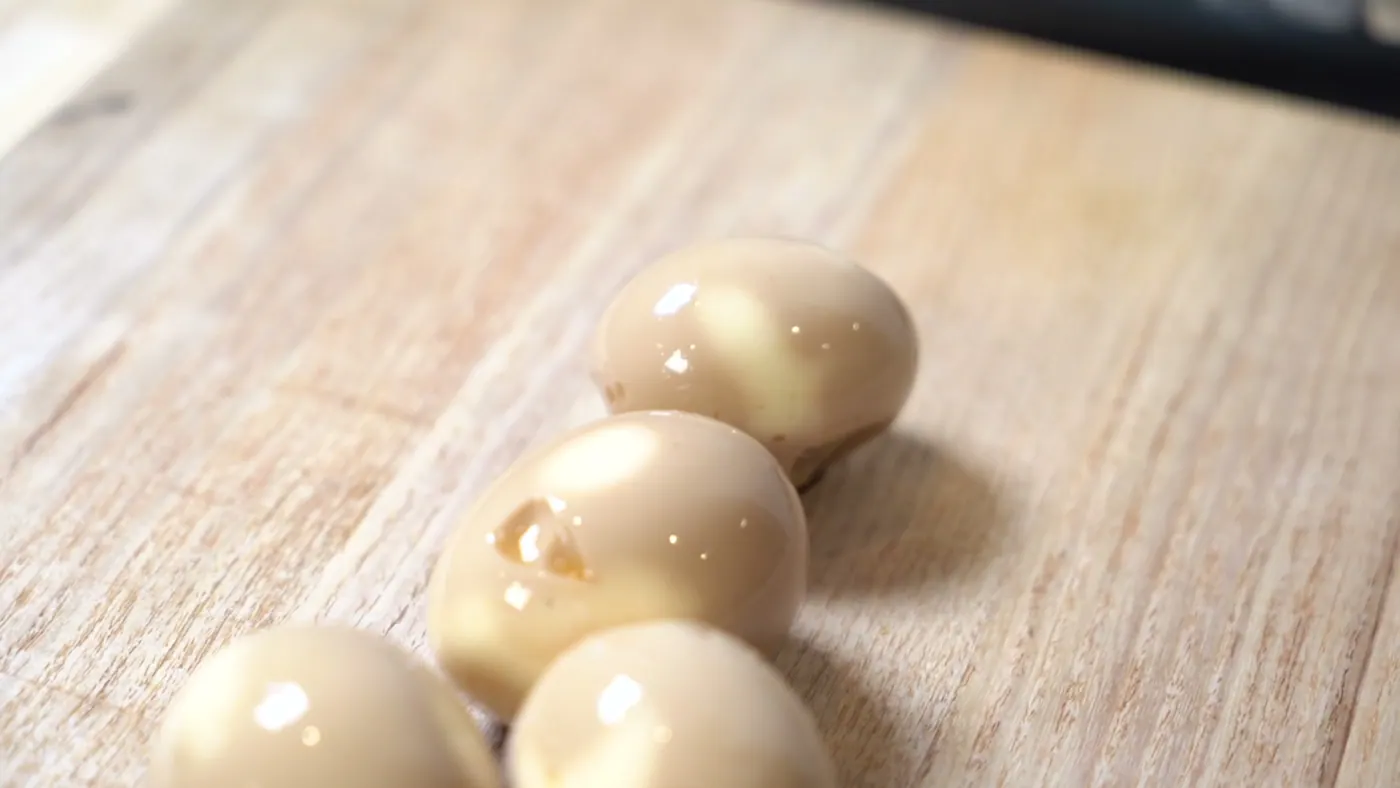
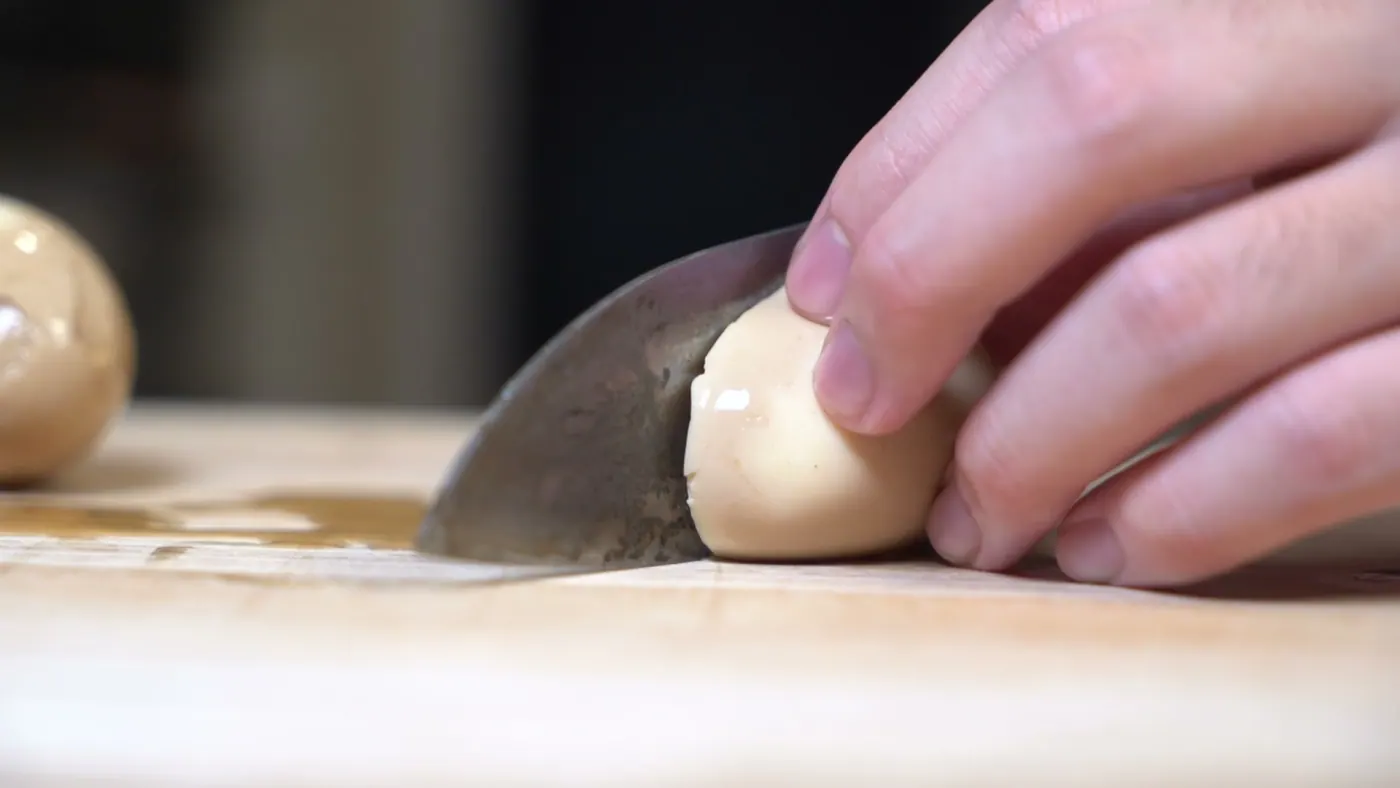
Slice the eggs gently
Take the eggs out of the marinade and cut them in half. Slide the knife slowly back and forth as you cut so the soft eggs keep their shape.
Compare and serve
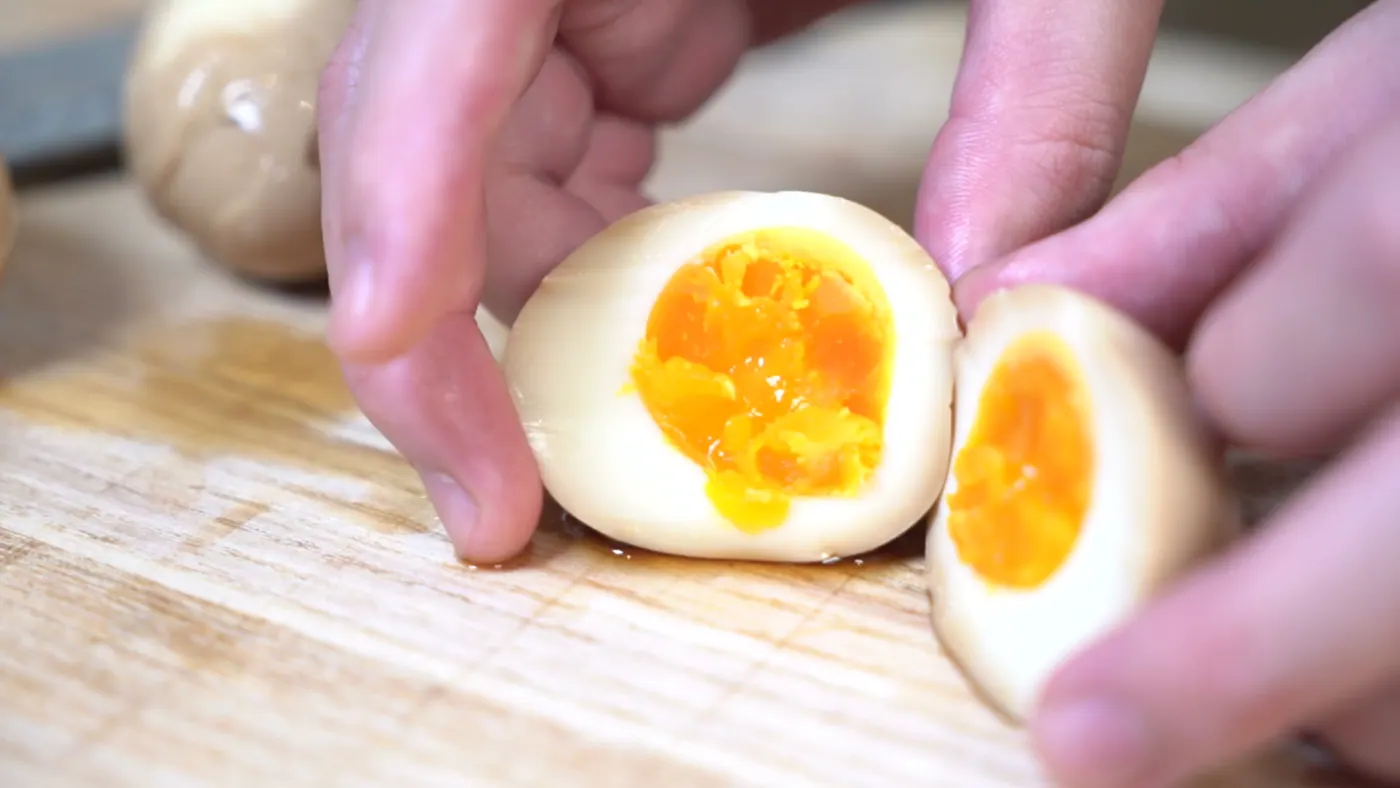
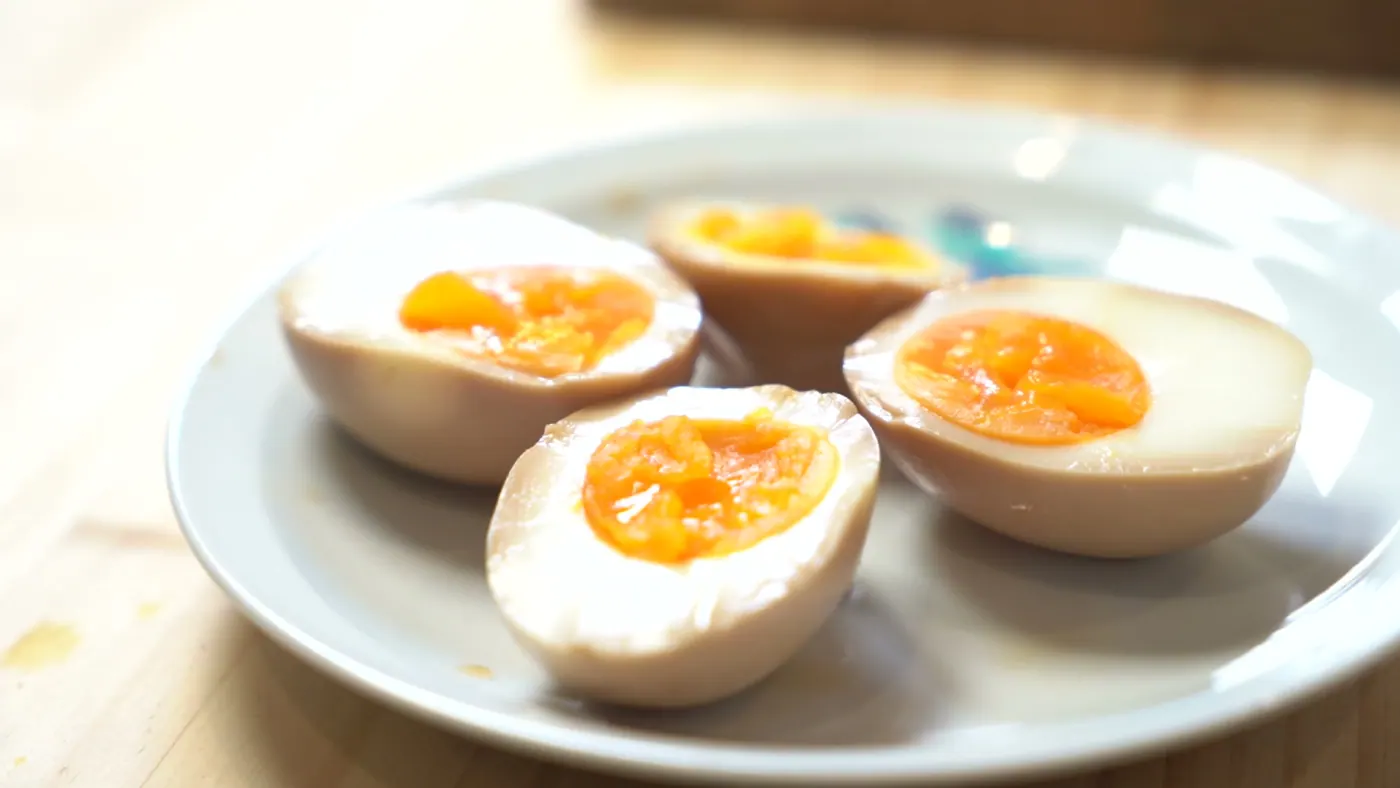
The 8-minute eggs are softer and creamier in the center than the 11-minute eggs. Adjust the boiling time next time to suit your taste. Serve them as they are, or on top of ramen.
Tips and Key Points
Don't skip the bonito flakes
Bonito flakes add a lot of umami to the marinade, and the yolk soaks it up.
Use cold eggs and a timer
The boiling times are for eggs straight from the refrigerator: 7-8 minutes for soft, 10-12 minutes for firm. Rolling the eggs while they boil keeps the yolks in the center.
Crack, then peel in water
Cool the eggs in cold water, crack the shells all over, and peel them from the bottom in a bowl of water.
Don't over-marinate
About half a day in the refrigerator is enough. Longer, and the flavor gets too strong.
Troubleshooting
Frequently Asked Questions
How long should I boil the eggs?
For eggs straight from the refrigerator, 7-8 minutes gives a soft, jammy yolk and 10-12 minutes gives a firmer yolk.
How do I keep the yolk in the center?
Gently roll the eggs in the water while they boil.
My eggs are hard to peel. Any tips?
Put the boiled eggs in cold water for 2-3 minutes, then crack the shells all over and return them to the water. Water gets in between the shell and the egg, so the shell comes off easily. Start peeling from the bottom.
How long should I marinate the eggs?
About half a day in the refrigerator. If you marinate them too long, the flavor gets too strong.
I don't have mirin. What can I use?
Mix 1 tablespoon of sake with 1 teaspoon of sugar for each tablespoon of mirin, so in place of the 4 tablespoons of mirin, add 4 more tablespoons of sake and 4 teaspoons of sugar to the marinade. Our mirin substitute recipe also has a version made with honey.
Summary
Ramen eggs need just a little care at each step: a marinade boiled with bonito flakes, cold eggs boiled for exactly the time you want, a cold-water bath and cracked shells for easy peeling, and half a day in the refrigerator. Slice them gently and they're ready for your ramen bowl.
Ramen eggs are the classic topping with chashu — try them on our miso ramen.
小鉢Appetizers & Sides煮卵(味玉)
Ramen Egg (Ajitama / Nitamago, Soy-Marinated Soft-Boiled Eggs)
Ajitama, also called nitamago, is the soy-marinated egg you often see on top of ramen at ramen shops, and it's easy to make at home.
No ratings yet
Rate this recipe
- Prep
- 10 min
- Cook
- 25 min
- Marinating
- 12 hr (half a day) in the refrigerator
- Total
- 12 hr 35 min (including marinating)
- Servings
- 4
- Difficulty
- Beginner
Ingredients
Marinade
Eggs
Ingredient amounts are multiplied; cooking times and pan size may need adjusting.
Instructions
Amounts mentioned in the steps are for the original recipe (1x) — use the scaled amounts above.
Make the Marinade
Put the seasonings in a pan
Put the marinade ingredients in a frying pan:
- 3 tablespoons cooking sake
- 4 tablespoons mirin
- 4 tablespoons soy sauce
- 1 tablespoon sugar
- 5g bonito flakes
Bonito flakes have lots of umami, so be sure to add them. They make a big difference in the flavor.
Bring it to a boil
Heat over medium heat and bring it to a boil. Boiling is needed to cook off the alcohol in the mirin and sake.
Simmer, strain and cool
Once it boils, turn the heat down to low and simmer for about 1 minute to draw the umami out of the bonito flakes. Strain the marinade through a fine sieve and squeeze out the bonito flakes. Set the marinade somewhere it won't spill and let it cool.
Boil the Eggs
Bring the water to a boil
Fill a deep frying pan with enough water to cover the eggs completely and bring it to a boil. Once it boils, turn the heat down to slightly lower than medium.
Use eggs straight from the refrigerator
Take 4 eggs out of the refrigerator. The boiling times and heat in this recipe are for cold eggs straight from the refrigerator, so be sure to follow them.
Lower the eggs in with a ladle
Put the eggs into the water gently, one at a time, with a ladle. If you drop them in, the shells can crack and the egg white leaks out.
Time it and roll the eggs
Once all the eggs are in, start a timer.
- 7-8 minutes for a soft, jammy yolk
- 10-12 minutes for a firmer yolk
While they boil, gently roll the eggs. This keeps the yolks in the center of the eggs.
Move the eggs into cold water
Prepare a bowl of cold water. Take the eggs out after 8 minutes for soft, jammy yolks, or after 11 minutes for firmer yolks. Move the eggs into the cold water and leave them for 2-3 minutes.
The cold water makes the egg whites shrink a little, which leaves a gap between the shell and the egg, so the eggs peel more easily.
Peel the Eggs
Crack the shells all over
Here's a tip to make peeling even easier. Gently crack the bottom of an egg, then make small cracks all over the shell. Put it back in the water and do the same with every egg. Water gets in through the cracks, between the shell and the egg, which makes peeling much easier.
Peel the eggs in water
Prepare another bowl of water. Start peeling from the cracks at the bottom of the egg. Once the bottom of the shell is off, slide your finger between the shell and the egg and the shell comes off smoothly.
Keep the peeled eggs in water
Put the peeled eggs in the water so the soft-boiled eggs keep their shape. When all the eggs are peeled, check that no thin membrane is left on them. If it's left on, it feels strange when you eat the eggs.
Marinate the Eggs
Put the eggs and marinade in a bag
Set an open zip-top bag inside a bowl. Put all the eggs in the bag and pour the cooled marinade over them.
Squeeze out the air and seal
Close the bag while pushing the air out. This way the marinade covers the whole surface of every egg.
Marinate for half a day
Keep the bag in the refrigerator for about half a day so the marinade soaks into the eggs. Don't leave them too long, or the flavor gets too strong. Half a day is just right.
Slice and Serve
Slice the eggs gently
Take the eggs out of the marinade and cut them in half. Slide the knife slowly back and forth as you cut so the soft eggs keep their shape.
Compare and serve
The 8-minute eggs are softer and creamier in the center than the 11-minute eggs. Adjust the boiling time next time to suit your taste. Serve them as they are, or on top of ramen.
Video
Watch the video · 5:37Open on YouTube
Jump to a part of the video (12 chapters)
Video: https://youtu.be/aR-32ddq0uM
Notes
Substitutions
- More eggs: The same marinade works for 4 to 5 eggs
- Mirin: If you don't have mirin, mix sake and sugar instead. See our mirin substitute recipe
Nutrition estimated, per serving
- Calories
- 71 kcal
- Carbohydrates
- 0.2 g
- Protein
- 6.1 g
- Fat
- 5.1 g
- Saturated fat
- 1.6 g
- Fiber
- 0 g
- Sugar
- 0.1 g
- Sodium
- 70 mg
Estimated by us from the Standard Tables of Food Composition in Japan (MEXT, 2020). Optional ingredients and garnishes are not counted; soup and sauce are counted as fully eaten. Actual values depend on your brands and portion sizes. How we calculate this
Course: Appetizers & Sides · Cuisine: Japanese · Keyword: Ramen Egg
Recipe from Japanese Cooking Ichie — https://japanesecookingichie.com/recipes/ramen-egg/
Make it a meal
Serve it alongside one of these mains.



Ratings & comments
No ratings yet — be the first to rate this recipe.
Comments