Part of Japanese Izakaya Food at Home: 10 Easy Recipes — compare them all
- Prep
- 15 min
- Cook
- 15 min
- Total
- 30 min
- Servings
- 1 serving (5 meatballs)
- Difficulty
- Beginner
What is Tsukune?
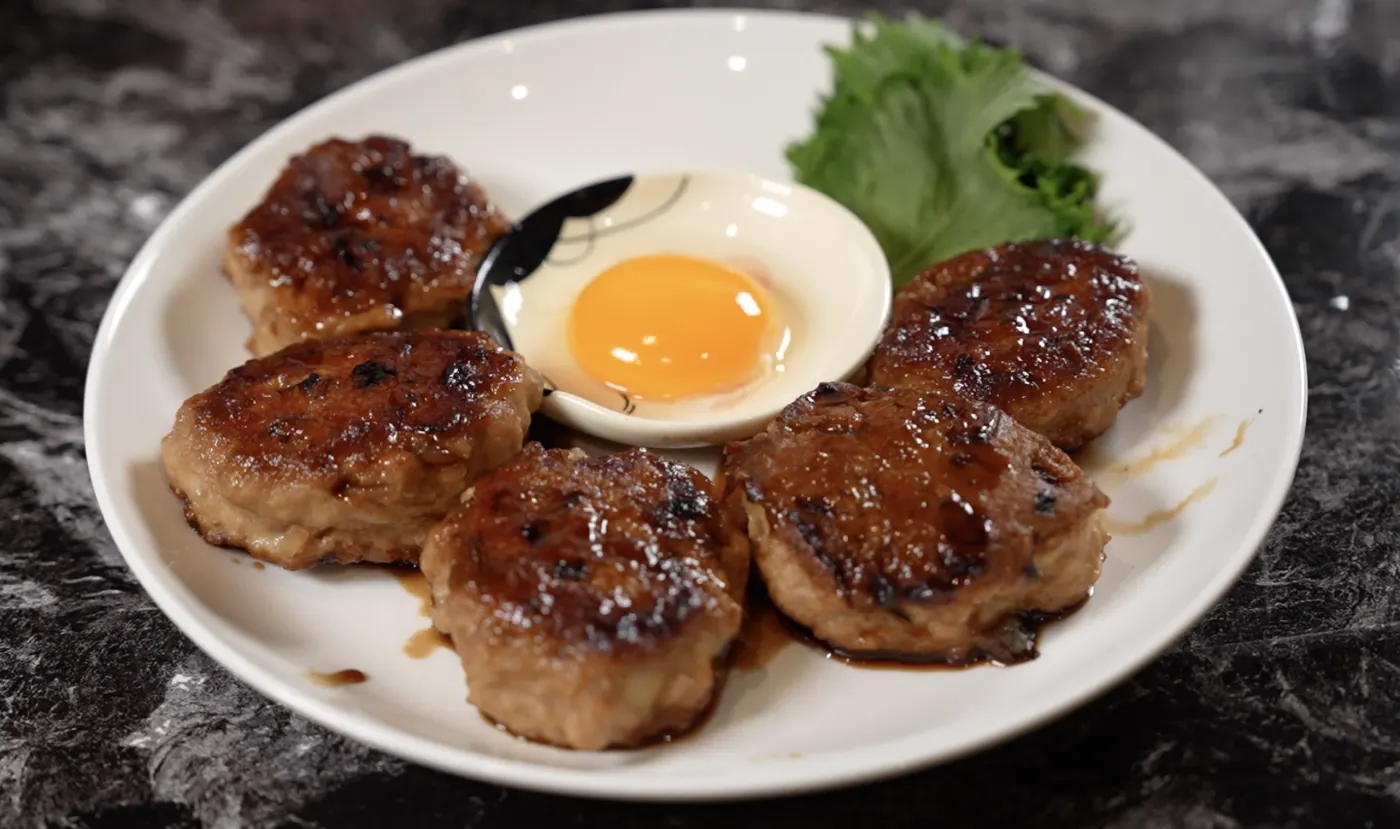
A popular izakaya yakitori menu item, tsukune. This dish with its fluffy texture and sweet-savory glaze is an exquisite recipe that's easy to make at home.
The key feature of this recipe is the technique of incorporating air while mixing. By folding in egg whites like making a meringue, you achieve an incredibly fluffy texture. Additionally, ginger eliminates any gamey smell and potato starch improves the binding, creating an authentic restaurant-quality flavor.
Why You'll Love This Recipe
- Ready in 30 minutes - Perfect for weeknight dinners or appetizers
- Incredibly fluffy texture - Achieved through air incorporation and egg white techniques
- Sweet-savory glaze is delicious - Soy-based tare sauce whets the appetite
- Perfect with egg yolk - Dipping in rich egg yolk creates exceptional flavor
- Easy-to-find ingredients - Made with ground chicken and basic seasonings
Recipe Highlights
- Incorporate air while mixing for fluffy texture
- Add egg whites for extra fluffiness
- Ginger eliminates chicken's gamey smell
- Potato starch improves meat binding
Equipment Needed
- Large mixing bowl
- 2 small bowls
- Knife and cutting board
- Grater
- Frying pan with lid
- Tongs
Tsukune Ingredients (1 serving - 5 meatballs)
13 ingredients · 1 serving (5 meatballs)
Ground chicken, onion, ginger, egg, shiso leaves, soy sauce, sake, potato starch, mirin, vegetable oil.
Full amounts in the recipe cardIngredient Substitutions
- Ground chicken: Thigh meat is juiciest, but breast meat or a mix of thigh and breast works too
- Sake: Can substitute dry white wine (or omit)
- Mirin: See our separate mirin substitute recipe
- Shiso leaves: Can be omitted, but they significantly enhance flavor and appearance
Video Tutorial
For detailed instructions, watch the video below. It clearly demonstrates the air incorporation technique, tips for achieving fluffy texture, and the entire cooking process.

How to Make Tsukune
Preparation: Egg, Onion, and Ginger
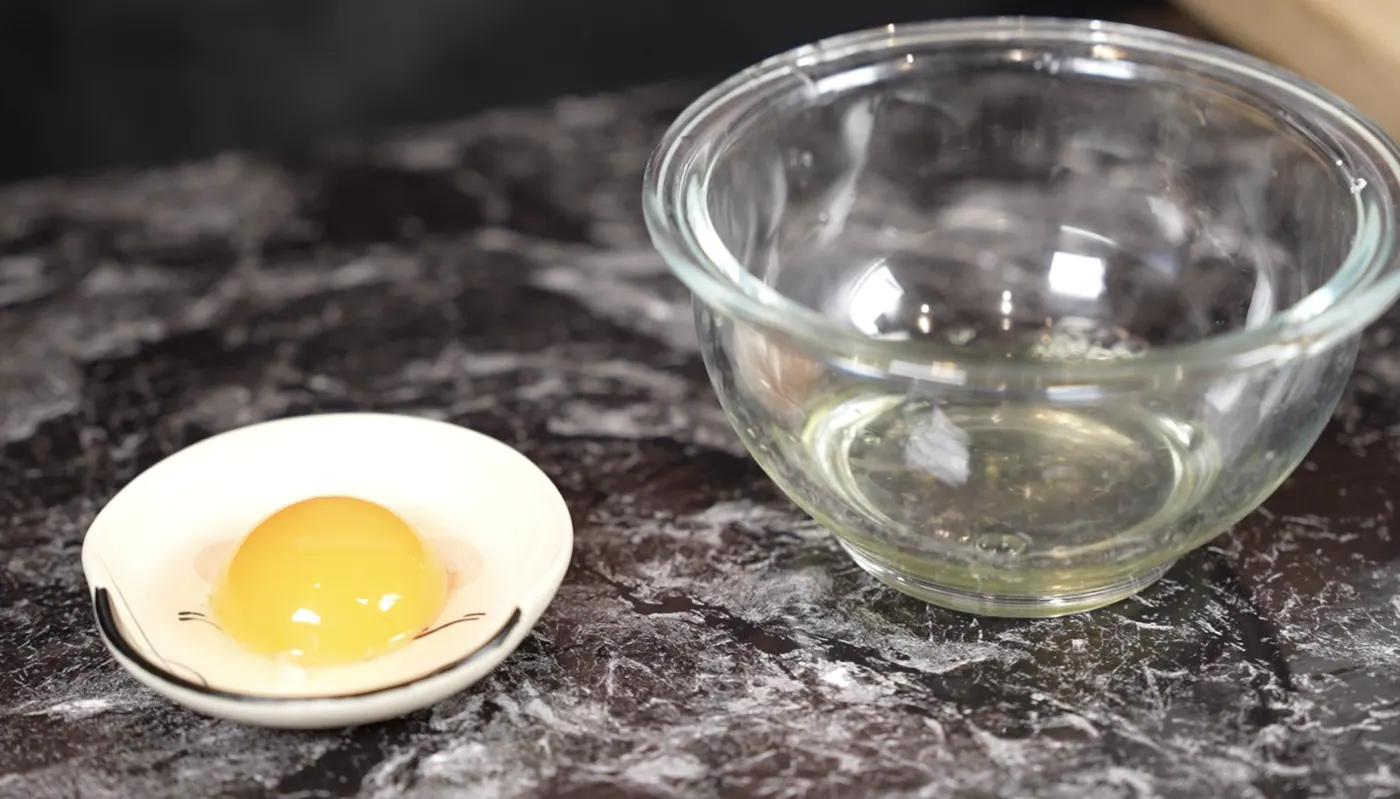
Separate egg white and yolk
Prepare 1 egg and separate the white from the yolk.
- Egg yolk: Set aside for topping
- Egg white: Keep nearby to mix into the tsukune mixture
Mince the onion
Mince 1/2 onion. Since the onion will be used in the tsukune mixture, mince it slightly coarse to add texture.
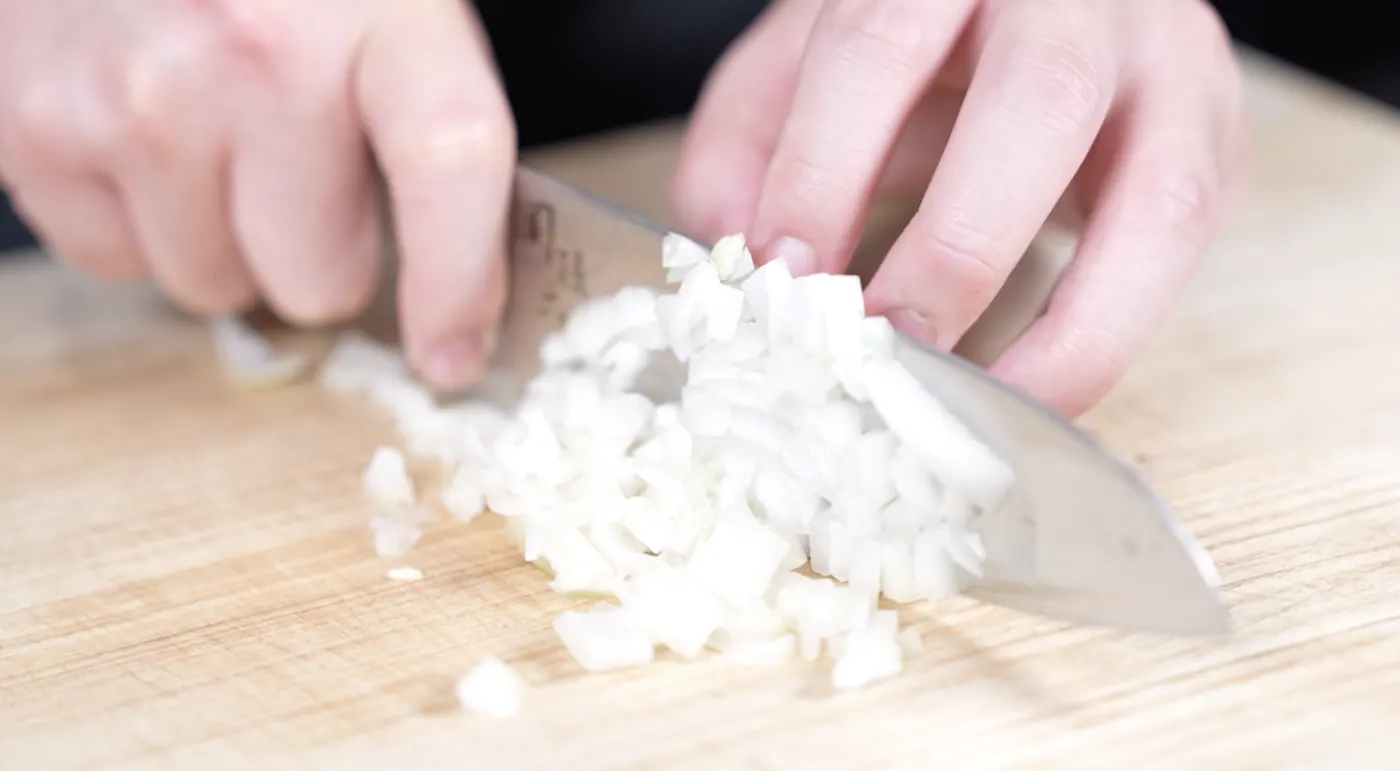
Tips for Mincing Onion
An easy recommended method:
- Make horizontal cuts in the onion
- Make vertical cuts
- Slice horizontally
This creates uniform minced onion.
Making the Tsukune Mixture
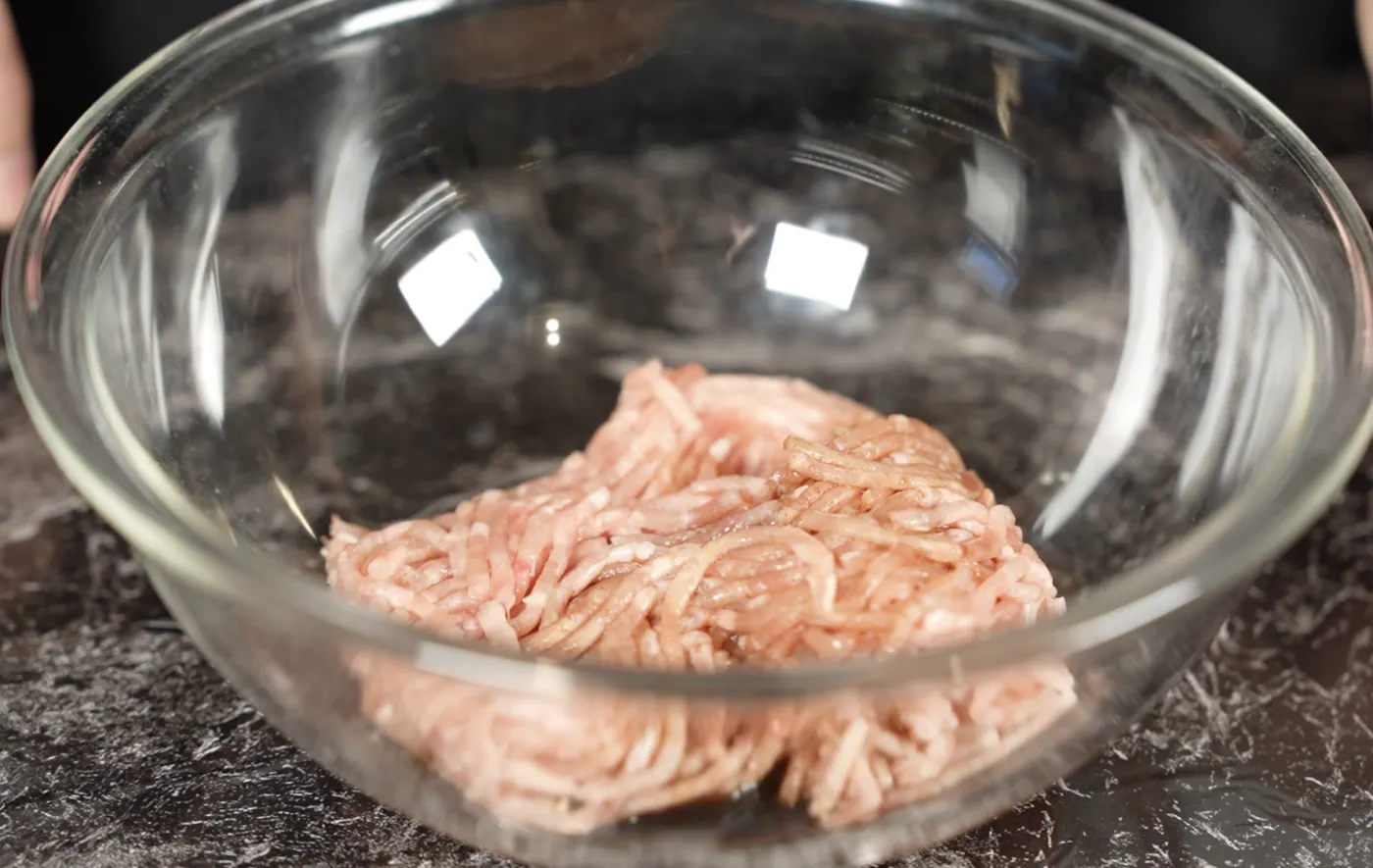
Add ground chicken and seasonings to bowl
Add 200g ground chicken to a bowl along with the seasonings:
- Soy sauce 1 tablespoon
- Sake 1/2 tablespoon
Grate and add ginger
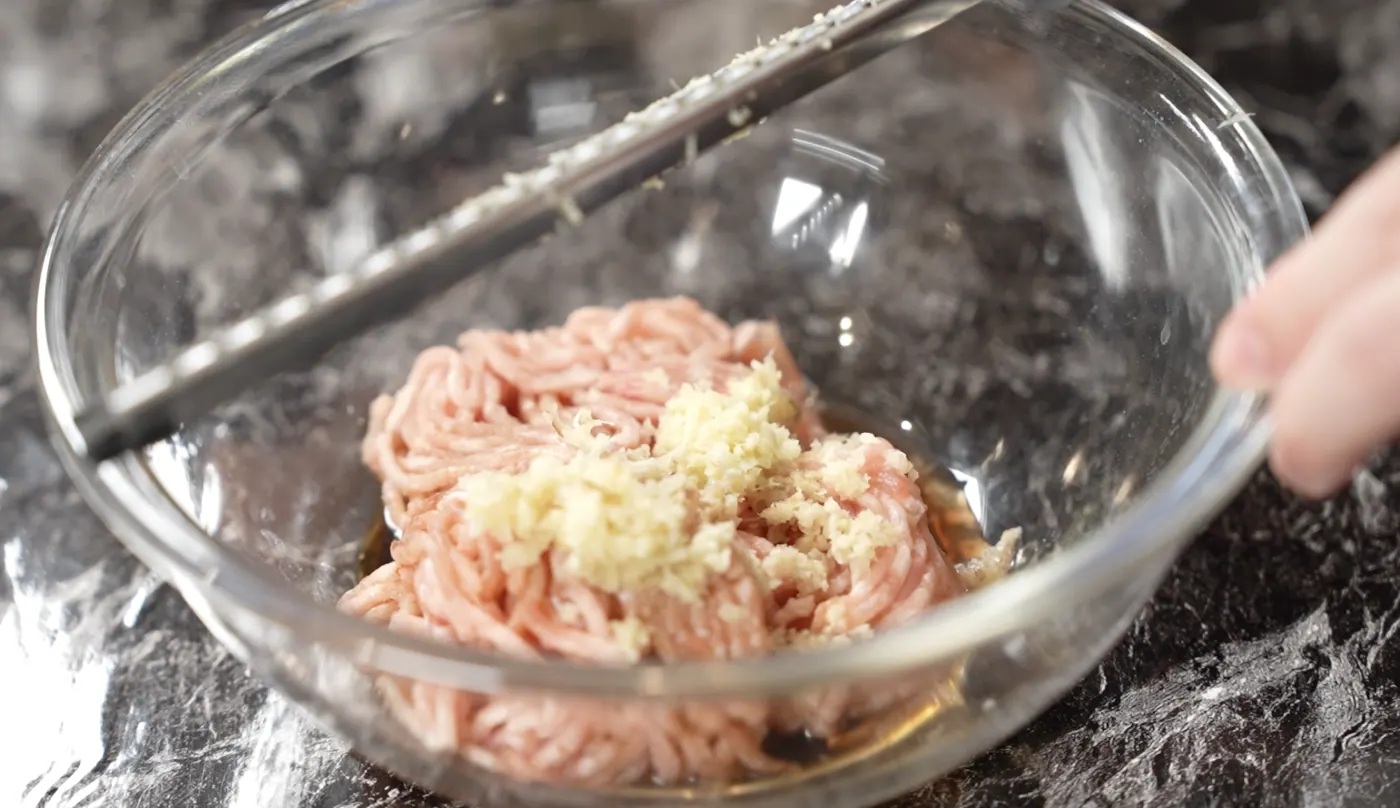
Grate 15g ginger and add to the bowl.
Why Add Ginger?
Ginger eliminates the gamey smell from chicken. Be sure to include it.
Mix seasonings and meat
Once all ingredients are in the bowl, mix together. First, use a twisting motion to work the seasonings into the meat.
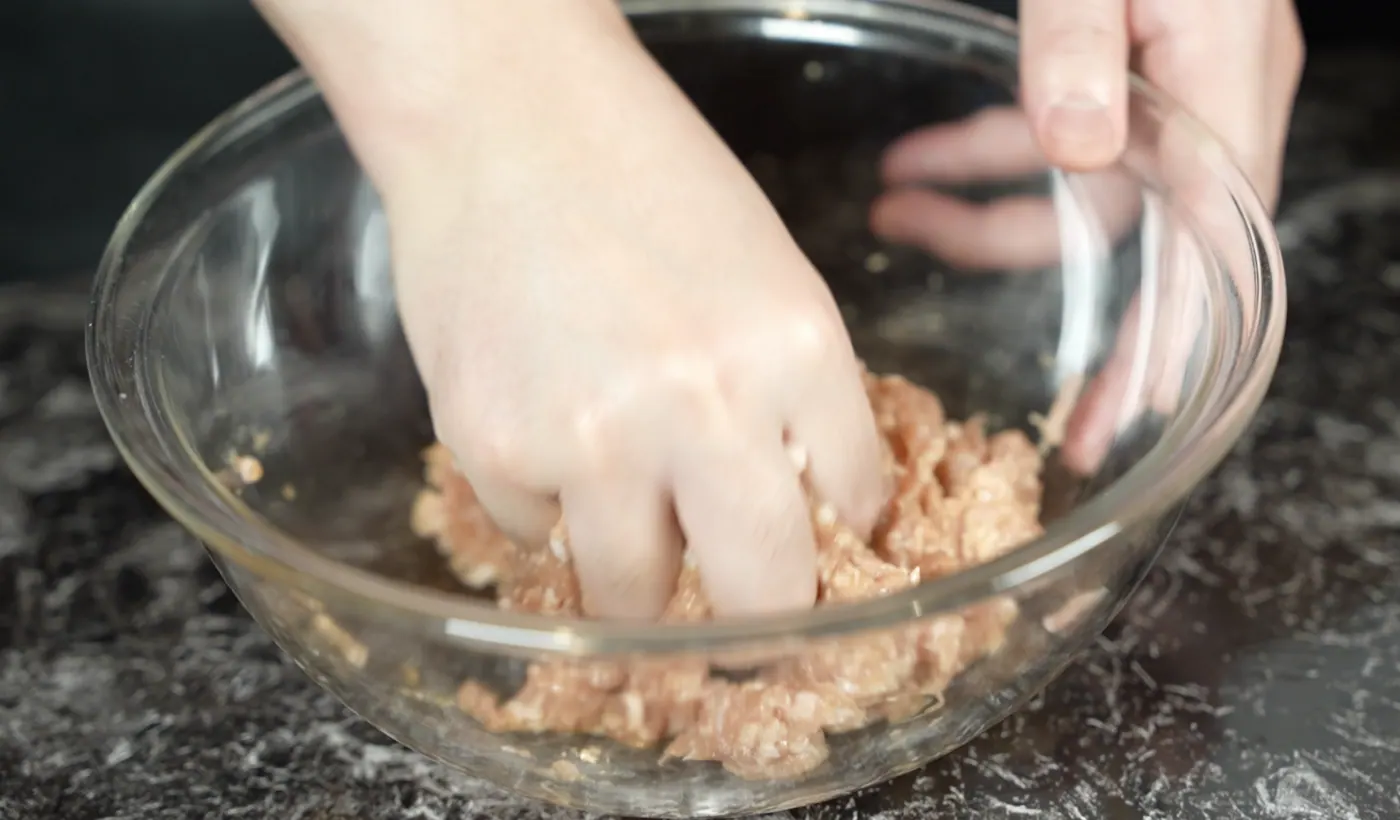
Once somewhat mixed, spread your hand like a whisk and mix quickly in a kneading motion.
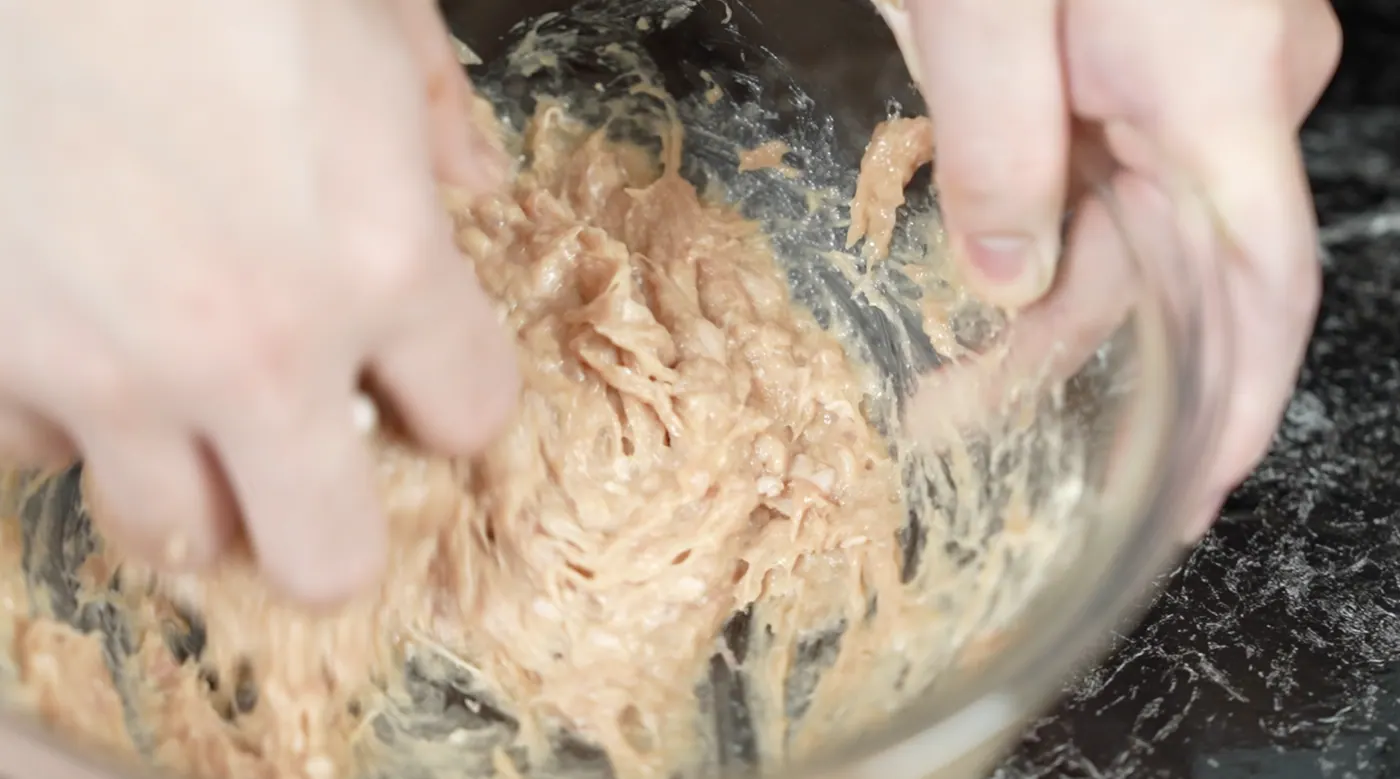
Mix thoroughly until the seasonings are evenly distributed throughout the ground meat.
Incorporate air while mixing
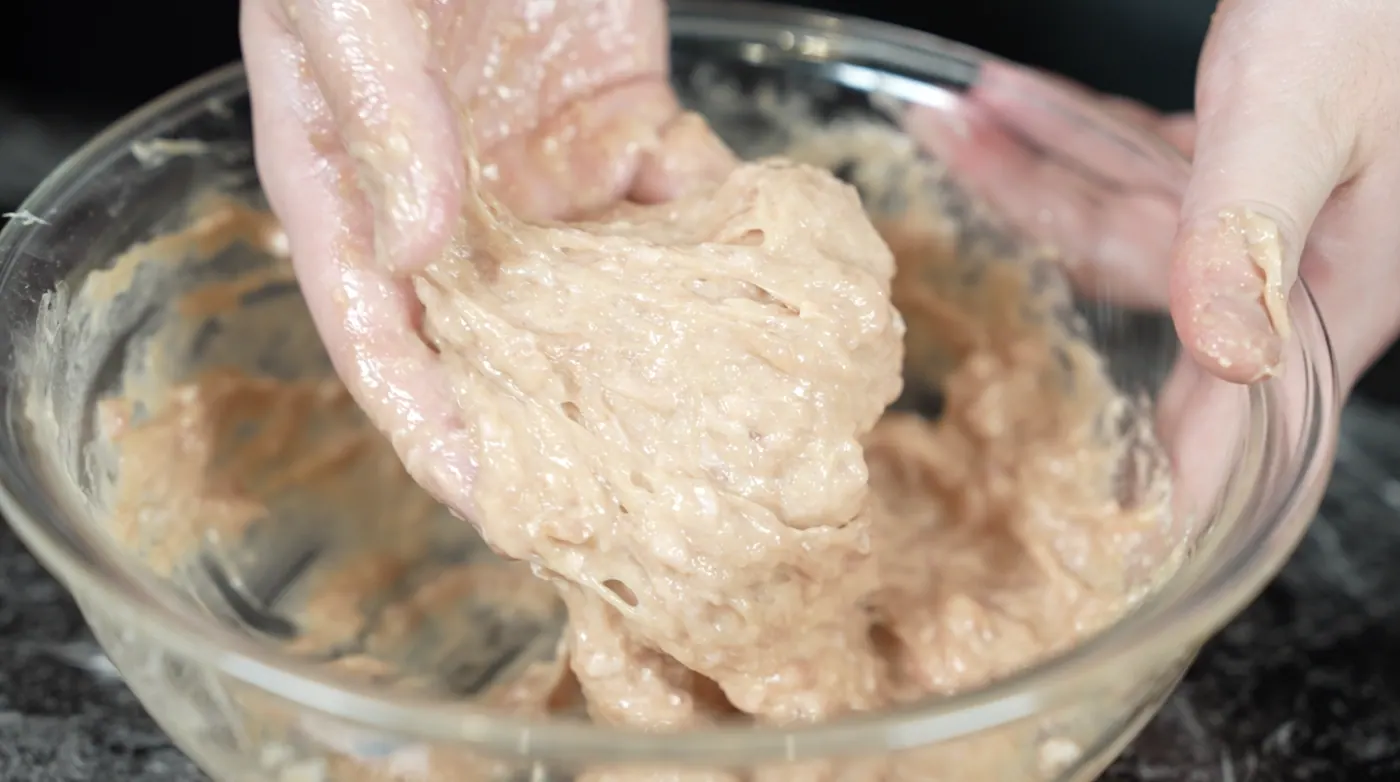
This is the most important point. Focus on mixing lightly to incorporate air.
Why Incorporate Air?
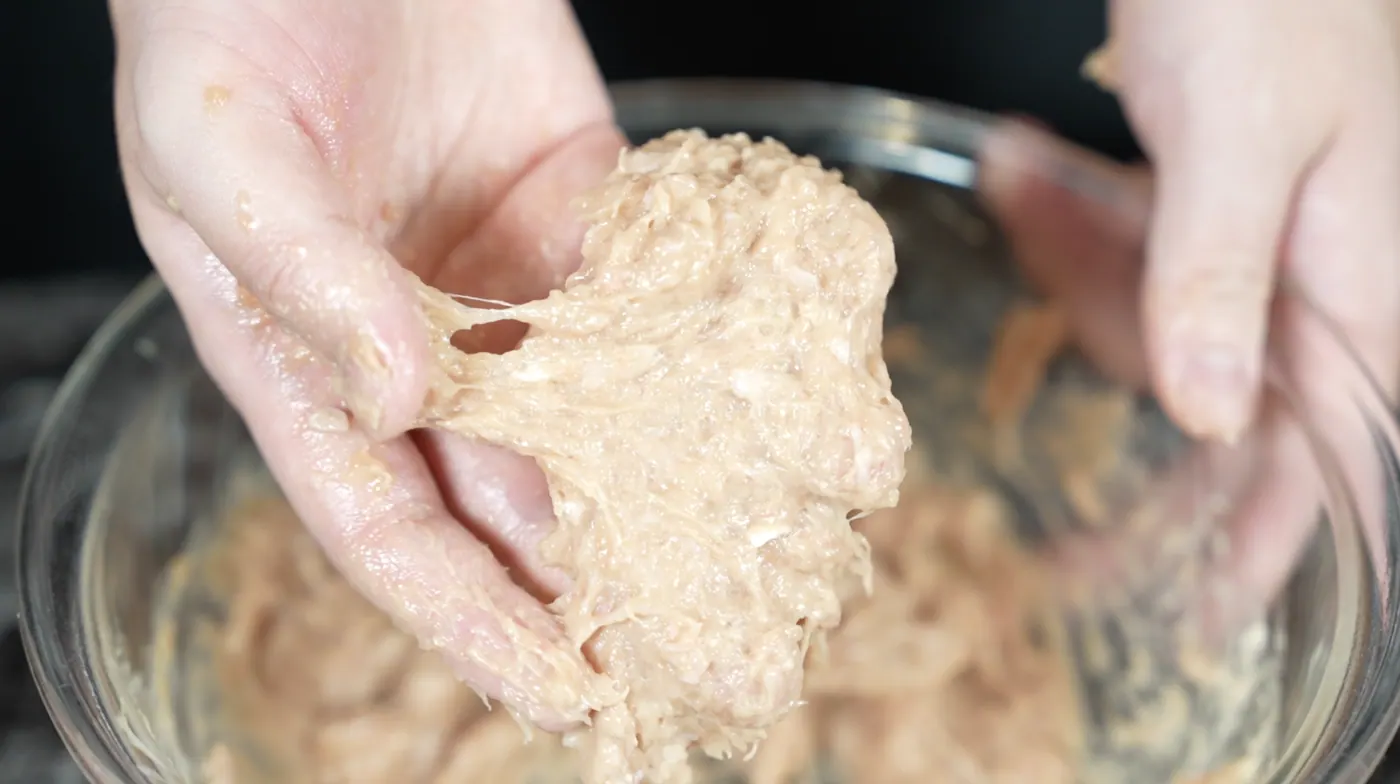
Incorporating air into the mixture gives tsukune a fluffy texture.
This is the most important technique in this recipe!
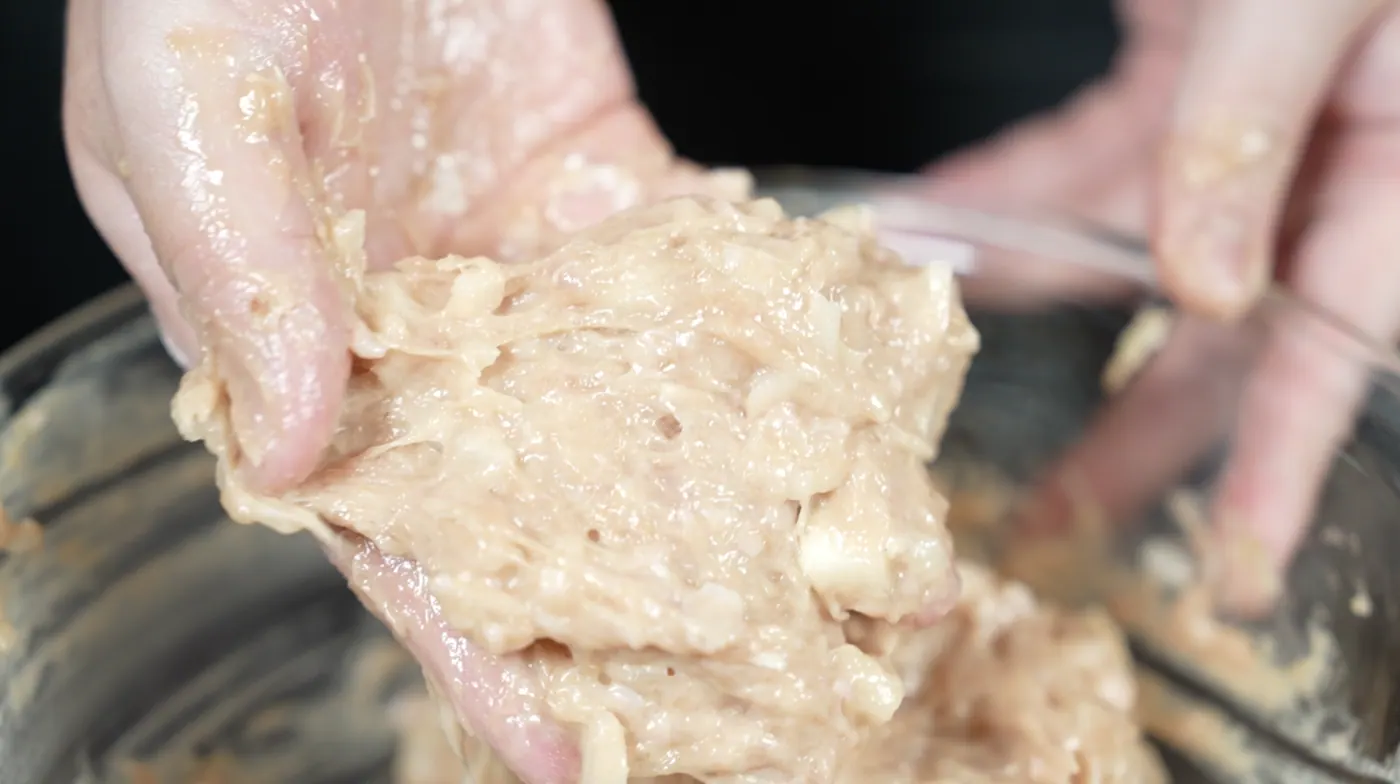
When the mixture becomes sticky yet fluffy like this, it's ready.
Add egg white
Next, add the egg white. Adding egg white makes the result even fluffier.
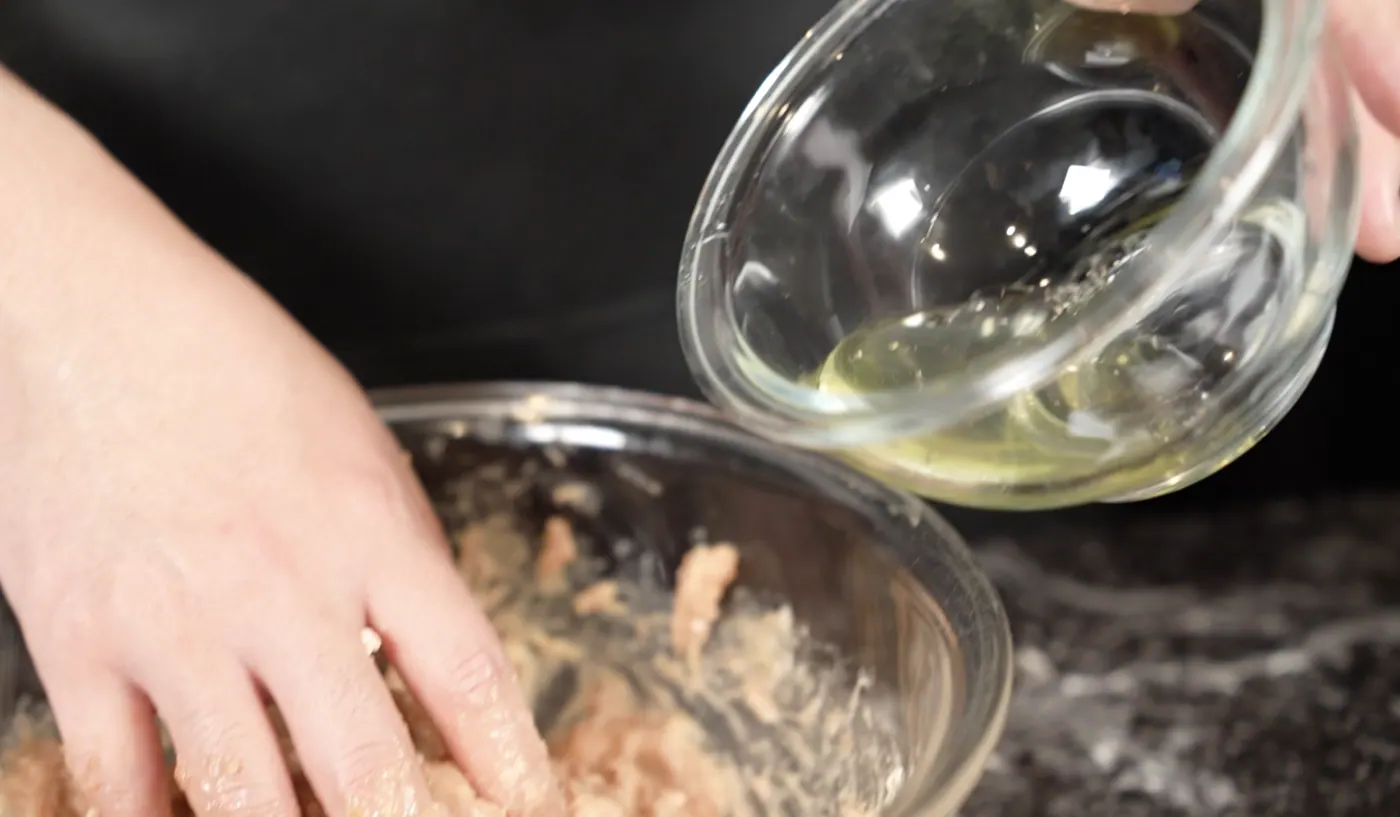
Mix egg white like making meringue
Egg white doesn't mix easily, so fold it in thoroughly like making meringue. Mix for about 2-3 minutes until the egg white is well incorporated.
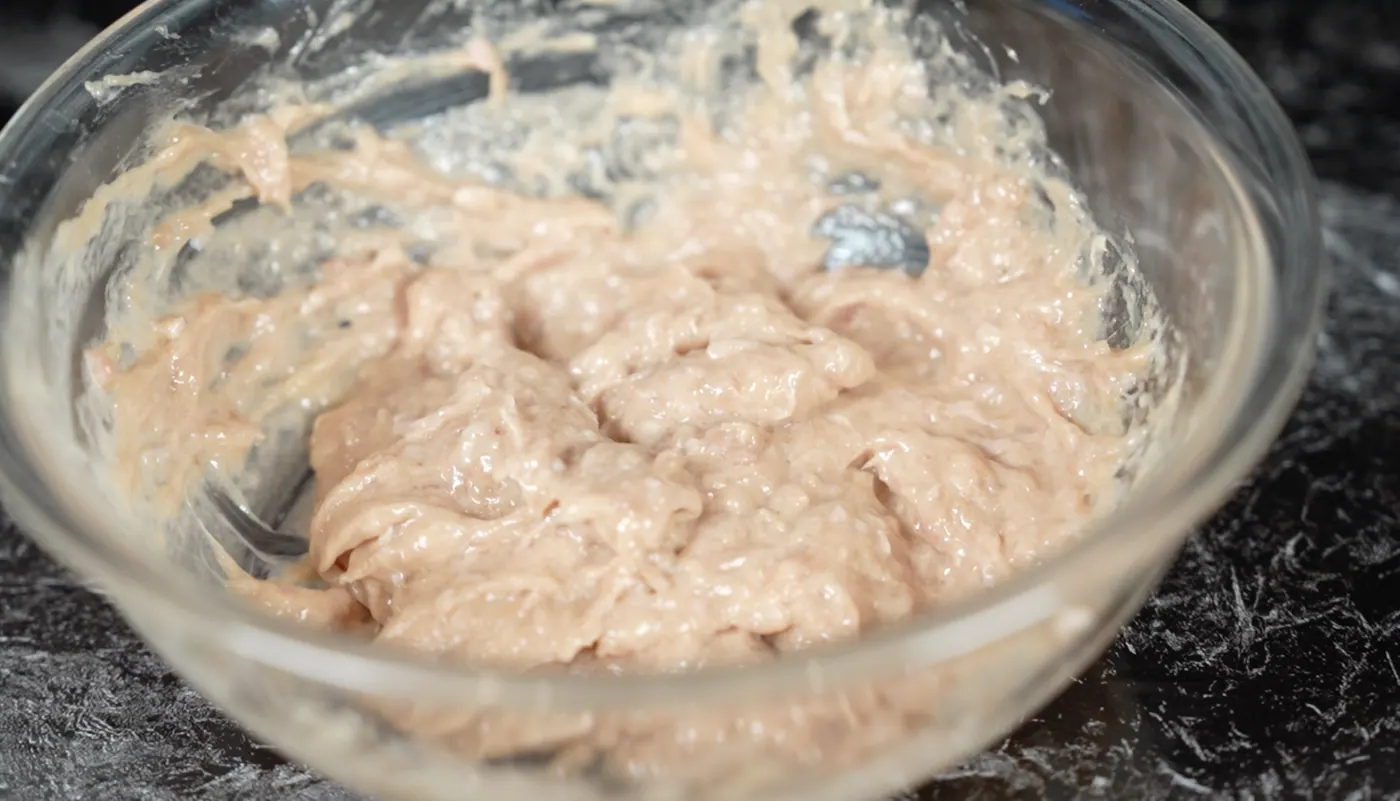
When it becomes smoother and fluffier, it's perfect.
Add minced onion and potato starch
Once the ground meat is thoroughly mixed, add the minced onion and 1 teaspoon potato starch.
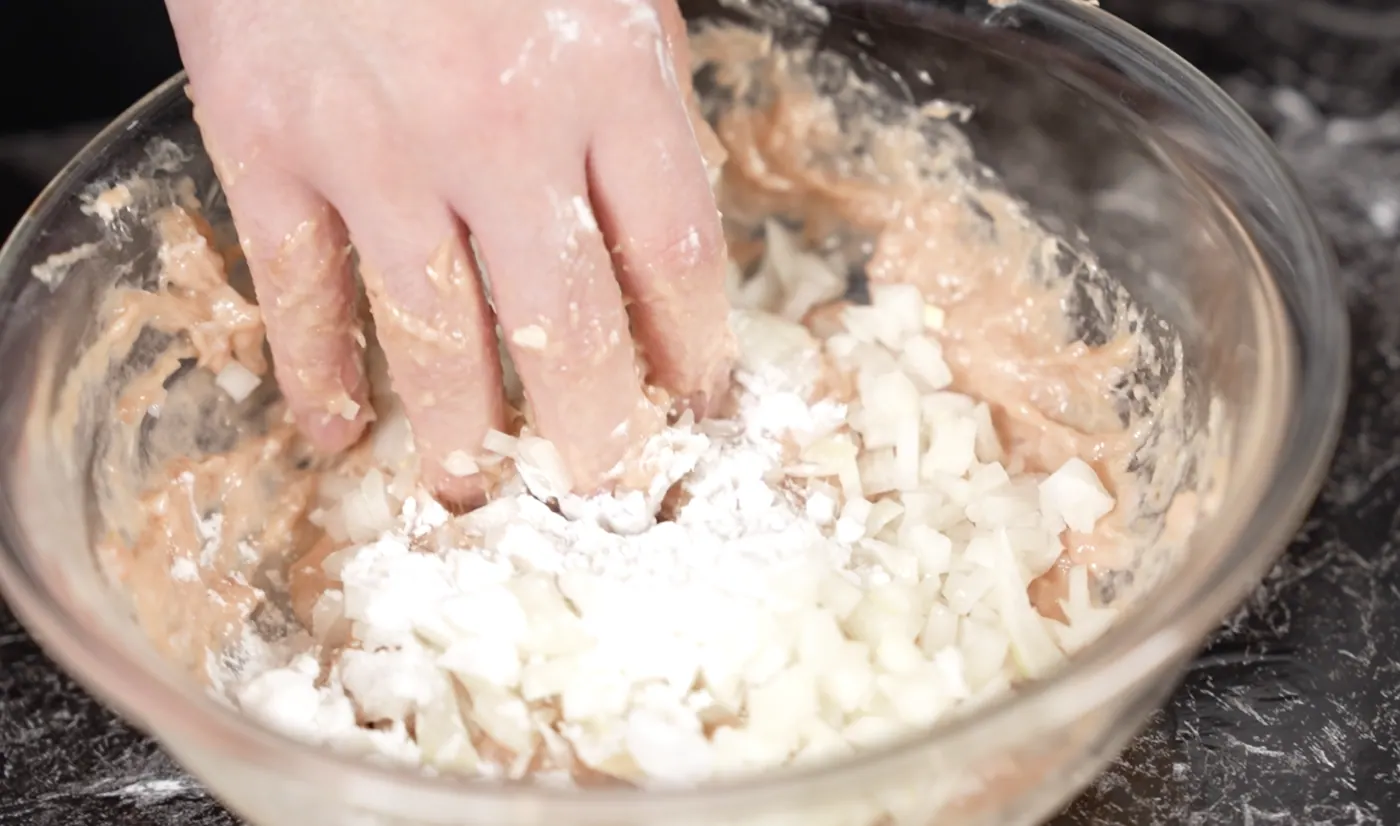
Roles of Onion and Potato Starch
- Onion: Adds texture and sweetness
- Potato starch: Absorbs excess moisture and improves meat binding
Mix everything together
Once the potato starch and onion are well mixed, the tsukune mixture is complete.
Shaping and Cooking the Tsukune
Oil or wet your hands
Before shaping the tsukune, lightly oil or wet your hands. This prevents the meat from sticking and makes shaping easier.
Form tsukune balls
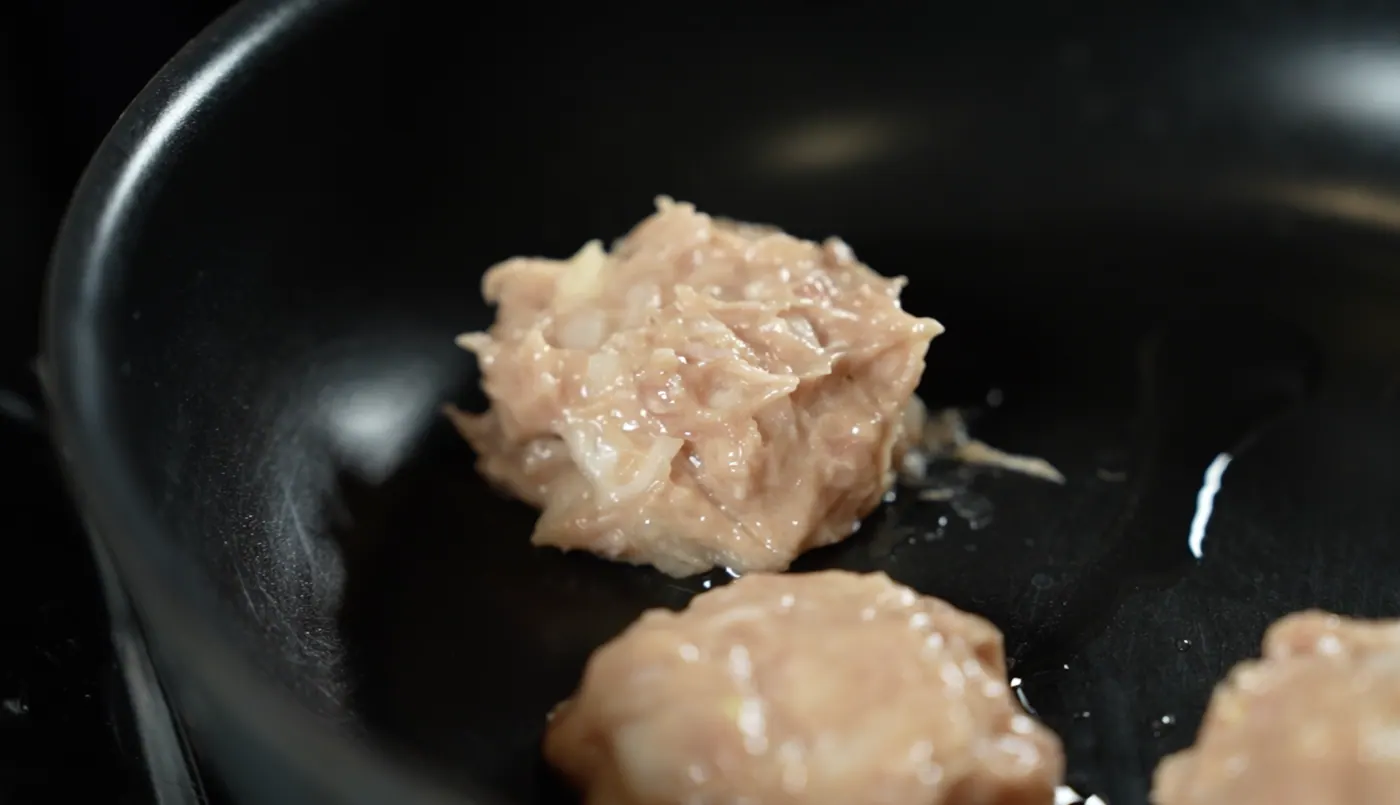
This amount makes about 5 tsukune, so shape them one at a time. Gently form into balls and carefully place in the frying pan.
Tips for Keeping Them Fluffy
To maintain the fluffy texture, be careful not to flatten them when placing in the pan. Keep the round shape intact.
Arrange all tsukune in the pan
Once all tsukune are shaped and arranged, cook over medium heat.
Cook one side for about 2 minutes
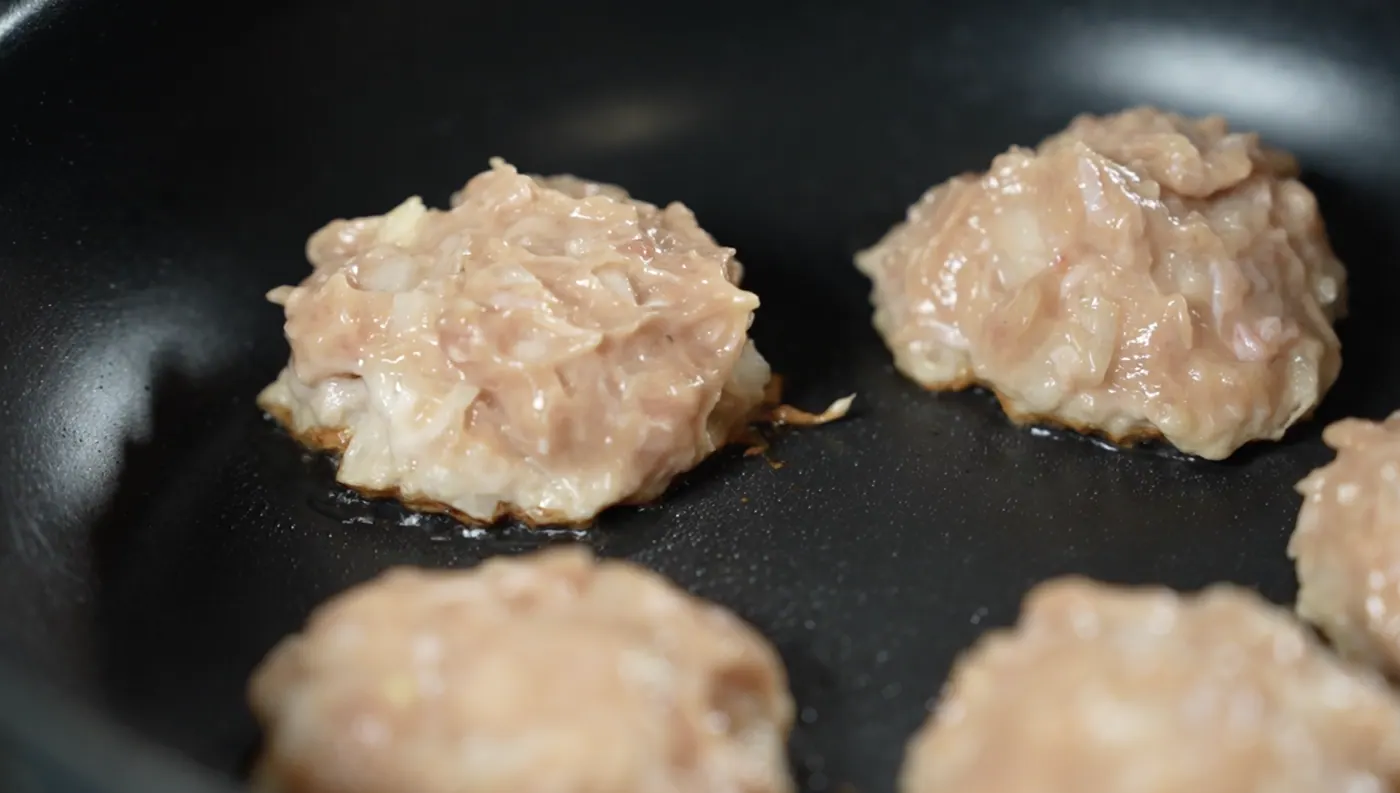
Cook gently for about 2 minutes to develop color. Don't touch them during this time to maintain their shape. When the edges start to brown slightly, they're cooking properly.
Flip them over
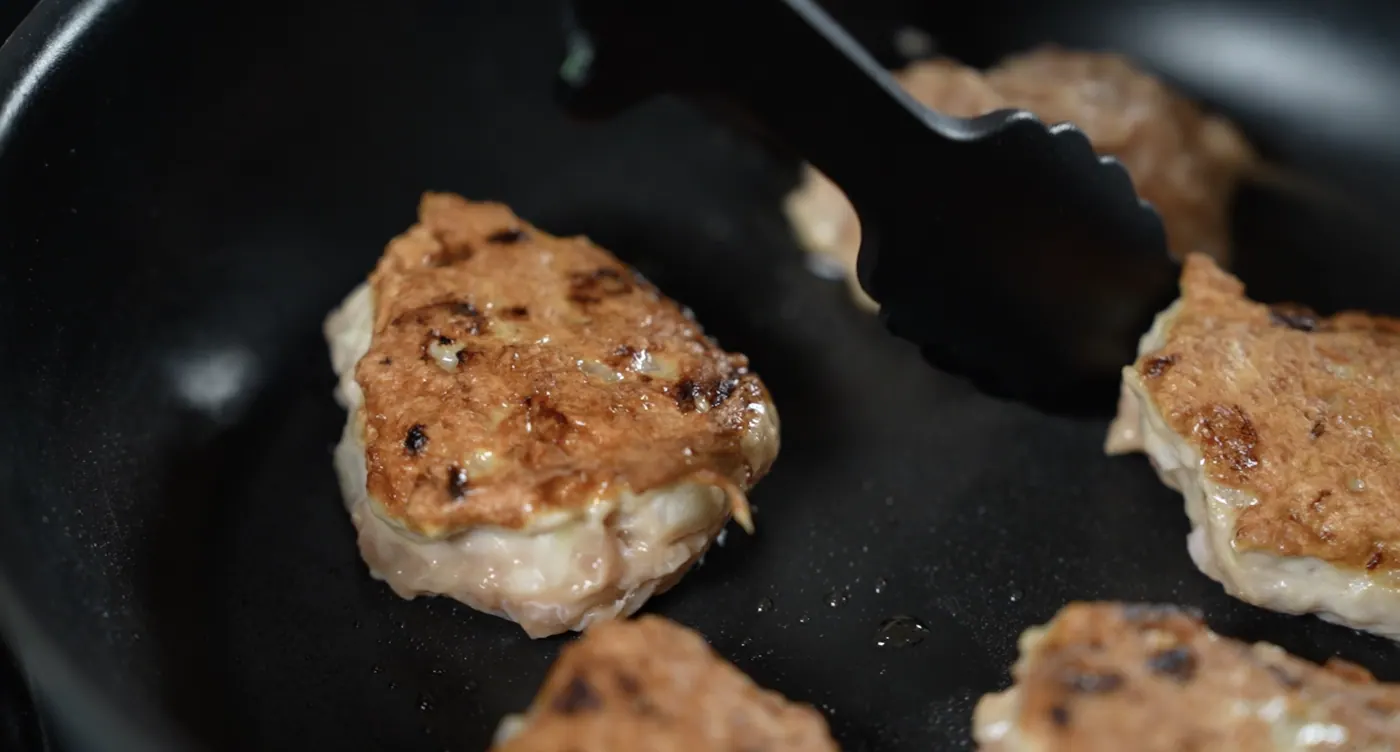
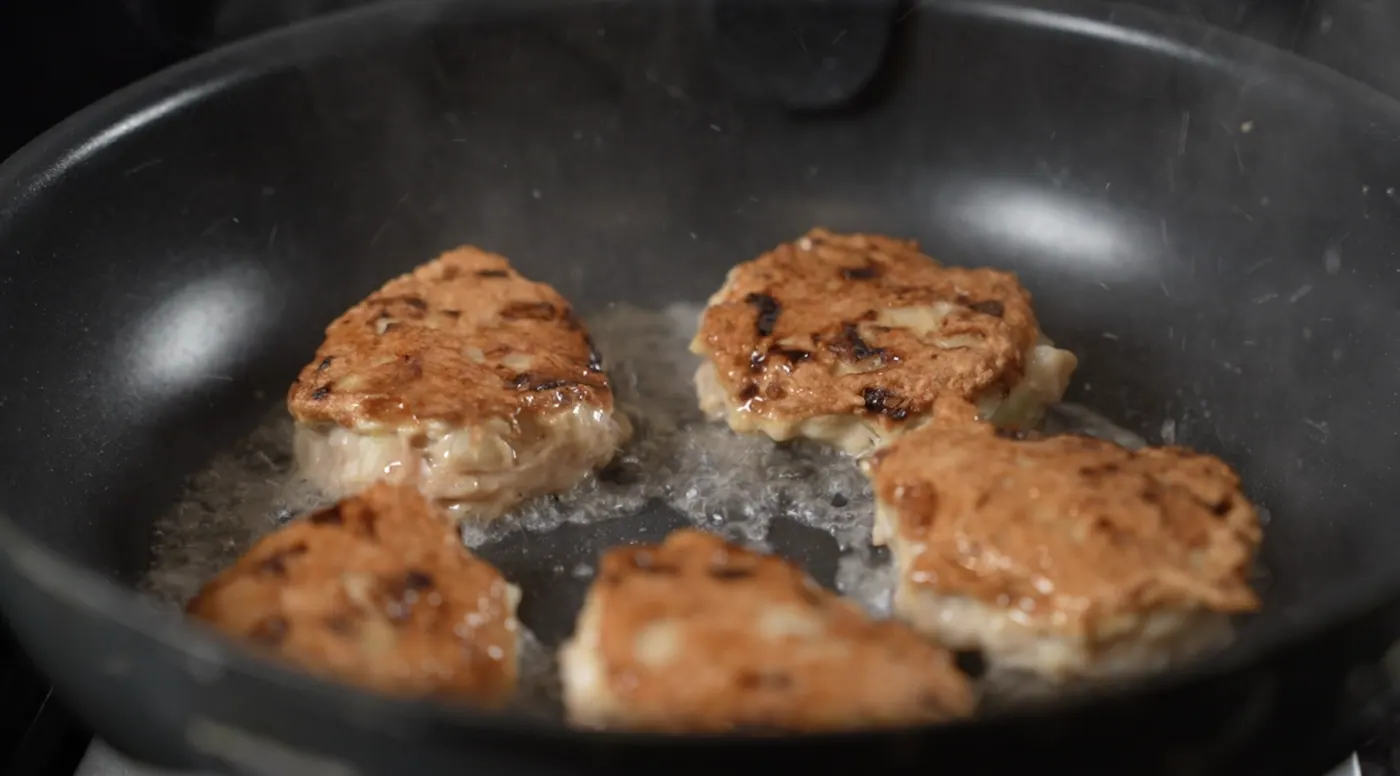
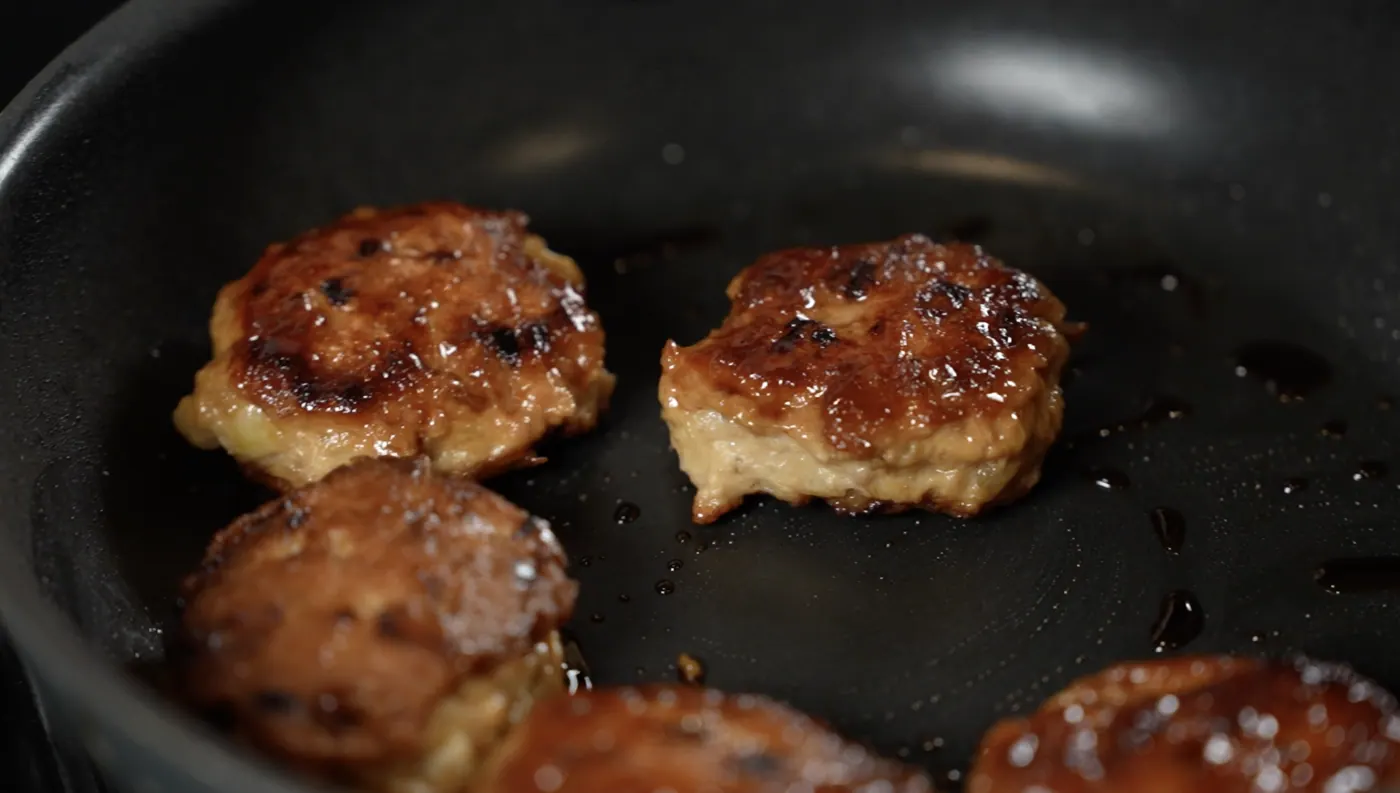
After 2 minutes, use tongs to flip them over. Be careful not to press down or lose their shape. Aim for browning like shown in this photo.
Add sake and steam cook
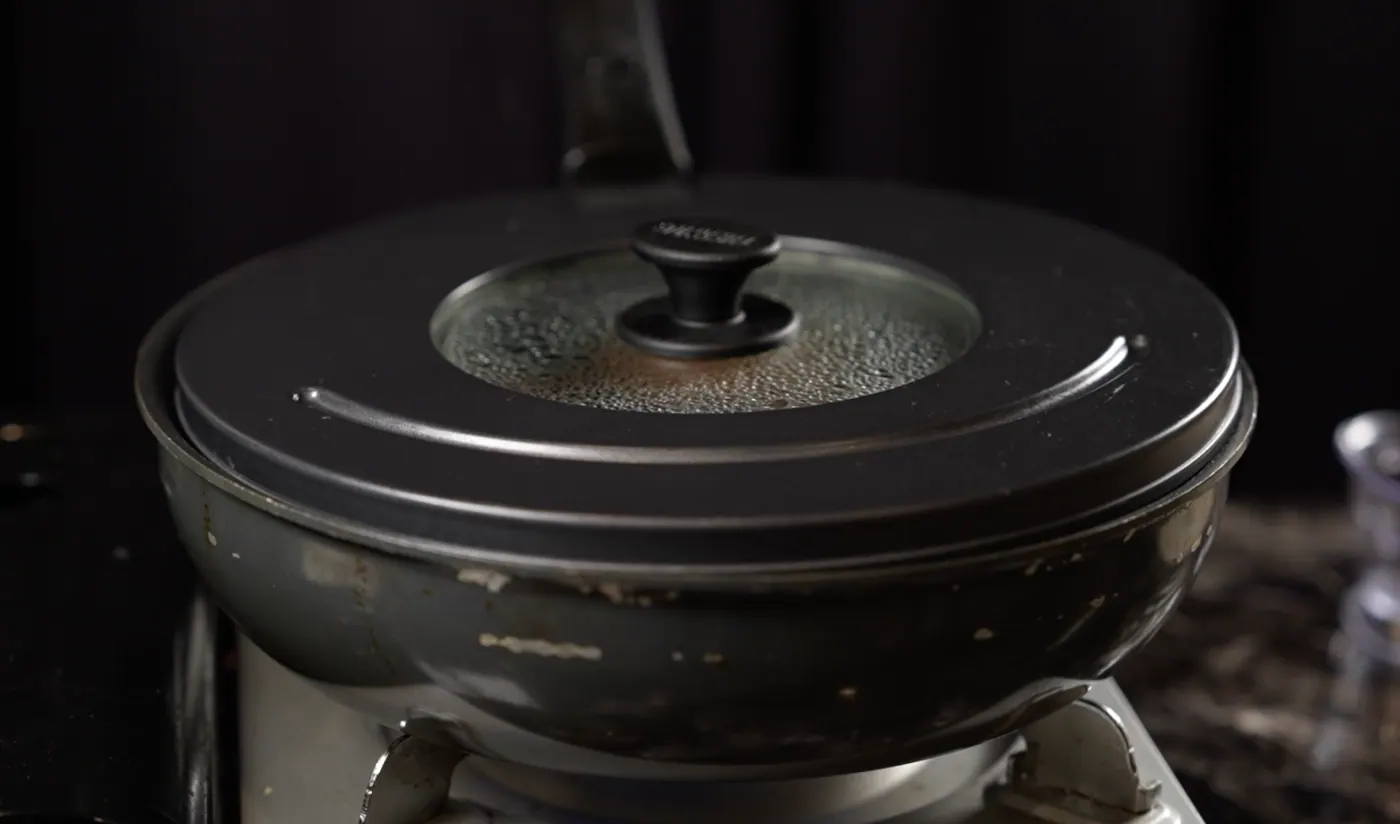
Next, add 2 tablespoons sake, cover with a lid, and steam cook. Without opening the lid, cook thoroughly for about 3-4 minutes.
Why Steam Cook with Sake?
Sake has these effects:
- Tenderizes the meat
- Steam cooks through to the center
- Maintains fluffy texture
Making the Tare Sauce
Turn off heat and add tare ingredients
Once steam cooking is complete, turn off the heat and add the tare sauce seasonings:
- Soy sauce 1.5 tablespoons
- Sake 1 tablespoon
- Mirin 2 tablespoons
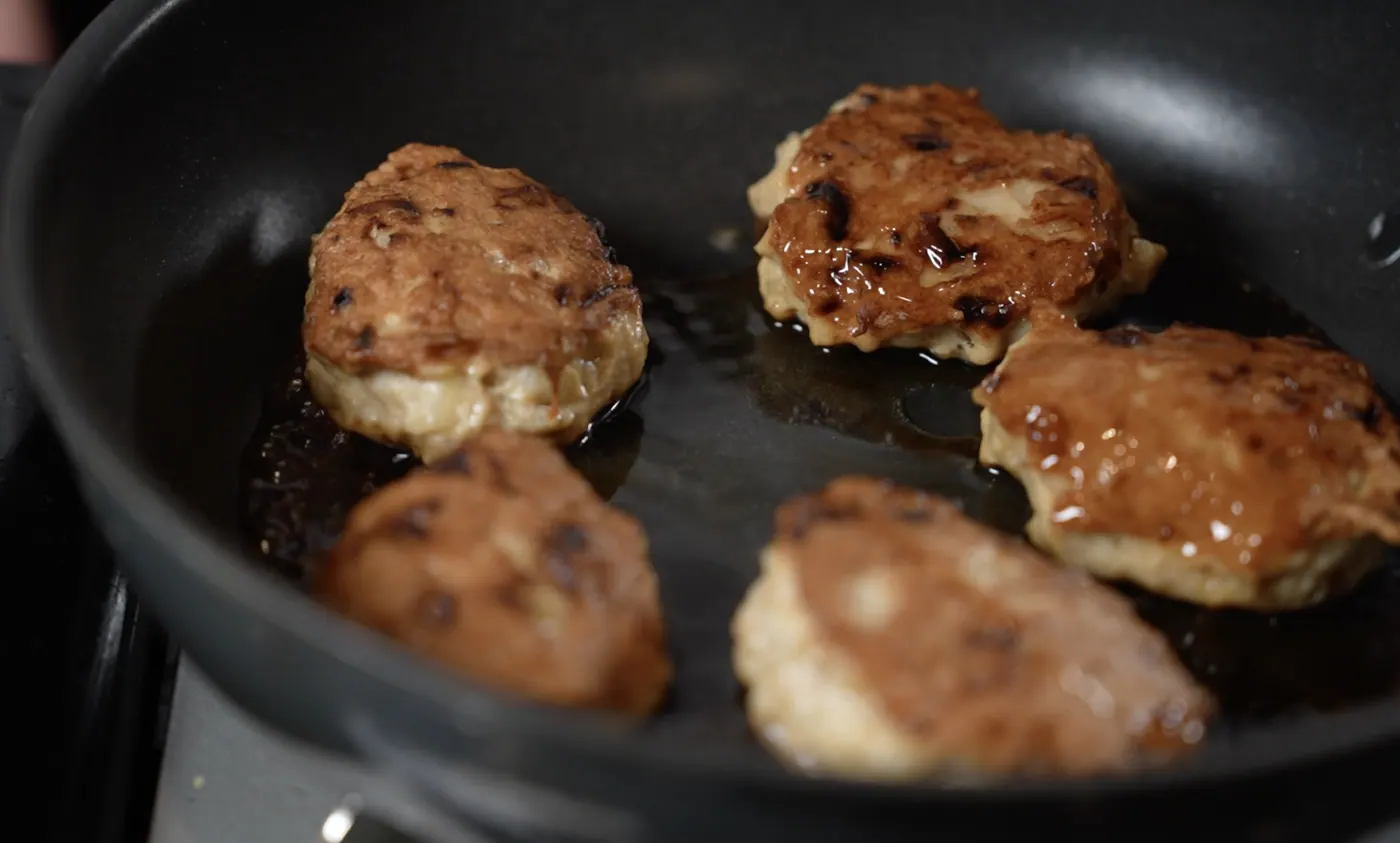
Reduce tare over low heat
Once everything is added, turn to low heat and coat the tsukune while reducing the sauce. The tare burns easily, so always use low heat.
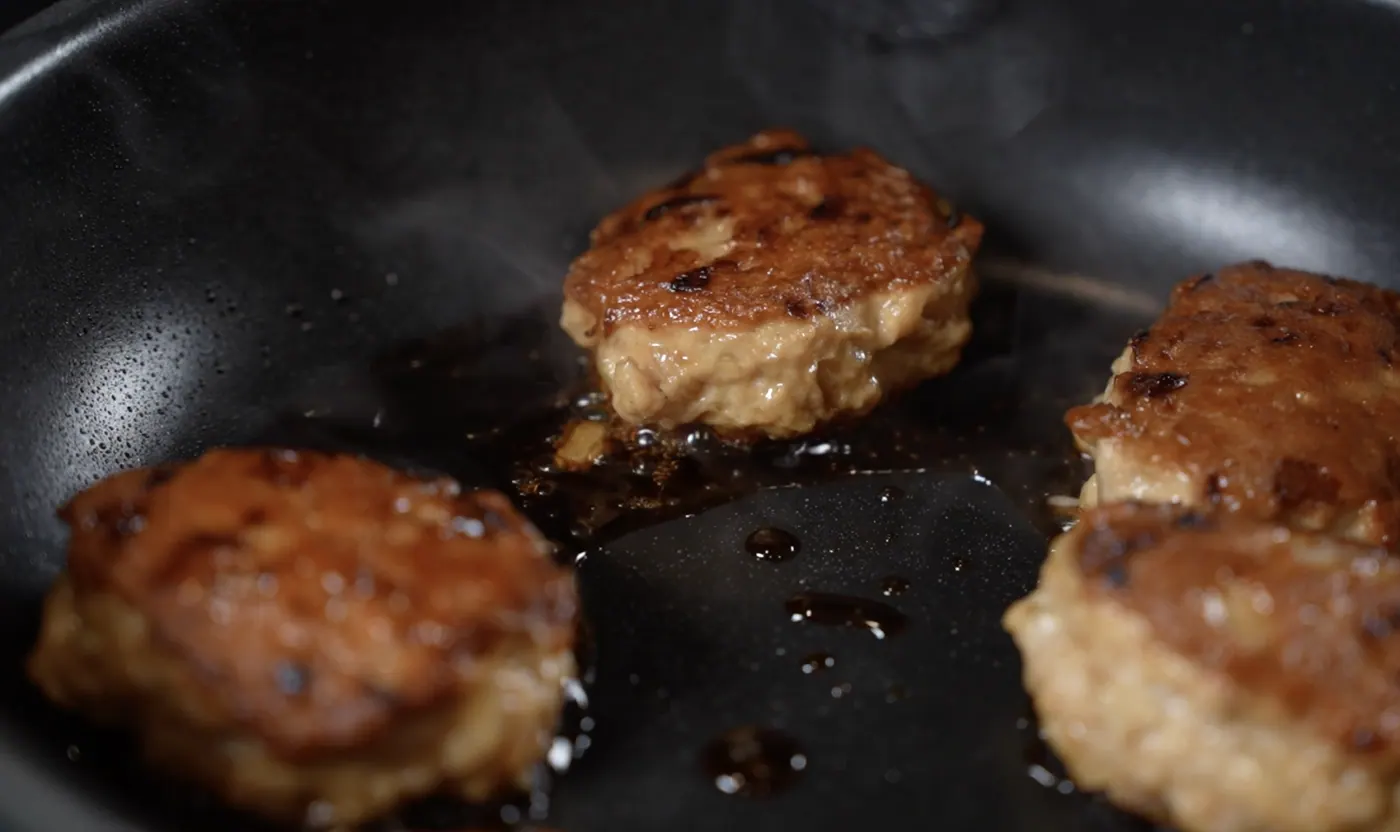
Tips to Avoid Burning the Tare
The sweet mirin and the soy sauce make it burn easily. Always maintain low heat.
Coat with tare
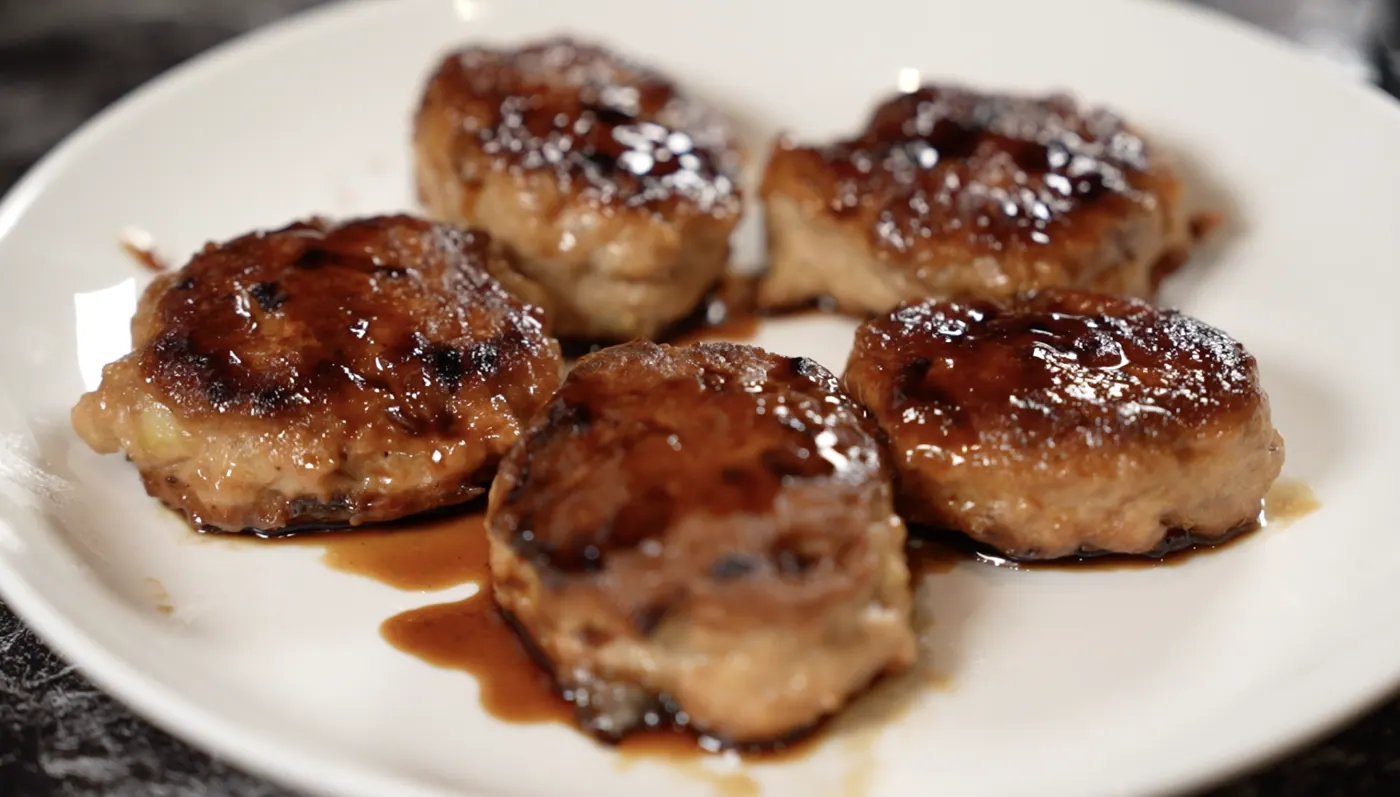
Once the tare thoroughly coats all the tsukune, they're done.
Plating
Plate the tsukune
Turn off the heat and plate the tsukune. Pour any remaining tare over the top.
Top with egg yolk and shiso
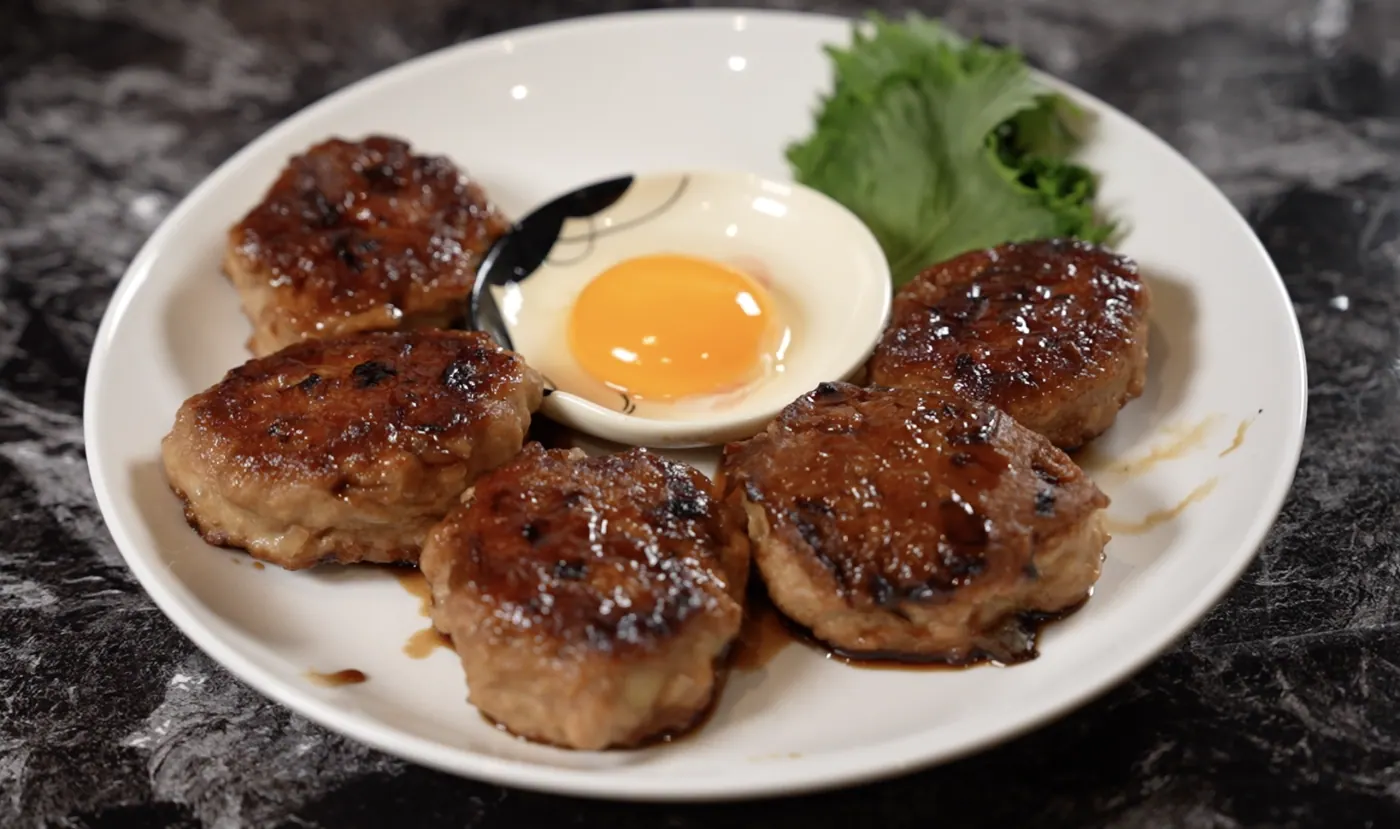
Add the egg yolk and shiso leaves to complete. The presentation looks beautiful and very appetizing.
About raw egg safety
In Japan, eggs are sold for raw consumption. If raw egg safety cannot be confirmed in your area, use a pasteurized egg, or skip the yolk and enjoy the tsukune with the tare alone.
Recommended way to eat
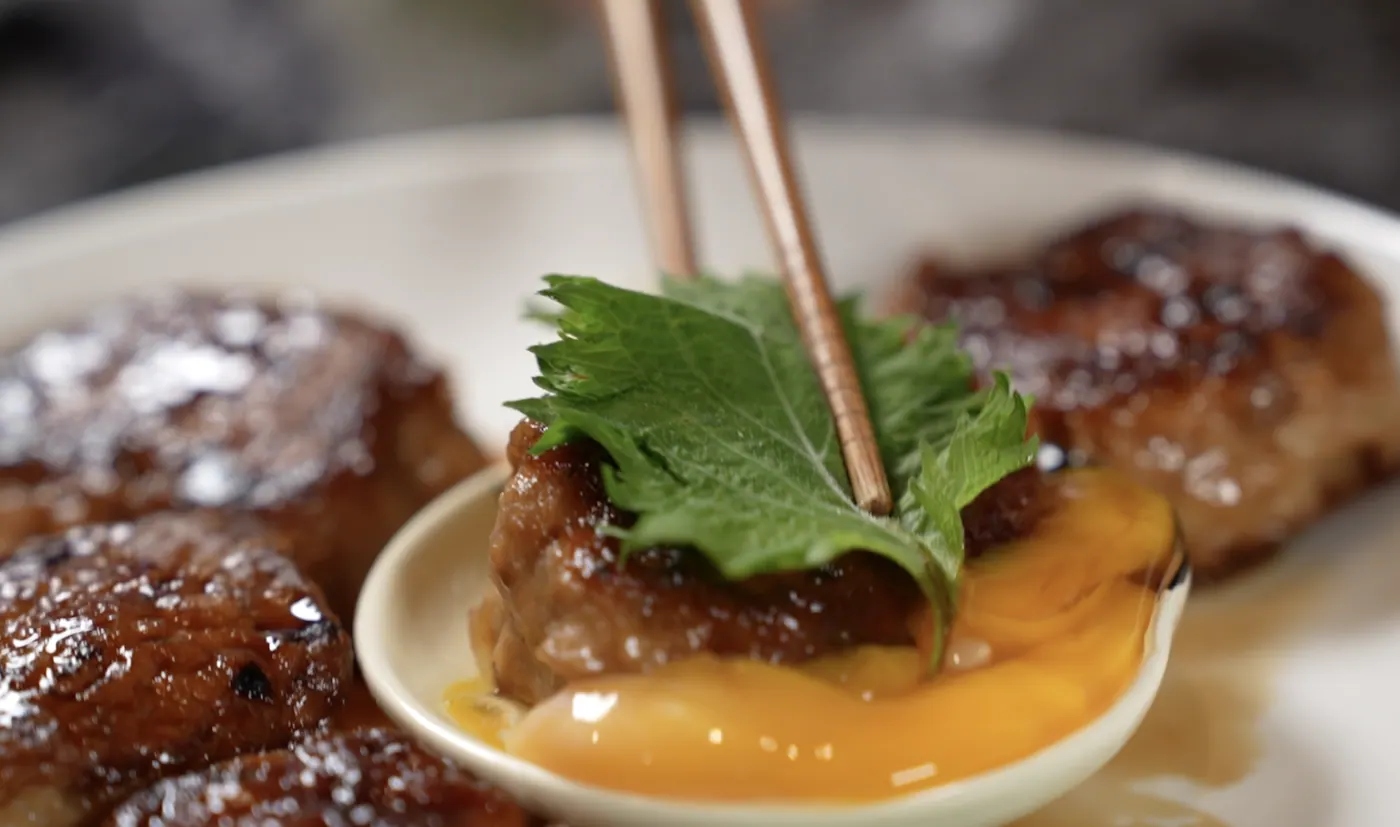
The recommended way to eat is to pick up tsukune and shiso with chopsticks and dip generously in the egg yolk.
Incredibly fluffy, with the sweet-savory tare and refreshing shiso perfectly balanced - you could eat these all day. Please try this recipe.
Cooking Tips and Key Points
Choose chicken thigh meat
Thigh meat is juiciest and most delicious.
Incorporate air while mixing
This is the secret to fluffy texture. Focus on mixing lightly.
Fold in egg whites like making meringue
Thoroughly incorporating the egg whites makes them even fluffier.
Don't flatten when shaping
Flattening when placing in the pan releases all that carefully incorporated air.
Steam cook with sake
This extra step ensures thorough cooking while maintaining fluffy texture.
Keep tare on low heat
Tare burns easily, so always maintain low heat.
Troubleshooting
Frequently Asked Questions
What should I do if my tsukune turned out tough?
You may have overmixed or overcooked. Mix lightly to incorporate air, and avoid touching too much while cooking.
What should I do if my tsukune fell apart?
There may not have been enough potato starch, or mixing was insufficient. Mix in the potato starch thoroughly until sticky.
What should I do if the centers were undercooked?
Steam cooking time may have been too short. Steam thoroughly with the lid on for 3-4 minutes.
What should I do if my tare burned?
The heat may have been too high. Once you add the tare, always reduce to low heat.
Summary
The magic of this recipe lies in the "incorporate air while mixing" technique and the "fold in egg whites like making meringue" approach. These two extra steps are the secret to achieving restaurant-quality fluffy texture.
Tsukune glazed with sweet-savory tare and rich egg yolk is perfect as a side dish with rice or as a drinking snack. Please give it a try.
For more izakaya chicken favorites, try karaage, Japanese fried chicken, or yakitori made in a frying pan.
How to Store Tsukune
Leftover tsukune can be stored in an airtight container in the refrigerator for 2-3 days.
Reheating Methods:
- Microwave: Heat at 600W for 1-2 minutes, checking as you go
- Frying pan: Reheat over low heat with a small amount of sake for tender results
Freezer Storage:
Cooked tsukune can be frozen. Wrap individually in plastic wrap, place in a freezer bag, and store for about 1 month.
小鉢Appetizers & Sidesつくね
Tsukune (Japanese Chicken Meatballs)
A popular izakaya yakitori menu item, tsukune. This dish with its fluffy texture and sweet-savory glaze is an exquisite recipe that's easy to make at home.
No ratings yet
Rate this recipe
- Prep
- 15 min
- Cook
- 15 min
- Total
- 30 min
- Servings
- 1 serving (5 meatballs)
- Difficulty
- Beginner
Ingredients
Main Ingredients
Seasoning for Meat Mixture
Tare Sauce
For Cooking
Ingredient amounts are multiplied; cooking times and pan size may need adjusting.
Instructions
Amounts mentioned in the steps are for the original recipe (1x) — use the scaled amounts above.
Preparation: Egg, Onion, and Ginger
Separate egg white and yolk
Prepare 1 egg and separate the white from the yolk.
- Egg yolk: Set aside for topping
- Egg white: Keep nearby to mix into the tsukune mixture
Mince the onion
Mince 1/2 onion. Since the onion will be used in the tsukune mixture, mince it slightly coarse to add texture.
Making the Tsukune Mixture
Add ground chicken and seasonings to bowl
Add 200g ground chicken to a bowl along with the seasonings:
- Soy sauce 1 tablespoon
- Sake 1/2 tablespoon
Grate and add ginger
Grate 15g ginger and add to the bowl.
Mix seasonings and meat
Once all ingredients are in the bowl, mix together. First, use a twisting motion to work the seasonings into the meat.
Once somewhat mixed, spread your hand like a whisk and mix quickly in a kneading motion.
Mix thoroughly until the seasonings are evenly distributed throughout the ground meat.
Incorporate air while mixing
This is the most important point. Focus on mixing lightly to incorporate air.
When the mixture becomes sticky yet fluffy, it's ready.
Add egg white
Next, add the egg white. Adding egg white makes the result even fluffier.
Mix egg white like making meringue
Egg white doesn't mix easily, so fold it in thoroughly like making meringue. Mix for about 2-3 minutes until the egg white is well incorporated.
When it becomes smoother and fluffier, it's perfect.
Add minced onion and potato starch
Once the ground meat is thoroughly mixed, add the minced onion and 1 teaspoon potato starch.
Mix everything together
Once the potato starch and onion are well mixed, the tsukune mixture is complete.
Shaping and Cooking the Tsukune
Oil or wet your hands
Before shaping the tsukune, lightly oil or wet your hands. This prevents the meat from sticking and makes shaping easier.
Form tsukune balls
This amount makes about 5 tsukune, so shape them one at a time. Gently form into balls and carefully place in the frying pan.
Arrange all tsukune in the pan
Once all tsukune are shaped and arranged, cook over medium heat.
Cook one side for about 2 minutes
Cook gently for about 2 minutes to develop color. Don't touch them during this time to maintain their shape. When the edges start to brown slightly, they're cooking properly.
Flip them over
After 2 minutes, use tongs to flip them over. Be careful not to press down or lose their shape. Aim for browning like shown in this photo.
Add sake and steam cook
Next, add 2 tablespoons sake, cover with a lid, and steam cook. Without opening the lid, cook thoroughly for about 3-4 minutes.
Making the Tare Sauce
Turn off heat and add tare ingredients
Once steam cooking is complete, turn off the heat and add the tare sauce seasonings:
- Soy sauce 1.5 tablespoons
- Sake 1 tablespoon
- Mirin 2 tablespoons
Reduce tare over low heat
Once everything is added, turn to low heat and coat the tsukune while reducing the sauce. The tare burns easily, so always use low heat.
Coat with tare
Once the tare thoroughly coats all the tsukune, they're done.
Plating
Plate the tsukune
Turn off the heat and plate the tsukune. Pour any remaining tare over the top.
Top with egg yolk and shiso
Add the egg yolk and shiso leaves to complete. The presentation looks beautiful and very appetizing.
Recommended way to eat
The recommended way to eat is to pick up tsukune and shiso with chopsticks and dip generously in the egg yolk.
Incredibly fluffy, with the sweet-savory tare and refreshing shiso perfectly balanced - you could eat these all day. Please try this recipe.
Video
Watch the video · 5:50Open on YouTube
Jump to a part of the video (8 chapters)
Video: https://youtu.be/dNLUslCOK08
Notes
Substitutions
- Ground chicken: Thigh meat is juiciest, but breast meat or a mix of thigh and breast works too
- Sake: Can substitute dry white wine (or omit)
- Mirin: See our separate mirin substitute recipe
- Shiso leaves: Can be omitted, but they significantly enhance flavor and appearance
To store
- Leftover tsukune can be stored in an airtight container in the refrigerator for 2-3 days.
- Microwave: Heat at 600W for 1-2 minutes, checking as you go
- Frying pan: Reheat over low heat with a small amount of sake for tender results
- Cooked tsukune can be frozen. Wrap individually in plastic wrap, place in a freezer bag, and store for about 1 month.
Nutrition estimated, per serving
- Calories
- 571 kcal
- Carbohydrates
- 34.1 g
- Protein
- 46.2 g
- Fat
- 29.3 g
- Saturated fat
- 8.1 g
- Fiber
- 2.2 g
- Sugar
- 18.1 g
- Sodium
- 2,750 mg
Estimated by us from the Standard Tables of Food Composition in Japan (MEXT, 2020). Optional ingredients and garnishes are not counted; soup and sauce are counted as fully eaten. Actual values depend on your brands and portion sizes. How we calculate this
Course: Appetizers & Sides · Cuisine: Japanese · Keyword: Tsukune
Recipe from Japanese Cooking Ichie — https://japanesecookingichie.com/recipes/tsukune/
Make it a meal
Serve it alongside one of these mains.
Ratings & comments
No ratings yet — be the first to rate this recipe.
Comments