Part of Japanese Izakaya Food at Home: 10 Easy Recipes — compare them all
- Prep
- 45 min
- Cook
- 15 min
- Total
- 1 hr
- Servings
- 2-3
- Difficulty
- Intermediate
What is Yakitori?
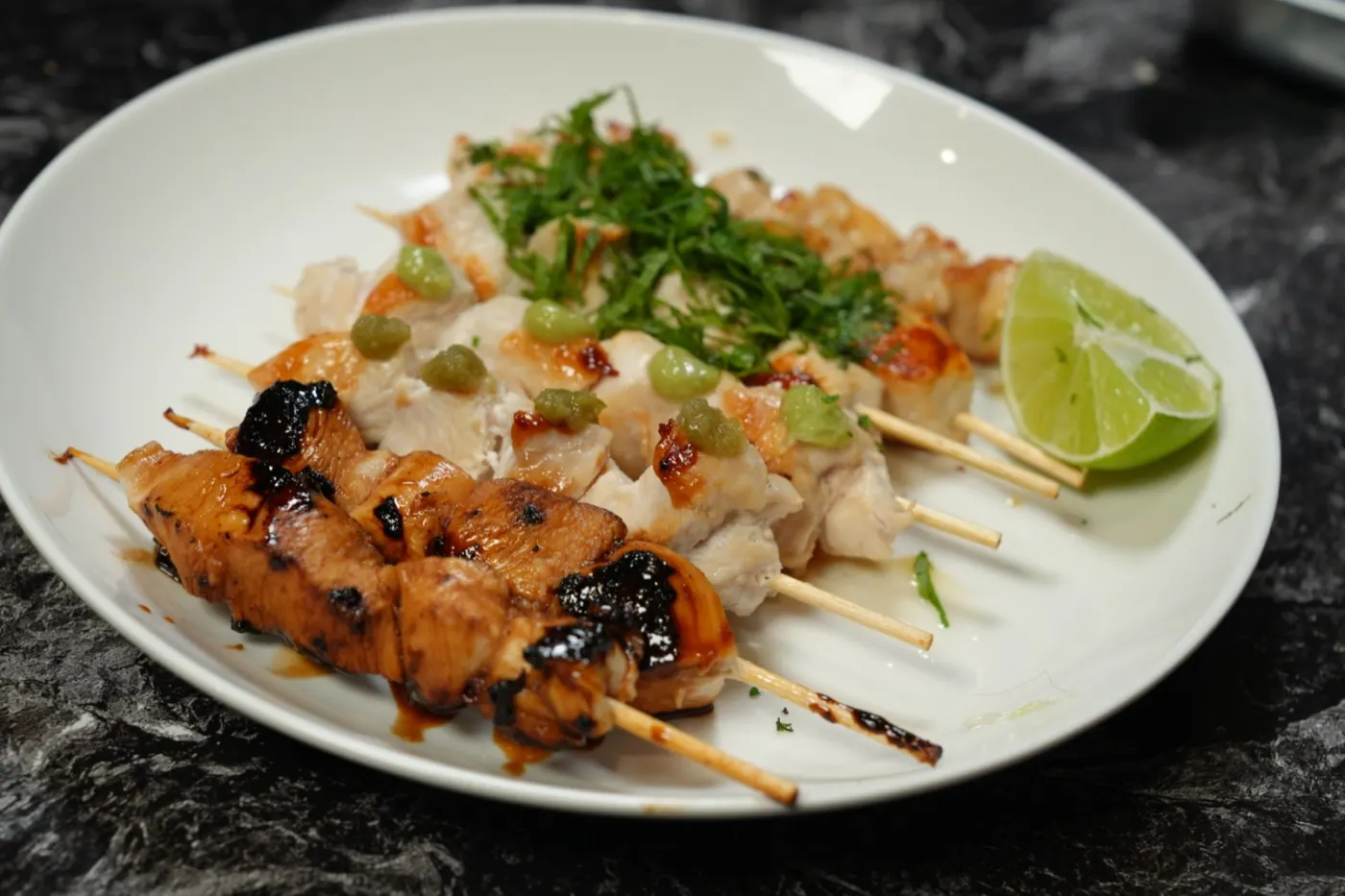
Yakitori, grilled chicken skewers, is a classic at Japanese izakaya (casual pubs) and a perfect match for a drink. This recipe makes authentic yakitori right in a frying pan, with the prep tips yakitori restaurants use and a simple homemade tare (yakitori sauce) made from just soy sauce, mirin and sugar.
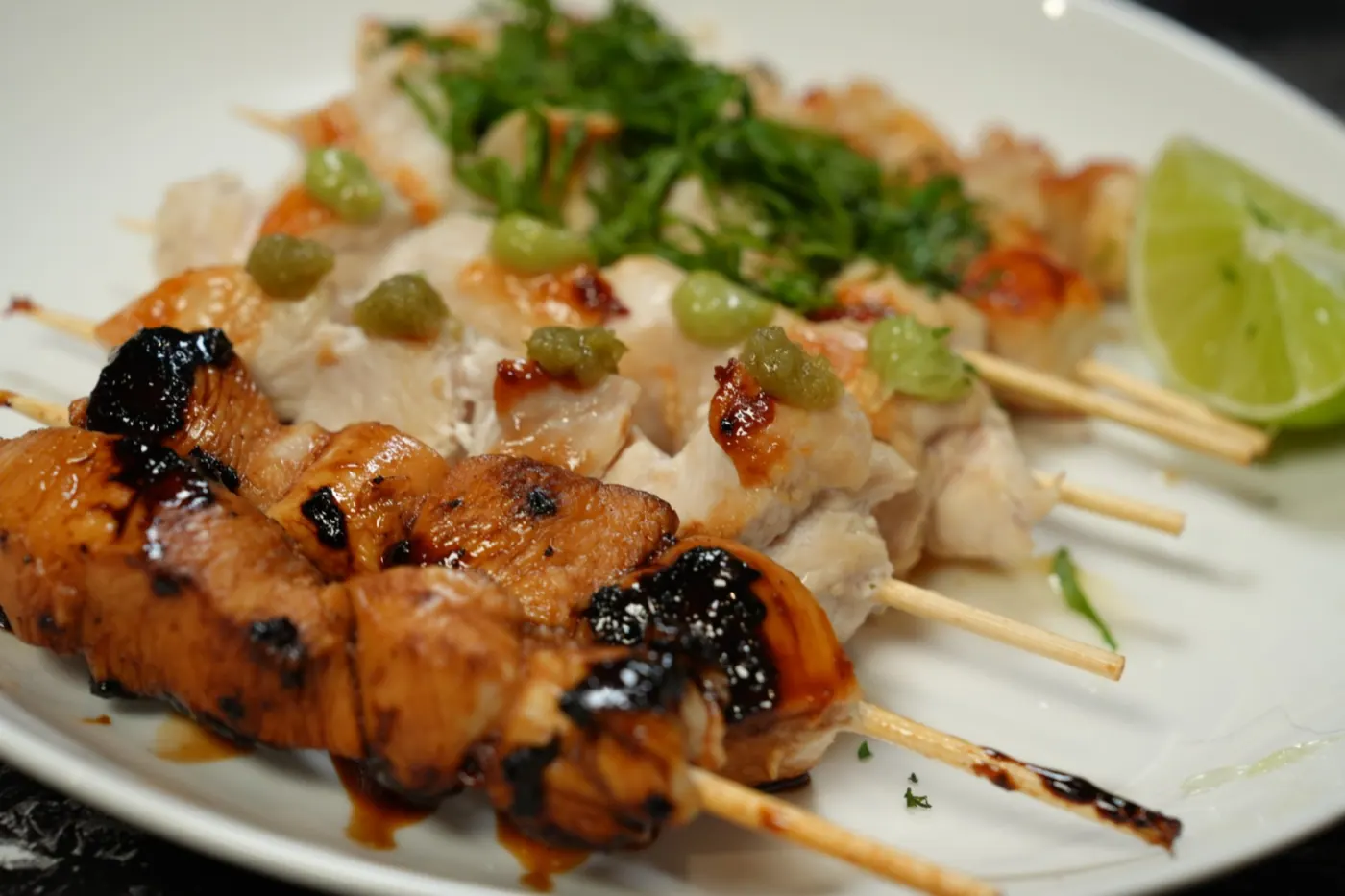
You'll make two kinds from one chicken breast: tender breast meat seasoned with salt, and the skin, packed tightly onto skewers and glazed with the sweet-savory tare. That's the basic pairing, but both are good either way, and in the photos a few skewers are switched.
Why You'll Love This Recipe
- No grill needed - Everything cooks in a regular frying pan
- Tender chicken breast - Cutting across the grain keeps the breast meat soft
- Homemade tare - Just soy sauce, mirin and sugar, simmered until glossy
- Two kinds from one breast - Salted breast skewers and tare-glazed chicken skin skewers
Key Points of This Recipe
- Boil the mirin until the alcohol is gone before you add the other seasonings
- Cut the chicken breast across the grain
- Blanch the skin first so it's easier to skewer
- Skewer across the grain in a wavy motion so the meat stays on
Required Equipment
- Small saucepan or frying pan (for the tare)
- Knife and cutting board
- Pot (for blanching the skin)
- Tray
- Frying pan
- Tongs
Yakitori Ingredients (Serves 2-3)
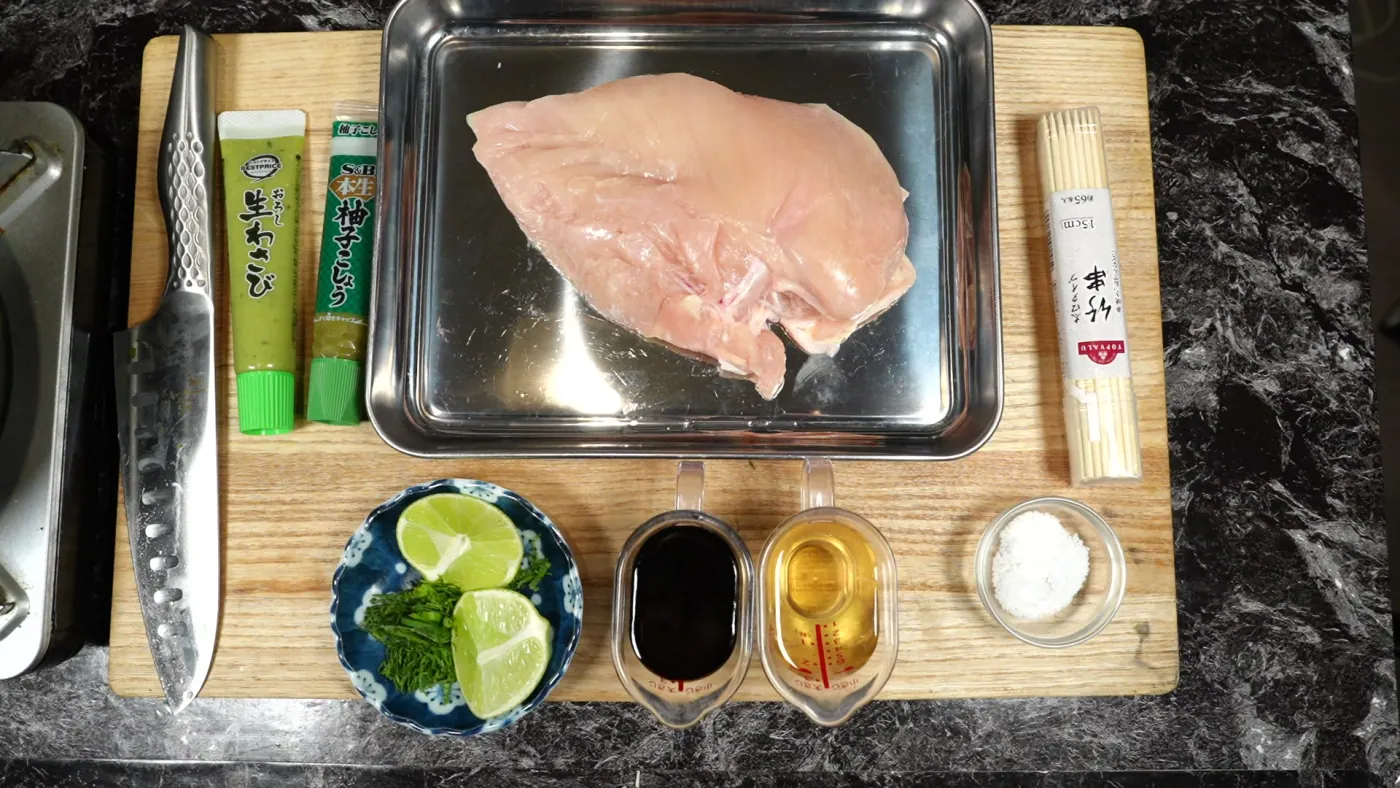
11 ingredients · 2-3 servings
Skin-on chicken breast, the skin from the chicken breast, salt, vegetable oil, bamboo skewers, soy sauce, mirin, sugar, shiso leaves, sudachi, wasabi.
Full amounts in the recipe cardIngredient Substitutions
- Mirin: See our mirin substitute made with seasonings you have at home
- Sudachi: Lemon works too
Video Tutorial
The video shows where to cut the chicken breast, how the grain runs, and how to weave the meat and skin onto the skewers.

How to Make Yakitori
Make the Tare
Boil the mirin
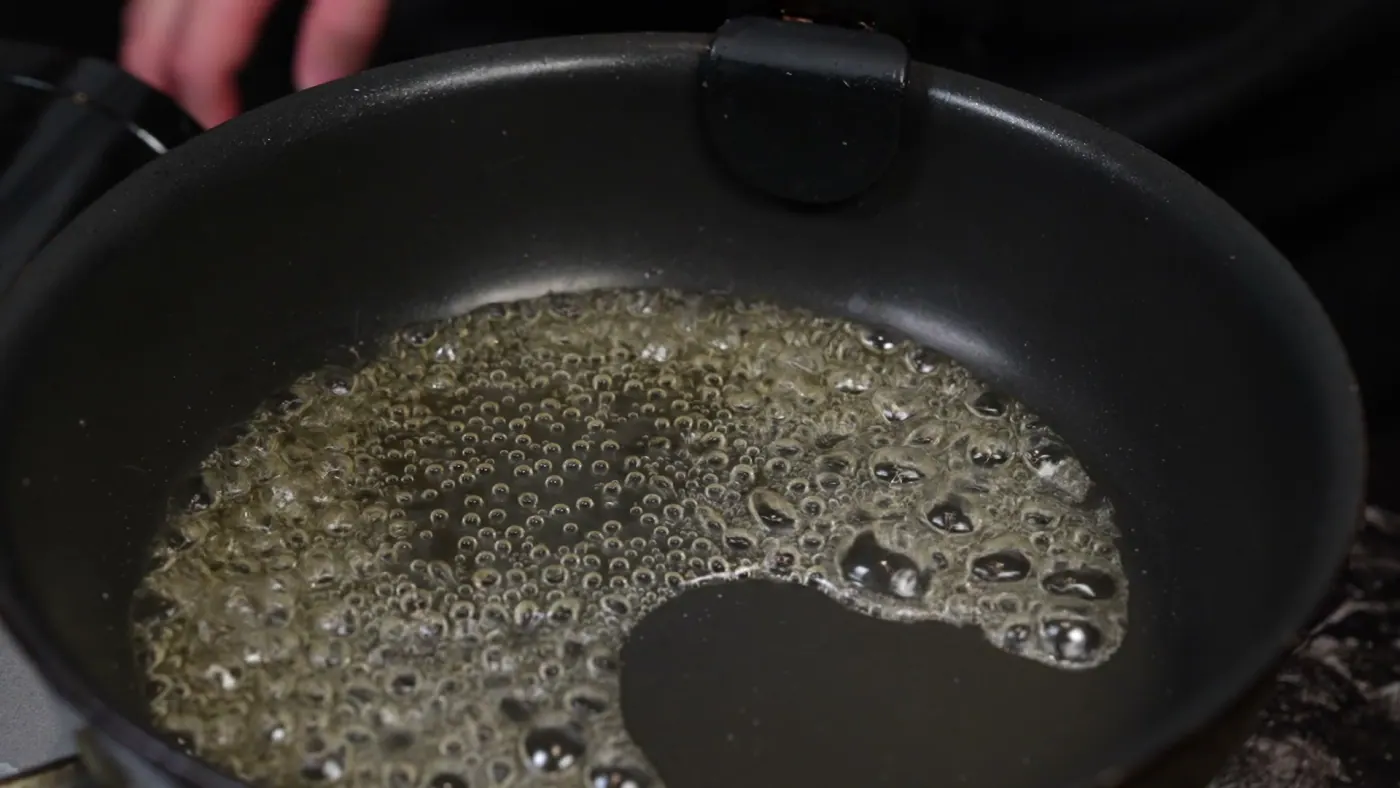
First, make the tare that recreates the flavor of a yakitori restaurant. Put 40ml of mirin in a small pan and bring it to a boil over high heat.
Cook off the alcohol
Boiling off the alcohol well is the key to a delicious tare. Fan the steam toward you with your hand. When you can no longer smell alcohol, it's done.
Add the sugar and soy sauce
Add 5g of sugar and stir well until it dissolves. Then add 40ml of soy sauce.
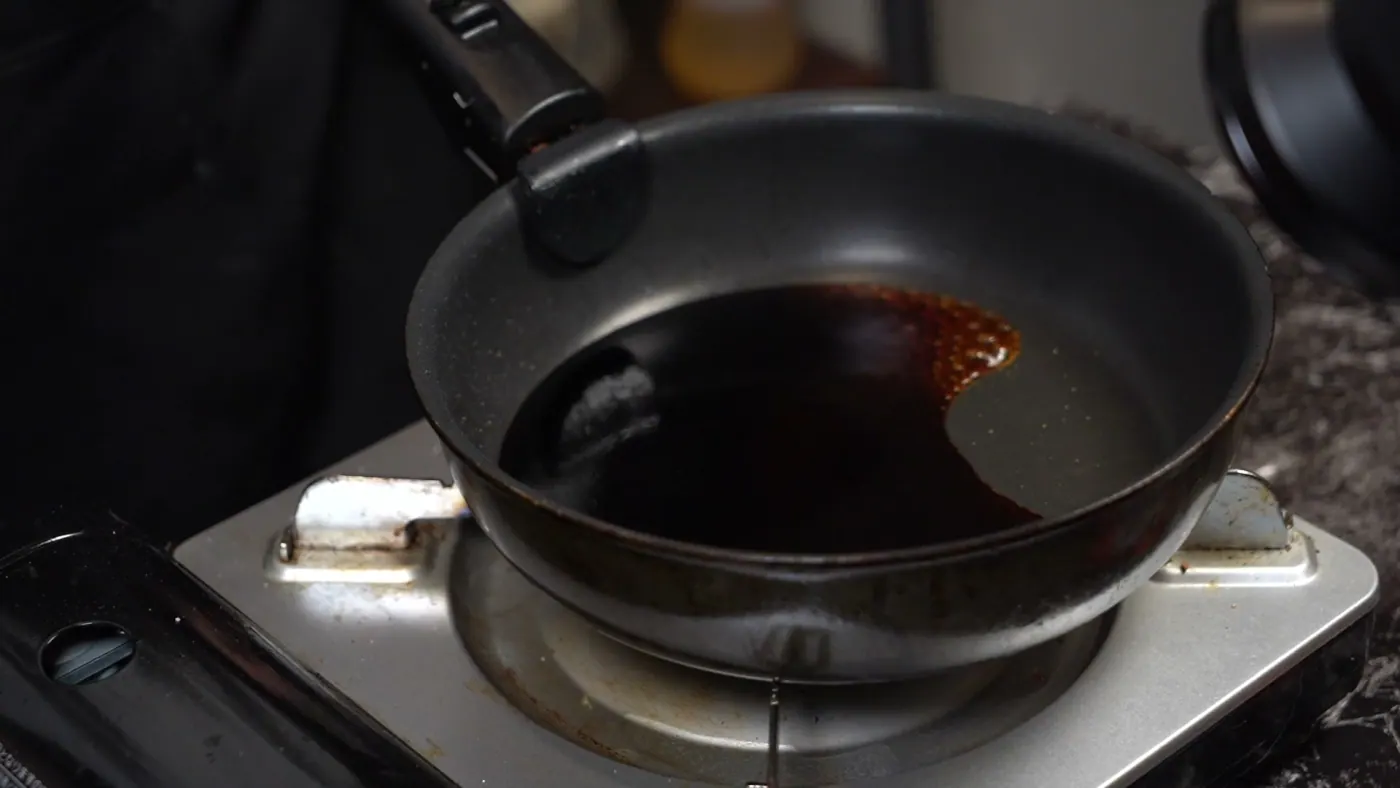
Simmer on very low heat for about 10 minutes
Turn the heat down to very low and simmer for about 10 minutes, taking care not to let it burn.
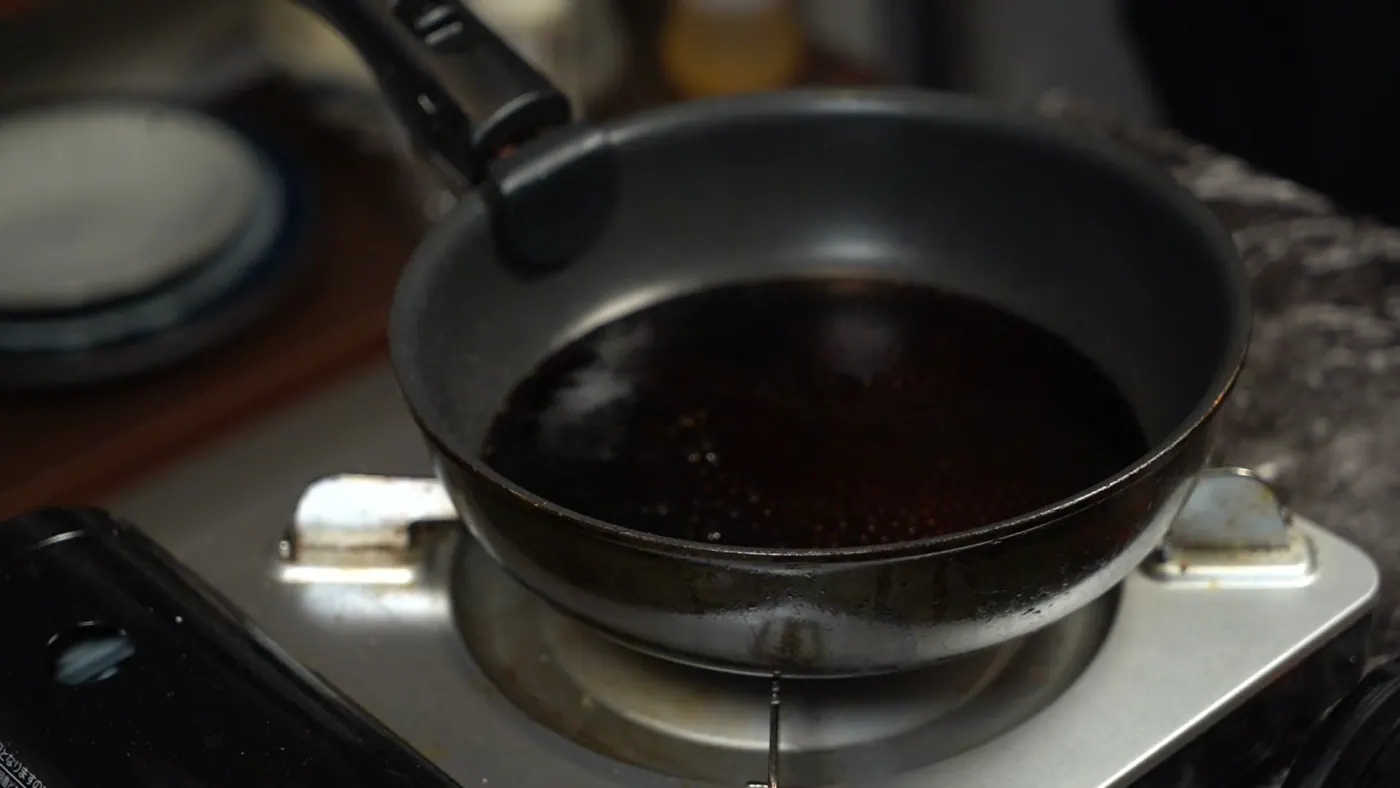
Skim off the scum
Scum will rise to the surface as the tare simmers, so skim it off.
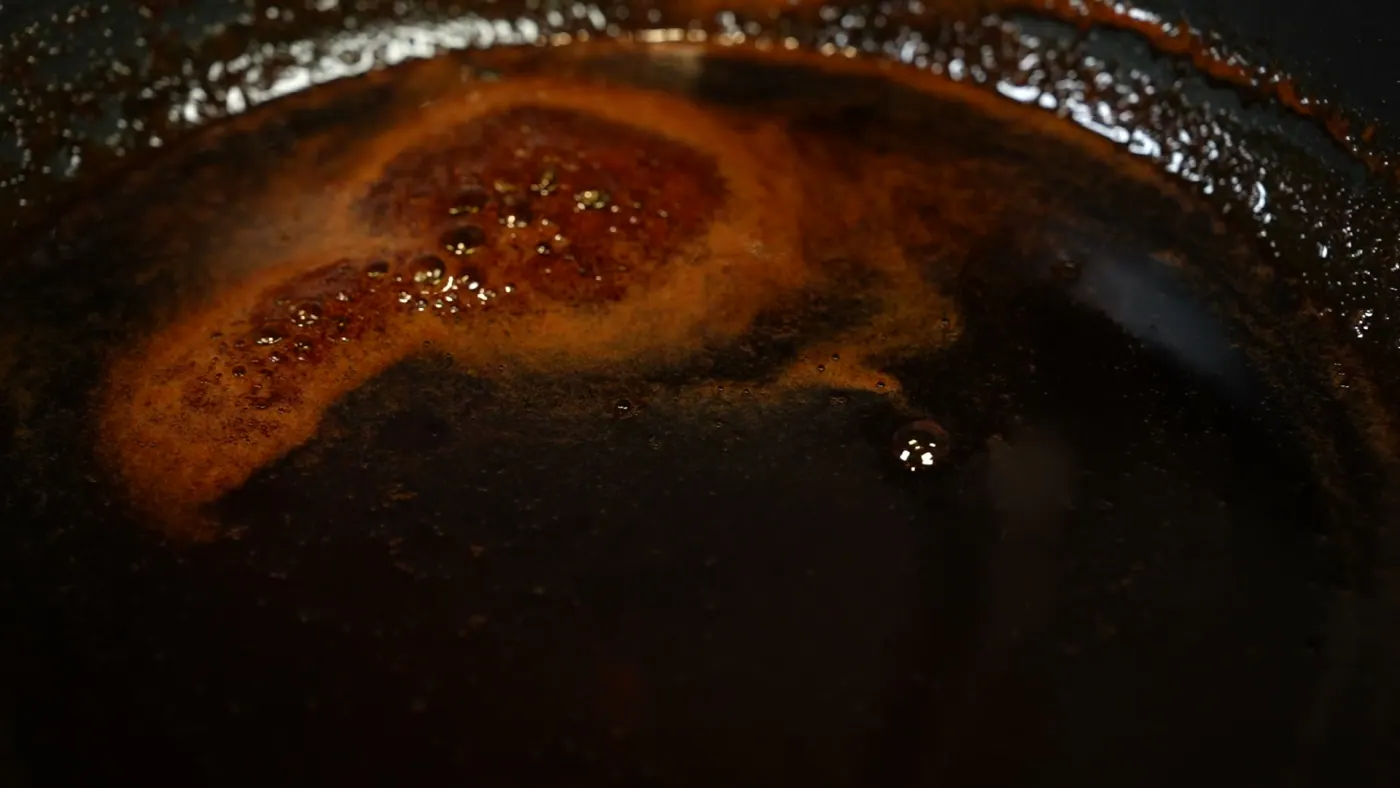
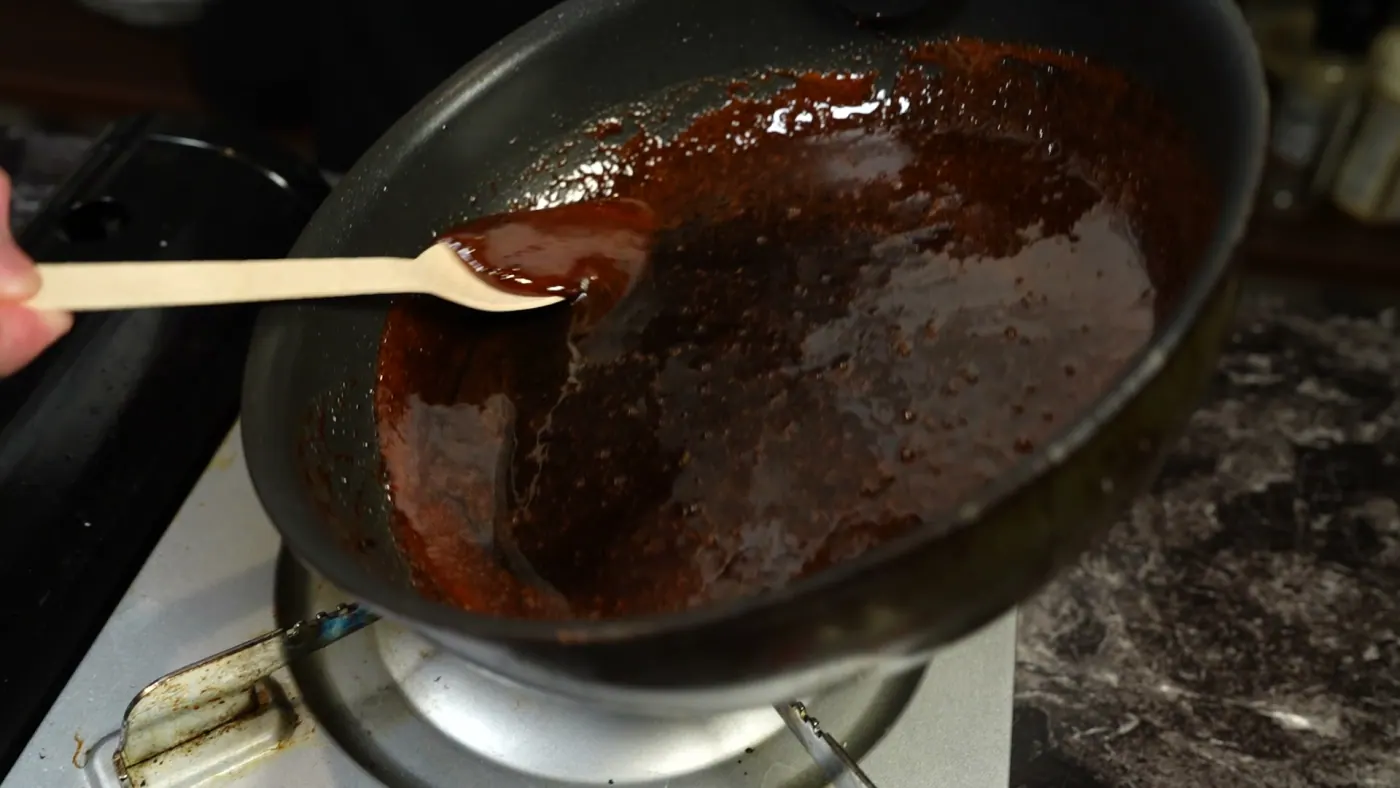
Cool the tare
After about 10 minutes, the tare will thicken slightly. Turn off the heat and let it cool. As it cools, it thickens even more, so it clings to the chicken better.
Prepare the Chicken Breast
Remove the skin
The skin peels off the chicken breast easily by hand. Set it aside, because you'll use it later.
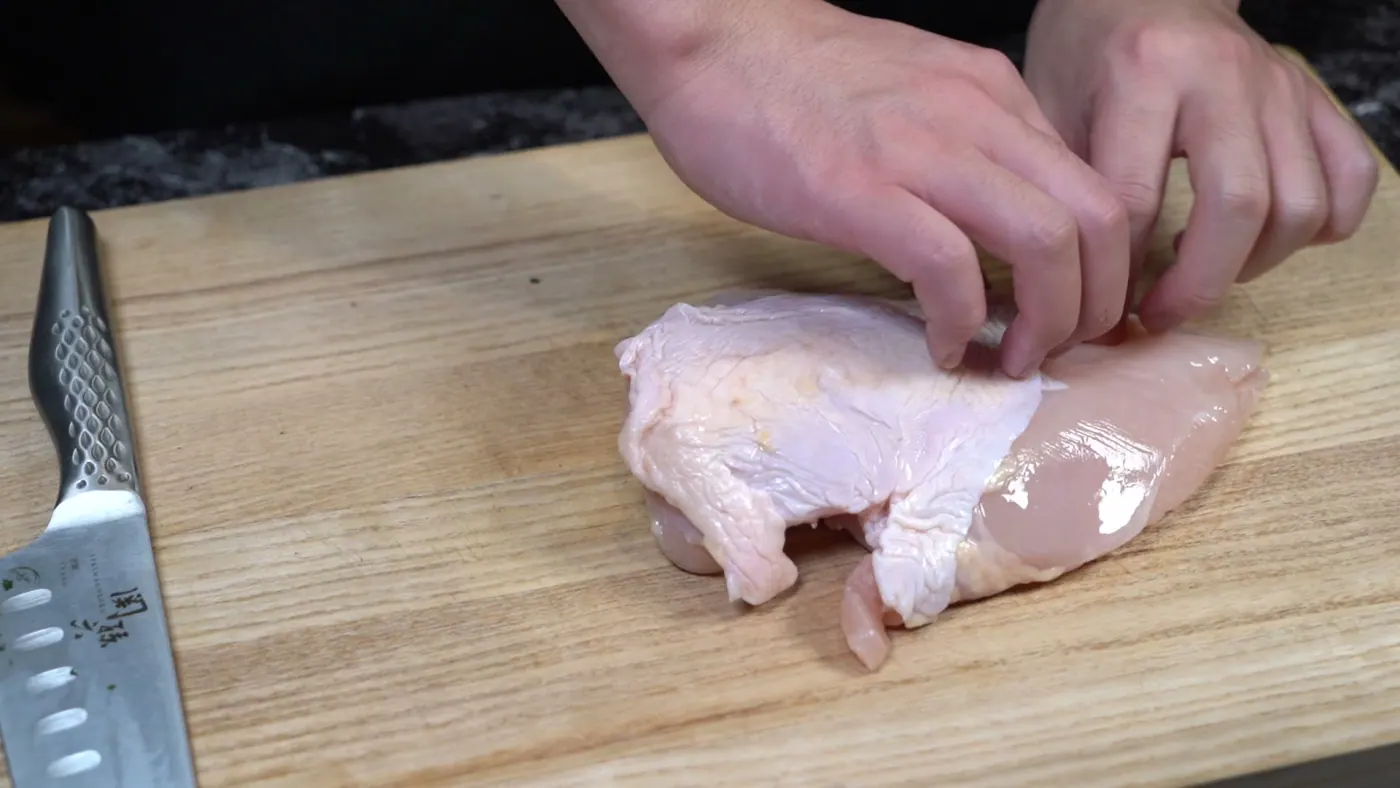
Cut the breast into 3 blocks
The key to tender chicken breast is how you cut it. First, cut it into 3 large pieces: cut off the rounded part as one piece, then cut the rest in half.
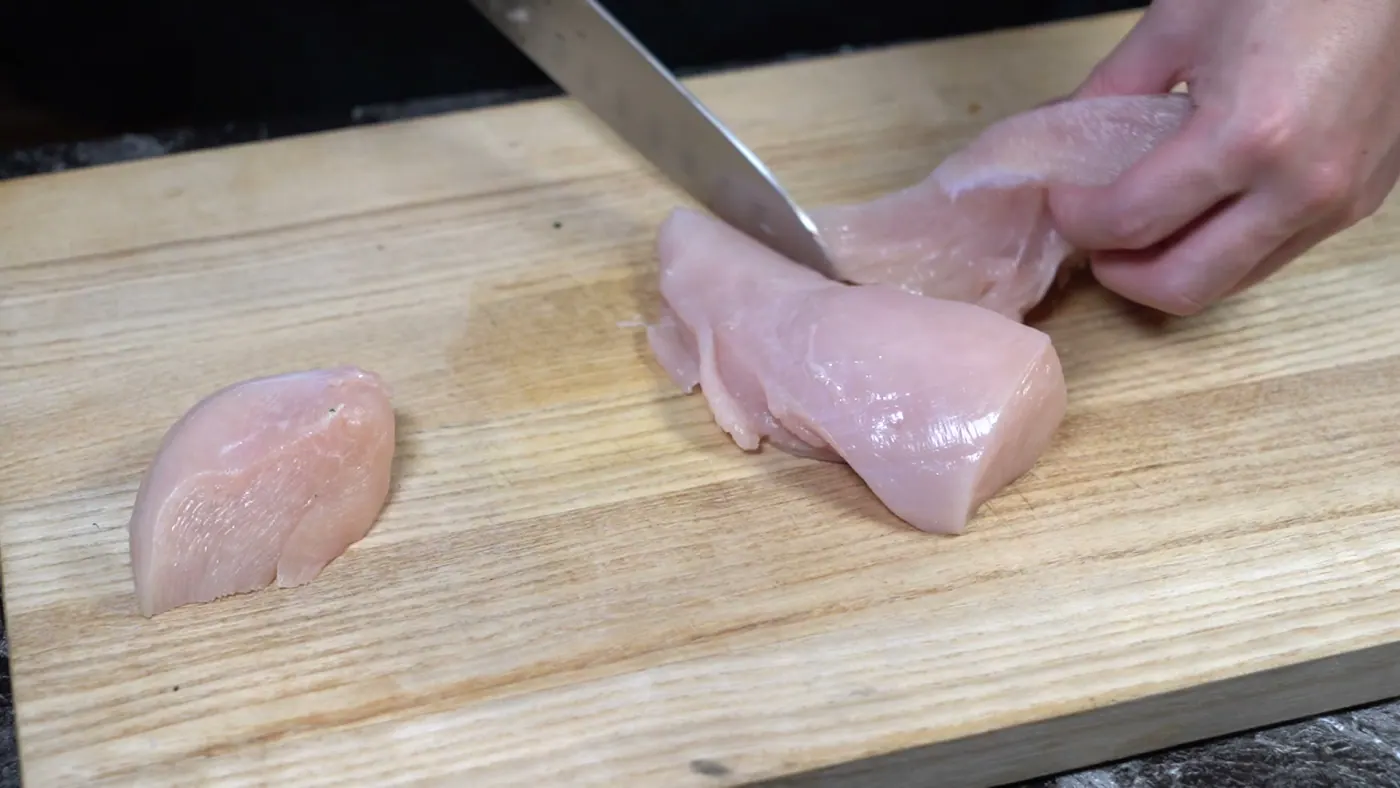
Cut across the grain into bite-size pieces
Look closely and you'll see the grain (the direction of the fibers) in the meat. Cut each block into bite-size pieces at a right angle to the grain, cutting through the fibers. This gives the yakitori a tender texture.
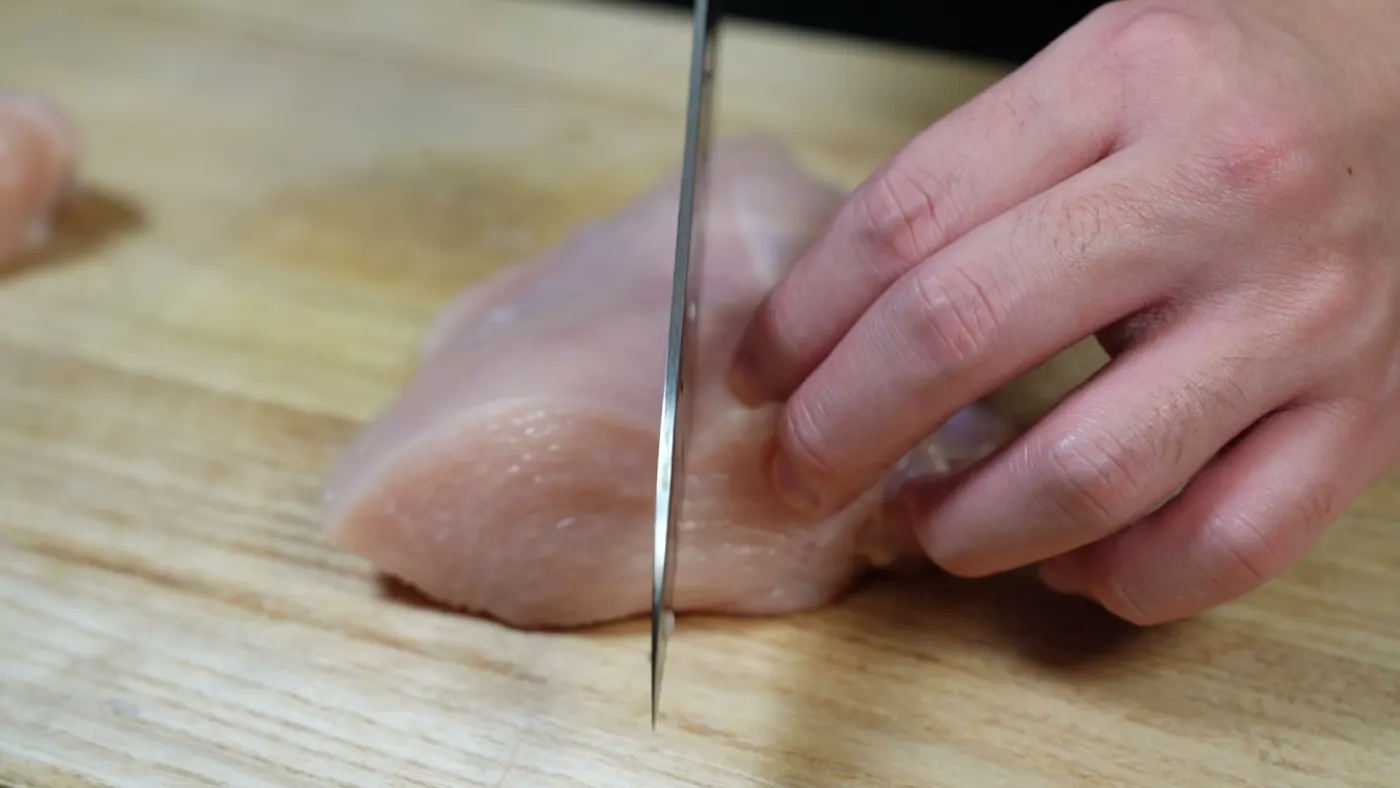
Cut the rest the same way
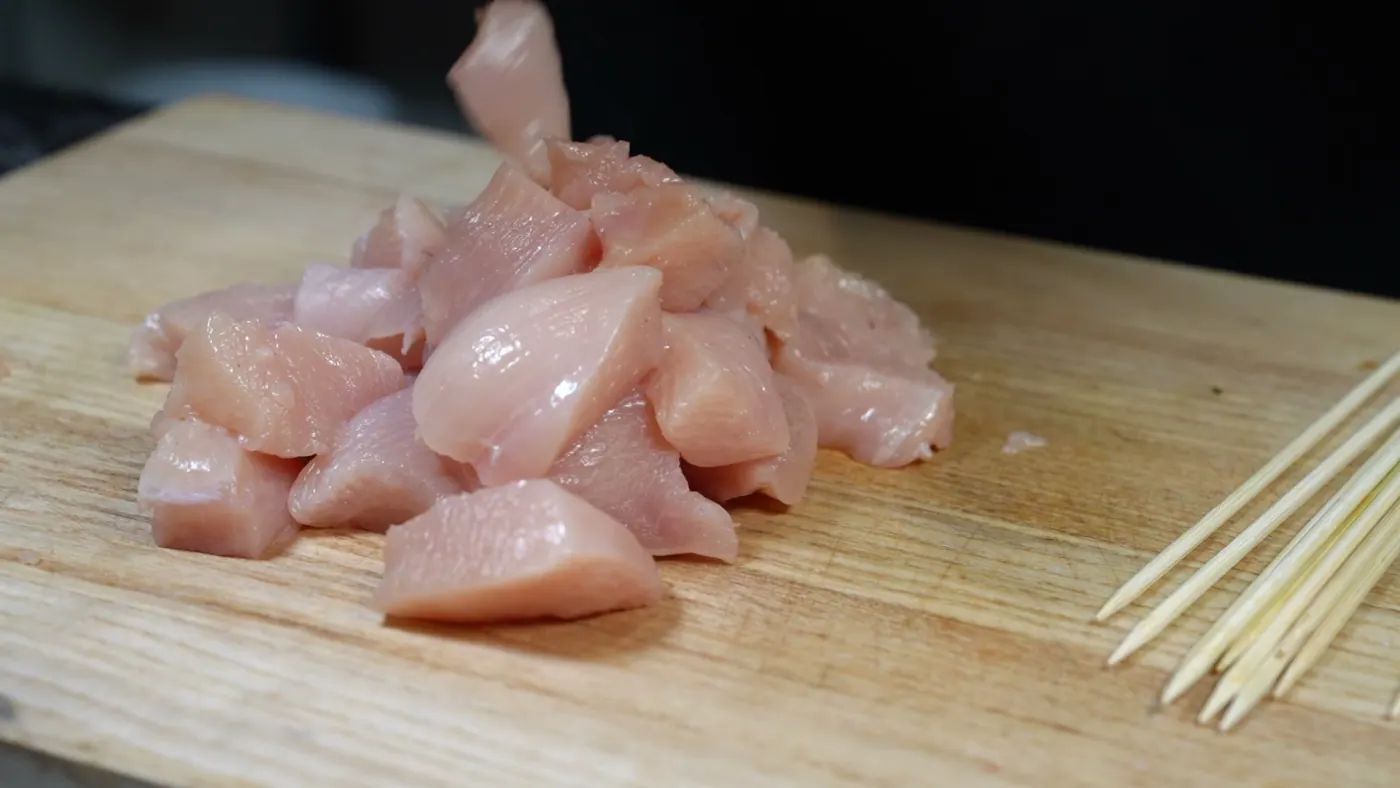
Cut the other blocks into bite-size pieces the same way. You can cut slightly larger pieces in half. Put all the pieces back on the tray.
Prepare the Chicken Skin
Blanch the skin
You can cook the skin as it is, but blanching it first makes it easier to handle. Bring a pot of water to a boil and add the skin. Blanching removes extra fat and any gamey smell, and the skin is no longer slippery, so it's easier to skewer.
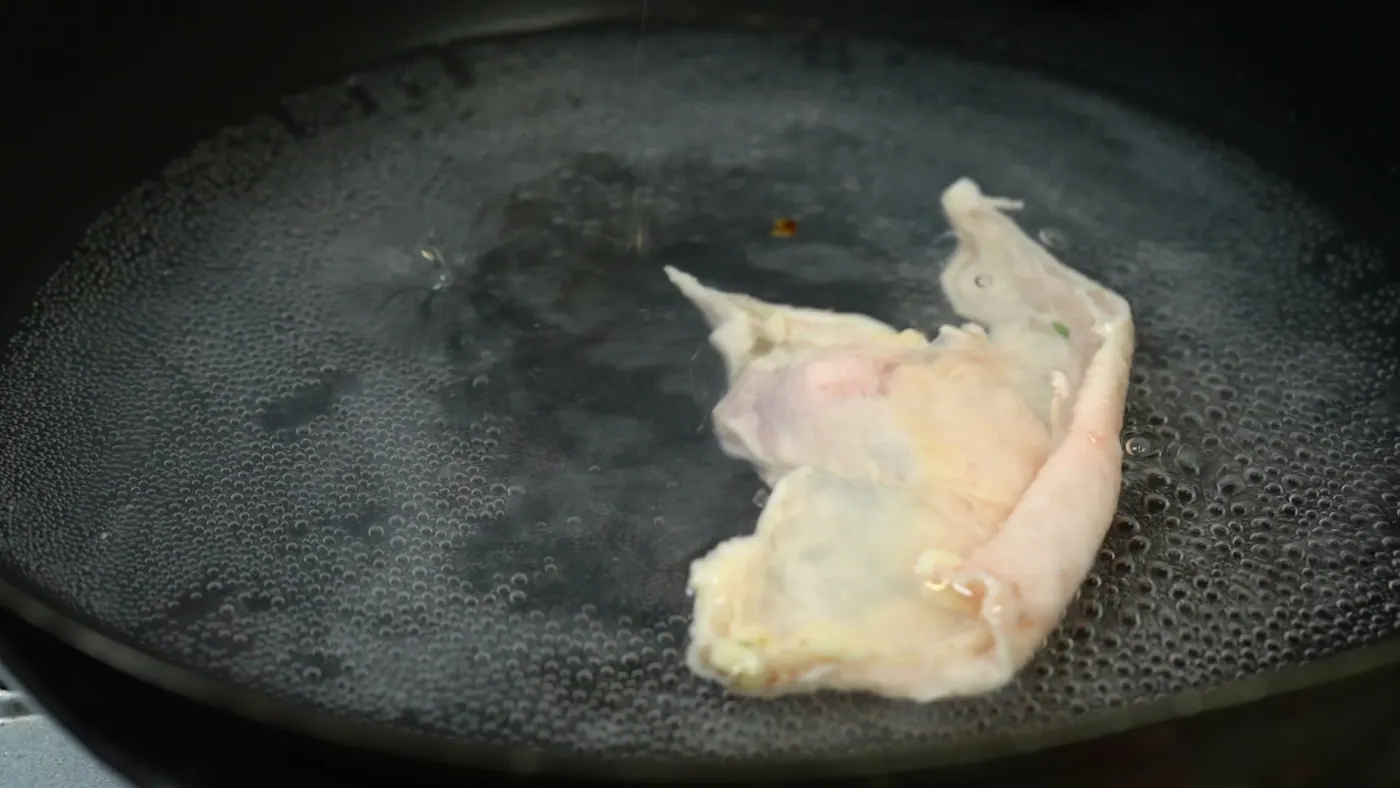
Take it out when it turns white
A quick blanch is enough. When the skin turns white all over, take it out and put it on the tray.
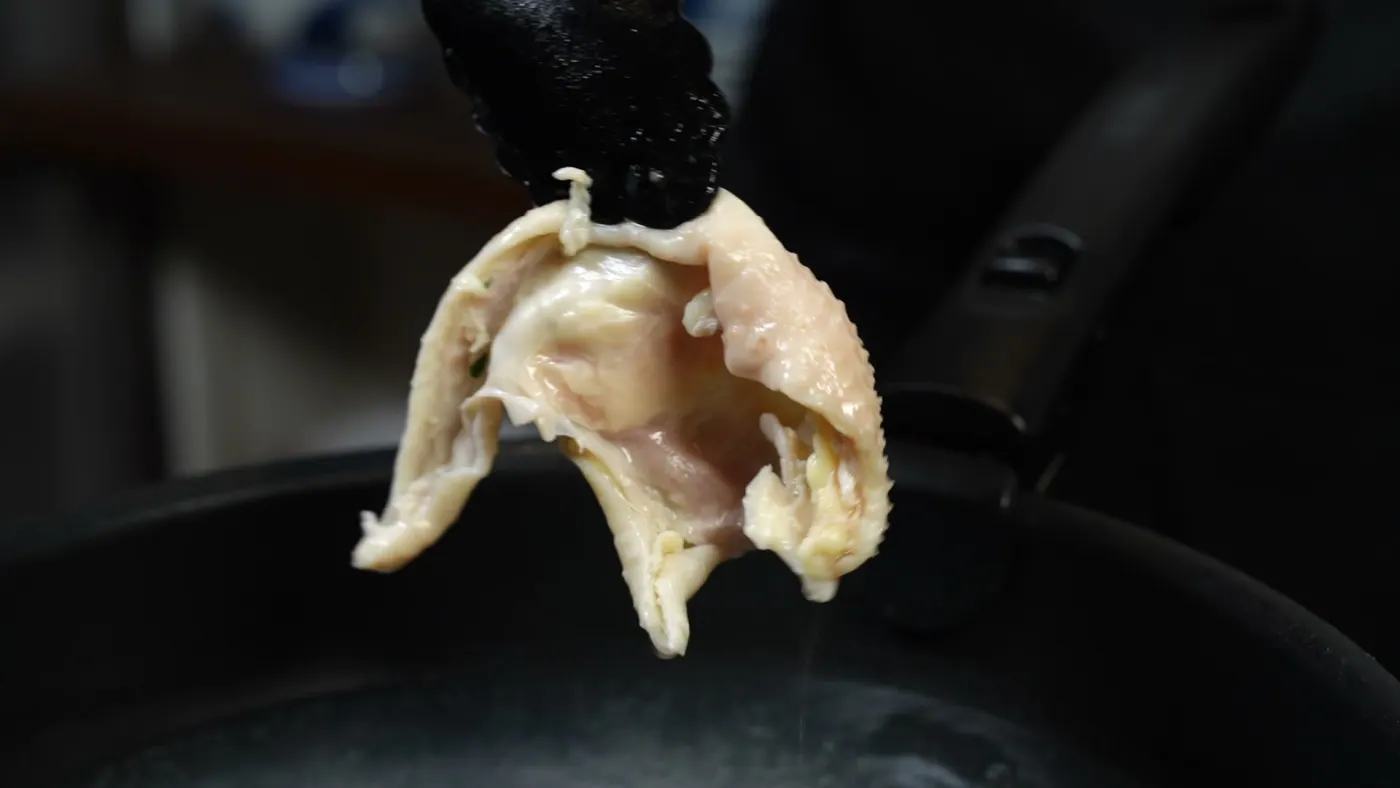
Cut the skin into narrow strips
Cut the skin into narrow, bite-size strips. Strips about the width of a bite are easy to eat once they're on the skewer.
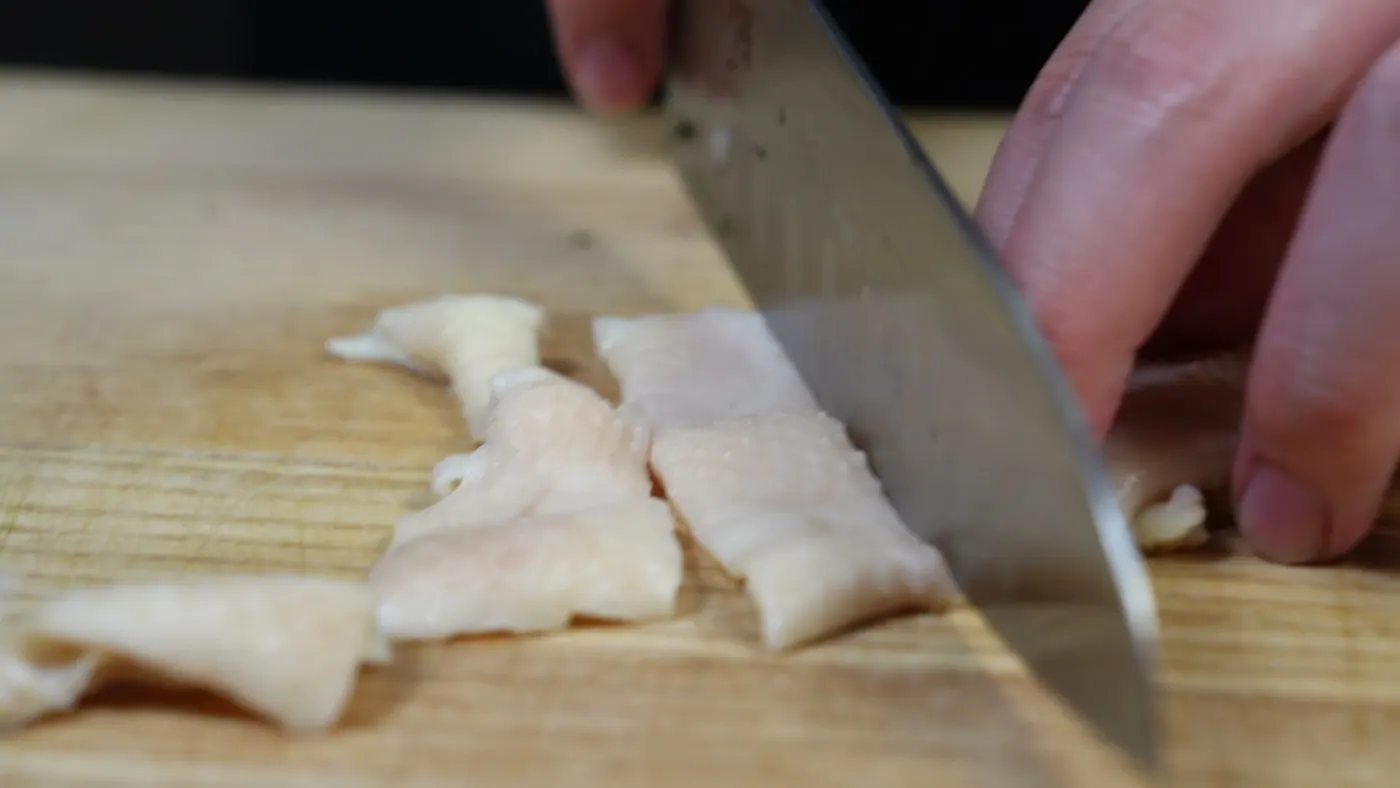
Skewer the Chicken
Skewer the chicken breast
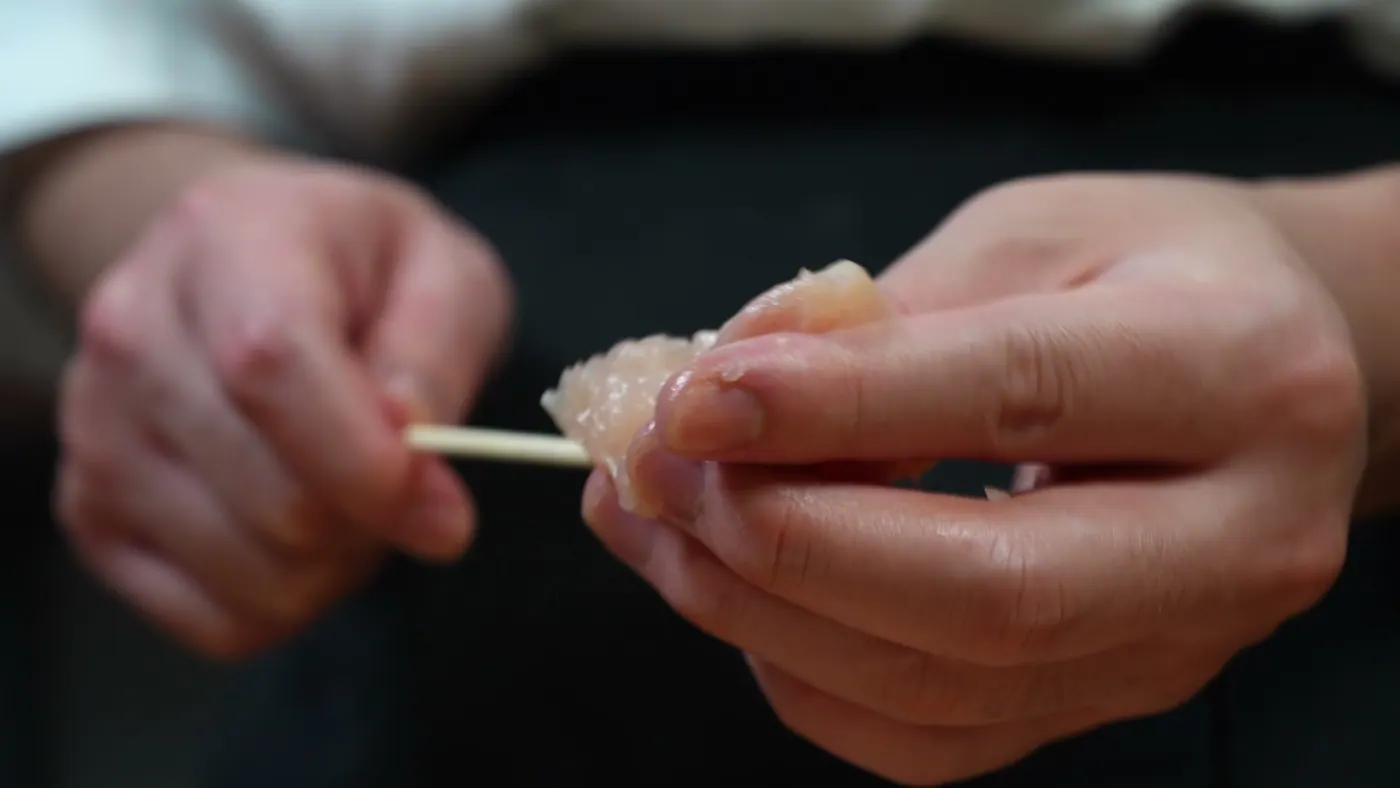
Skewering is where yakitori chefs show their skill, but these tips make it easy for anyone. Hold the meat in the hand opposite the one holding the skewer, and skewer the pieces one at a time.
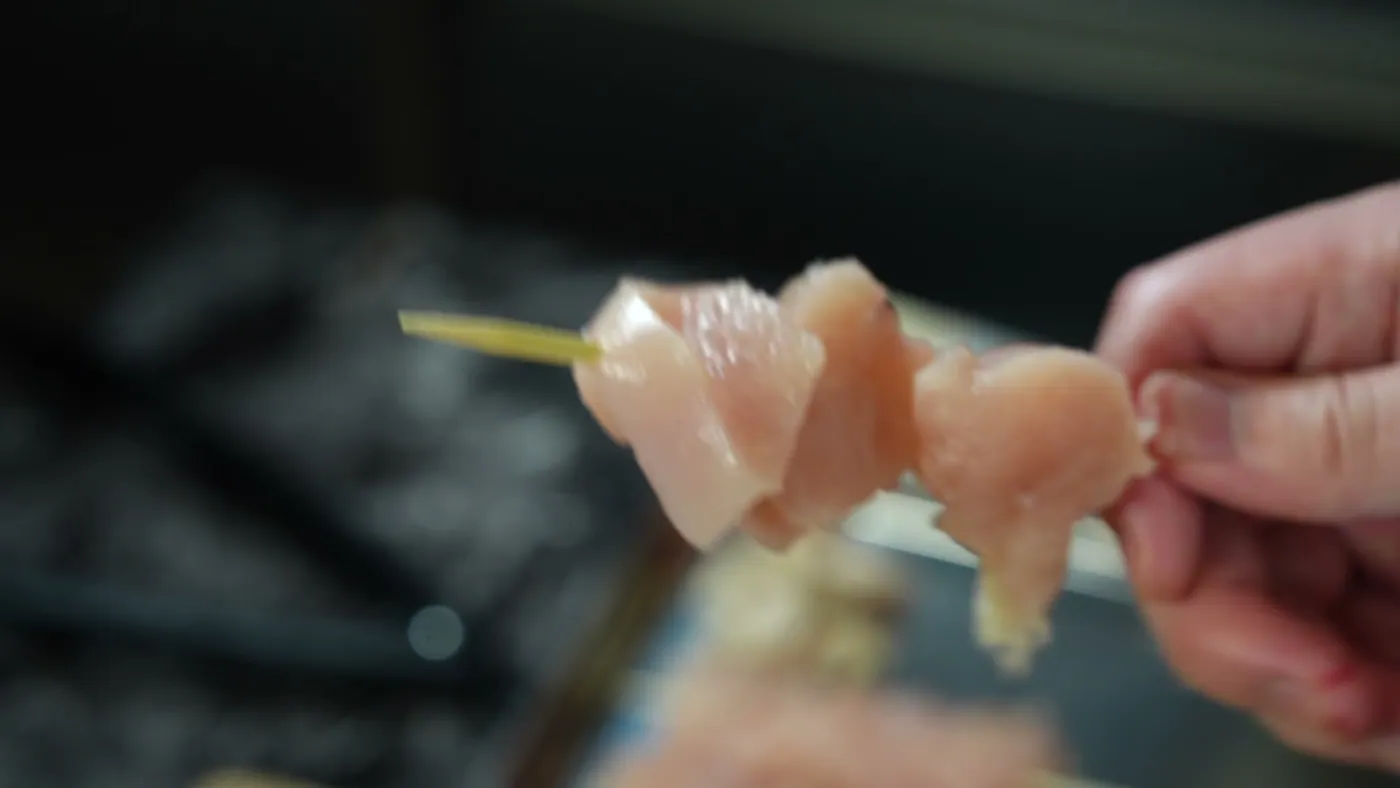
Skewer across the grain, in a wave
Check the direction of the grain. If you skewer along the grain, the meat comes loose, so push the skewer through at a right angle to it. Weave the skewer through in a slight wave, as if you're sewing through the fibers, so the meat stays firmly on the skewer.
Fold small pieces slightly to adjust their shape before you skewer them. Doing it all alone is a lot of work, so it's a fun job to share with family. In Japan, yakitori chefs do this quietly for hours.
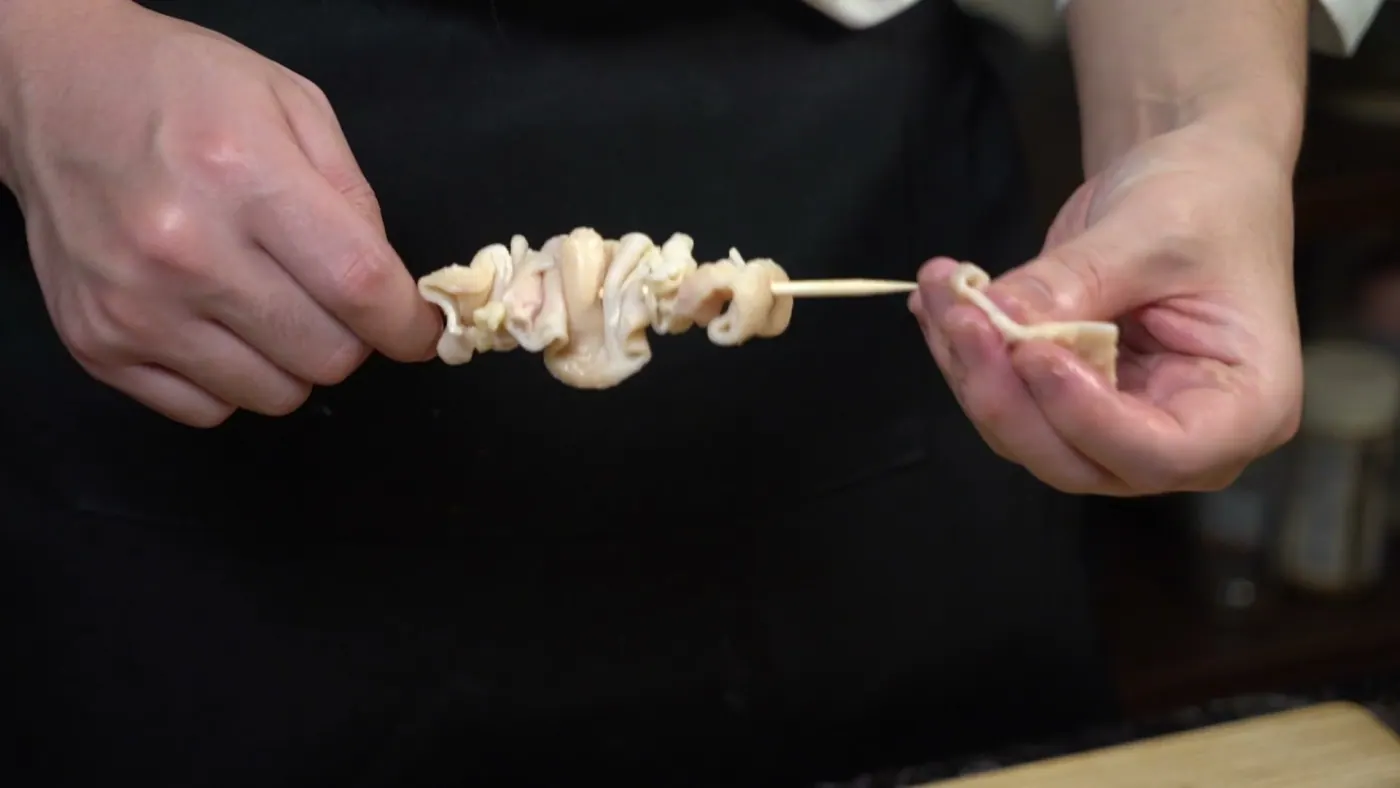
Skewer the skin
Skin slips off skewers easily, so weave the skewer through it the same way. Pack the skin tightly onto the skewer. Skewer all the skin the same way. After handling raw chicken, wash your hands, the cutting board and the knife.
Cook the Yakitori
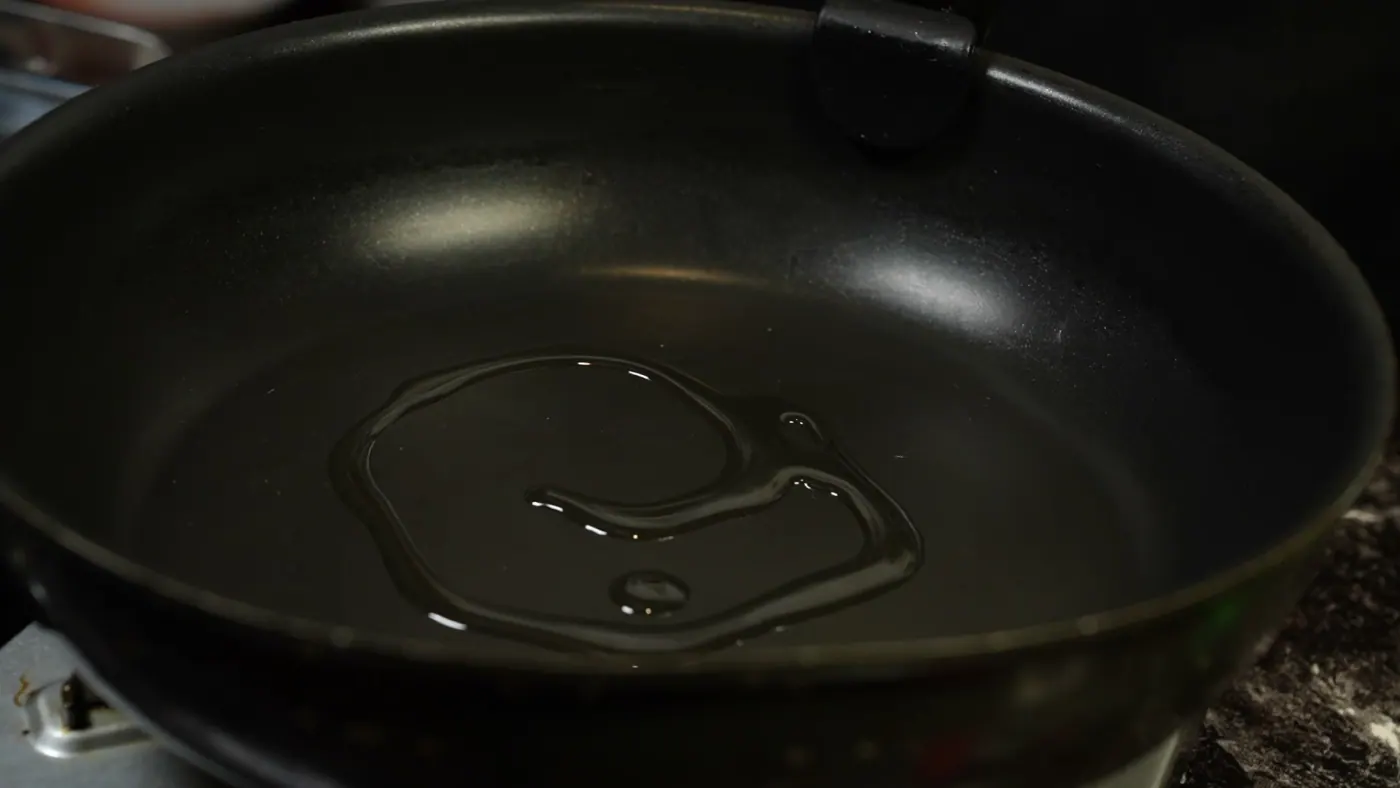
Oil the frying pan
Coat a frying pan thinly with vegetable oil and heat it over medium heat.
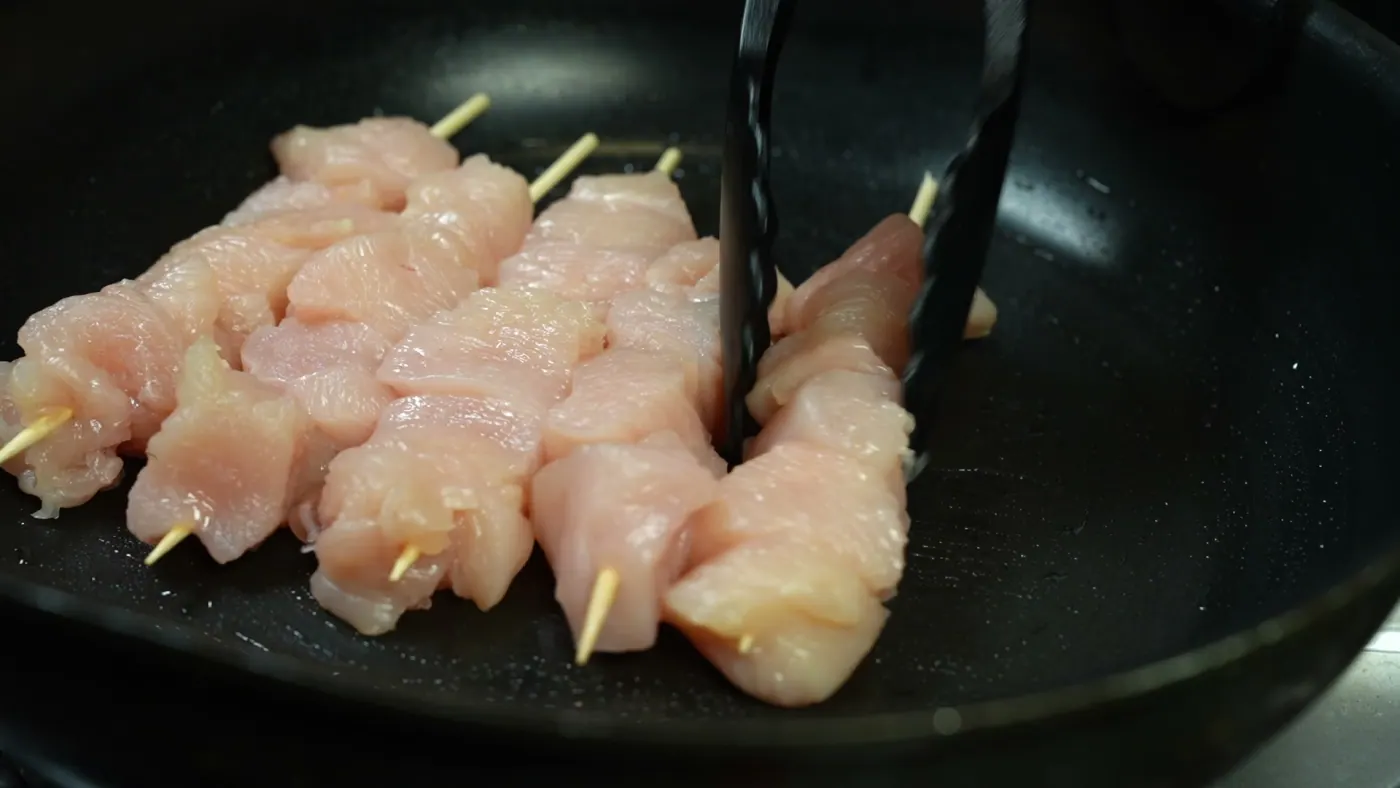
Arrange the skewers and add salt
Arrange the chicken breast and skin skewers in the pan. Sprinkle salt lightly over only the skewers you'll finish with salt. Don't salt the ones you'll glaze with tare.
Cook, turning the skewers
Cook the skewers, turning them with tongs now and then, until they're lightly browned on all sides and the chicken is cooked through. To check, cut into one piece of breast meat: it should no longer be pink inside, and the juices should run clear.
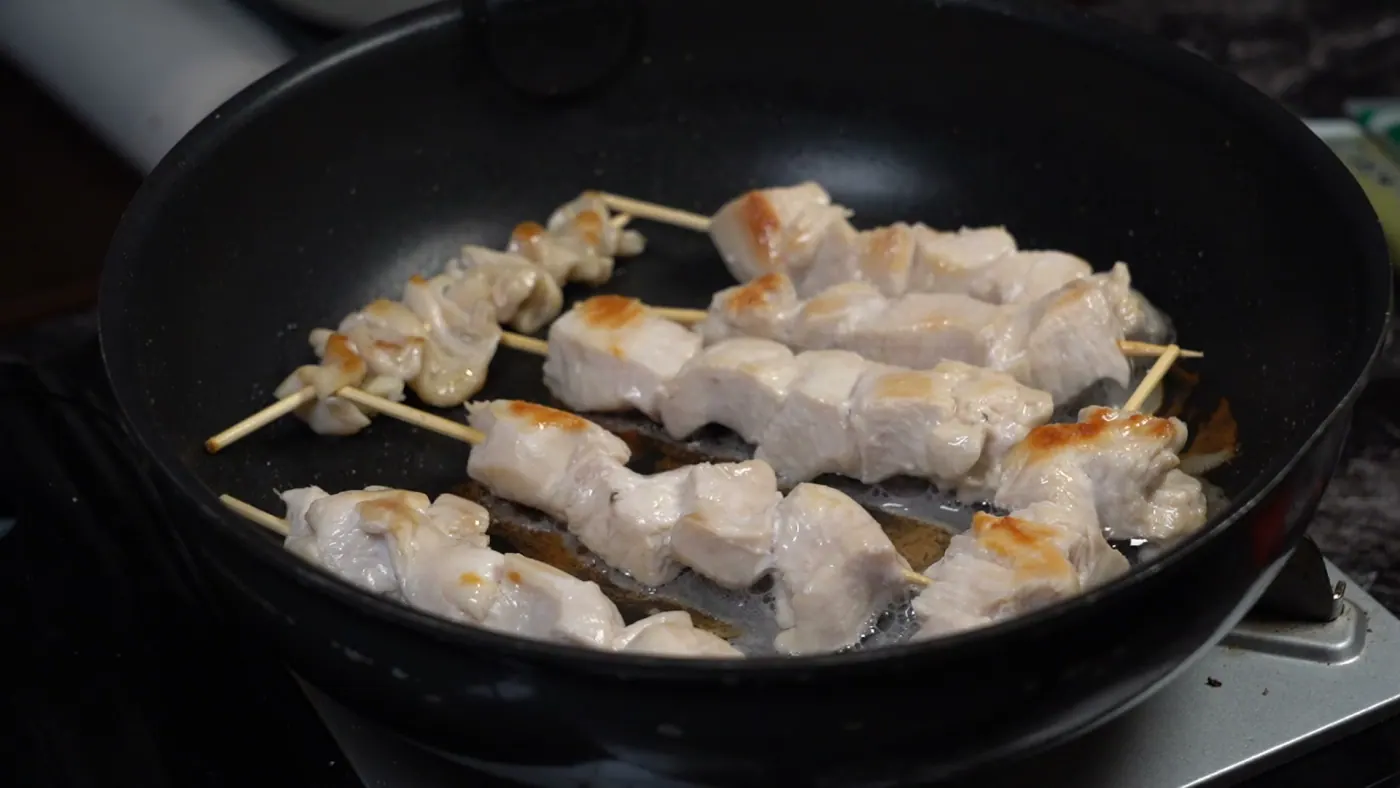
Take out the salted skewers
When the salted skewers are cooked through, take them out of the pan. Usually these are the chicken breast skewers.
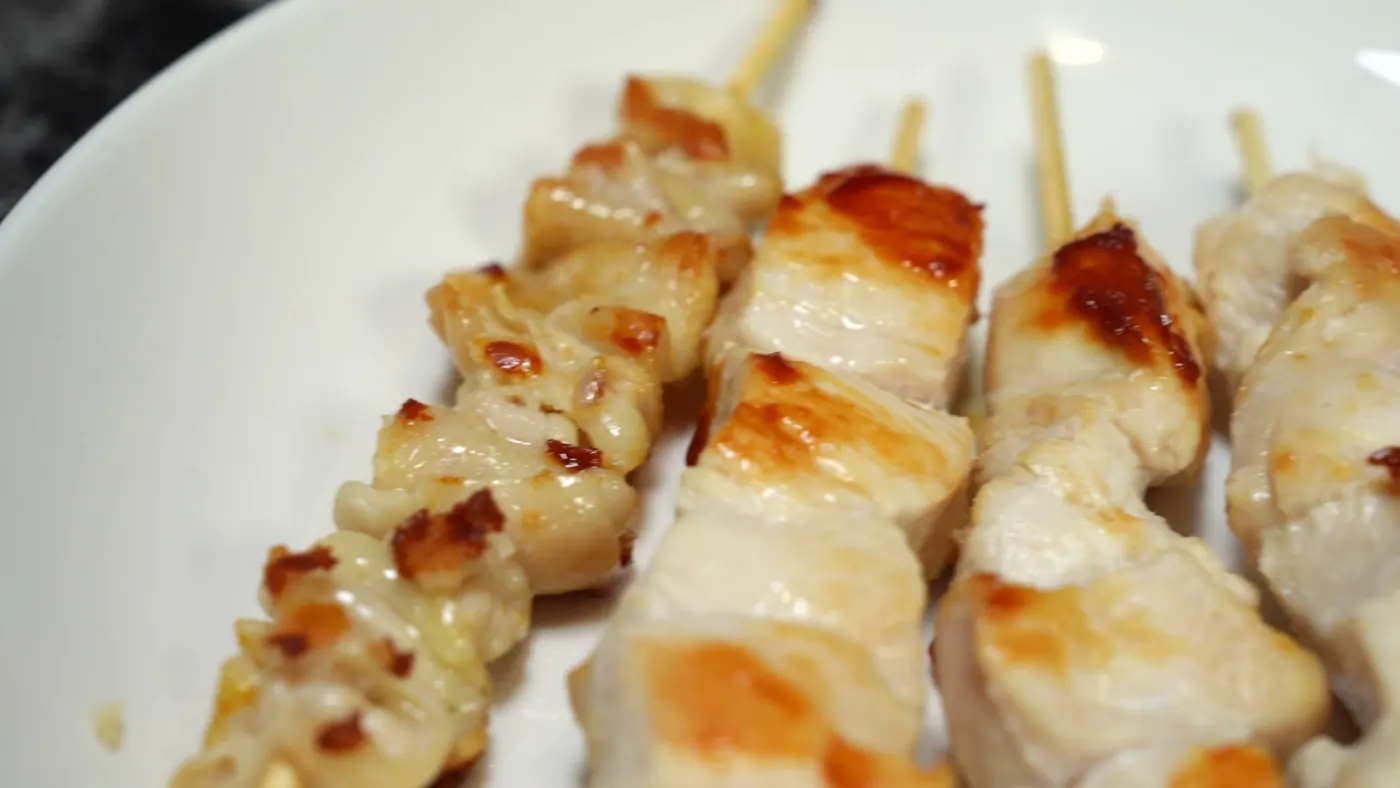
Glaze the tare skewers
Leave the skewers you'll finish with tare in the pan (usually the skin skewers). Pour in just enough tare to coat them, and keep the rest for brushing on or dipping at the end. Let it bubble for a few minutes, turning the skewers so the tare coats them. Don't reduce it too long, or the tare becomes too salty. If you have tare left over, it's good on other dishes too.
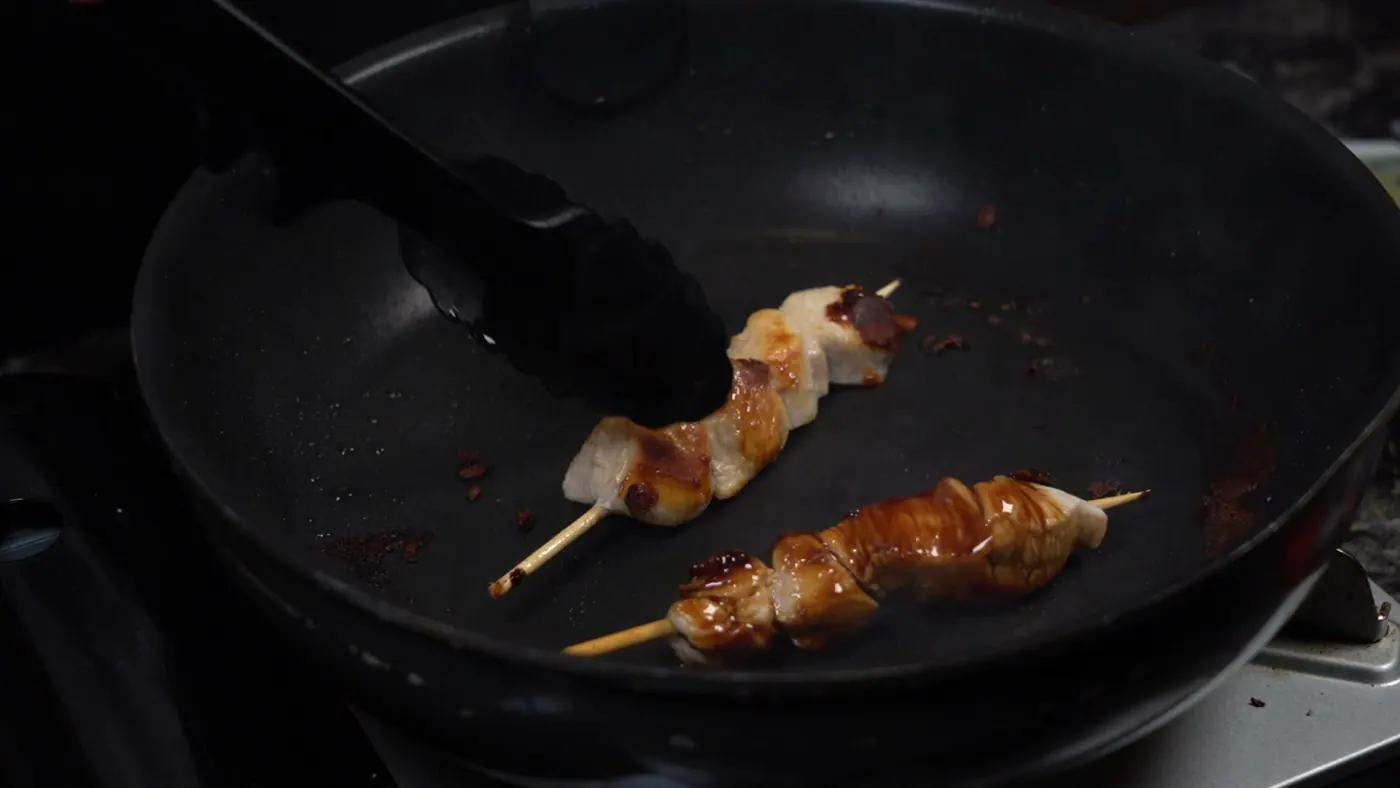
Plate and Serve
Add the toppings
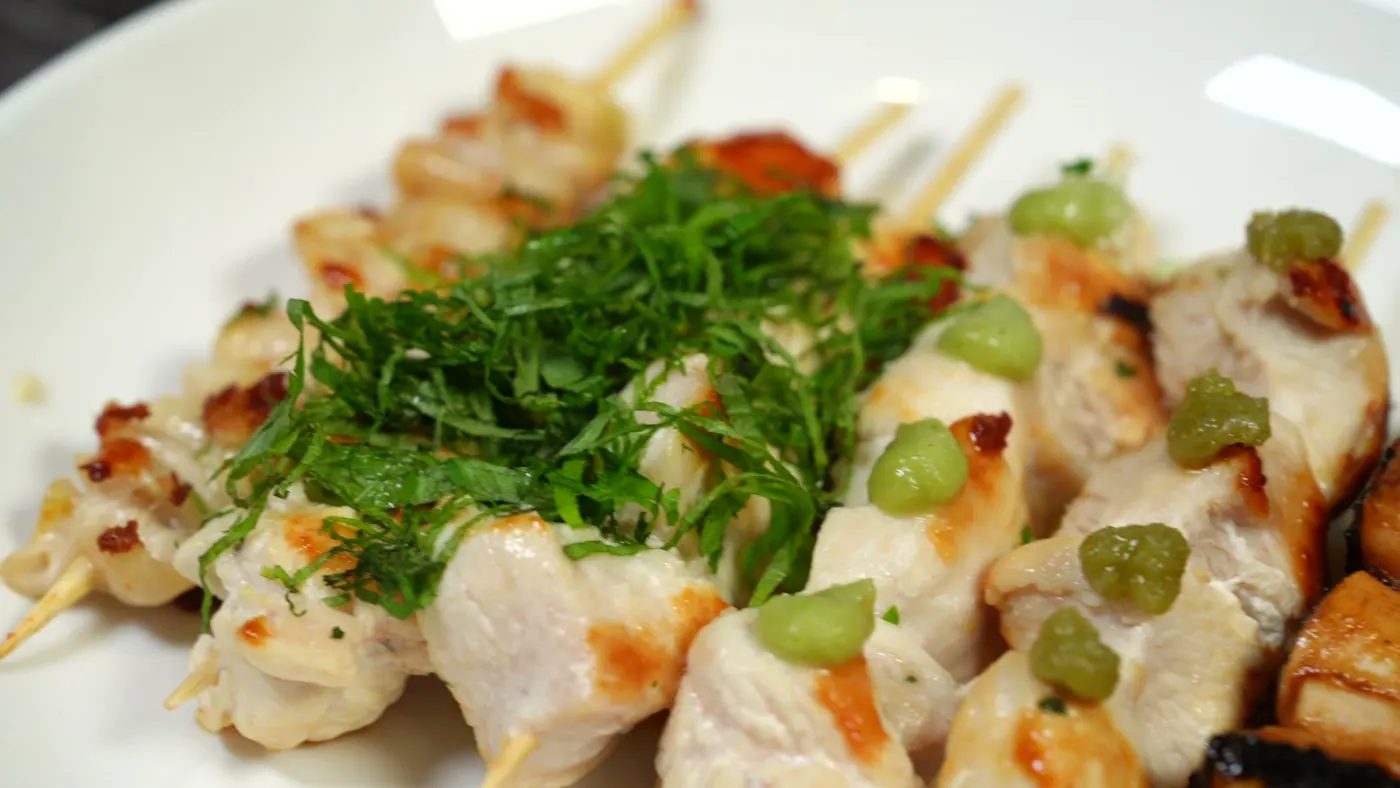
Arrange the skewers on a plate. Add a sudachi or lemon wedge, put a little wasabi on the salted breast skewers, and top them with thinly shredded shiso leaves.
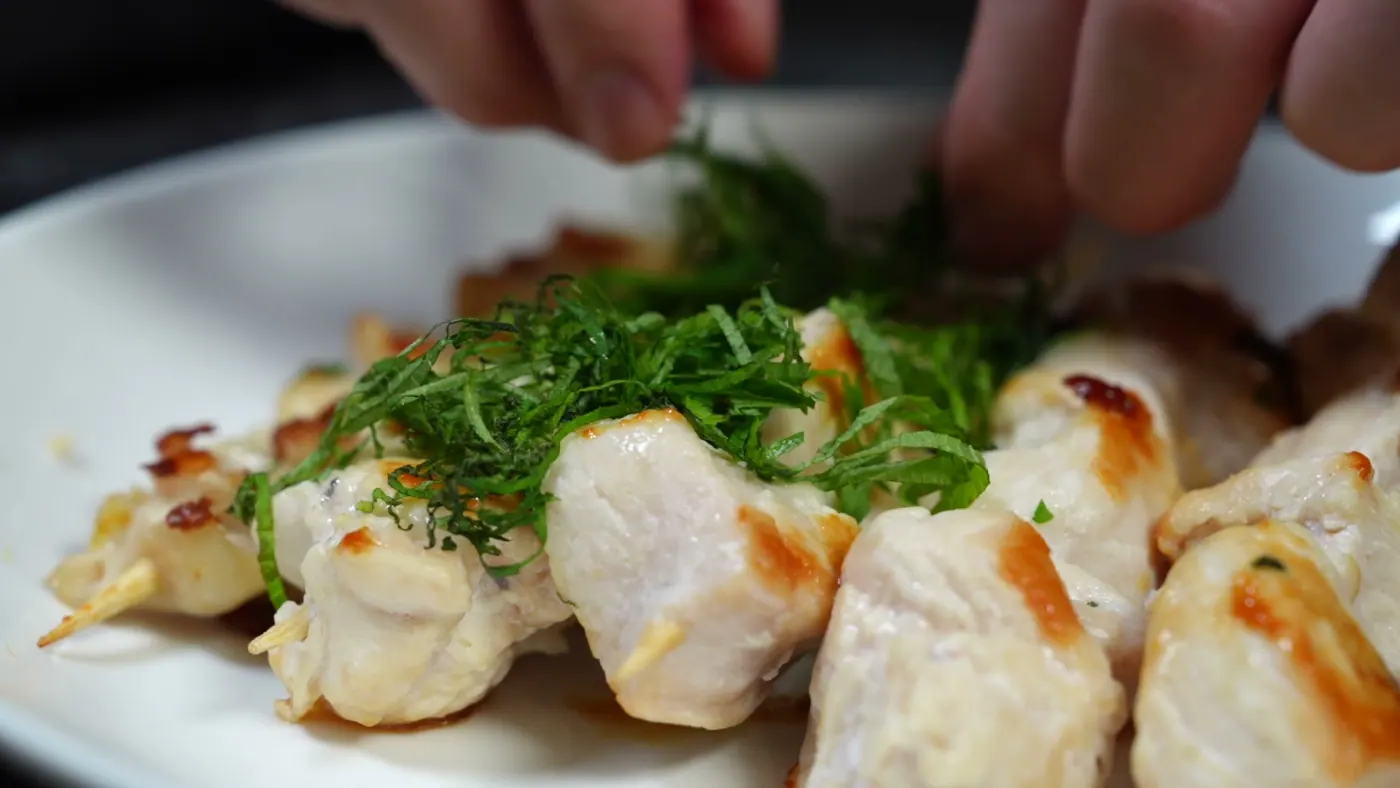
Tips and Key Points
Cook off the alcohol in the mirin
Boil the mirin until you can't smell alcohol in the steam before adding the sugar and soy sauce. The tare will taste much better.
Mind the grain
Cut across the grain so the breast stays tender, and skewer across the grain in a wave so the meat doesn't slide off.
Salt or tare
The basic pairing is salt for the breast and tare for the skin, but both are good either way. In the photos, a few skewers are switched, so try some of each.
Don't over-reduce the tare in the pan
A few minutes is enough. If it cooks down too much, it gets too salty.
Troubleshooting
Frequently Asked Questions
Can I make yakitori without a grill?
Yes. This recipe cooks the skewers in a regular frying pan coated with a thin layer of oil.
Why cut the chicken breast across the grain?
Cutting through the fibers makes the breast meat tender.
What should I do if my chicken keeps sliding off the skewer?
Push the skewer through at a right angle to the grain and weave it in a slight wave, as if sewing through the fibers. Skewering along the grain makes the meat loose.
Why blanch the chicken skin?
It removes extra fat and any gamey smell, and the skin isn't slippery anymore, so it's easier to skewer.
What should I do if my tare is too salty?
Don't reduce it too long in the pan. A few minutes is enough to coat the skewers.
What can I use instead of mirin?
See our mirin substitute, made with seasonings you have at home.
Summary
Frying-pan yakitori comes down to the prep: simmer soy sauce, mirin and sugar into a glossy tare, cut the chicken breast across the grain, blanch the skin, and weave everything onto skewers across the grain. Cook them in a lightly oiled pan until cooked through, finish the breast with salt and the skin with tare (or switch a few), and serve with shiso, wasabi and citrus.
For more yakitori-style chicken, try fluffy tsukune (chicken meatballs) or teriyaki chicken.
小鉢Appetizers & Sides焼き鳥
Yakitori (Japanese Chicken Skewers in a Frying Pan)
Yakitori, grilled chicken skewers, is a classic at Japanese izakaya (casual pubs) and a perfect match for a drink.
No ratings yet
Rate this recipe
- Prep
- 45 min
- Cook
- 15 min
- Total
- 1 hr
- Servings
- 2-3
- Difficulty
- Intermediate
Ingredients
Chicken
Tare (Yakitori Sauce)
Toppings
Ingredient amounts are multiplied; cooking times and pan size may need adjusting.
Instructions
Amounts mentioned in the steps are for the original recipe (1x) — use the scaled amounts above.
Make the Tare
Boil the mirin
First, make the tare that recreates the flavor of a yakitori restaurant. Put 40ml of mirin in a small pan and bring it to a boil over high heat.
Cook off the alcohol
Boiling off the alcohol well is the key to a delicious tare. Fan the steam toward you with your hand. When you can no longer smell alcohol, it's done.
Add the sugar and soy sauce
Add 5g of sugar and stir well until it dissolves. Then add 40ml of soy sauce.
Simmer on very low heat for about 10 minutes
Turn the heat down to very low and simmer for about 10 minutes, taking care not to let it burn.
Skim off the scum
Scum will rise to the surface as the tare simmers, so skim it off.
Cool the tare
After about 10 minutes, the tare will thicken slightly. Turn off the heat and let it cool. As it cools, it thickens even more, so it clings to the chicken better.
Prepare the Chicken Breast
Remove the skin
The skin peels off the chicken breast easily by hand. Set it aside, because you'll use it later.
Cut the breast into 3 blocks
The key to tender chicken breast is how you cut it. First, cut it into 3 large pieces: cut off the rounded part as one piece, then cut the rest in half.
Cut across the grain into bite-size pieces
Look closely and you'll see the grain (the direction of the fibers) in the meat. Cut each block into bite-size pieces at a right angle to the grain, cutting through the fibers. This gives the yakitori a tender texture.
Cut the rest the same way
Cut the other blocks into bite-size pieces the same way. You can cut slightly larger pieces in half. Put all the pieces back on the tray.
Prepare the Chicken Skin
Blanch the skin
You can cook the skin as it is, but blanching it first makes it easier to handle. Bring a pot of water to a boil and add the skin. Blanching removes extra fat and any gamey smell, and the skin is no longer slippery, so it's easier to skewer.
Take it out when it turns white
A quick blanch is enough. When the skin turns white all over, take it out and put it on the tray.
Cut the skin into narrow strips
Cut the skin into narrow, bite-size strips. Strips about the width of a bite are easy to eat once they're on the skewer.
Skewer the Chicken
Skewer the chicken breast
Skewering is where yakitori chefs show their skill, but these tips make it easy for anyone. Hold the meat in the hand opposite the one holding the skewer, and skewer the pieces one at a time.
Skewer across the grain, in a wave
Check the direction of the grain. If you skewer along the grain, the meat comes loose, so push the skewer through at a right angle to it. Weave the skewer through in a slight wave, as if you're sewing through the fibers, so the meat stays firmly on the skewer.
Fold small pieces slightly to adjust their shape before you skewer them. Doing it all alone is a lot of work, so it's a fun job to share with family. In Japan, yakitori chefs do this quietly for hours.
Skewer the skin
Skin slips off skewers easily, so weave the skewer through it the same way. Pack the skin tightly onto the skewer. Skewer all the skin the same way. After handling raw chicken, wash your hands, the cutting board and the knife.
Cook the Yakitori
Oil the frying pan
Coat a frying pan thinly with vegetable oil and heat it over medium heat.
Arrange the skewers and add salt
Arrange the chicken breast and skin skewers in the pan. Sprinkle salt lightly over only the skewers you'll finish with salt. Don't salt the ones you'll glaze with tare.
Cook, turning the skewers
Cook the skewers, turning them with tongs now and then, until they're lightly browned on all sides and the chicken is cooked through. To check, cut into one piece of breast meat: it should no longer be pink inside, and the juices should run clear.
Take out the salted skewers
When the salted skewers are cooked through, take them out of the pan. Usually these are the chicken breast skewers.
Glaze the tare skewers
Leave the skewers you'll finish with tare in the pan (usually the skin skewers). Pour in just enough tare to coat them, and keep the rest for brushing on or dipping at the end. Let it bubble for a few minutes, turning the skewers so the tare coats them. Don't reduce it too long, or the tare becomes too salty. If you have tare left over, it's good on other dishes too.
Plate and Serve
Add the toppings
Arrange the skewers on a plate. Add a sudachi or lemon wedge, put a little wasabi on the salted breast skewers, and top them with thinly shredded shiso leaves.
Video
Watch the video · 7:31Open on YouTube
Jump to a part of the video (9 chapters)
Video: https://youtu.be/vv9zN1Kaqnk
Notes
Substitutions
- Mirin: See our mirin substitute made with seasonings you have at home
- Sudachi: Lemon works too
Nutrition estimated, per serving, based on 3 servings
- Calories
- 134 kcal
- Carbohydrates
- 9.7 g
- Protein
- 15.5 g
- Fat
- 3.9 g
- Saturated fat
- 1 g
- Fiber
- 0 g
- Sugar
- 6 g
- Sodium
- 926 mg
Estimated by us from the Standard Tables of Food Composition in Japan (MEXT, 2020). Optional ingredients and garnishes are not counted; soup and sauce are counted as fully eaten. Actual values depend on your brands and portion sizes. How we calculate this
Course: Appetizers & Sides · Cuisine: Japanese · Keyword: Yakitori
Recipe from Japanese Cooking Ichie — https://japanesecookingichie.com/recipes/yakitori/
Make it a meal
Serve it alongside one of these mains.
Ratings & comments
No ratings yet — be the first to rate this recipe.
Comments